Features
Part of The floor fails first: deciding what to keep in vintage diner interiors
How to research vintage diner interiors options
Learn how to research vintage diner interiors options through National Register files, facade clues, interior criteria, and calls to confirm what survives.
What to take away
- When researching vintage diner interiors options, build your own list from records rather than relying on familiar travel photos.
- National Register nomination files can describe interiors in detail and are free to read.
- Look at the outside of the building for a clue about the inside: terra cotta, structural glass and tile frontages usually mean money was spent within.
- Verify it is still open by telephone. Small restaurants close quietly.
Finding a promising interior is a research job: records can show what was there, while a phone call can confirm what remains.
Read the nominations
When a building is listed, somebody writes a description of it, and those descriptions are far more detailed than any travel article.
The National Park Service's National Register publications and bulletins explain how the documentation is organized and what the different bulletins cover, which makes the files far easier to use once you know what you are looking at. Nomination text routinely describes counters, floors, fixtures and later alterations by name.
Search the National Register of Historic Places database by property name. For digitized nomination files, check NPGallery; if a file is not online, contact the relevant State Historic Preservation Office (SHPO), which may have the record.
That is a shortlist nobody else is working from, and it tells you what survives rather than what photographs well.
Read the facade for a clue about the room
There is a rough correlation worth knowing: buildings that spent money on the frontage usually spent it inside too.
Architectural terra cotta is a good marker of a commercial building where the owner invested in appearance. The National Park Service's Preservation Brief 7, The Preservation of Historic Glazed Architectural Terra-Cotta, covers what the material is and how it was used on exactly the kind of early commercial frontages that housed lunch counters.
The same applies to glazed tile and colored structural glass fronts. If the outside is intact and expensive, the inside is worth a look.
What makes a stop worth the detour
- The counter run is original and still in use.
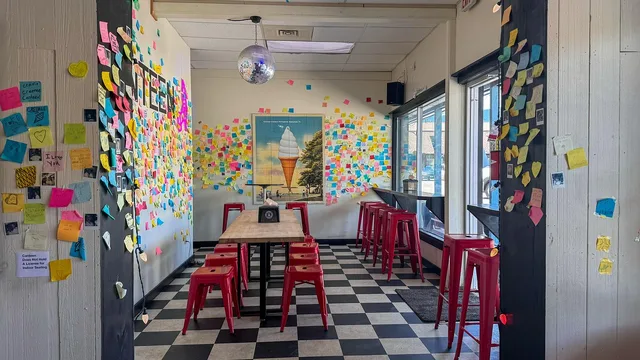
- The floor has not been covered.
- The lighting is period, or the fittings survive even if rewired.
- The plan is unalteredsame entrance, same counter position, same window line.
- It is still a restaurant rather than a museum piece.
Two of those five is enough for a detour. Five is worth building the day around.
Where to look that most people do not
Small towns on bypassed routes. The building survives because nothing replaced it.
Downtown blocks that never gentrified. Refits happen where rents rise.
Buildings that changed use. A pharmacy lunch counter or a department store restaurant frequently survives inside a building now doing something else entirely.
Places nobody calls a diner. The best interiors are often in cafes, luncheonettes and counters that never used the word.
Verify before you drive
Telephone. Do not trust an aggregator's hours, a social media page that stopped updating, or a review from last spring.
Ask three questions: are you open on this date, what time is quiet, and is the counter still in use. That third one saves the wasted trips.
Fitting them into a longer route
Two diner stops a day is realistic if you want to look properly, and one of them should be a meal. Three becomes a lot of coffee and not much attention.
Plan the rest of the route around the stops you have confirmed, leaving time to eat and look carefully. Build in enough flexibility for a place to be closed or less intact than its nomination describes; that is part of why a phone call and a modest daily itinerary matter.