Industry
Part of How to Read Roadside Architecture from the Road
Roadside architecture places to stay in Tucumcari
Roadside architecture places to stay in Tucumcari: three named motels, tips for checking a property's history, booking direct, and supporting preservation.
What to take away
- Staying in one is the most useful thing a visitor can do. These are businesses, and occupancy is what keeps them standing.
- Density beats individual landmarks. Pick a corridor with several survivors rather than driving between isolated ones.
- Expect a small room, thin walls and idiosyncratic plumbing. That is the building being honest, not the owner being careless.
- Book direct where you can. The margin on a third-party booking is the margin that pays for paint.
For readers looking for roadside architecture places to stay, the best way to see roadside architecture is to sleep in it. It is also the only form of appreciation that pays the owner anything.
Find the corridors, not the landmarks
A single famous motel means a long drive with nothing either side. A corridor with a dozen survivors means you can walk between three of them after dinner.
Landmark vs corridor
Single landmark
- Survivors nearby
- None
- After dinner
- Long drive
- Trip planning
- One stop
- Source
- Listicle
Corridor
- Survivors nearby
- A dozen
- After dinner
- Walk to three
- Trip planning
- Cluster of towns
- Source
- NPS state overviews
New Mexico and Missouri hold unusually dense concentrations of surviving Route 66 properties. Both states have well-documented preservation activity.
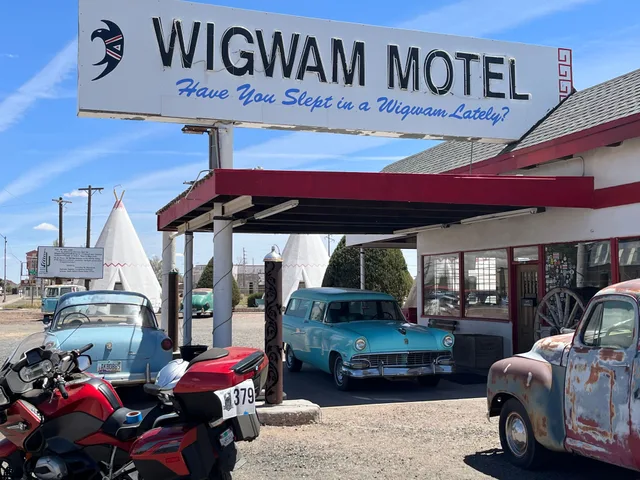
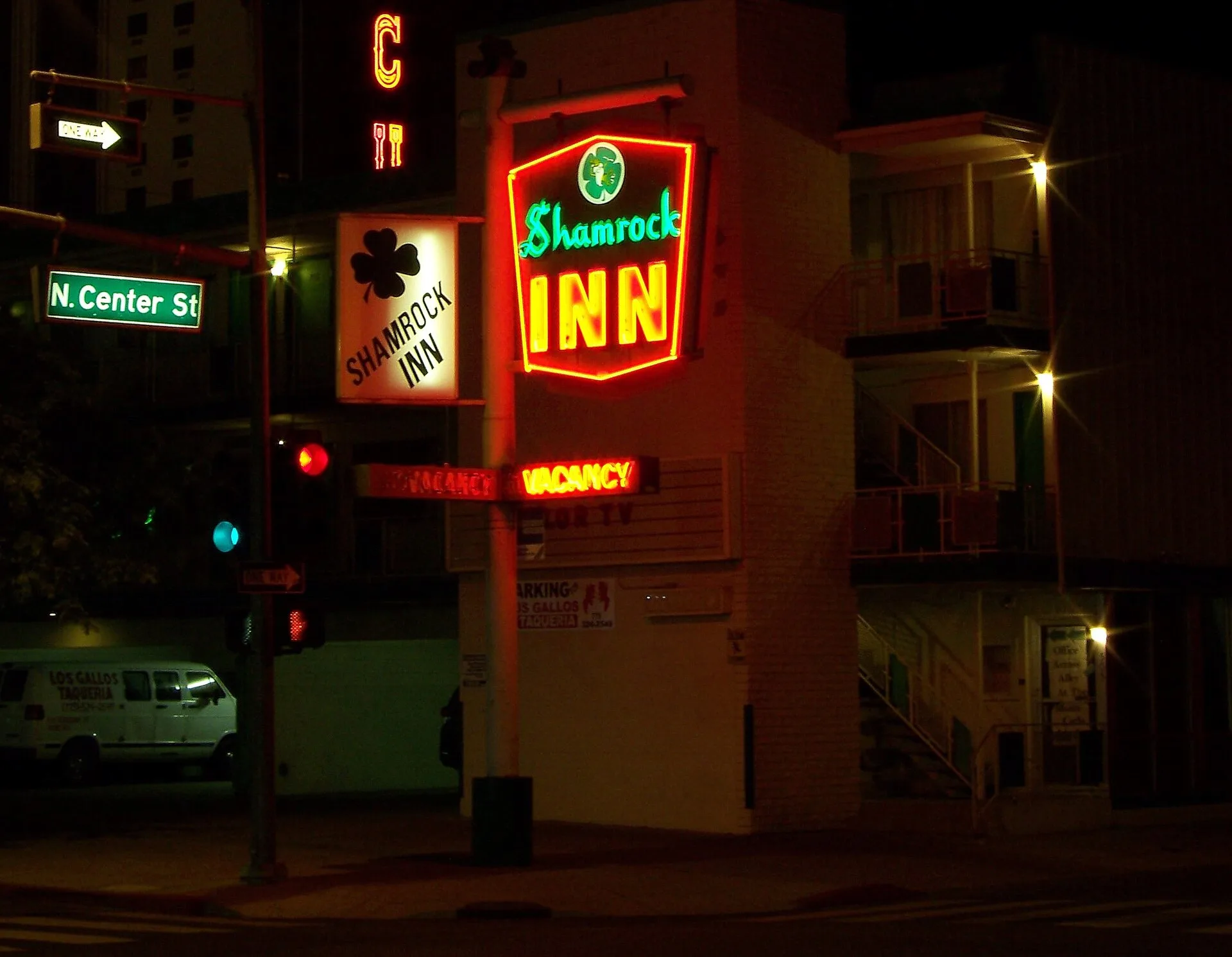
A concrete corridor to start with is Route 66 through Tucumcari, New Mexico. The Blue Swallow Motel, Motel Safari, and Roadrunner Lodge are named lodging options in town; check their current operating status and availability before building a trip around a stay.
The National Park Service's state overviews for Route 66 in New Mexico and Route 66 in Missouri list funded projects by property. That beats a listicle for trip planning, since every entry is a place somebody spent money preserving.
Use those overviews for the broader preservation picture, then choose a town where projects cluster. Tucumcari on Route 66 is one actionable starting point; verify a property's current operation and availability before booking.
How to tell an operating historic motel from a themed one
Some properties are genuinely old. Some are new builds with a retro sign. Both can be pleasant; only one is what you came for.
Before booking, check whether the property offers:
- An opening date and an account of how the building has been used over time.
- Named previous owners or specific restoration details, rather than only general retro language.
- Photos and descriptions of the actual building and its surviving roadside features.
- A preservation project listing or other public record that supports its history.
Real or themed motel
- Rooms entered from outside, parking at door
- Office at the end nearest the road
- Sign construction older than its paint
- Listed on the National Register
- Photos show small windows, low ceilings
- Website gives specific dates and owners
If the website talks about the building's history in specifics, dates, previous owners, what was restored, it is usually real. Vague nostalgia language usually is not.
What to actually expect
Manage this honestly, because disappointed guests hurt these businesses.
Rooms are small. Bathrooms are small. Walls are thin, doors open onto the parking lot, and the air conditioning may be a window unit. Water pressure varies. There will be no lift, and often no second floor to need one.
What you get in exchange is a room in a building that has done exactly this job for seventy or eighty years, usually run by someone who chose to take it on.
If you need a predictable room, take the chain and visit the motel during the day. That is a completely legitimate choice and better than leaving a bad review on a building for being old.
Book direct
Third-party booking platforms take a meaningful share of a small property's room rate. On a twelve-room motel that share is the difference between repainting this year and not.
Call, or book on the property's own site. It costs you nothing and it frequently gets you a better room, because the owner is choosing.
Say why you came
This matters more than it sounds. Tell the owner you came for the building or the sign.
Owners of these properties are often unaware that anyone values the architecture. That knowledge affects what happens when the sign next needs work or when somebody suggests replacing the windows with something cheaper. Several documented restorations began because guests kept asking about the sign.
Combine it with the daytime looking
Base yourself in a town with survivors and you can photograph in morning light, drive a stretch during the day, and be back for the neon at dusk without another two hours of driving.
Use the field guide to read the building, and the history checks above to understand what you are actually booking.