Reviews
Part of Motel exterior safety checklist: what to record before you decide to stop
Motel exterior safety checklist comparison questions to ask before you escalate
Motel exterior safety questions for 2027 help U.S. readers record visible facts, identify responsible escalation, and avoid unsupported safety claims.
A useful safety question has a visible fact, a stated limit, and a responsible recipient. It does not ask an editor to issue a diagnosis or a repair instruction.
What to take away
- Ask what is visible before asking what caused it.
- Ask who can review an area before seeking access.
- Ask whether a route is available before attempting to use it.
- Keep a separate record for provider submissions and paid placements.
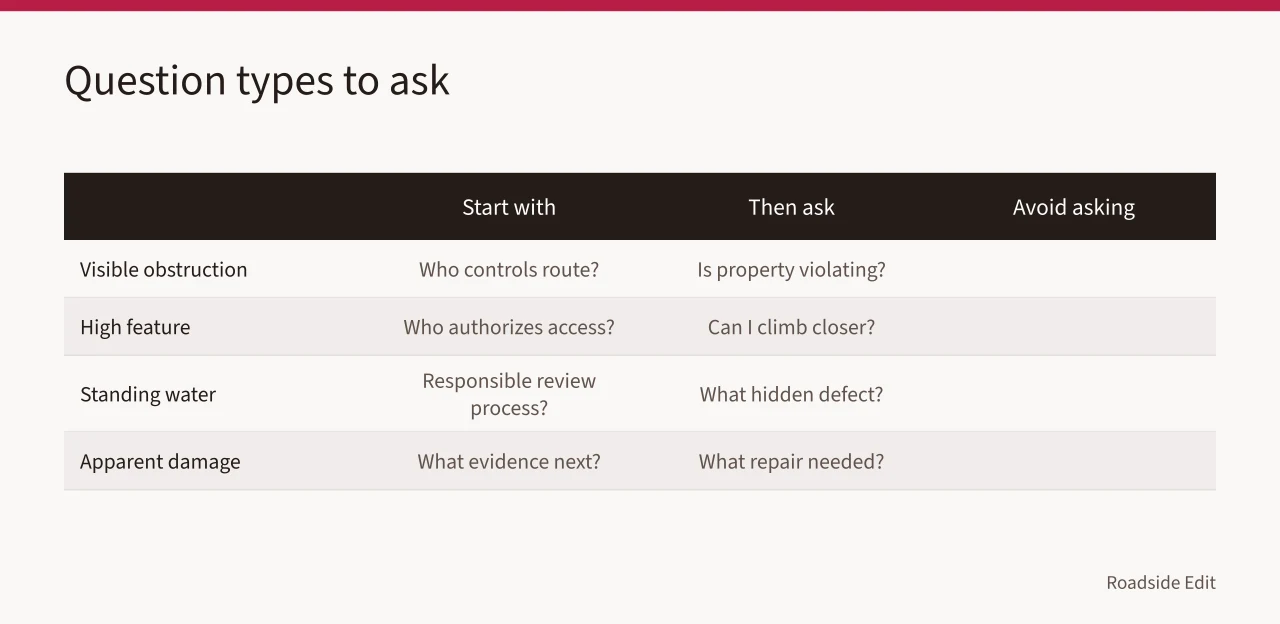
Compare the question types
| Start with | Then ask | Avoid asking |
|---|---|---|
| A visible obstruction | Who controls the route and can review it? | Is the property violating a rule? |
| A high feature | Who can authorize qualified access? | Can I climb closer for a photo? |
| Standing water | What is the responsible review process? | What hidden defect caused it? |
| Apparent damage | What evidence is needed next? | What repair must be done? |
OSHA's general requirements say employers must inspect walking-working surfaces regularly and as necessary, and keep them safe. Review OSHA standard 1910.22.
That rule addresses employers and workers, not readers making a public observation. So record the condition and refer the decision to the responsible person instead of treating this article as an inspection.
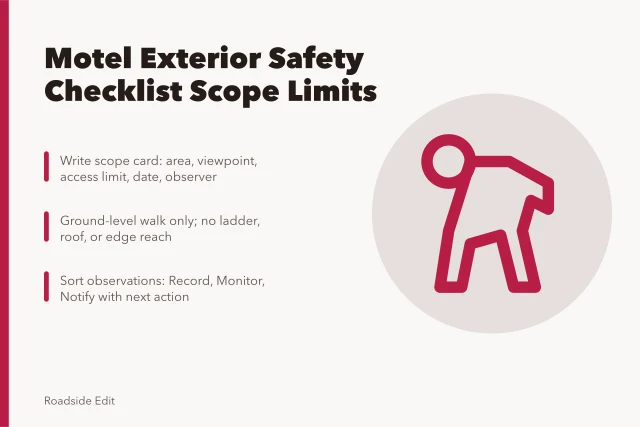
Ask about access before attempting a closer look
An exterior image may show a roof edge, sign, stair, walkway, or high feature. It does not grant access to that feature.
Ask who controls the property, whether entry is authorized, and which person is responsible for a closer review. Do not encourage a reader to climb, enter a closed area, move barriers, or test a feature to gather content.
OSHA's construction standard includes accident-prevention responsibilities for covered construction work. Consult OSHA's accident-prevention provision. The rule does not determine the facts at a particular motel or govern a public observer. It supports the basic boundary that work-site safety responsibilities should be identified rather than guessed at in an editorial article.
Keep route and water questions separate
An entrance route may involve a curb, walkway, ramp, lighting, standing water, or a visible obstruction. Each needs a separate record. A public image can show the feature at a time. It cannot settle whether the route meets a standard, whether a surface is safe to use, or what change is required.
The ADA Standards for Accessible Design are technical standards for covered facilities. Review the ADA Standards for Accessible Design. They do not decide compliance or obligations at one motel. They explain why a photograph is not a compliance finding and why questions about a route should go to the responsible authority or qualified reviewer.
When water or weather is part of the question, keep the date and source. FEMA's National Flood Hazard Layer provides federal flood hazard information for mapped areas. Check FEMA's National Flood Hazard Layer information.
It does not determine current safety, damage, or project duties at a property. It gives readers a defined source when mapped flood information is relevant.
Question log example
| Record | Example |
|---|---|
| Visible fact | Wet area is visible at the entrance edge. |
| Evidence limit | The source and duration are not known. |
| Responsible question | Who can inspect the area under authorized conditions? |
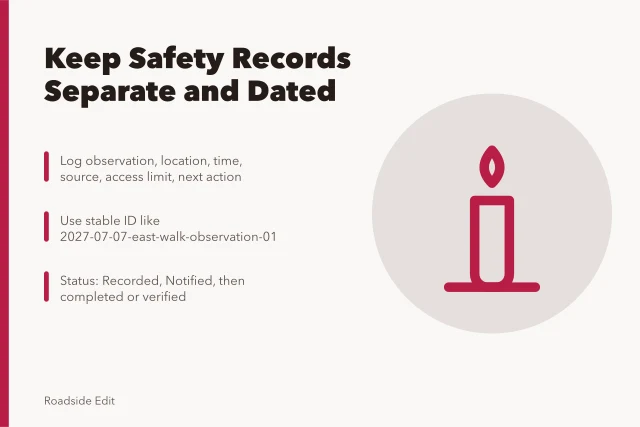
| Follow-up | Date and contact role recorded. |
When an answer arrives, attach it to the question instead of rewriting the original entry. Attribute the response, give its date, and note whether it answers the full question or only part of it. This small habit makes later editorial review much more reliable.
For public publication, remove private contact details and any site-security information that does not help a reader understand the observation.
Escalate without publishing a diagnosis
If a reader sees an immediate access concern, utility issue, or condition that may need urgent attention, the right next step is to contact the responsible owner, relevant service, or qualified professional. Preserve a dated observation but do not publish a diagnosis. A cautious question is more useful than a confident conclusion that exceeds the record.
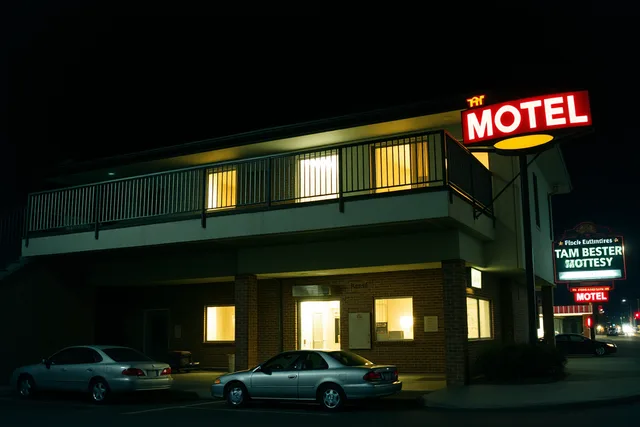
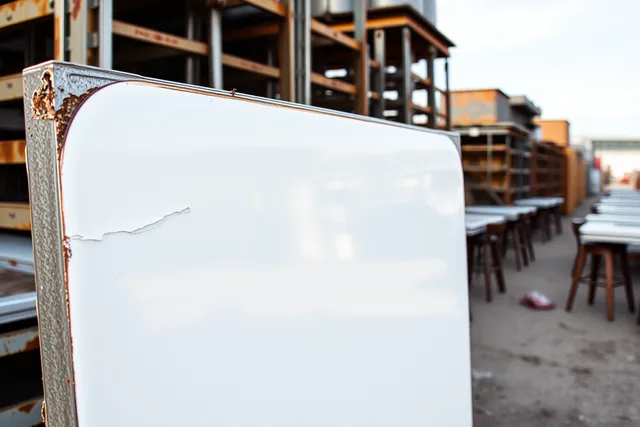
The image is illustrative. It does not establish a motel's current condition, safety, ownership, access status, or project result.
Common questions
Does an observation prove a hazard?
No. It provides a limited factual record and may identify a reason for responsible review.
Who decides whether a route can be used?
The responsible owner or manager and, where relevant, qualified or regulatory parties decide access and use.
Can an article promise a safety result?
No. Property-specific outcomes depend on conditions, authority, and appropriate review.