Reviews
Part of Judge the best roadside design studios by replication, not photographs
How to tell whether a roadside design studios tour is worth the fee
How to compare tours built around roadside design studios: a studio visit means standing in a working workshop with machines running. The good operators say.
What to take away
- Find out whether the workshop will be running. A quiet shop is a lecture with tools in the background.
- Ask what protection is provided and what the rules are around machinery.
- Hearing protection is not a formality in a fabrication shop. Bring your own if unsure.
- Small groups only. A workshop tour of twenty people sees nothing and gets in the way.
Studio visits are the best value in roadside architecture and the most variable. Two of them at the same price can be an hour watching somebody cast a panel, or a slide talk in a room with a bench in it.
The difference is knowable in advance.
Will the shop be working?
Ask this first and ask it plainly: will work be in progress during the visit, and what work.
A working shop is noisy, busy and completely absorbing. A shop shut down for visitors is safer, tidier and far less interesting. Both are legitimate offers, and only one of them is what most people are paying for.
Ask what happens if a job runs late. Small workshops have deadlines, and a visit that competes with a delivery gets the short version.
The machinery question
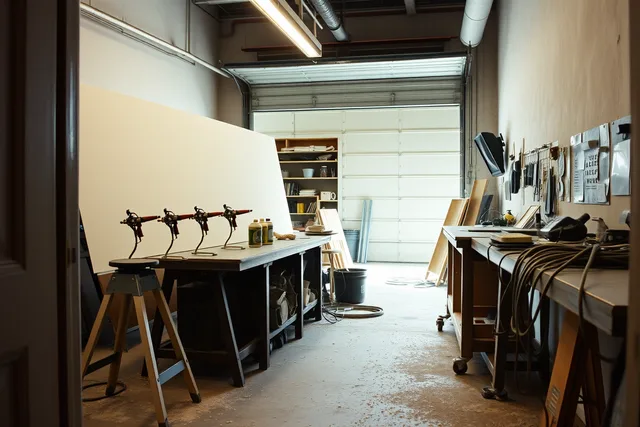
A fabrication shop contains saws, grinders, presses, benders and lifting equipment, and there are rules about where visitors stand.
The Occupational Safety and Health Administration's material on machine guarding explains the hazards these machines present and the protection that must be in place. You are not the one responsible for compliance, and knowing what the concerns are tells you whether a shop that is happy to walk a group through is running a tight operation or a casual one.
The good sign is a briefing at the door: where to stand, what not to touch, what to do if somebody starts a machine. The bad sign is being waved in.
Noise
This one catches people out because it is invisible until you are in the room.
Grinding, cutting and hammering in an enclosed workshop is loud enough to matter, and the OSHA guidance on occupational noise covers why exposure is managed by level and duration rather than by whether it feels uncomfortable.
Ask whether hearing protection is provided. Bring your own plugs regardless, especially for children, who should probably not be in a working shop at all.
Group size decides everything
Six people can gather round a bench and see what somebody's hands are doing. Twenty cannot.
Ask the maximum group size. If it is more than about ten, expect a demonstration set up for viewing rather than actual work.
What else to establish
- How long in the workshop, as opposed to traveling or in a meeting room
- Whether the person leading it is the one who does the work
- Whether photography is allowed, and whether current client work is off limits
- Whether you can buy anything, and whether that is expected
- What the visit costs the studio, and whether the fee reflects that
That last point deserves a thought. A working shop that stops to host visitors is losing production time, and a fee that covers it is fair rather than opportunistic.
Judging it afterwards
The test is whether you now understand why something costs what it costs. A good studio visit answers that permanently.
What those studios are actually able to make is set out in what separates the good ones, and the same booking discipline applied to renovation sites covers the live-site version of this.
Common questions
Are children allowed? In a working shop, usually not, and where they are the age limits are firm. Ask before booking rather than at the door.
Is it rude to ask about money? Not if you ask about the work rather than their rates. Most makers are glad somebody wants to know why the labor takes as long as it does.
Should I book several studios in a day? Two at most. These visits are dense and you will stop absorbing after the second.
What if the studio is not open to the public? Many are not, and a polite email out of season sometimes works when a booking request does not.