Guides
Part of Judge the best roadside design studios by replication, not photographs
Why does a roadside design studios trip need to run on someone else's clock?
How to plan roadside design: studio visits run on somebody else's production schedule, which means the trip gets planned around their calendar and never once around.
What to take away
- Ask when suits them and build the trip around the answer. This is the whole method.
- Mid-morning midweek is the productive window in most workshops.
- Expect parts of a shop to be off limits, and do not push. Solvents and finishing areas are not display space.
- Leave a gap after each visit. The notes you write in the car are the trip's actual output.
Every other roadside subject can be planned around your own convenience, because buildings do not have opinions about when you arrive. Studios do.
So the sequence reverses: contact first, then build the days around what comes back.
Ask first, plan second
Write to two or three studios a fortnight ahead. Say what you are interested in, ask when would suit, and offer a range of dates rather than requesting one.
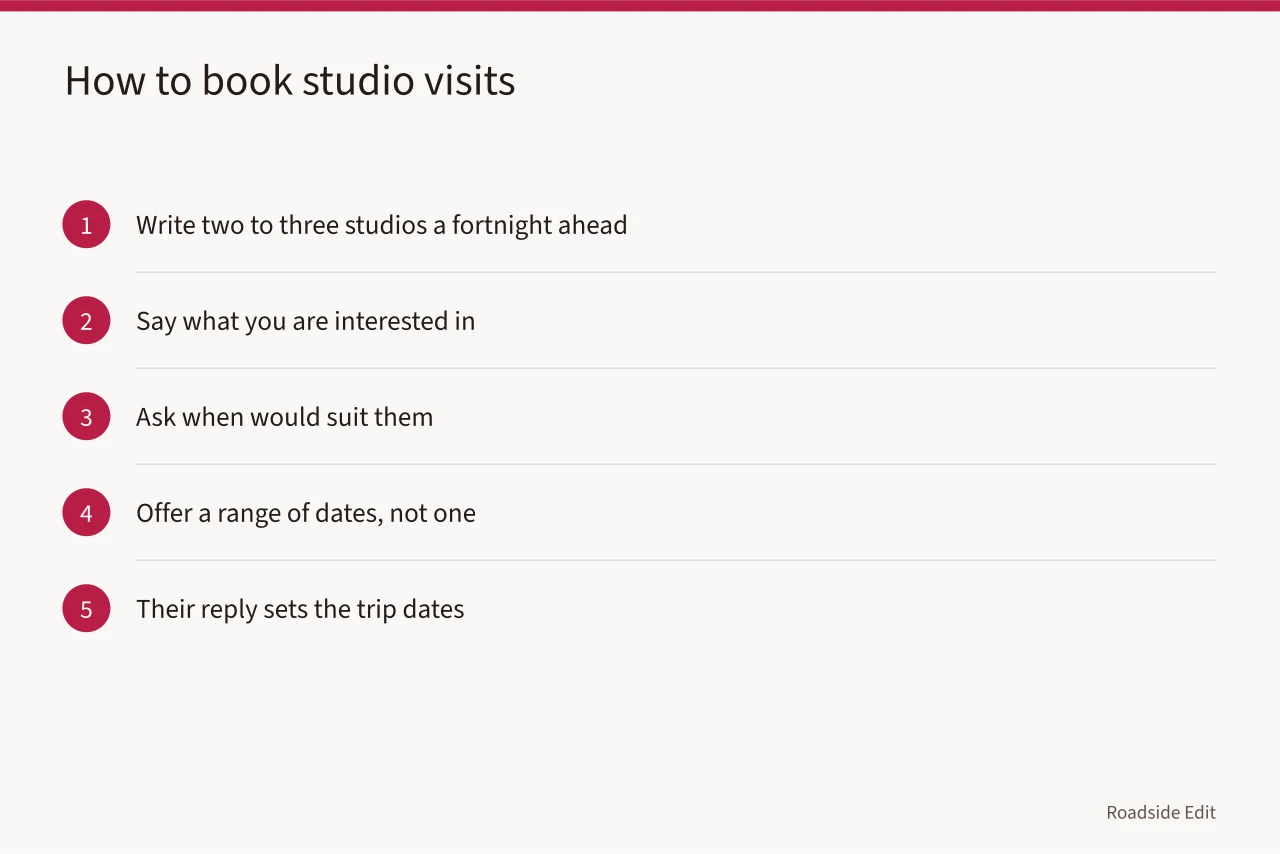
What comes back sets the trip. If a workshop says Thursday morning, the trip is now built around a Thursday morning, and the buildings and driving fill in around it.
That feels backwards and it is the reason some people get into these workshops and others do not.
The productive window
Mid-morning, midweek. Early is setup and the day's priorities. Late afternoon is finishing and getting work out of the door. Weekends are frequently closed or given over to classes.
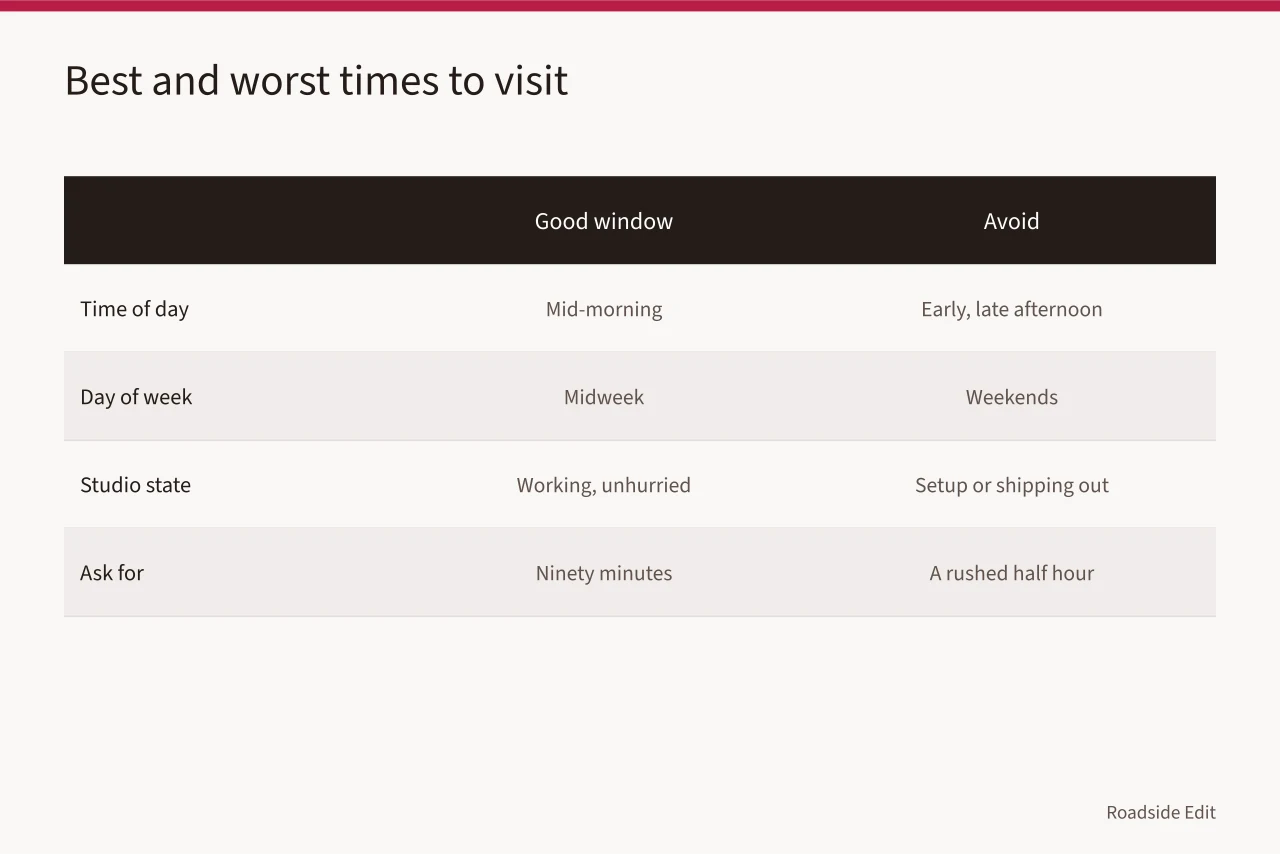
Ninety minutes is a good ask. Studios that enjoy the conversation will run over on their own account.
Expect closed doors inside the shop
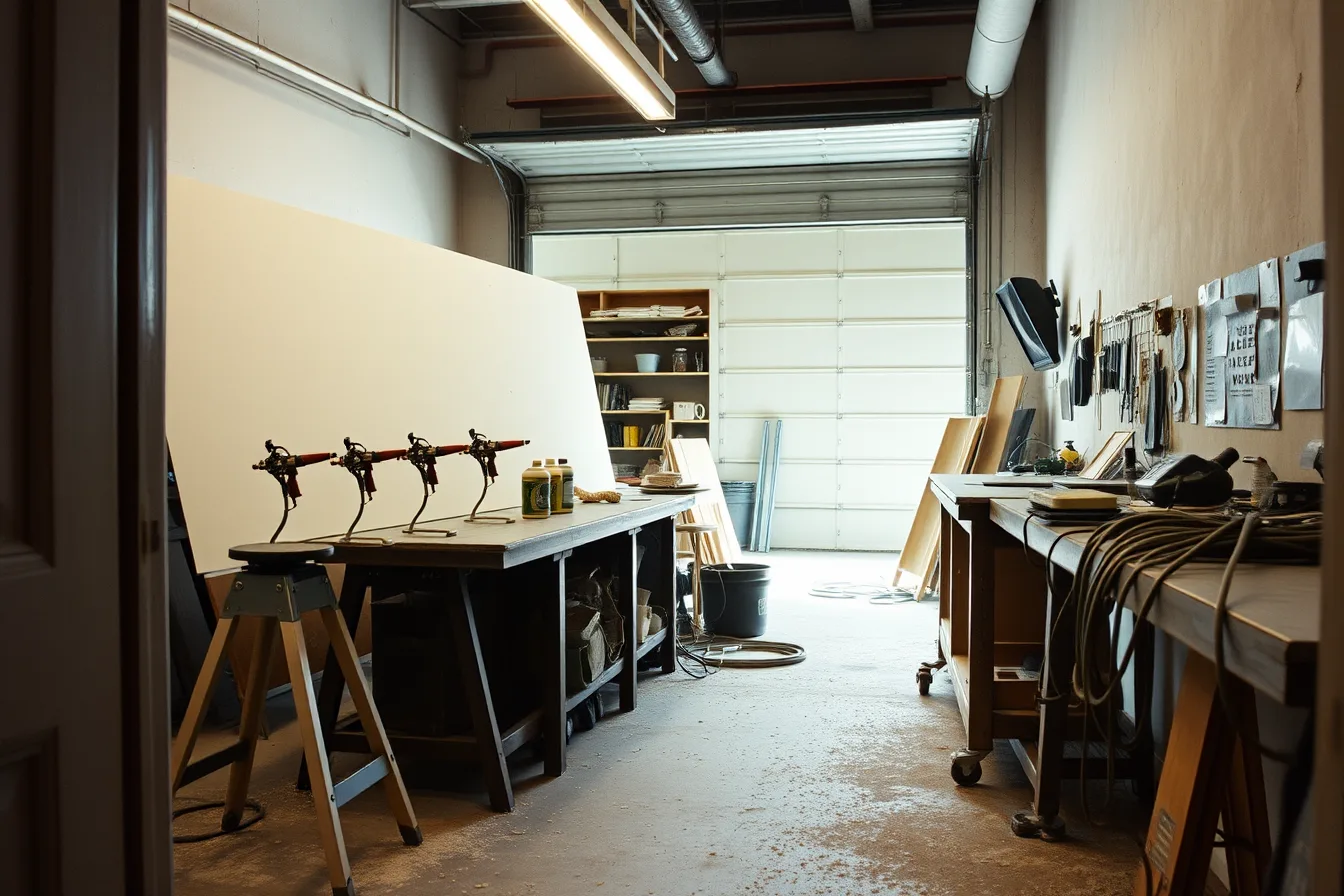
A working studio has areas that are not for visitors, and the reasons are practical rather than secretive.
Finishing rooms, solvent stores and stripping areas involve chemicals whose handling and disposal are regulated, and the Occupational Safety and Health Administration's material on hazardous waste operations gives a sense of the training and controls involved where such work is done properly. A studio that keeps you out of that corner is running things correctly.
The same applies to client work under embargo and to anything mid-process that a visitor could ruin by touching.
Pair each visit with a building
A studio visit is twice as useful with one of their finished projects seen the same day, before or after.
Ask which of their jobs is nearby and publicly visible. Look at it, then ask about it. That single question produces the best material of the whole trip.
The interiors point
If your interest runs to interiors as well as fabric, ask about finishes rather than only structure. Historic paint schemes are a specialism in their own right, and the brief on painting historic interiors covers how original schemes are investigated and reproduced.
Studios that do this work will show you paint samples and cross sections, which is one of the more surprising things you can be handed in a workshop.
The daily shape that works
One studio, one connected building, one hour of writing, and a second building in the afternoon. That is a full day and it does not feel rushed.
Two studios in a day is possible when they are close together and you accept that the second will land on a tired brain.
Writing it up
Notes in the car straight afterwards, not in the evening. Names of processes, names of materials, and anything you did not understand, which is the list to research later.
The judgment of which studios are worth this effort is in what separates the good ones, and the detours worth making for a rare craft is where the shortlist comes from.
Common questions
How far ahead should I write? Two weeks for a small workshop, a month in busy seasons. Longer than that and it gets forgotten.
What if they say no? Ask whether there is a better time of year. Many will say yes in a quieter month.
Should I offer to pay? Yes, in the first message. It removes the awkwardness and it is the right thing to do.
Can I bring a group? Ask, and expect a limit of about six. Workshops are small and the interesting parts are around a bench.