Industry
What paperwork moves diner booths and neon parts from Canada into the US?
Cross-border salvage diner booths neon moves on US Customs and Border Protection entry paperwork, duty classification and a named importer of record.
What to take away
- Cross-border salvage diner booths neon shipments clear through US Customs and Border Protection as formal or informal entries, and the classification you pick decides the duty.
- Booths, counters and stools are usually furniture; glass tubing, transformers and sign cans are classified separately, so one truck can carry several tariff lines.
- A licensed customs broker files the entry, but the importer of record carries the legal liability for value, origin and accuracy.
- USMCA duty-free treatment applies only to goods that meet the rules of origin and are backed by a certification of origin. Age alone does not qualify anything.
- Fragile fixtures need crating, blocking and bracing, plus photo documentation before the tailgate closes, because damage claims are decided on what you can prove.
- Settle import and export license questions, EPA rules and broker bonding before the truck is loaded, not at the border.
What counts as salvage versus regulated goods at the border
Salvage is not a legal category at the border. US Customs and Border Protection (CBP) sees used diner booths, back bars and neon parts as merchandise, and merchandise is classified by what it is, not by the word on the bill of lading. Calling a load salvage on the paperwork changes nothing about duty.
The distinction that matters is between ordinary used goods and regulated goods. A wooden booth seat and an aluminum counter are ordinary. A neon tube containing mercury, a transformer with PCBs, or a fixture with asbestos insulation is regulated, and those items can be refused, seized or held for review.
Used goods moving between the United States and Canada are not banned. There is no blanket prohibition on importing secondhand restaurant fittings. What trips dealers up is the assumption that used means exempt. CBP collects duty on used goods the same way it does on new ones.
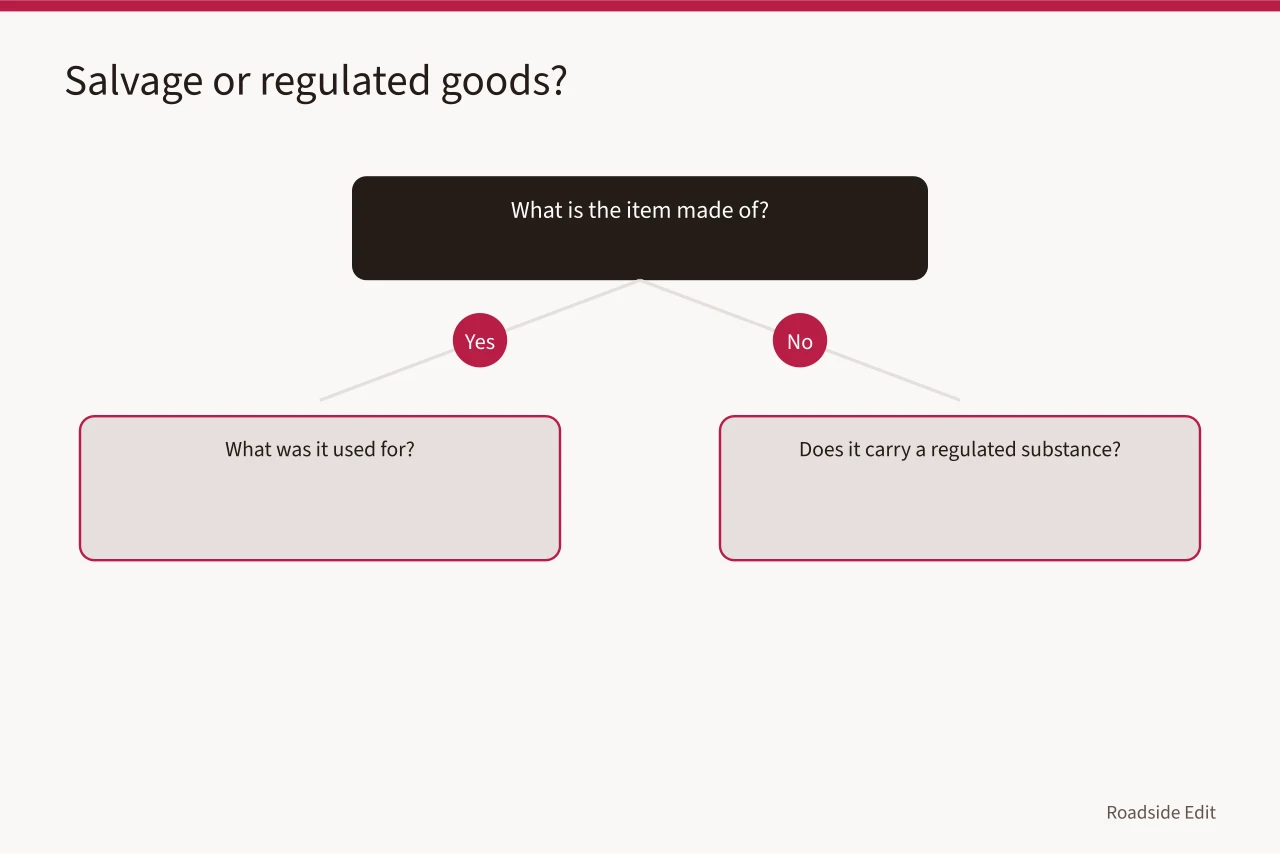
Some categories carry extra scrutiny regardless of age. Food-contact surfaces, refrigeration equipment and anything that held chemicals need cleaning declarations or they sit in a warehouse at your cost. Booths and stools rarely fall into this group.
Restoration shops sometimes assume that parts destined for a museum or a historic property move differently. They do not. A donation to a preservation organization is still an import, and the receiving institution still needs an importer of record.
If you source from Canadian sellers, the Buy Salvage Materials guide covers what to look for before money changes hands. Sorting condition and completeness there saves border headaches later.
US Customs and Border Protection entry procedures
Every commercial shipment from Canada needs an entry. The two paths are informal entry for low-value consignments and formal entry above the threshold, and the difference is paperwork volume, not legality.
Informal entry suits a single booth or a box of small parts. It is quicker and cheaper, but it caps the value and limits how many shipments you can run that way in a period. Dealers who import regularly should expect formal entry.
Formal entry requires a bond, a completed entry summary, and classification and value declared per line. CBP reviews the filing, may examine the goods, and then releases them. Release can happen before liquidation, which is the final determination of duty owed.
Here is the sequence most brokers follow.
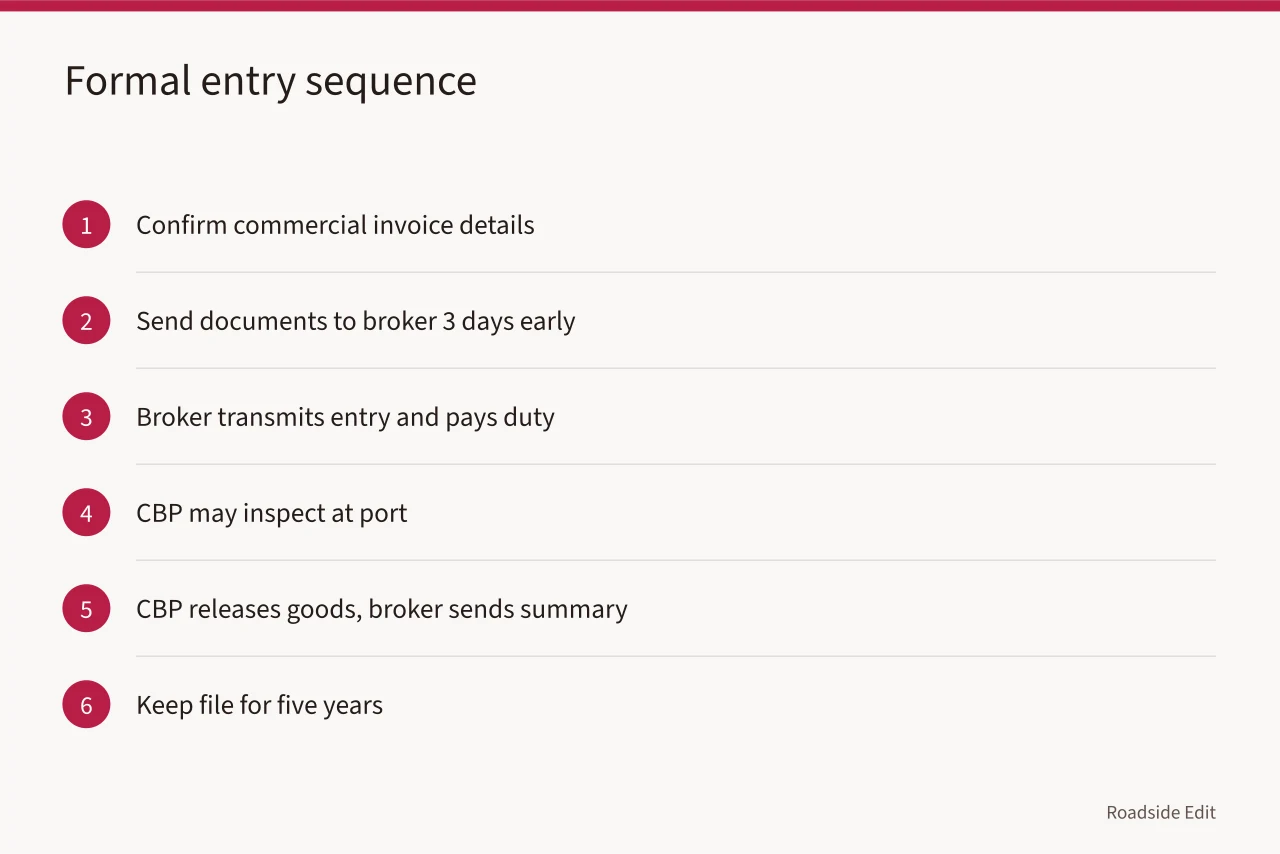
Pre-arrival processing is the single biggest time saver on this route. A load that arrives at a northern border crossing in Maine or Michigan with a complete electronic file typically clears in hours. A load with a vague invoice can sit for days.
If you are planning site visits around a shipment, Travel accessibility is worth checking before you commit to dates. Freight delays and travel schedules rarely line up.
Duty and tariff classification for booths and neon parts
Duty and tariff classification is where the money is decided. Every line on the entry gets a Harmonized Tariff Schedule code, and the code sets the rate. Two dealers importing identical booths can pay different duty if one classifies them as furniture and the other as building parts.
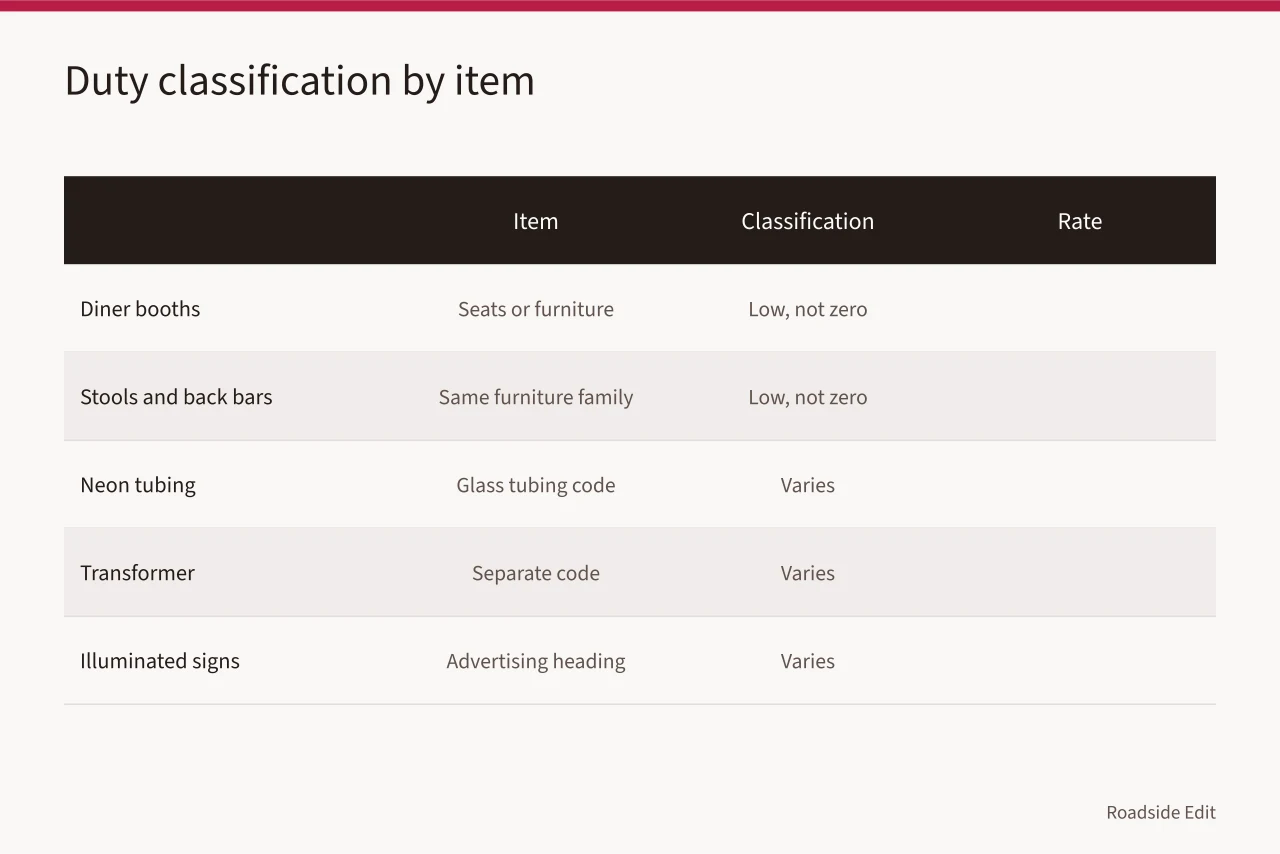
Used diner booths are generally classified as seats or furniture, not as restaurant equipment. Stools, counter sections and back bars usually follow the same family. The rate is typically low, but it is not zero unless a trade preference applies.
Neon is messier because a sign is several products in one crate. The glass tubing, the electrodes, the transformer and the metal can or raceway can each take a different code. Brokers often classify the transformer separately from the tubing.
Signs that are primarily illuminated advertising can fall under a different heading than signs that are structural. That distinction matters when you import a complete porcelain enamel sign with its original can.
Value is the second half of the calculation. CBP wants the price actually paid, plus freight and insurance to the US port, plus any commission. Artificially low invoice values are the fastest route to a penalty.
Keep a written classification rationale for anything unusual. If CBP questions a code eighteen months later, a one-page memo explaining the item and the reasoning is worth more than a phone call to a broker who has moved on.
| Item | Typical classification family | Duty consideration |
|---|---|---|
| Diner booth seats and stools | Seats and furniture | Low rate, preference may apply |
| Counter and back bar sections | Wood or metal furniture | Rate varies by material |
| Neon glass tubing | Glassware and lighting parts | Separate line from the sign |
| Transformers and ballasts | Electrical apparatus | Often the highest rate on the load |
| Complete sign with can | Illuminated signs | Classification depends on construction |
Broker paperwork and importer of record duties
A licensed customs broker is not optional for most formal entries. The broker transmits the filing, posts the bond, communicates with CBP and pays the estimated duty. Good brokers also push back when a classification looks wrong.
The importer of record is the party legally responsible for the entry. That can be you, your company, or a consignee. It cannot be the broker, and it cannot be the Canadian seller unless that seller is also the US importer.
Naming yourself importer of record means accepting liability for value, origin, classification and record keeping. If the seller understates the invoice, the penalty lands on the importer of record, not the seller.
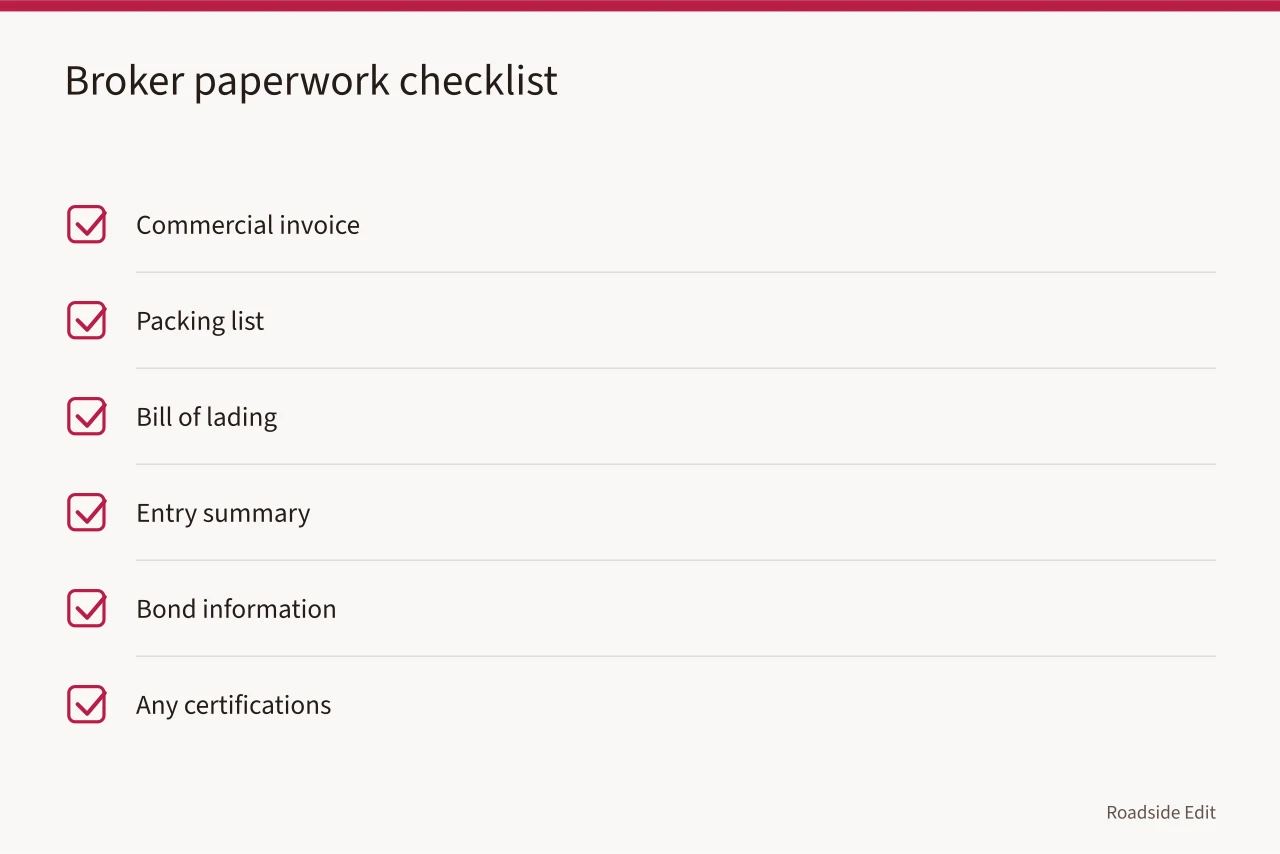
Broker paperwork typically includes the commercial invoice, packing list, bill of lading, entry summary, bond information, and any certifications. Missing one document stalls the whole load.
Ask your broker three questions before the first shipment. Who is the importer of record? What is the bond amount? What happens if CBP examines the goods? The answers tell you whether the broker understands salvage freight or only moves palletized retail.
Get a written fee schedule. Brokerage fees, single entry bond costs, examination charges and warehouse storage are separate line items. A cheap per-entry rate can hide expensive extras.
For planning purposes, how to build a 2027 budget walks through the cost lines that surround an import, from brokerage to crating. It is easier to price a shipment when you know which costs are fixed.
Trucking, packing and damage claims for fragile fixtures
Cross-border trucking on this lane is routine, but fragile fixtures are not. Carriers running freight between the United States and Canada must file electronic manifest data with CBP before the truck reaches the border. Most damage, though, happens in the last fifty miles, because the load has shifted and nobody rechecked the straps.
Book carriers that handle restaurant and museum freight, not general dry van haulers who treat booths as pallets. Ask whether the driver has loaded glass before and whether the trailer has e-track or only floor rings.
Packing rules that hold up in a claim:
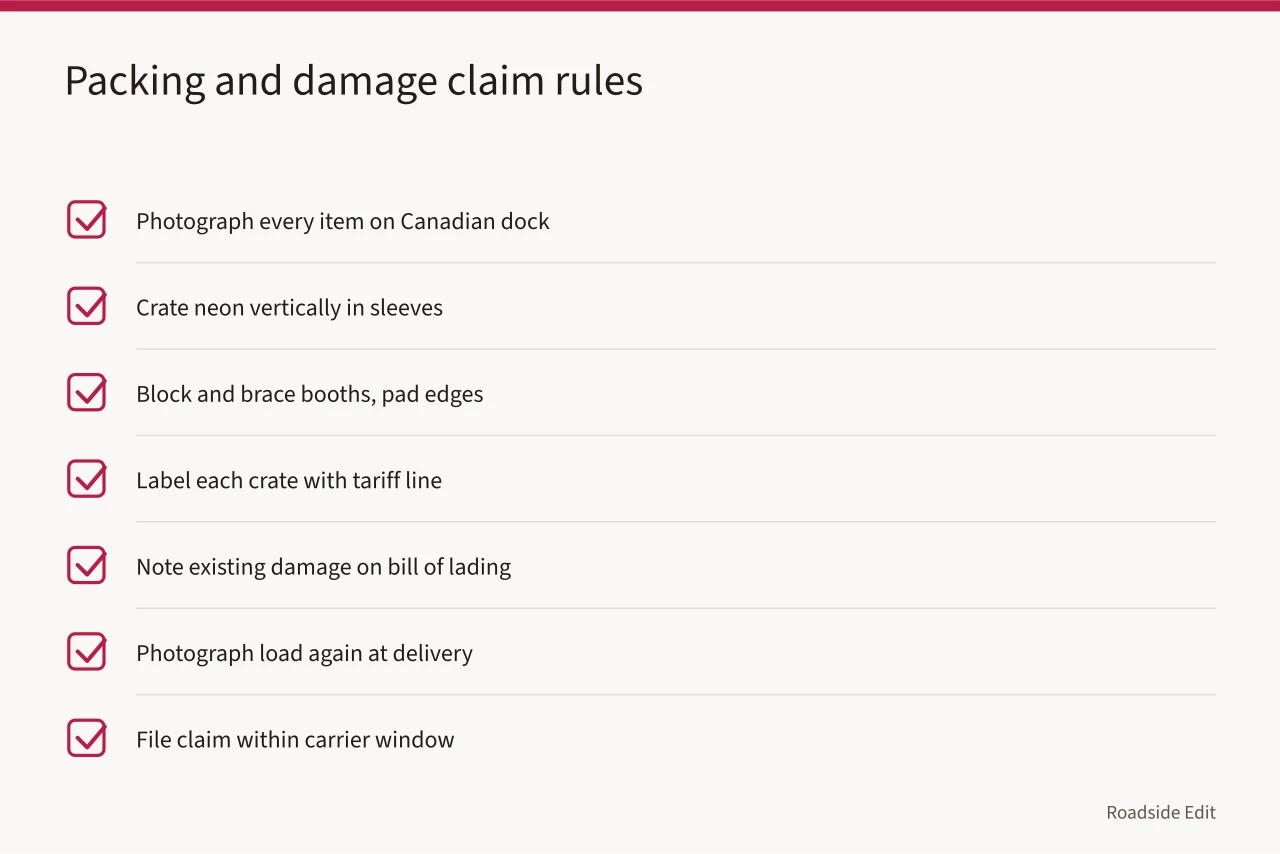
Damage claims fail for two reasons: no pre-shipment photos, and a clean bill of lading signed at pickup. Once you sign without noting damage, you have accepted the condition of the goods.
Insurance is separate from carrier liability. Carrier liability is usually capped per pound, which is nearly worthless for a neon sign. Declared value coverage or a separate cargo policy is what actually pays.
If a trip involves multiple pickups and site visits, the transport, stays and tickets breakdown is a useful template for costing the run. Salvage runs have the same shape as preservation trips.
Import and export license questions to settle early
Most salvage shipments need no import license. The United States does not require a general license to import furniture or used restaurant fittings. Licenses attach to specific goods, and the list is narrower than dealers expect.
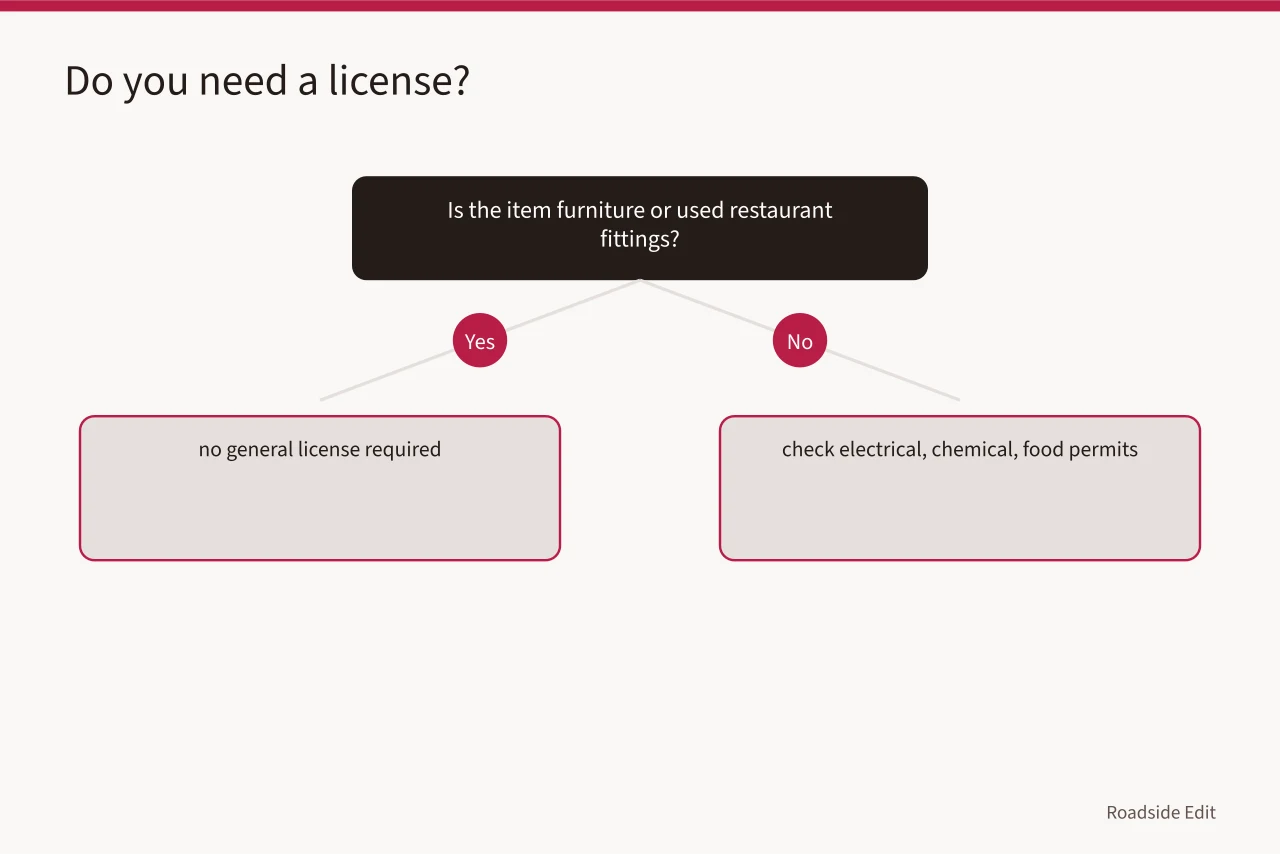
That said, some categories do require permits or prior review. If your load includes anything electrical, chemical or food-related, check before you ship. The federal guide on how to get an import license or permit explains which agencies issue them and how to apply.
On the Canadian side, the question is whether the goods need an export permit. Canada controls some cultural property and some strategic goods. Used diner furniture is generally not controlled, but a sign with heritage designation can be.
If you are moving parts north for restoration, the US guide on how to get an export license or permit covers the reverse direction. Restoration shops that ship parts to Canada and back should read both.
Environmental rules apply to transport operations as well as goods. The EPA publishes regulatory information by business sector, which is the starting point for understanding what a hauling or storage operation must comply with.
Two license questions worth settling in writing before the truck loads: does the seller have clear title to the goods, and does any item carry a heritage designation that restricts export? Both are cheap to answer early and expensive to answer at the border.
USMCA context and where it does and does not apply
The USMCA replaced NAFTA and governs most trade between the United States and Canada, including used goods. Its provisions on cross-border parts movement are relevant to restoration supply chains, and the US Department of Labor maintains a USMCA overview that summarizes the agreement's scope.
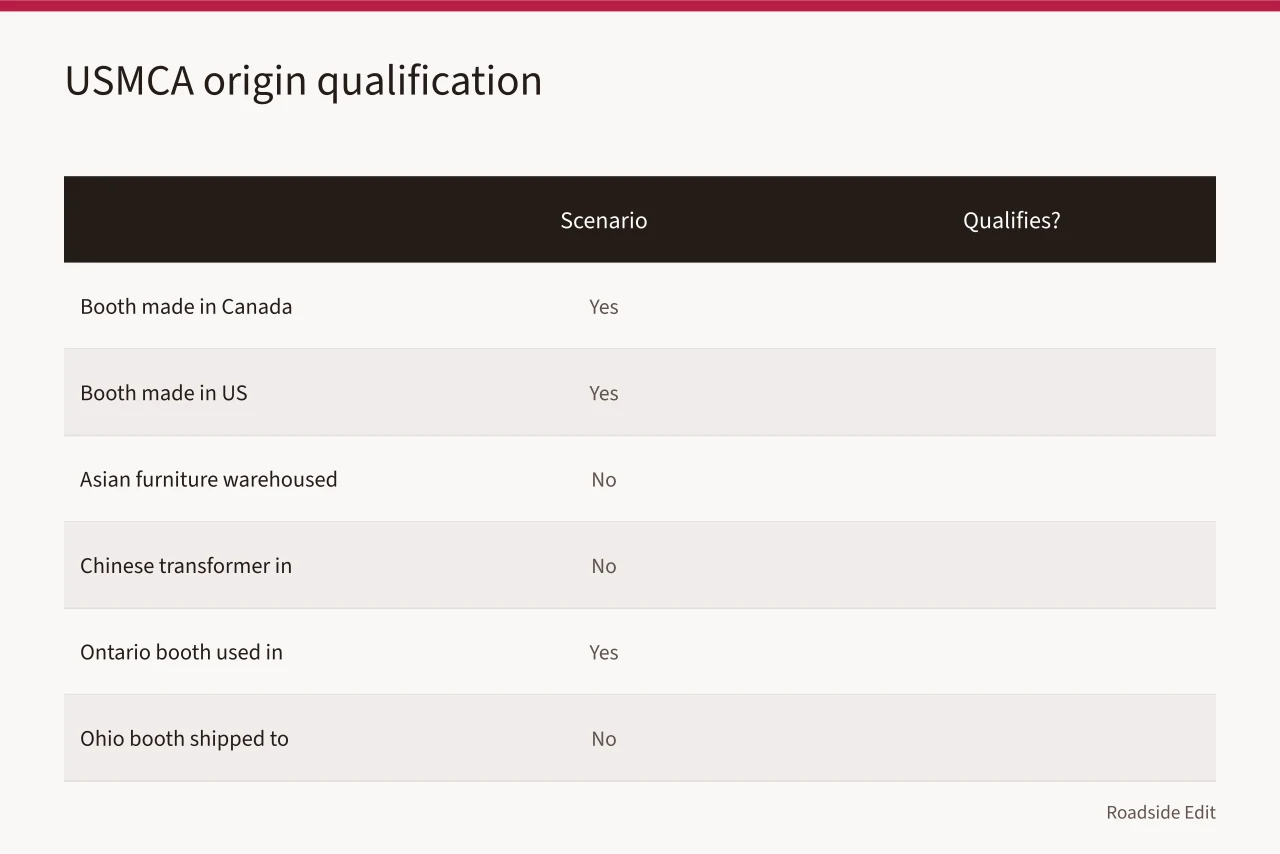
Duty-free treatment under USMCA is not automatic. The goods must meet the rules of origin for their classification, and the importer must have a valid certification of origin. A bill of lading that says Canada is not a certification.
For diner booths, origin is usually straightforward. Furniture made in Canada or the United States from domestic materials generally qualifies. Furniture made in Asia and warehoused in Canada does not, no matter how long it sat there.
Neon parts are harder. A transformer made in China and assembled into a Canadian sign does not become Canadian because of the assembly. The tariff shift rules decide, and they vary by code.
Used goods can qualify, but the analysis is about where the good was produced, not where it was last used. A booth built in Ontario in 1954 and used in a Manitoba diner is Canadian origin. The same booth built in Ohio and shipped to Canada in 1970 is not.
If you cannot document origin, do not claim the preference. Pay the duty and keep the file clean. A later CBP audit that disallows a preference costs duty plus interest plus penalties.
One more planning note: budget notes on provider selection are worth reading if you are hiring a broker or a rigger for the first time. The same questions about scope, insurance and change orders apply.
Common questions
Do I need a customs broker to import diner booths from Canada? For formal entries, yes in practice. You can file yourself, but you would need a bond and a working knowledge of CBP filing systems. Most dealers use a licensed broker.
Are used diner booths duty free under USMCA? Only if they meet the rules of origin and you hold a valid certification of origin. Age and Canadian storage do not qualify goods on their own.
How are neon signs classified for duty? Usually by component. Tubing, transformers and the sign can or raceway can each take a separate tariff line, and the transformer often carries the highest rate.
Who is legally responsible if the invoice understates value? The importer of record. CBP assesses penalties against the importer, not the Canadian seller or the broker, so verify the invoice before filing.
What paperwork should travel with the truck? Commercial invoice, packing list, bill of lading, entry documents and any origin certification. Keep copies with the driver and with your broker.
Can I import a designated heritage sign from Canada? Possibly, but export controls may apply on the Canadian side. Check the designation status before purchase, because a restricted item cannot simply be loaded and driven south.