Reviews
Pittsburgh diner and gas station salvage yards, craftspeople and transport
Pittsburgh diner salvage yards stock booths, neon parts and station fixtures, with enamel repair craftspeople and hauling options across the Rust Belt.
What to take away
- Pittsburgh diner salvage yards cluster in the Mon Valley and the East End, and most stock stools, counter sections and porcelain panels rather than whole buildings.
- Construction Junction, Architectural Salvage and Pittsburgh Center for Creative Reuse cover most retail stock; Mon Valley processors take the heavy steel.
- Porcelain enamel repair is a niche trade. Chip filling is common; kiln re-firing needs a shop that buys frit and can fit the piece.
- Booths, neon parts and gas station fixtures each have their own supply chain, and no single yard covers all three well.
- Hauling options run from a rental pickup to a boom truck, with rigging firms for the heaviest lifts.
- Call ahead with dimensions and a photo. Inventory turns over weekly and listings online are often stale.
What Pittsburgh-area salvage yards actually stock
Pittsburgh's salvage trade grew out of the mills, so the region's yards are comfortable with heavy steel and cast iron. Expect counter frames, stool bases, walk-in doors and exterior porcelain panels more often than intact diners.
Retail stock runs through a handful of named operations. Construction Junction, at 214 North Lexington Street in Point Breeze, sells doors, lighting, hardware and the occasional booth seat. Architectural Salvage in the city's East End carries mantels, doors, signage and porcelain panels. Pittsburgh Center for Creative Reuse takes in smaller parts and sign components.
The Mon Valley corridor, from Homestead through McKeesport, holds the heaviest material. Processors such as Tube City IMS run scrap steel and cast iron rather than retail counters, so call before you assume a yard sells to the public.
Gas station fixtures arrive in waves when a station closes or a canopy comes down. Pumps, hose reels, air meters, island lights and porcelain station signs show up together. Buyers who want matched sets should ask whether the fixtures came from one site.
Diner material is thinner on the ground. Pittsburgh lost most of its industrial-era diners to closure and demolition, so what remains is often parted out. Booth seats, table tops and counter stools are the common finds. Whole counters appear a few times a year.
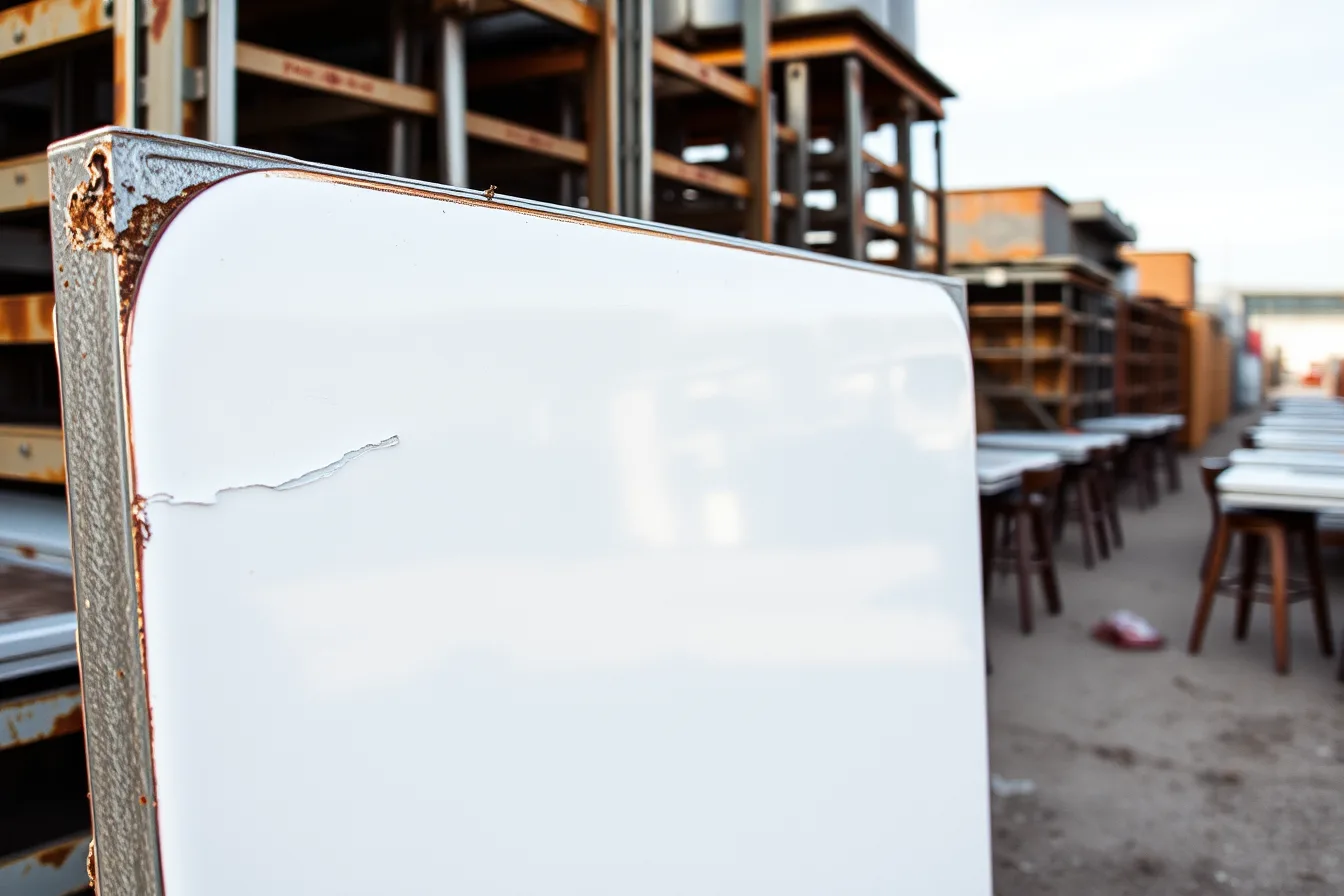
Condition varies more than the photos suggest. Porcelain that sat outdoors for a decade will have rust bloom at the edges. Ask for close-ups of every edge and mounting hole before you commit.
Porcelain enamel repair craftspeople and their limits
Porcelain enamel is glass fused to steel at high temperature. That is why a chip cannot be touched up like paint. The repair either re-fuses enamel or fills the chip with a matched epoxy, and the two results look different up close.
Miracle Method runs franchises across the Pittsburgh area that fill chips with color-matched material and polish them flush. From three feet away the panel reads as original. In raking light you will see it.
Kiln re-firing is a smaller trade. The Porcelain Enamel Institute sets the technical standards these shops work to, and enamel frit from suppliers such as Ferro is what makes a fired repair possible.
A shop that buys frit can re-enamel a stool base, a small sign or a table edge. It generally cannot re-fire a full counter panel, because the piece will not fit a standard kiln and the steel will warp.
Craftspeople who work on historic diners often come through traditional trades training rather than a single trade. The traditional trades training programs run by the Advisory Council on Historic Preservation explain how these skills are passed on, and they are a reasonable starting point when you need someone who understands historic fabric.
Ask any repair shop three questions. What is the turnaround? What happens to the surrounding enamel when the piece is heated? Will the repair survive freeze-thaw cycles outdoors? A shop that cannot answer the third question has not worked on exterior panels.
Sourcing diner booths, neon parts and station fixtures
Diner booths are the easiest of the three to source and the hardest to match. Seats and backs were made by several manufacturers, and upholstery patterns changed by decade. Buy a full booth set from one site if you can, even at a premium.
Vinyl and Naugahyde are still produced in period colors, so recovering is straightforward. The steel frames matter more. Check for bent legs, cracked welds and missing pivot hardware, because replacement castings are hard to find. Cross-border buyers have a separate route, covered in this guide to where to Buy Salvage Materials for diner booths in Canada.
Neon parts are a different market. Working sign shops bend glass and sell transformers, electrodes, tube supports and GTO cable. Salvaged transformers are usually Franceformer or Transco units, and older ones often contain PCBs, so ask before you buy.
Gas station fixtures turn up through yard contacts, demolition contractors and online auctions. Pumps from Bennett and other makers are the most sought after and the most reproduced, so verify casting marks and serial plates. Canopy frames and island lighting are cheaper and heavier, which changes the hauling math.
If you are weighing a canopy project, Gas Station Canopy Restoration covers what to inspect before hiring a contractor.
A restored facade is judged on color, and period palettes for Diner Exterior Paint Colors in Ontario are a useful reference when you are matching one.
| Item | Typical yard source | Condition risk |
|---|---|---|
| Booth seats and backs | Construction Junction, demolition resellers | Bent frames, missing pivot hardware |
| Counter stools | East End dealers, Architectural Salvage | Rust at the base flange |
| Porcelain panels | Sign shops, industrial salvage | Chips, edge rust bloom |
| Neon transformers | Working sign shops | PCB content in older units |
| Gas pumps | Auction, demolition contractors | Reproduction castings |
| Canopy frames | Mon Valley processors with rail access | Hidden section loss |
Hauling options and rigging for heavy salvage
A porcelain counter section can weigh several hundred pounds, and a station canopy frame can weigh tons. Match the haul to the piece, not to the price of the rental.
- Measure the largest single piece, including any frame, and write down the weight estimate.
- Decide whether the piece can be tilted, because a counter that must stay upright needs a taller trailer.
- Book the truck class that fits: a rental pickup for stools and signs, a box truck from Penske for booths, a flatbed with a boom for counters and canopy steel.
- Confirm loading equipment at the yard. Some have a forklift and a dock; others have neither.
- Arrange rigging separately if the piece needs a crane or a gantry, and get the lift plan in writing.
Equipment yards such as Sunbelt Rentals and United Rentals supply forklifts, gantries and telehandlers by the day. Heavy lifts go to rigging firms such as Barnhart Crane & Rigging or Mammoet, which handle machinery moves and permitted loads.
Oversize loads on Pennsylvania highways need PennDOT permits, and that paperwork adds days. Rates depend on distance, weight and whether a permit is required. A breakdown of transport, stays and tickets for a gas station preservation trip shows how the line items stack.
If you are moving single-story components such as doors or forecourt fixtures, this guide to porcelain enamel gas station panels repairable covers how to view and handle accessible exterior materials without damaging them.
Environmental rules that touch salvage and transport
Salvage yards handle waste streams, and federal rules apply to how they store, sort and ship material. The EPA's overview of land, waste and cleanup topics is the starting point for what a compliant yard manages on site.
Sector-specific rules matter when a yard also does demolition or transport. The EPA publishes regulatory information by business sector, which is where to check requirements that apply to your operation rather than a generic list.
Old diner and station fixtures carry lead risk. Painted steel, older porcelain glazes and sign components can all contain lead, and the EPA's lead rules govern handling, disclosure and disposal. Assume any pre-1978 painted fixture has lead until testing says otherwise.
Neon transformers from older signs may contain PCBs, which fall under separate disposal rules. Do not ship them as general scrap. Ask the sign shop or yard how they handle retired transformers and get the answer in writing.
Historic designation adds a layer. If your project touches a National Register property or uses federal money or permits, Section 106 review and the Secretary of the Interior's Standards for Rehabilitation shape what you can change. Local historic preservation commissions and design review boards in Pittsburgh-area municipalities review exterior work separately.
Before you buy, run this checklist.
- Confirm the yard's waste and storage compliance status.
- Ask for lead test results on painted fixtures.
- Confirm how retired neon transformers are handled.
- Check whether the property is National Register listed or in a local district.
- Confirm permit needs for oversize transport.
- Get the loading plan and equipment in writing.
- Photograph condition before the piece leaves the yard.
How to verify a yard's inventory before you drive
Online listings go stale fast. A yard that posts a counter in March may have sold it in April and never updated the page. Verification takes one phone call and saves a wasted trip.
Ask for a photo with a dated object in frame. A yard that cannot produce one within a day is not holding the piece for you. Ask for dimensions, not descriptions, because "large counter" means different things to different sellers.
Confirm the address and hours, since many yards operate on reduced schedules or by appointment. Ask who will load the piece and what equipment is on site.
Get the price and any deposit terms in writing before you leave. Deposits on salvage are usually non-refundable, and a verbal hold is not a hold.
Finally, ask what else came from the same site. Matched material from one diner or station is worth more than the same number of parts from five different sources, and a yard that knows its provenance will tell you.
Common questions
Do Pittsburgh diner salvage yards sell whole diners? Rarely. Most yards part out diners and sell components. A complete car or building appears a few times a year, usually through a demolition contractor rather than a retail yard.
Can chipped porcelain enamel be repaired invisibly? No. A shop such as Miracle Method can fill and polish a chip, and small pieces can be re-enameled, but a repair shows in raking light. Get a sample before committing a rare piece.
Where do I find period-correct neon parts in Pittsburgh? Working sign shops are the best source for transformers, electrodes and tube supports. Ask about PCB content on any Franceformer or Transco transformer before you buy it.
What truck do I need for a porcelain counter section? A flatbed with a boom or a forklift at the yard. Counter sections are heavy and awkward, and a box truck with a liftgate is usually not enough.
Do lead rules apply to old gas station fixtures? Yes. Assume pre-1978 painted steel and older glazes contain lead until testing shows otherwise, and follow federal handling and disposal requirements.
How far ahead should I book a haul? Book the truck once the piece is confirmed and paid for. Oversize permits in Pennsylvania add days, so allow a week for anything that needs one.