Maintenance
Are Porcelain Enamel Gas Station Panels Repairable?
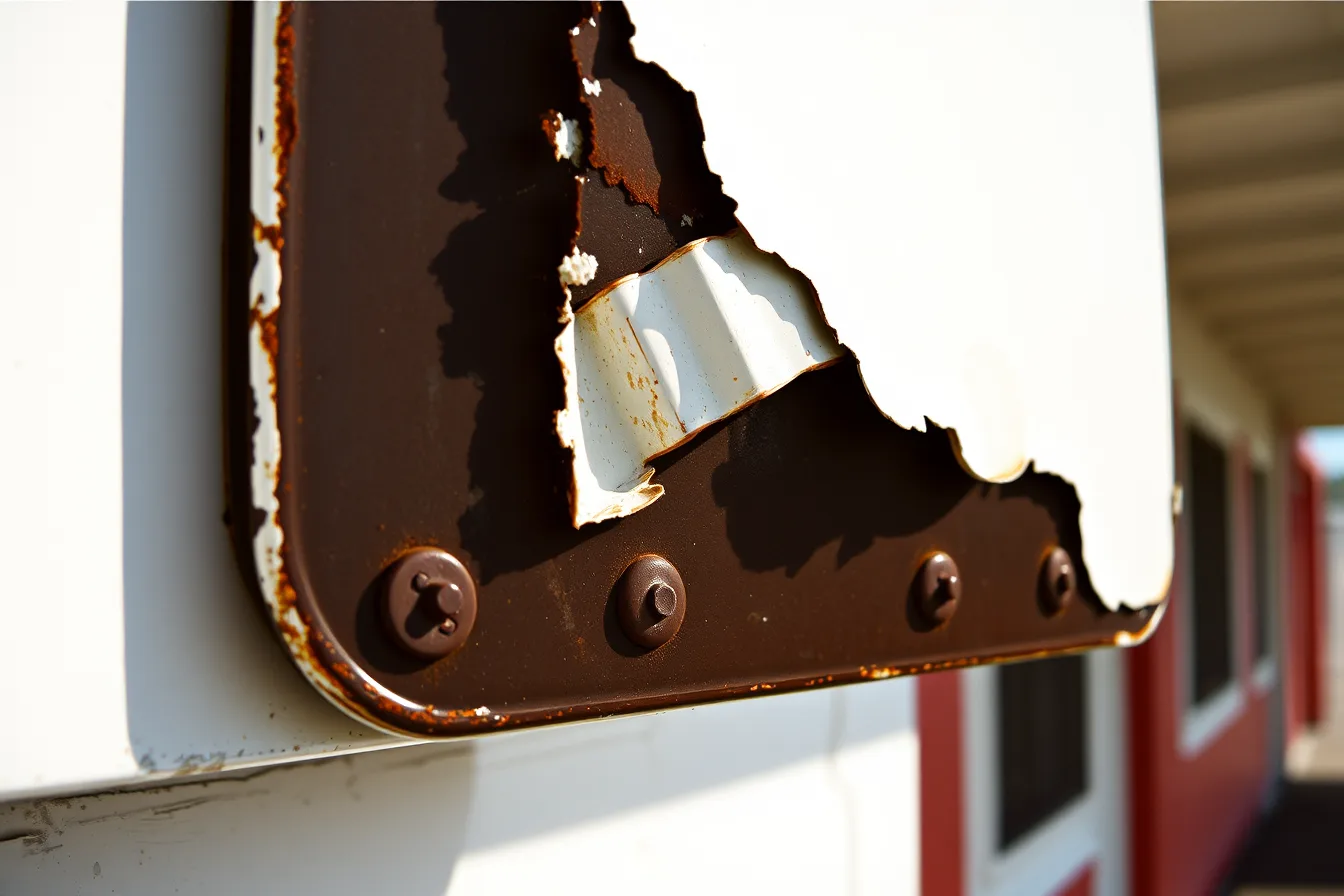
Porcelain enamel gas station panels are repairable when the glass is chipped and the steel is sound. Rust under the enamel rules it out entirely.
What to take away
- Porcelain enamel panels are repairable when the glass is chipped and the steel underneath is still sound. Rust under the enamel ends that conversation.
- The finish is glass fused to steel in a kiln, as Wikipedia's article on porcelain enamel sets out. That fired bond cannot be rebuilt on site.
- Cold-cure touch-up products match color better than they match gloss, and they stay cosmetic. Count on a few years of service, not decades.
- Salvaged donor panels from the same manufacturer give the closest match, and supply depends on what salvage yards have already pulled.
- Kiln refabrication is the only route back to a real glass surface. It means pulling the panel and cutting new screens for the lettering.
How Porcelain Enamel Panels Were Made
Porcelain enamel is glass fused to steel. A shop coated the steel with frit, then fired it until the glass flowed and bonded to the metal. That fired bond is why the finish outlasts paint by decades, and why repairs are hard.
Enamel shops fire panels in an illustrative range of 1,400 to 1,600 F. No field crew reaches that with a torch. Federal guidance on porcelain enamel covers the process and the conservation approach that follows from it.
The Repair Options, Compared
Four routes exist, and each answers a different question. None of them suits every panel.
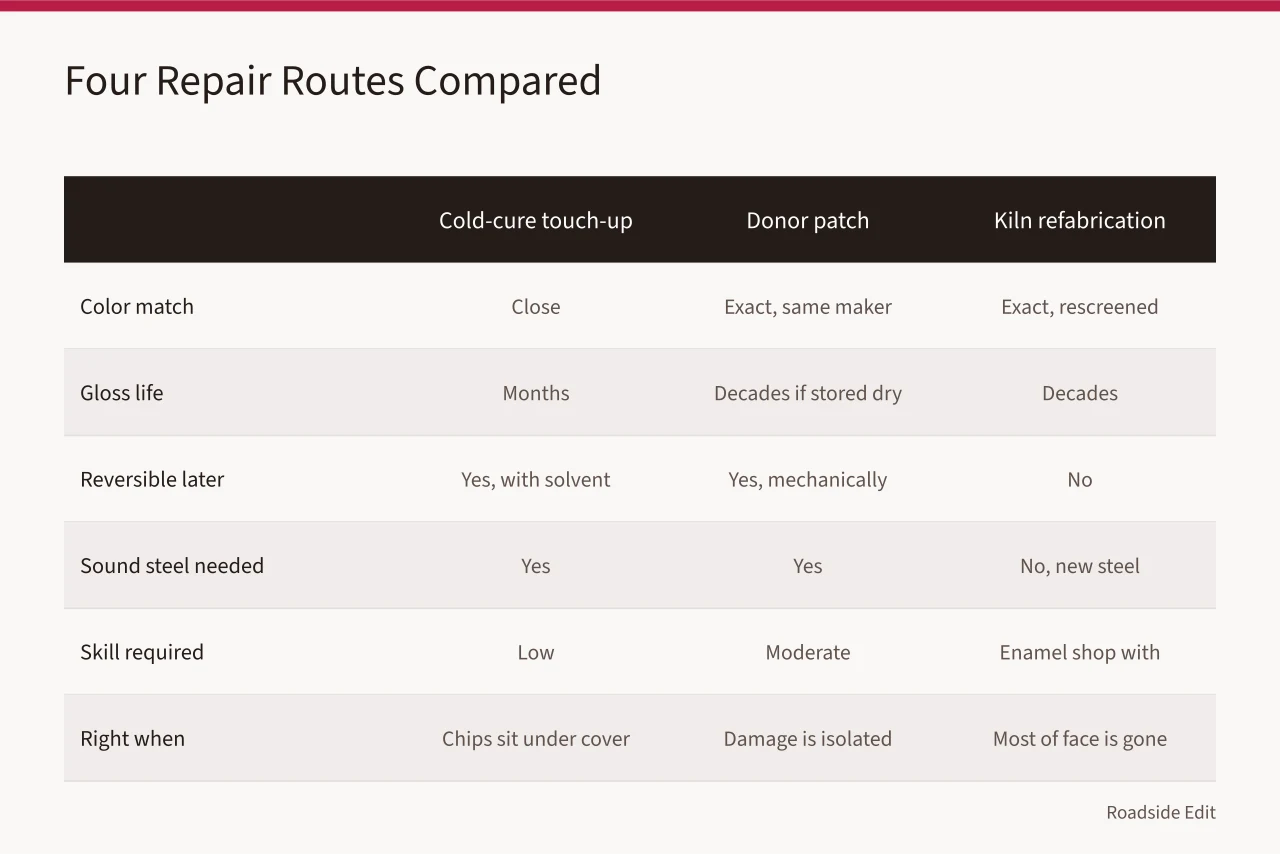
| Criterion | Cold-cure touch-up | Donor patch | Kiln refabrication | Modern cladding |
|---|---|---|---|---|
| Color match | Close | Exact from the same maker | Exact, rescreened | Poor |
| Gloss life | Months | Decades if stored dry | Decades | Years |
| Reversible later | Yes, with solvent | Yes, mechanically | No | No |
| Sound steel needed | Yes | Yes | No, new steel | No |
| Skill required | Low | Moderate | Enamel shop with a furnace | Low |
| Right when | Chips sit under cover | Damage is isolated | Most of the face is gone | Building is not designated |
Where Each Route Is the Right Answer
Cold-cure touch-up suits a shaded panel with small chips at bolt holes. Sun and rain strip these coatings quickly, so an exposed fascia is a poor home for them.
A donor patch makes sense when a matching panel exists and the damage sits in one corner. Refabrication is the answer when large sections are shattered and the lettering has to survive. Modern cladding belongs on a building that is not designated and still trades as a working station.
Comparing the three preservation routes is the same exercise as choosing roadside renovation help: match the method to the damage, then to the schedule.
What Damage Rules Out a Field Repair
A field repair needs sound steel and an intact bond around the damage. Four checks show whether that holds:
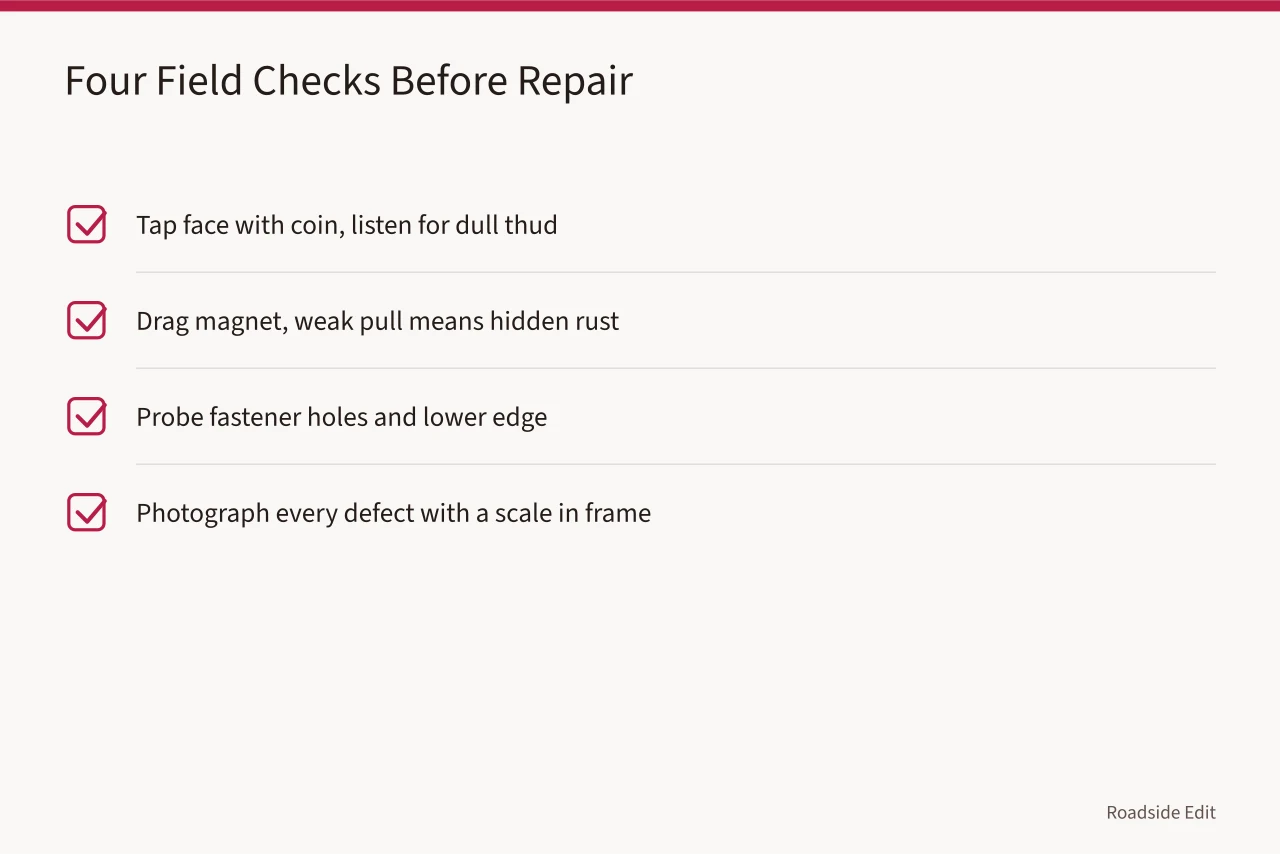
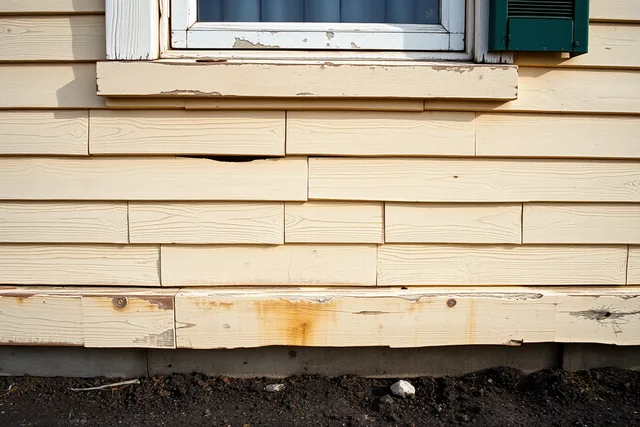
A dull thud is not a small problem. It means the enamel has separated from the steel, and any coating laid over it will fail within a season.
When two or more checks fail across more than a small area, touch-up stops making sense. The panel comes off for patching or refabrication. A roadside renovation photography pass before removal records the color, the hardware and the lettering in one go.
Example: A 1948 Canopy Panel With Chipped Edges
An owner finds chipped enamel along the lower edge of a fascia panel, about a hand's width in total. The steel at the chips looks gray and dry, and a magnet pulls firmly. Touch-up is reasonable, with the caveat that the chips will trap water.
The same panel with a dull thud and rust weeping from the fastener holes tells a different story. No coating will hold there, and the panel comes off.
What Every Option Cannot Fix
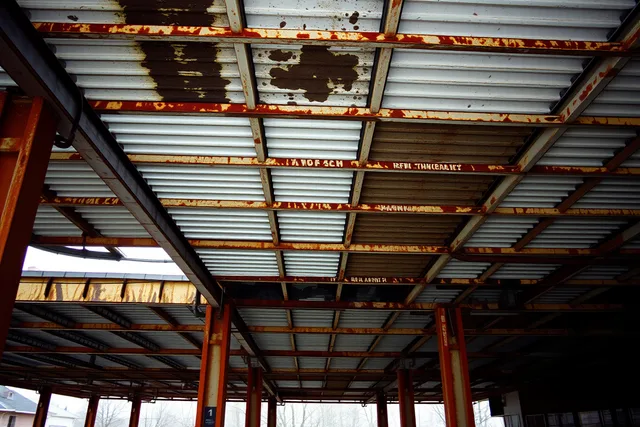
None of the four routes addresses water. Enamel fails at fasteners, at panel seams and at the gutter above the canopy. Gas station canopy restoration work starts with drainage for that reason. A refabricated panel bolted back into a leaking frame will chip in the same places.
That order of work is not a preference. It is the difference between a finish that holds and one that fails in a year.
Common questions
Can a chipped panel be repaired without removing it? Yes, if the steel is sound and the chips are small. Cold-cure coatings fill and color the damage. They do not restore the fired glass.
How do I know whether rust has reached the steel? A dull thud under a coin tap and a weak magnet pull both point to separation or corrosion. Rust weeping from a fastener hole is the clearest sign.
Is refabrication worth it for one panel? Rarely for one. For a full fascia run with original lettering, a shop furnace is often the only way back to the original look.
Does patching affect a historic designation? It can, and review differs between listed buildings and local districts. Owners who line up gas station preservation help early tend to get a cleaner review.