Maintenance
Roadside renovation damage compared: careless cleaning versus plain bad luck
Careless cleaning and plain bad luck cause most roadside renovation damage, and they leave different marks. Here is how to tell them apart and what to do.
What to take away
- Two causes account for most roadside renovation damage: careless cleaning and plain bad luck.
- The first is gradual. The second arrives suddenly or hides behind a wall.
- Never sandblast. It removes the hard outer surface and the building decays faster afterwards.
- Fix the water source before repairing what the water damaged.
- Test every treatment on a hidden patch first.
Most damage to small roadside buildings is not neglect. It is done in the first year of ownership, with enthusiasm and a rented machine. The rest is plain bad luck.
Careless cleaning: the damage you cause
A grimy building looks like it needs blasting. It does not.
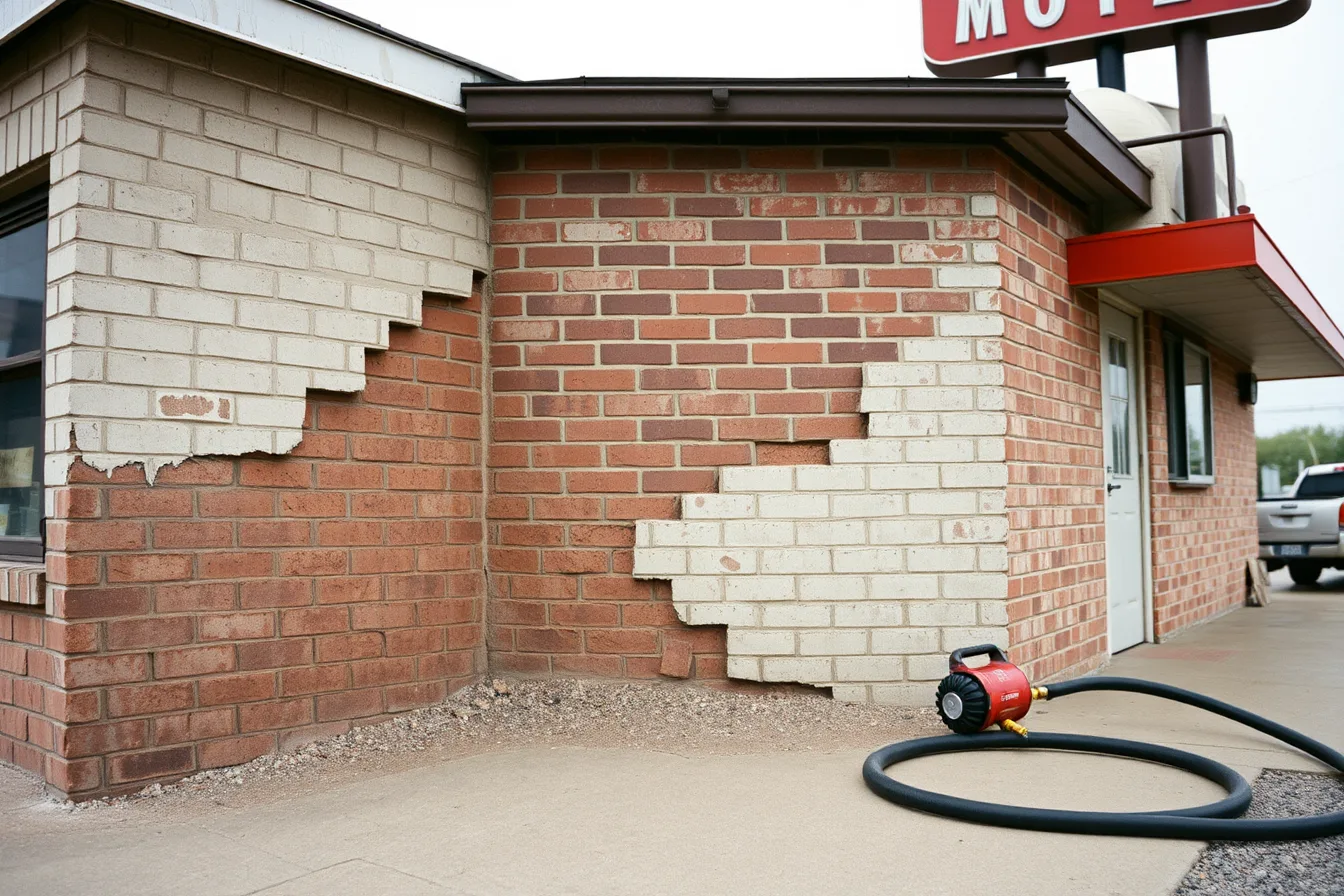
Brick, stone, concrete and stucco all have a harder outer surface formed as they cured or were fired. Abrasive cleaning removes it. The softer material underneath absorbs water faster than the dirt ever did.
The National Park Service's brief on the dangers of abrasive cleaning methods explains why the damage is permanent and why the results often look worse within a few years.
The fix is boring: the gentlest method that works. Water and a soft brush, then a mild detergent.
Pressure washing counts as abrasive at high pressure. So do aggressive wire brushing and grinding out mortar with a disc.
Plain bad luck: the damage that finds you
Some losses have nothing to do with method. Weather, soil and other people's decisions do the work.
- The National Flood Insurance Program sells commercial building coverage up to $500,000. Flood is excluded from standard property policies, and new policies take 30 days to start.
- NOAA's Storm Events Database is free and searchable by county and date, which is how you document that a hail or wind claim really happened.
- The USDA Web Soil Survey is free and maps shrink-swell ratings, so you can learn that your clay moves before the walls crack.
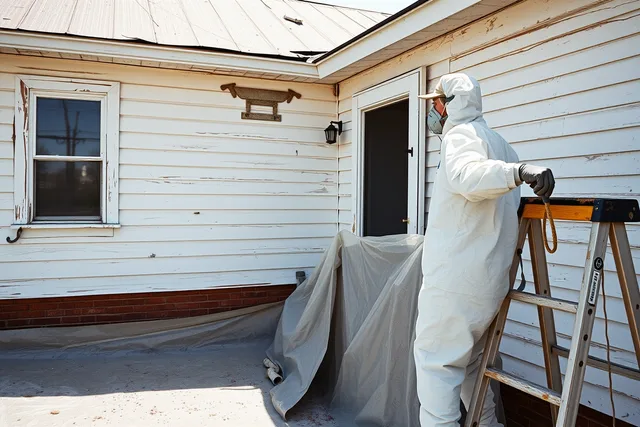
- EPA's Renovation, Repair and Painting Rule requires an EPA-certified firm for paid work in pre-1978 housing. Surprise lead paint is common on older roadside properties.
- Corteva's Sentricon bait stations are checked quarterly and stop subterranean termites before they reach framing.
- NFPA 780 is the standard for lightning protection systems, which use air terminals, conductors and ground rods.
- A pin meter such as the General Tools MMD4E costs about $50 at home centers and shows whether a wall is wet right now.
Telling the two apart
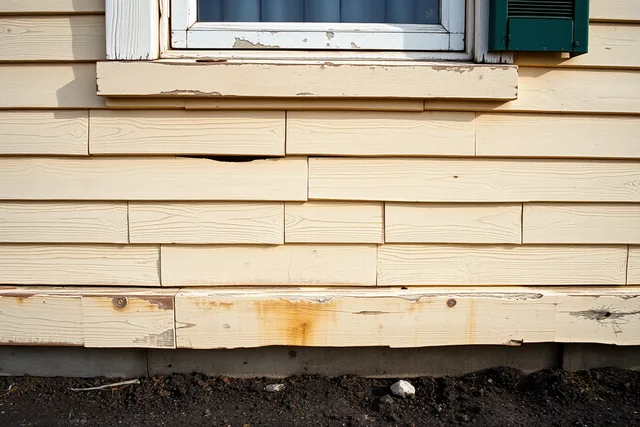
Careless damage is gradual, even, and follows a cleaning or coating job. Bad luck damage is sudden, localized, and usually carries a date.
Insurance draws a similar line. Wind, hail and lightning are normally covered. Flood needs a separate policy. Decay and poor workmanship are excluded.
The National Park Service brief on controlling unwanted moisture in historic buildings sorts leaks from condensation and rising damp.
Photographs, weather records and a moisture meter settle most arguments about which one you have.
Two more errors are worth naming. Windows, doors and trim: Nearly always repairable, nearly always replaced. The second is stripping out later additions too early. Some of them are historic in their own right, and you cannot put them back.
The order that avoids most of it
Roof, gutters, drainage and ground levels first. Then structure, then windows and doors, then services, then paint and signage last. Bad luck can hit any stage, so insurance details and photographs belong at the start.
Habits worth copying
Test small first, on a patch behind a downpipe, and wait a month. Photograph everything before you touch it. Ask before anything irreversible. Your state preservation office answers questions for free, and would rather advise than be shown the result.
The wider sequence is in the motel restoration steps, and what careful new work beside old looks like is the standard to aim at.
Common questions
Is pressure washing ever acceptable? At low pressure, on sound surfaces, with care. The failures come from treating it as a shortcut.
How do I tell bad luck from my own mistake? Look at the pattern. Sudden, localized damage with a date is bad luck. Gradual damage that began after your own work is not.
Does insurance cover bad luck? Wind, hail and lightning usually are. Flood needs a National Flood Insurance Program policy. Slow decay and poor workmanship are not covered.
What is the cheapest thing that helps most? Clearing drainage and moving ground level away from the walls. It costs a weekend and prevents years of damage.
In this guide
- Roadside renovation leaves paint lines and window tops that new visitors missA renovated building tells you how it was done if you know where to look. Start with the paint at ground level and the tops of the window frames.
- Two photo details separate real roadside renovation stays from redecorated onesWhere to stay near: booking sites all say restored. Two details in the photographs tell you whether a place was actually renovated or merely redecorated last spring.
- 5 fixes that actually help roadside renovation, starting with graffitiHow local businesses can support roadside renovation: the two things a street can do collectively that no owner can do alone, deal with graffiti quickly.
- What matters more before a roadside renovation site visit in 2027: paint or dust?Questions to ask when booking roadside renovation in 2027: if a visit or workshop puts you on a live site, two questions matter more than the price.
- Document before it disappears: a field list for roadside renovation photographyRenovation photography has one job the pretty version does not: recording what was there before somebody removes it and nobody can remember it.