Features
Part of Investigate first: the sequence that protects a historic motel restoration
6 things nobody tells you about historic motel restoration
Interventions that keep a motel's character and still work as a business, starting with the windows every owner is told to rip out and replace.
What to take away
- Repairing original windows is nearly always possible and usually cheaper than the replacement quote.
- Steel windows scare contractors and are entirely repairable by someone who knows them.
- Keep the room door. It is the single most recognisable element of a motor court and the easiest to lose.
- Small reversible interventions beat one large irreversible one, every time.
Restoration ideas divide into two kinds: things that keep the building recognisable and things that quietly erase it while solving a real problem. The good ones do the second job without the first cost.
Repair the windows rather than replacing them
This is the biggest single opportunity on most motel projects, and owners are pushed hard in the opposite direction.
A wooden window that rattles and sticks is almost always repairable. The National Park Service's brief on the repair of historic wooden windows works through the process: assessing condition honestly, consolidating or splicing rotten sections, reglazing, and weatherstripping to close the performance gap.
Two things make this worth insisting on. Old-growth timber in a 1940s sash is better material than anything in a modern replacement, and a repaired window can be repaired again in fifty years, which a sealed unit cannot.
Get a quote from someone who repairs windows, not only from someone who sells them.
Steel windows are repairable too
Mid-century motels frequently have steel casements, and most contractors will tell you they must go.
They are wrong more often than not. The brief on repairing and thermally upgrading historic steel windows covers what is involved: freeing corroded sections, replacing failed putty, adding weatherstripping, and where necessary fitting interior secondary glazing that leaves the original in place.
Steel windows are a defining feature of the period. Replacing them with vinyl changes the building more visibly than almost any other single decision.
Keep the door
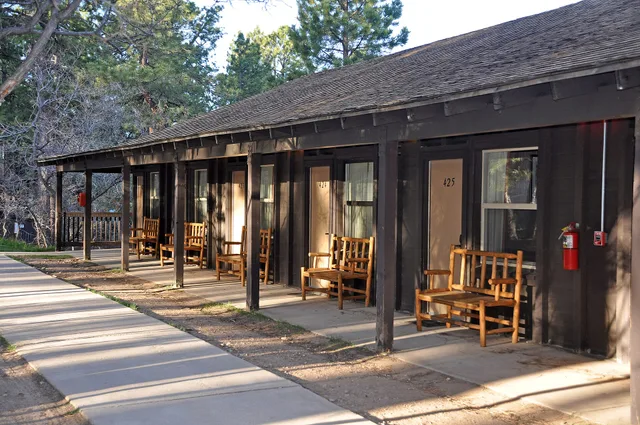
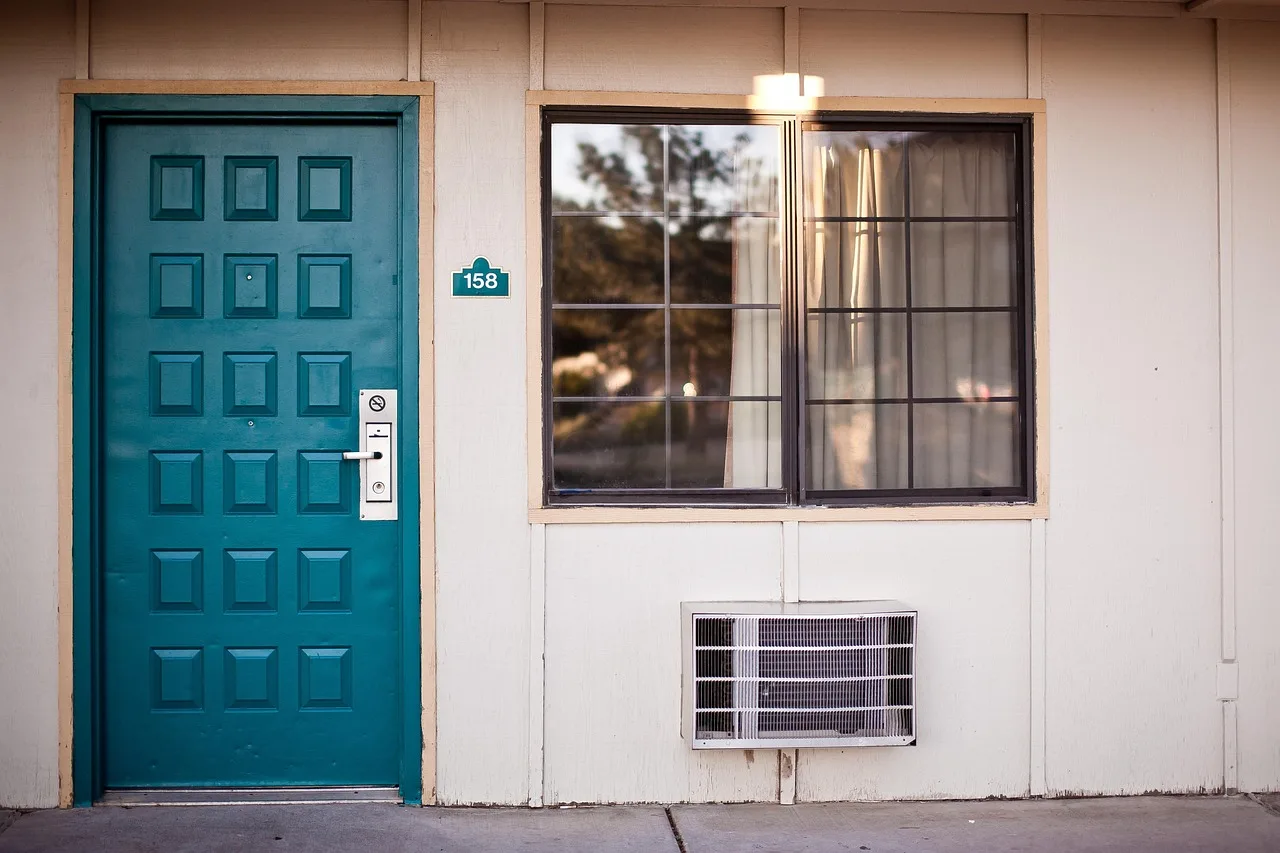
The room door of a motor court, usually with its number, sometimes with a small light beside it, is the element guests photograph and the element most often replaced during a fire-code upgrade.
Where a rated door is genuinely required, ask whether the original can be upgraded, or whether a rated door can be fitted with the original hardware and number. Both are usually possible and neither costs much more than a plain replacement.
Interventions worth the money
- Secondary glazinginstead of replacement windows: performance without loss.
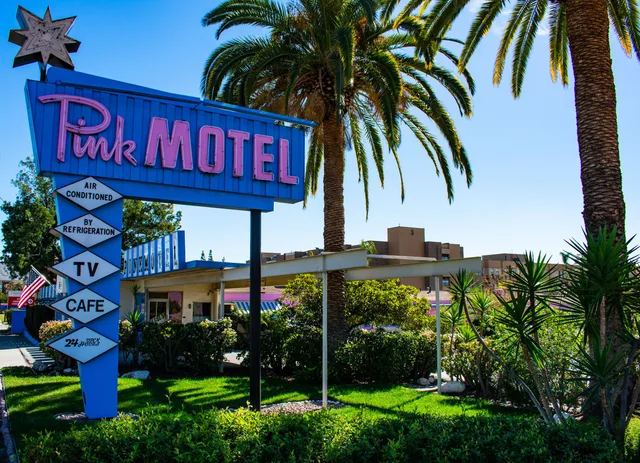
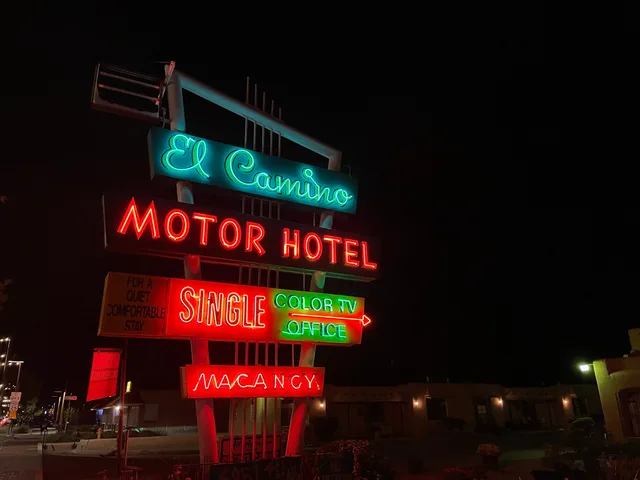
- Reinstating the original sign lightingrather than a new sign. Even where tubing must be remade, the cabinet and structure can stay.
- A single restored show roomkept close to original, bookable, and used in marketing.
- Room numbers and hardwarerescued, refurbished and reused rather than replaced with a standard set.
- Motor courts had open forecourts, not flower beds. Removing later planting frequently recovers how the site was meant to read.
- Reversible interior fittingsso a future owner can undo what you did.
Interventions to think twice about
Opening rooms together. Popular for creating suites, and it destroys the layout that makes the building legible. Do it in one wing if you must, not throughout.
Replacing the office. The office is where the building's public face lives. Modernize the function inside it; keep the form.
Cladding anything. Reversible in theory, almost never reversed in practice.
Removing the canopy or breezeway. These read as inessential and are usually the strongest surviving evidence of how the building worked.
The test before any intervention
Ask two questions. Could a future owner undo this? And does it change how the building is read from the road?
Anything reversible and invisible from the road is low risk. Anything irreversible and visible needs a much better reason than convenience.
The full sequence these ideas fit into is in the restoration steps that matter, and the budget that has to carry them will decide how many happen at once.