Costs
Part of Investigate first: the sequence that protects a historic motel restoration
Historic motel restoration: phase it wing by wing, not all at once
Why historic motel restoration cost sits in systems, not rooms, how phasing wing by wing keeps a project affordable, and how to mothball a paused project.
What to take away
- Budget by building system, not by room. Rooms look like the project; systems are where the money goes.
- Phase it. Most successful motel restorations run a wing at a time while the rest operates.
- Energy work pays back and is frequently misjudged. The cheap intervention is rarely the replacement.
- Budget for a pause. If the money runs out, mothballing properly is far cheaper than losing a year of weather.
Historic motel restoration cost rarely lands where the owner expects. The owner prices the rooms, because rooms are what the business sells, and then discovers that the roof, the wiring and the drainage consume most of the money before a single room is touched. What follows is the order that spending has to take, and why it moves one wing at a time.
Budget by system
Split the money the way the building is actually built.
Where the restoration money goes
- Roof and envelopelargest single block
- Systemsexpensive and invisible
- Rooms and finisheslast to spend on
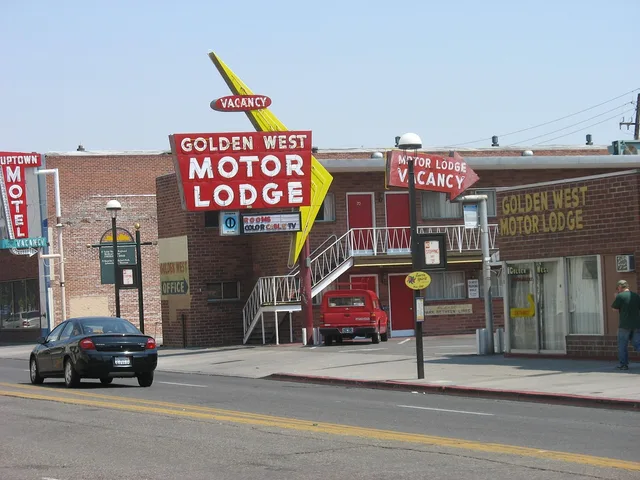
- Signoften surprisingly large
- Soft costsroutinely omitted early
Site and drainage. Grading, gutters, downspouts, paving, getting water away from the walls. Unglamorous, first in the sequence, and it protects everything spent after it.
Roof and envelope. Roof covering, flashing, walls, windows, doors. The largest single block on most projects.
Structure. Foundations, framing, anything that has moved.
Systems. Electrical, plumbing, heating and cooling. Expensive, invisible, and where code compliance lands.
Rooms and finishes. Bathrooms, floors, paint, furniture. What guests see and the last thing to spend on.
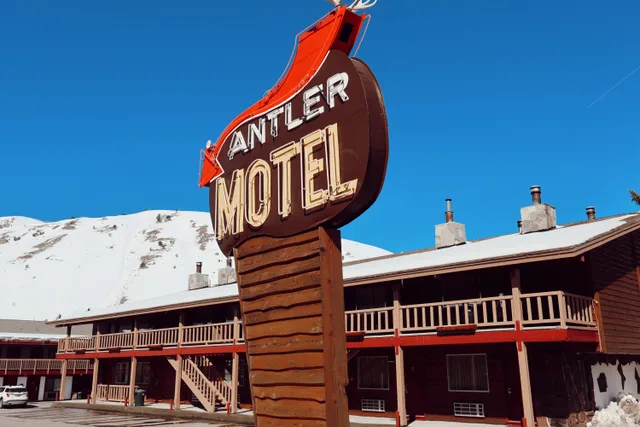
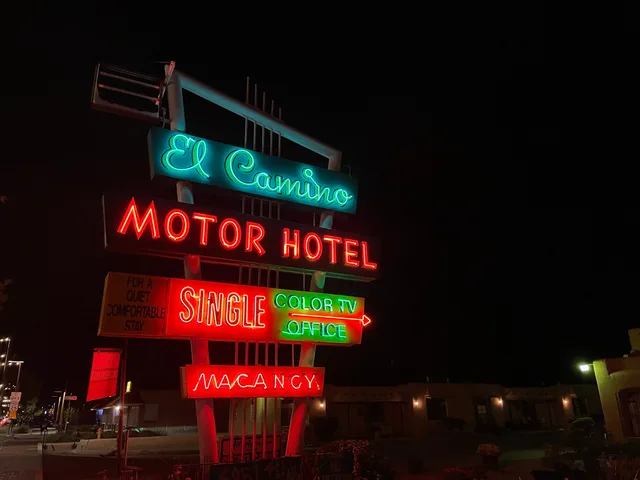
Sign. Often quoted separately and often surprisingly large, particularly if neon is involved.
Soft costs. Structure report, design, permits, review, insurance, legal. Routinely omitted from early estimates and routinely significant.
Phase it, and keep operating
Very few owners can fund a whole property at once, and attempting it usually means closing, which removes the income that was paying for the work.
Restore one wing at a time
- Restore six rooms
- Return them to service
- Use revenue and lessons learned
- Repeat on the next six
The common pattern is a wing at a time: restore six rooms, bring them back into service, use the revenue and what you learned on the next six. It takes longer and costs less in total, because the second phase benefits from everything the first taught you about the building.
It also means your contractor is working around guests, which needs planning but is entirely normal in this sector.
Energy work: get the analysis right
Owners are pushed hard toward replacement windows on the grounds of energy performance. On an old motel that is often the wrong analysis.
Repair windows or replace them
Repair and weatherstrip
- Cost
- Fraction of replacement
- Energy gain
- Most of the benefit
- Character
- Kept
- Where losses are
- Air infiltration, insulation
Full replacement
- Cost
- Highest
- Energy gain
- Marginal
- Character
- Lost
- Where losses are
- Not glazing
The National Park Service's Preservation Brief 3, on conserving energy in historic buildings, explains where losses occur. In most older buildings, air infiltration, insulation, and mechanical efficiency cause losses, not glazing.
Repairing and weatherstripping existing windows frequently gets most of the benefit at a fraction of the cost, and keeps the element that carries the building's character.
Price both options properly before accepting that replacement is the efficient choice. It often is not, on either axis.
Budget for the pause
Projects stall. Funding falls through, a season is lost, an owner's circumstances change.
An empty building deteriorates fast, and the difference between a paused project and a ruined one is whether it was closed up properly. The National Park Service's Preservation Brief 31, Mothballing Historic Buildings sets out how: securing the structure, controlling moisture, providing ventilation, protecting against pests and intrusion.
It costs something. It costs vastly less than a year of unmanaged water and vandalism, and it preserves the option of finishing.
Put a mothballing line in the contingency. Most owners never need it and the ones who do are very glad it was there.
The contingency conversation
On an old building with unknown history, a thin contingency is not optimism, it is a plan to run out of money mid-phase.
Set it after the investigation rather than before, and set it per phase rather than across the project, so an overrun in one wing does not consume the reserve for the next.
Where money comes from
Beyond the owner there is the federal historic rehabilitation tax credit, which applies to income-producing properties listed on the National Register of Historic Places, individually or as part of a district. State programs, corridor grant programs, and in some places local facade improvement funds sit alongside it. In Texas, for example, income-producing listed properties may be eligible for state tax credit programs.
Almost all of these require approval before work starts. The federal credit runs through a three-part certification — Part 1 for significance, Part 2 for the rehabilitation plan, Part 3 for the completed work — reviewed by the State Historic Preservation Office and the National Park Service, and it has to be filed before the work it covers begins. That timing constraint is worth more attention than the amounts.
The order that protects the money is investigate first, approvals second, then site and drainage, roof and envelope, structure, systems, rooms and finishes, with the sign either last or alongside the phase it faces. That sequence is the backbone of the planning steps, and any phasing plan has to respect it.