Features
How The Neon Museum and Las Vegas sign shops restore historic signs
Neon Museum Las Vegas sign restoration blends museum-grade conservation, careful storage and donor gifts, plus desert heat damage that named local shops repair.
What to take away
- Neon Museum Las Vegas sign restoration runs on three legs: conservation treatment, controlled storage and donor gifts of signs.
- The Neon Museum keeps most of its collection outdoors in the Neon Boneyard, where desert sun does slow damage to glass, paint and metal.
- Restoration methods follow the Secretary of the Interior's Standards for Rehabilitation: stabilize first, repair original material, replace only what is lost.
- Named Las Vegas sign shops handle glass bending, transformer and electrode work, paint matching and structural steel that museum staff cannot do alone.
- Desert heat and sun, not rain, drive most deterioration: thermal cycling cracks glass, ultraviolet light fades paint, and dry air lets corrosion creep.
- Researchers can book the study collection and archives by appointment, but access to unprocessed signs and donor records is limited.
How The Neon Museum approaches restoration and storage
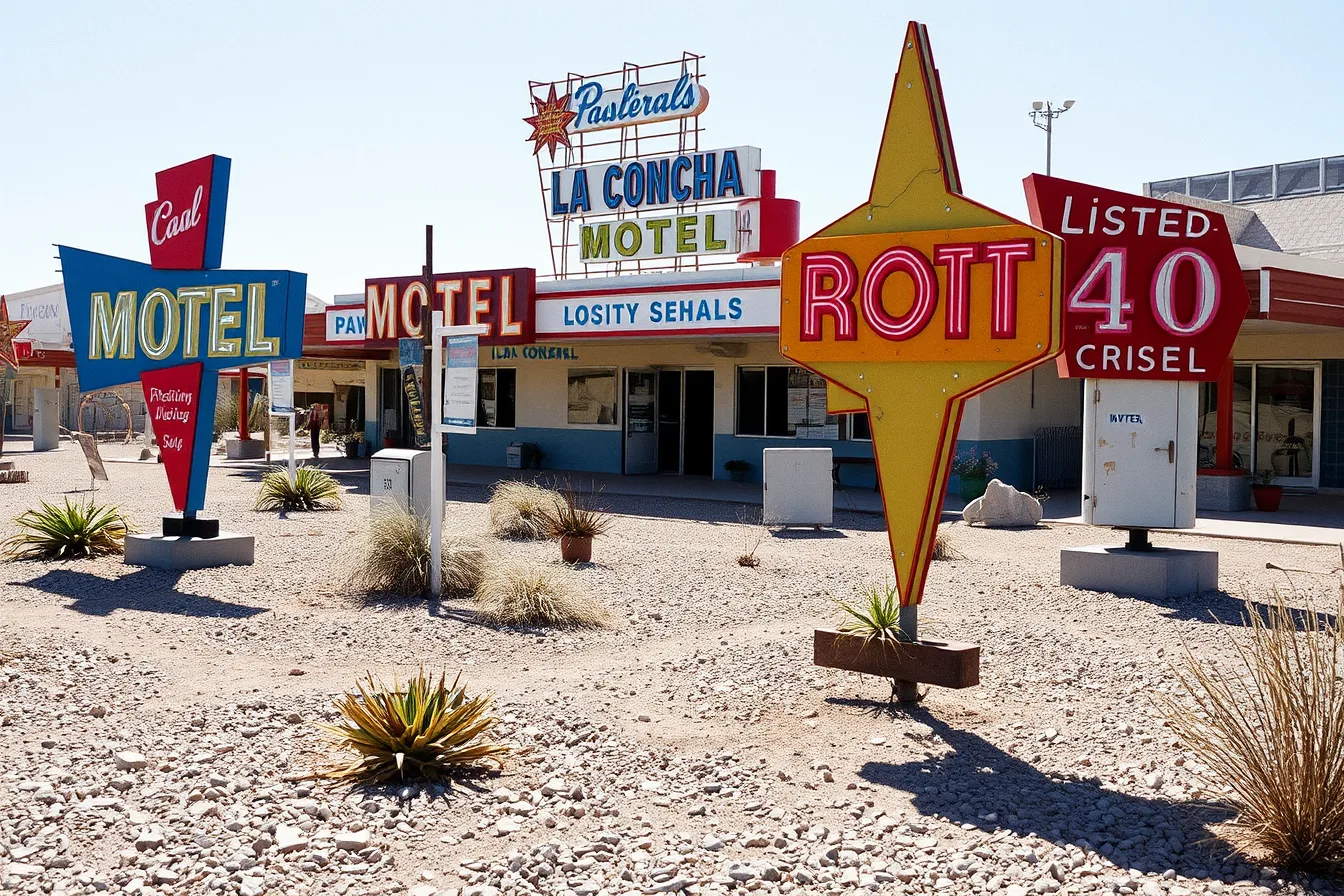
The Neon Museum occupies the former lobby of the La Concha Motel on Las Vegas Boulevard North, a shell relocated and rebuilt as the visitor center. Behind it sits the Neon Boneyard, an outdoor collection of signs displayed among gravel and desert plantings. That setting is the museum's central preservation problem and its main attraction.
Staff treat the Boneyard as a managed environment rather than a storage yard. Signs are set on concrete footings or steel frames so they do not touch soil, and each one gets a condition record with photographs. Conservators inspect on a cycle, because a sign that survives a decade outdoors can fail in a single summer.
Storage practice splits into three tiers. Displayed signs stay lit or unlit in the Boneyard. The study collection holds signs that are stable but not on view, kept off the ground and out of foot traffic. The rest waits in offsite storage for conservation funding, which is the honest bottleneck at most sign museums.
The museum's restoration philosophy leans toward stabilization over rebuilding. Original glass, porcelain enamel and sheet metal carry the history, so a bent channel letter is straightened rather than recast. Where a material has failed completely, staff document the loss before any replacement goes in.
The same logic shapes how the museum documents a sign before work starts, which is close to the method photographers use in the neon sign restoration field: record what is there, then decide what changes.
Restoration methods used on historic Las Vegas signs
Neon sign conservation is a sequence, not a single trade. The order below reflects how museum staff and contract shops typically work on a historic sign in Las Vegas.
- Survey and document. Photograph every face, measure letter dimensions, note broken tubes, rust runs and paint loss, and log missing parts.
- Stabilize the structure. Treat or replace corroded steel, re-anchor the cabinet, and stop water from pooling inside the can.
- Clean without stripping. Remove dirt, bird residue and old adhesive with mild methods so original patina and paint layers survive.
- Repair the electrical system. Replace brittle wiring, test transformers, and rebuild electrodes and tube supports to current code.
- Rebuild glass and paint. Bend new tubing to match original patterns, and match paint or porcelain enamel to surviving color.
- Reinstall and test. Run the sign under load, check for hot spots, and photograph the finished state for the record.
Technical guidance for steps two through five comes from the National Park Service, whose preservation briefs cover masonry, metals, paints and glass without jargon. The Technical Preservation Services (U.S. National Park Service) briefs are the standard reference for anyone writing a treatment plan for a sign.
For a sign that is still in service on a commercial building, the approach shifts toward rehabilitation rather than museum conservation. That means keeping the sign working, meeting electrical code, and accepting that some components will be modern. The Park Service's rehabilitation notes for historic materials address that middle ground directly.
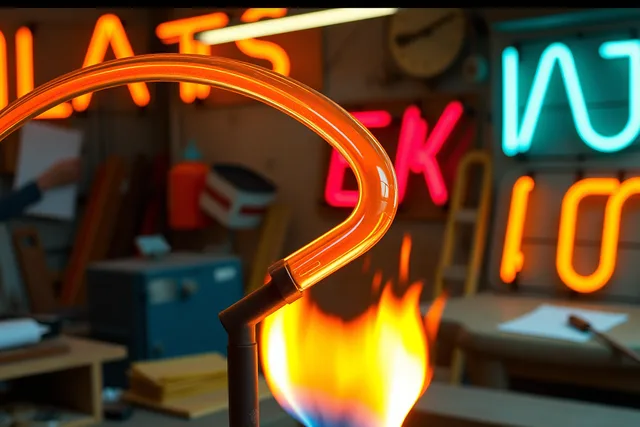
Porcelain enamel is the hardest material to match. A chipped enamel face on a 1950s casino sign cannot be repainted convincingly, so shops either leave the chip or source a donor panel. Neon tubing is easier: glass is bent to pattern, and the color comes from the gas and phosphor coating inside the tube, not from the glass itself.
Donor programs and how signs enter the collection
The Neon Museum's collection grew largely through donations. Casinos, motels, businesses and private collectors have given signs when a property closed, was remodeled or changed hands. The museum also accepts signs through agreements that let a donor keep a say in display.
Donation is not the only route. Staff sometimes take a sign on long-term loan, which keeps the owner's name on the object and shifts care to the museum. For a business tearing down a facade, a loan or gift can be faster than finding storage.
Donor programs matter because conservation costs money and the museum is a nonprofit. Gifts, memberships and sponsorships fund tube bending, steel work and paint matching. A donor who pays for one sign's treatment usually gets a condition report and photographs showing where the money went.
Before offering a sign, owners should document it in place. Shoot the sign lit and unlit, from both sides, and note its dimensions and removal date. The same discipline applies to any roadside structure, as laid out in Document before it disappears.
Not every sign is accepted. The museum weighs rarity, condition, size and whether the sign tells a Las Vegas story. A generic plastic box sign from a chain restaurant rarely makes the cut, and a sign too far gone may be declined because treatment would consume a year of budget.
- Confirm the sign is freestanding or can be removed without structural damage
- Photograph all faces, tubes, transformers and mounting hardware
- Note the original business name, address and years of operation
- Gather any historic photographs of the sign in use
- Ask about removal costs and who pays them
- Get the museum's decision in writing before demolition starts
Named Las Vegas sign shops and their specialties
Las Vegas has a small cluster of sign companies that still work on neon, and their skills divide along trade lines. The shops below are the ones most often named by preservation staff and collectors in the city.
| Shop | Specialty | Typical work |
|---|---|---|
| YESCO (Young Electric Sign Company) | Full-service sign fabrication and service, historic sign restoration | Building and servicing signs across the valley, including museum projects |
| Hartlauer Signs | Neon fabrication, service and restoration | Tube bending, transformer replacement, on-site repair |
| Federal Heath (Las Vegas operation) | Large-scale sign manufacturing and service | Signage for casinos and commercial properties, including retrofits |
| SignArt Las Vegas | Custom sign fabrication and neon service | Channel letters, neon repair, installation |
| Local independent benders | Glass bending and electrode work | One-off tube runs for restored signs |
YESCO is the oldest and largest of these, with a history that runs through much of Las Vegas signage. The company built and maintained many of the signs now in the museum's collection, which makes it a natural contractor for restoration work. Its service crews still repair neon on operating casino facades.
Hartlauer Signs is a smaller operation known for neon fabrication and repair. Shops of this size are where a museum goes for a short run of bent tubes that a large manufacturer will not schedule. Independent benders fill the same gap, often working from a pattern drawn off an original tube.
Choosing a shop is its own project. Ask for photographs of comparable work, a written scope, and a schedule that accounts for glass lead times. A reporting checklist helps a client compare bids on the same terms instead of on price alone.
Craft labor is the constraint. Glass bending and electrode work are taught through apprenticeships and trade programs rather than degree courses, and the Traditional Trades Training | Advisory Council on Historic Preservation initiative exists to widen that pipeline. In Las Vegas, a shop with an experienced bender is worth waiting for.
Desert heat and sun effects on glass, paint and metal
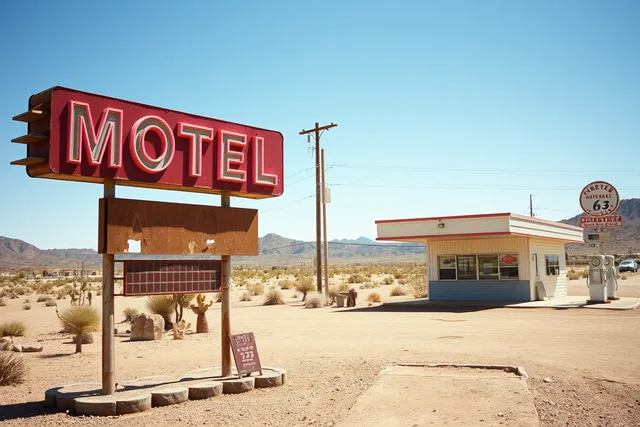
Las Vegas is a desert city, and its climate does more damage to outdoor signs than rain would in a wetter region. Summer air temperatures routinely pass 100 degrees Fahrenheit, and dark metal surfaces get much hotter in direct sun.
That heat drives thermal cycling. Glass and metal expand and contract at different rates through the day, so a tube held in a metal clip can crack at the point of contact. Repeated cycles widen small flaws until a tube fails, often at an electrode or a bend.
Ultraviolet light is the second agent. It fades paint and plastic, yellows clear coatings, and breaks down the rubber and plastic insulators around wiring. A sign that looks fine in shade can show chalked paint and brittle insulation on its sunward face.
Climate data and trends for the region are tracked through the Climate | National Oceanic and Atmospheric Administration.
Dry air slows rust but does not stop it. Corrosion concentrates where water collects: inside the cabinet, at the base of a letter, under a mounting flange. Wind-blown dust then holds moisture against metal and abrades painted surfaces over time.
Maintenance responds to all three. Shade structures and UV-resistant coatings help paint last. Flexible tube supports reduce stress on glass. Annual inspection before summer catches cracked tubes and loose wiring before the worst heat arrives.
What visiting researchers can and cannot access
Researchers, students and preservation consultants can use the museum's collections, but access is scheduled and supervised. Requests go through staff, and appointments are limited by the same crew that handles conservation work.
What you can typically get: the study collection of signs not on public display, condition reports, archival photographs, and time in the Boneyard outside public hours. Bring your own measuring tools and expect to work with gloves.
What you cannot get: open stacks, unprocessed donor files, and signs still awaiting conservation. Records that name private donors are restricted, and a sign in treatment is off limits until work is stable.
A visit works best with a specific question. If you are studying porcelain enamel loss or transformer replacement, say so in advance, and staff can pull comparable signs. That is also the efficient way to plan a short trip, as with Gas station preservation in two days, where the count comes before the return visit.
Common questions
Does The Neon Museum restore every sign in its collection? No. Conservation is expensive and staff time is limited, so the museum prioritizes signs by rarity, condition and story. Many signs are stabilized and stored rather than fully restored.
Can I donate a neon sign to The Neon Museum? Yes, if the sign fits the collection and can be removed safely. Contact staff before demolition, send photographs and dimensions, and expect a review of condition and provenance.
Why do Las Vegas signs deteriorate faster than signs in wetter cities? Heat and ultraviolet light, not rain, do most of the damage. Thermal cycling cracks glass, sun fades paint, and dust holds moisture against metal joints.
Do Las Vegas sign shops still bend neon by hand? Several do, including smaller fabrication shops and independent benders. Large companies like YESCO also maintain neon service capabilities alongside modern sign manufacturing.
Can I photograph signs in the Neon Boneyard for research? Yes, with permission and usually on a scheduled visit. Staff may restrict tripods, lighting equipment and access to signs under treatment.
What standards guide sign restoration work? The Secretary of the Interior's Standards for Rehabilitation, applied through National Park Service technical guidance, set the baseline for treating historic materials.