Guides
Gas station preservation: regional adaptation questions to ask before 2027 plans
Use this 2027 gas station preservation regional guide to frame local flood, heat, moisture, wind, and wildfire questions without making site-specific claims.
Gas station preservation regional adaptation starts with one question: what local conditions should shape the next project decision? A former service station in an arid interior, a coastal town, a floodplain, a snowbelt community, or a fire-prone edge of town can have very different exposures, public uses, building materials, and approval paths.
Regional context is valuable, but it is not a substitute for a property assessment. It should help an owner, preservation group, writer, or prospective tenant decide which questions belong in the record before anyone promises a treatment, opening date, cost, or safety outcome.
What to take away
- Begin with local conditions and the proposed use, not a generic national checklist.
- Separate observed evidence, public hazard information, historical context, and unverified assumptions.
- Treat flood, moisture, wind, heat, cold, erosion, and wildfire as planning prompts, not diagnoses.
- Preserve character-defining features and regional building traditions in the project record.
- Do not use regional language to imply that an individual property is resilient, safe, compliant, or ready to open.
Start with location, use, and time horizon
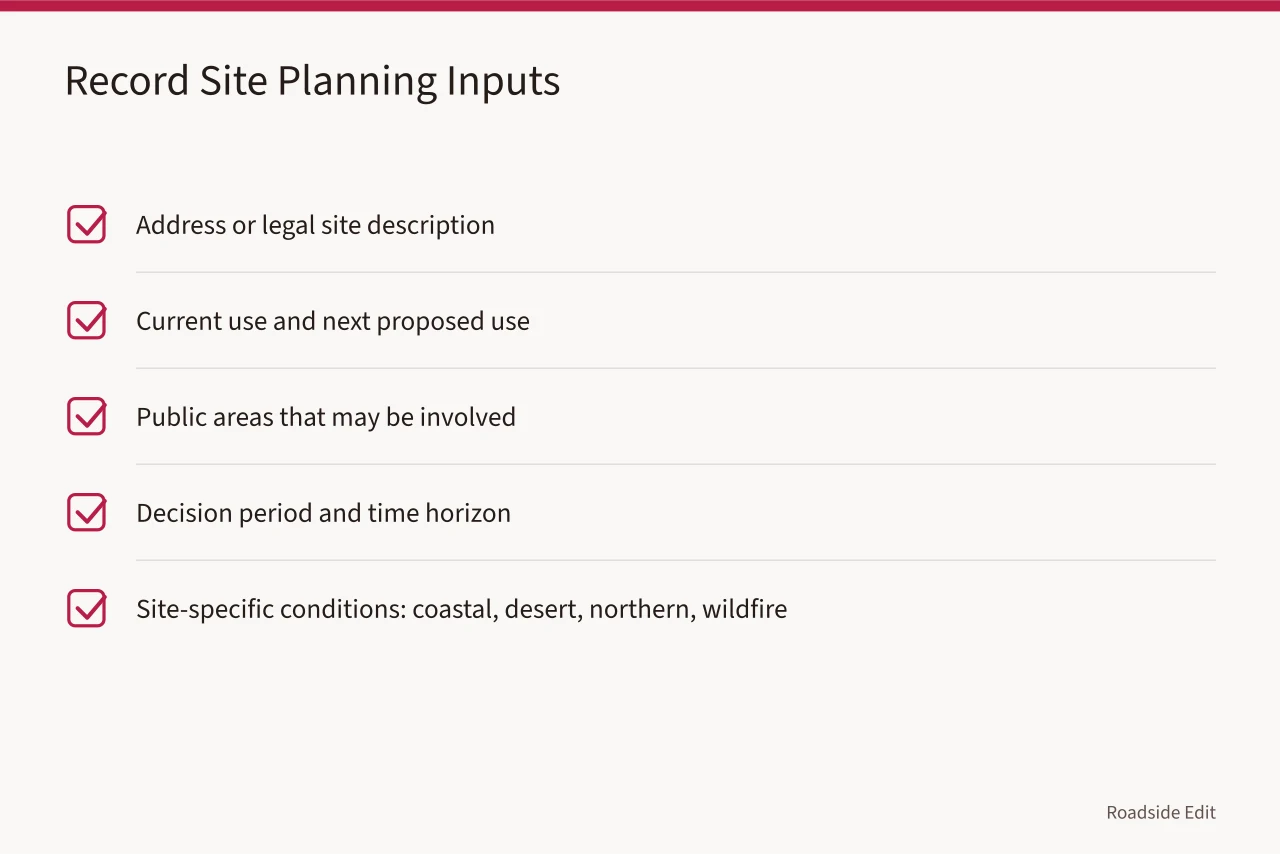
Regional planning does not begin with a product list. It starts with the site and intended use. Write down the address or legal site description, current use, next proposed use, public areas that may be involved, and decision period.
A small exterior documentation project has a different time horizon than a restaurant conversion, museum display, or long-term vacant-building plan.
Then describe site-specific conditions: a coastal building may need water pathways, elevation, storm access, and salt exposure. A desert site may need heat, windblown dust, water availability, and sun exposure.
A northern location may raise questions about snow loads, freeze-thaw cycles, roof drainage, and winter access. A property near grassland or forest may need a wildfire and evacuation planning conversation, but none of these phrases identifies a condition; they name topics for responsible research.
| Planning input | What to record | What not to infer |
|---|---|---|
| Local setting | Coastal, inland, urban, rural, elevation, surrounding drainage, and public access | A building's exact hazard level from a map alone |
| Proposed use | Visitor, retail, office, storage, event, or vacant status | That a proposed use is authorized or practical |
| Existing evidence | Dated photographs, reports, drawings, permits, and owner records | That missing records prove no risk exists |
| Seasonal pattern | When access, moisture, heat, wind, or storms affect operations | That a past event predicts a fixed future outcome |
| Decision owner | Person or group responsible for the next review | That an editor or sponsor can approve a treatment |
Build a regional condition profile
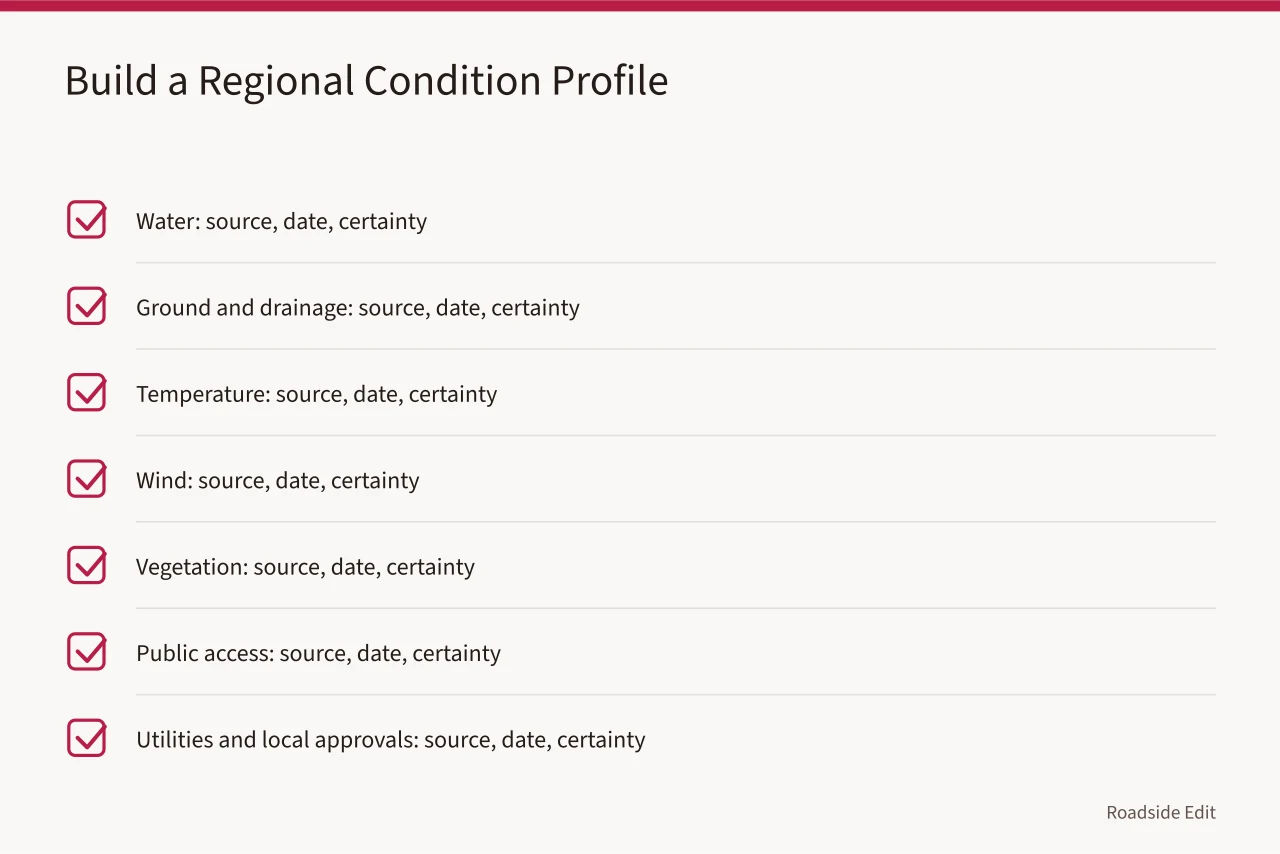
Create a one-page profile before publishing a regional article or starting a reuse discussion. Use plain categories: water, ground and drainage, temperature, wind, vegetation, public access, utilities, and local approvals. For each, identify the source, date, and certainty level.
"The city identifies this area as flood-prone" needs a current local source. "The building has survived storms" needs dated, property-specific evidence. A photograph of dry pavement proves only that it was dry when photographed.
The most useful profile makes gaps visible. It can say that a historic map was found, an owner record is unavailable, a drainage route has not been verified, or a public event is proposed but not yet approved. That is more credible than filling the gaps with generic climate language.
Match adaptation questions to regional pressure
The same feature can mean different things in different locations. A deep overhang may be relevant to shade, rain, wind, or the historic design of a canopy. A raised floor may be historical construction, a response to local water conditions, or neither. Treat it as evidence to study, not a shortcut to an adaptation claim.
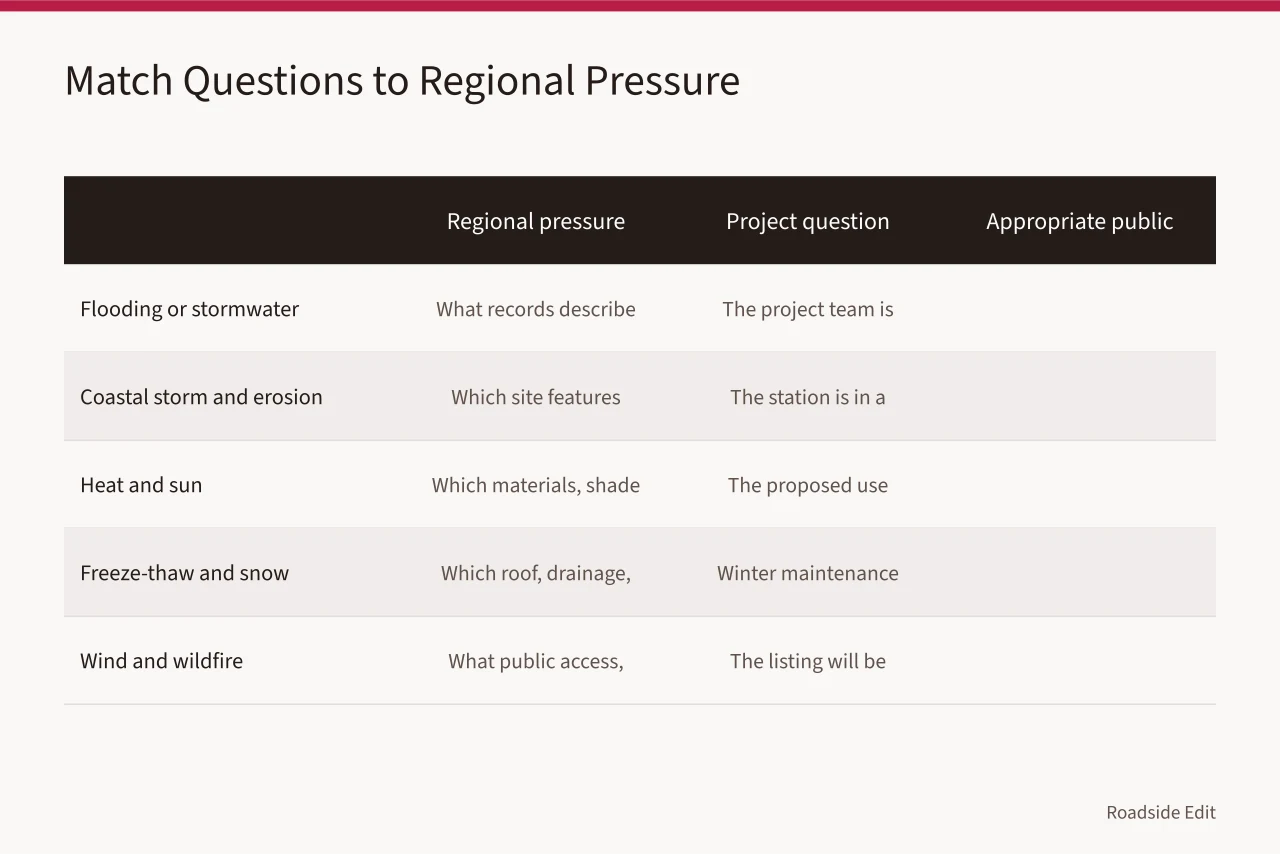
| Regional pressure | Project question | Appropriate public wording |
|---|---|---|
| Flooding or stormwater | What records describe drainage, water entry, and proposed work? | "The project team is reviewing local water conditions." |
| Coastal storm and erosion exposure | Which site features and access routes need current evaluation? | "The station is in a coastal region; no property-specific risk conclusion is stated." |
| Heat and sun | Which materials, shade areas, and visitor conditions need review? | "The proposed use includes a heat-season operating plan." |
| Freeze-thaw and snow | Which roof, drainage, entry, and access records are current? | "Winter maintenance needs are being documented." |
| Wind and wildfire | What public access, vegetation, exterior material, and emergency plans apply? | "The listing will be updated when the responsible operator confirms its plan." |
This structure keeps an editorial page useful without becoming a field report. It also helps a sponsor understand what a paid placement can and cannot say. A business may describe its location, project role, event, or service. It cannot buy a claim that the site is climate-ready, protected from a hazard, or approved for a specific public use.
Use preservation principles when evaluating change
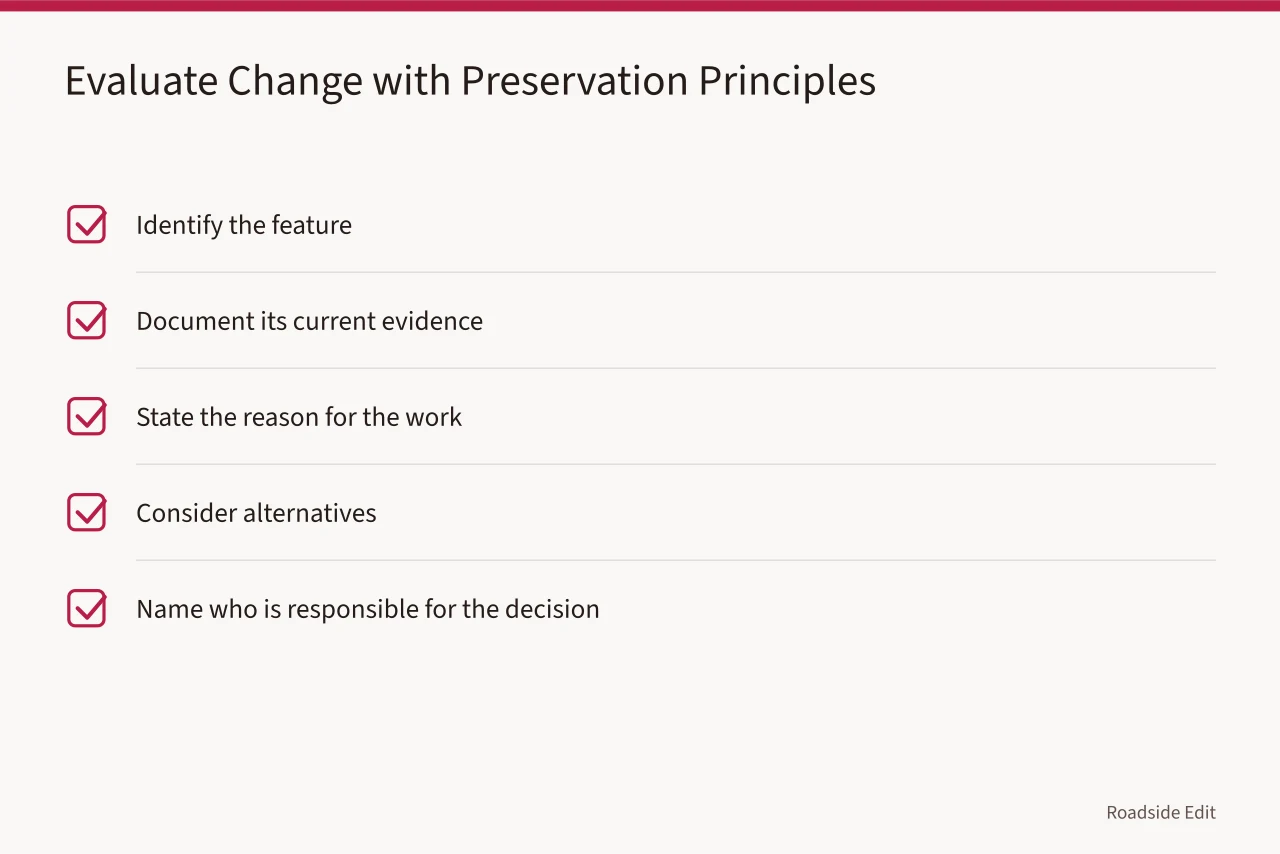
Regional adaptation may require new work. That work should not erase the evidence that makes a station worth understanding.
The National Park Service's flood-adaptation guidance for rehabilitating historic buildings says to consider flood resilience and the Standards for Rehabilitation together.
That supports a disciplined editorial rule. Do not describe a generic flood product or construction method as the correct solution for a named station. The appropriate approach depends on the property's risk, condition, historic character, applicable requirements, and project scope.
Keep regional research local enough to matter
National reports are useful context. They do not replace municipal records, tribal consultation where applicable, state requirements, current code adoption, utility information, local hazard data, or an owner's actual documents. A regional guide should point the reader toward the missing question, not tell them the answer.
For a small preservation group, the first regional research package may be simple: a site photograph log, a dated map or public planning source, prior project records, seasonal operational issues, and a meeting note naming who verifies each open question. A substantial rehabilitation needs a larger scope. The article should not pretend otherwise.
Plan monitoring instead of one-time certainty
Regional conditions change and property conditions change. Use a periodic record rather than a one-time conclusion. Note the date, weather or seasonal context when relevant, observed locations, photo vantage points, reported issue, follow-up owner, and outcome. Do not write "no problem found" when the record only shows that a limited observation occurred.
Monitoring works best when it has an owner. A nonprofit board, building owner, tenant, or preservation project manager can decide how often to revisit the record. An editorial site can publish a dated update and correct stale wording. The two roles should remain separate.
Make public access language accurate
Regional adaptation often changes how visitors use a site. A route may be seasonal, an event may use only part of a building, or a property may remain closed while work is evaluated. State the current, confirmed situation. Do not call a location open, accessible, weather-ready, or safe based on an old listing or an image.
When a business asks for placement, request a concise, dated description: what it offers, its operating period, the public area it controls, and a responsible contact for corrections. Attribute supplied claims. If a project has not confirmed an opening plan, describe it as proposed. That keeps marketing language from hardening into a misleading property record.
The National Park Service includes floods, storms, neglect, and lack of understanding among threats to historic places. That overview supports treating regional conditions as planning prompts. It does not make a threat list a diagnosis for a particular gas station, nor does it select a treatment for a project that has not been assessed.
Keep the information trail intact as a regional page changes. The National Archives' records-management overview explains why records should be organized for retrieval and use.
Retain the source, date, geographic scope, and exact claim behind each page revision. A later editor can correct a narrow sentence without silently turning an older public source into an apparent current fact.
Paid location profiles must be labeled as such. The Federal Trade Commission's endorsement guidance addresses material connections that can affect an endorsement. Put a disclosure near supplied business information and do not allow payment to determine regional risk language, treatment claims, or ranking.
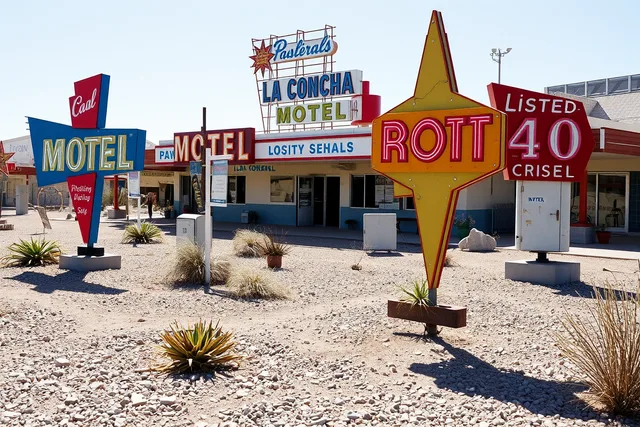
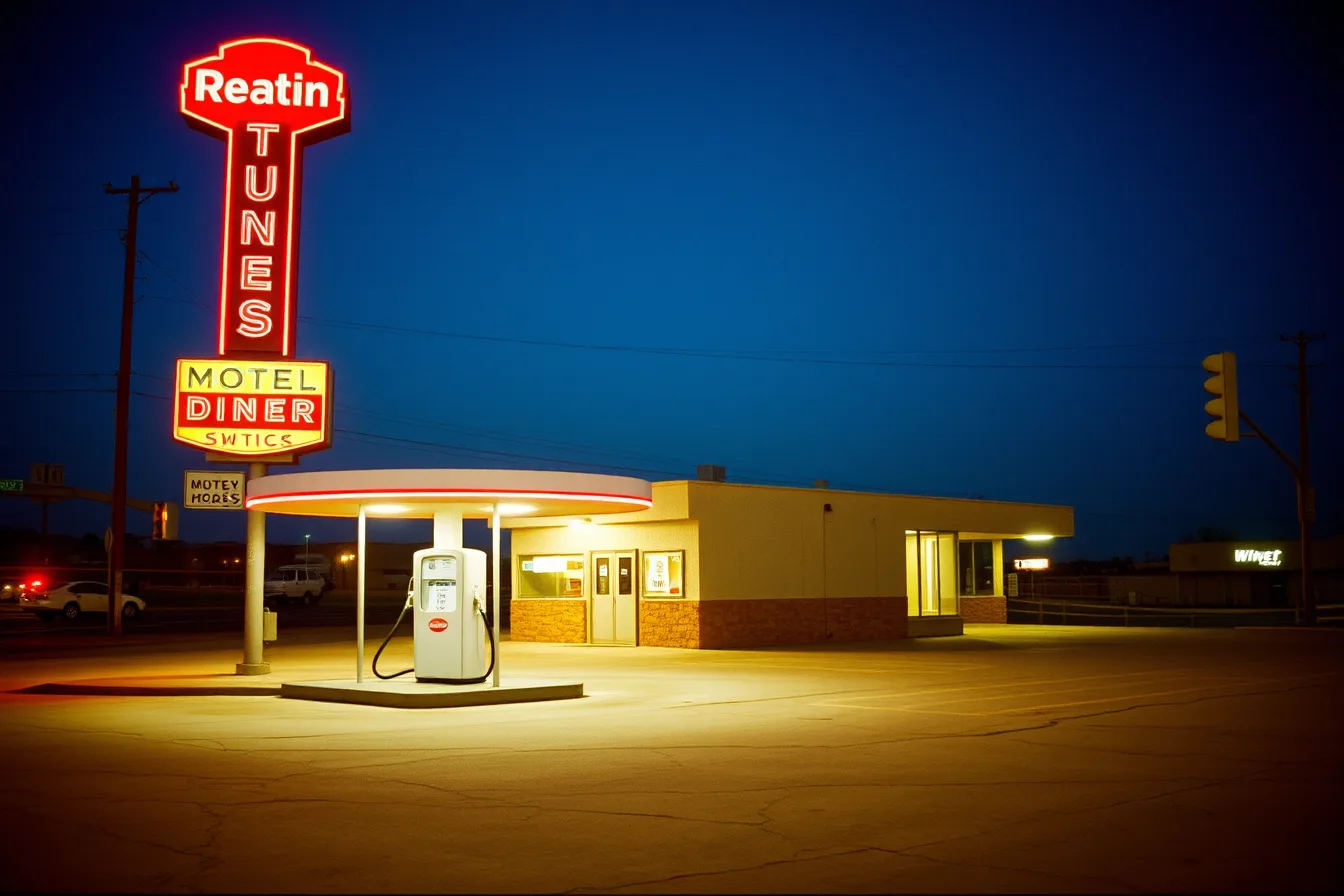
The image is illustrative and does not establish conditions, risks, approval status, or treatment needs at another property.
Use a regional editorial checklist
Before publication, confirm that the article:
- identifies the region without assigning a property-specific risk score;
- distinguishes historical evidence from current operating information;
- names the proposed use and any unresolved approval or access question;
- avoids construction instructions and professional conclusions;
- attributes owner, sponsor, and operator statements;
- dates the material that may change; and
- provides a correction path when a record is updated.
Common questions
Can a regional guide say a station is in a flood zone?
Only if a current, property-specific source supports that statement and the wording accurately reflects the source. A broad regional discussion should not be converted into a site conclusion.
Does a historic design feature always provide climate resilience?
No. A feature may have historical, aesthetic, or practical significance, but its present performance needs appropriate property-specific evaluation.
Can a listing state that a building is open year-round?
Only when the responsible operator provides current, supportable operating information. Seasonal or weather-related limits should be stated plainly.
Is adaptation the same as renovation?
Not necessarily. Adaptation describes a response to a condition or anticipated pressure. Renovation is a broad term for changing a building. The appropriate treatment depends on the particular project.
In this guide
- How a 2027 gas station preservation checklist handles regional scopeUse a 2027 gas station regional preservation checklist to record local conditions, proposed use, seasonal operations, and questions that need review.
- Gas station preservation questions to ask before a regional comparisonGas station regional preservation questions for 2027 help compare local evidence, proposed reuse, public access, flood planning, and documented features.
- Gas station preservation: regional warning signs to check before 2027Regional warning signs for gas station preservation point to named records like SHPO plans, flood maps, tank files, and hazard zones to check before 2027.
- How to build 2027 gas station preservation records that track owner claimsRecord a 1950s porcelain-enamel sign and a 1960s plastic box sign by material, date, and hazard context, so 2027 gas station owner claims stay checkable.