Reviews
Part of Gas station preservation: regional adaptation questions to ask before 2027 plans
Gas station preservation questions to ask before a regional comparison
Gas station regional preservation questions for 2027 help compare local evidence, proposed reuse, public access, flood planning, and documented features.
A regional comparison can describe a former gas station more easily, but it cannot settle a property decision.
Good questions separate public records from proposed reuse, current conditions from old images, and a general planning tool from site-specific advice. This matters when a publisher, owner, agency, or prospective sponsor tries to say something useful without promising more than the evidence can bear.
What to take away
- Start with the proposed use, the reader, and the place that needs confirmation.
- Keep regional maps, old photographs, and property records in separate evidence columns.
- Describe a plan as a plan until the responsible party confirms approval or operation.
- Ask for a source date, a source owner, and the exact claim each source can support.
Begin with a question that has a clear answer
The weak version of a regional question is broad: "Is this station resilient?" The useful version names the decision, the place, and the record needed to answer it. It also leaves room for a finding of "not yet known." That is a sound editorial result, especially when a project is still in discussion.
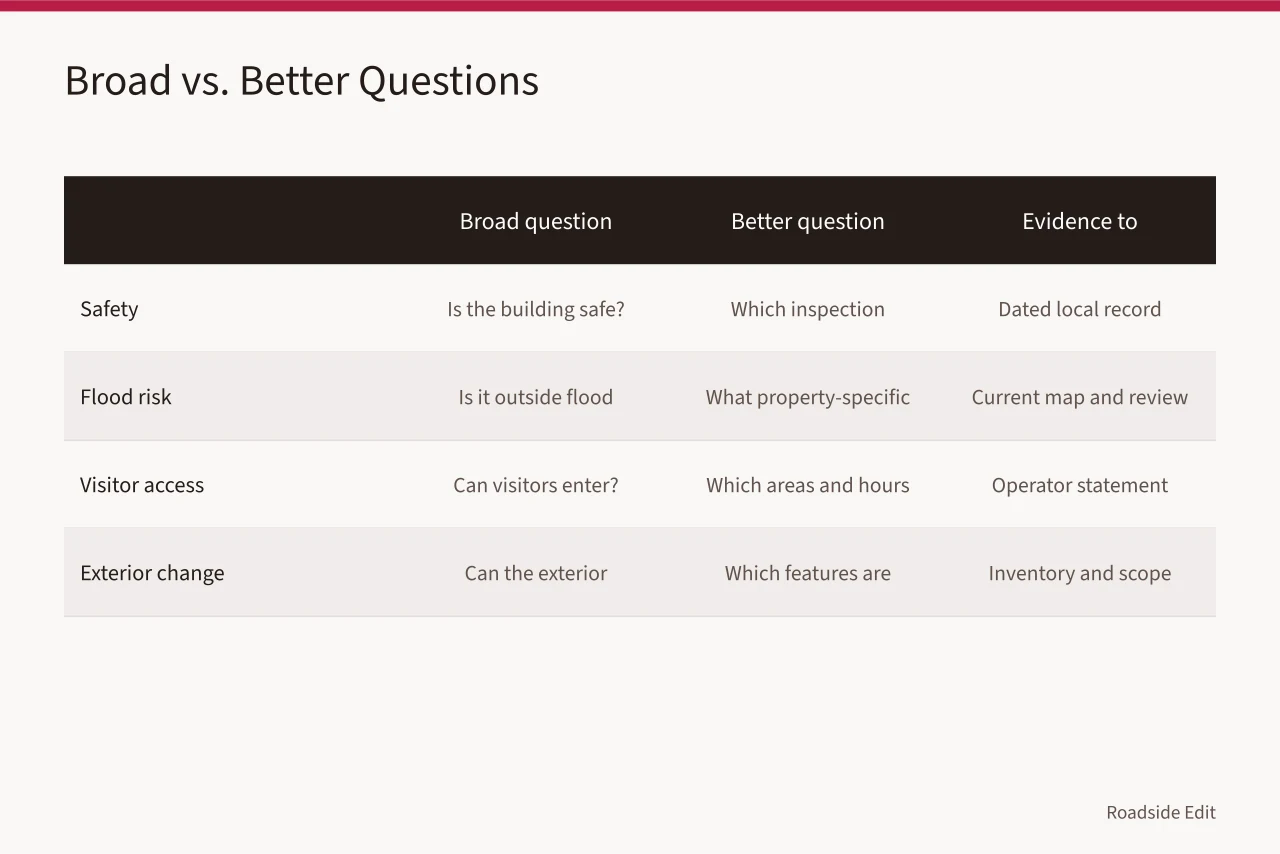
| Broad question | Better question for an article or project file | Evidence to request |
|---|---|---|
| Is the building safe? | Which current inspection or authority record addresses the proposed public use? | Dated local record or a statement from the responsible authority |
| Is it outside flood risk? | What current property-specific material addresses water-related planning for this address? | Current map, local record, and a qualified review where needed |
| Can visitors enter? | Which areas, hours, route, and accessibility details have been confirmed? | Operator statement and current access information |
| Can the exterior change? | Which documented features are relevant to the proposed work, and who reviews it? | Inventory record, project scope, and applicable review information |
The first question should be tied to the actual reader promise. A driving guide may need to establish whether a location welcomes visitors, while a preservation profile may need to identify the original canopy, storefront, or sign a record describes.
A sponsored listing may state only the service, hours, or event supplied by the sponsor. Each format needs different evidence.
Put regional flood material in its proper place
Flood material is easy to overread. A regional document may explain a planning approach, identify a risk category, or show why historic resources deserve attention in mitigation work, but it does not certify one parcel, building, or access route.
The FEMA guide on reducing flood risk for historic properties discusses including historic properties and cultural resources in mitigation planning. It supports an early planning question but does not replace a current determination for a particular address.
For publication, keep the sentence narrow. "The project is reviewing water-related planning information" is defensible when that review is underway. "The station is flood-safe" needs much more and may not belong in a general article at all. The same restraint applies to photographs. A dry image from one season cannot establish drainage, road access, or present operating conditions.
Questions that keep the comparison honest include:
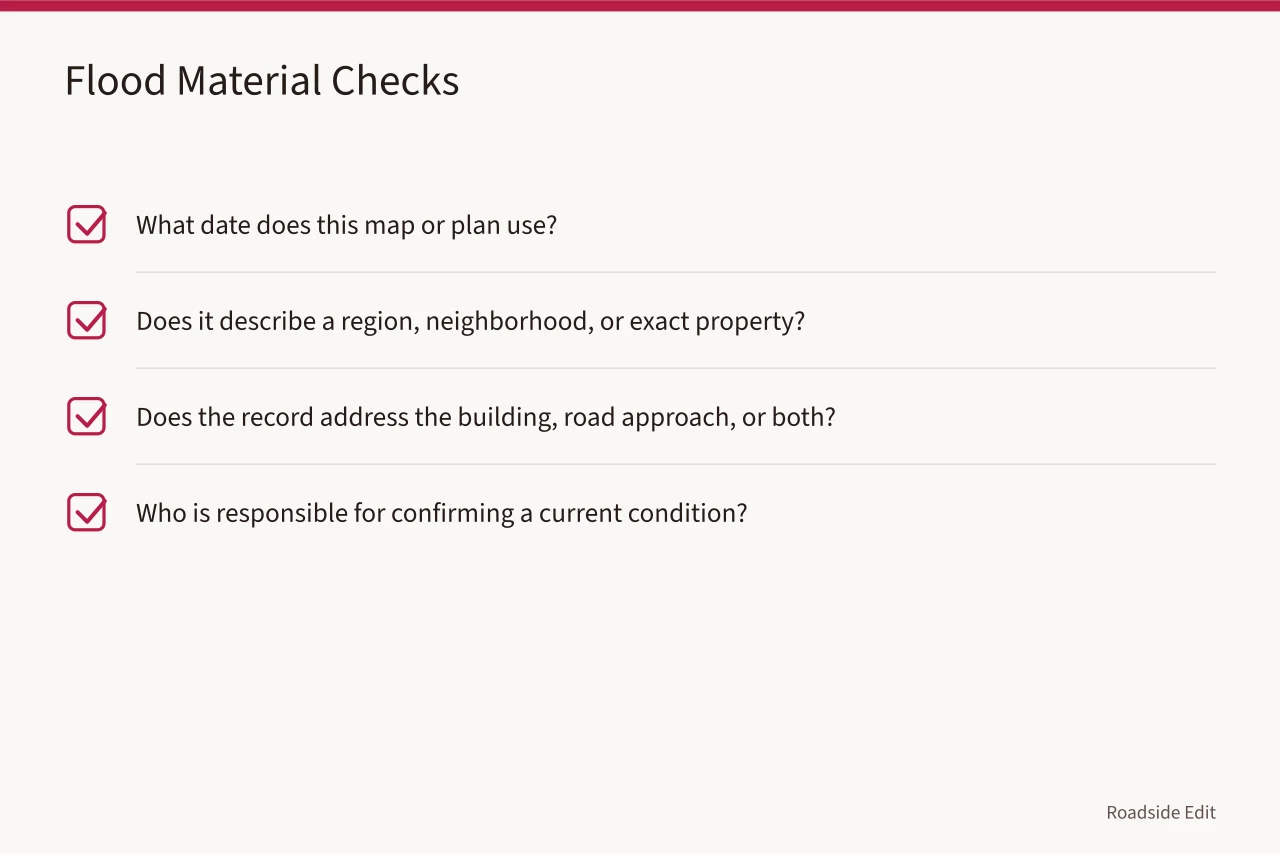
Those questions do not slow a good story down. They make its boundaries visible to a reader who may rely on it while planning a visit or researching a property.
Separate treatment questions from approval questions
Preservation language can create another confusion. A source may explain how treatment guidance is organized but not say whether a proposal is approved.
The National Park Service preservation standards and guidelines cover standards used at national, tribal, state, and local levels, and some can be regulatory. Ask which standard or review path applies. Do not announce a project meets one.
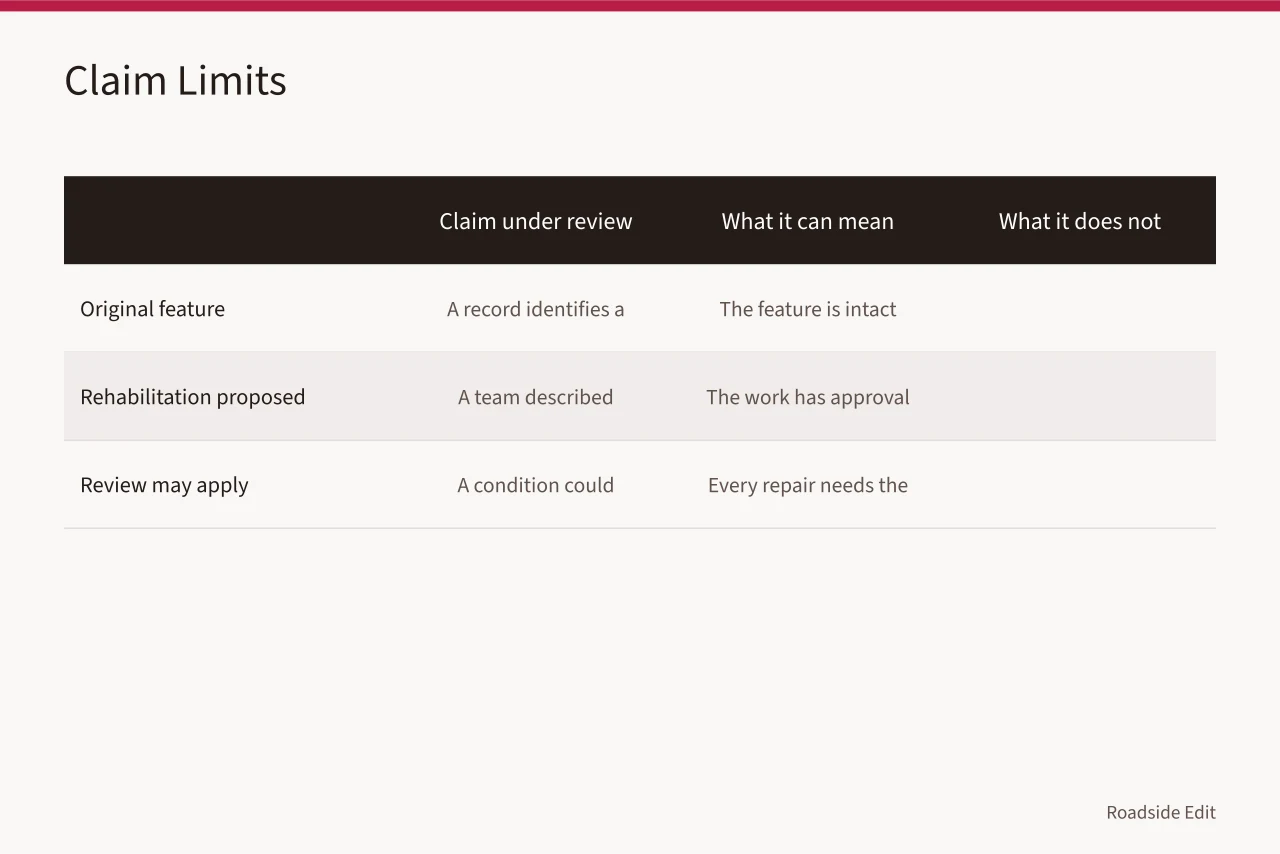
Use a comparison sheet that gives each claim a home:
| Claim under review | What it can mean | What it does not prove |
|---|---|---|
| Original feature documented | A record identifies a feature or its history | The feature is intact today or protected from all change |
| Rehabilitation proposed | A project team has described intended work | The work has approval, funding, or a completion date |
| Review may apply | A legal or program condition could affect a project | Every repair needs the same review |
The federal Section 106 process overview from the Advisory Council on Historic Preservation explains that the process concerns federal undertakings and their effects on historic properties. That scope should appear in the text when it is relevant. Do not use it as a general answer for a project that has no federal connection.
Test the source before using the sentence
Regional articles often pull together field notes, local history, agency material, and owner comments. Those are not interchangeable. An owner can explain a current intention. A historic survey can describe what was recorded at the time of the survey. A map can define its own coverage. A writer should not silently merge them into one stronger claim.
The National Archives explanation of primary sources is useful here because it distinguishes original materials from later interpretation. A 1940s photo, an invoice, or a recorded plan may be primary evidence for its own date. It cannot answer a current question about access, ownership, or physical condition without newer support.
Before the article goes live, ask these practical questions:
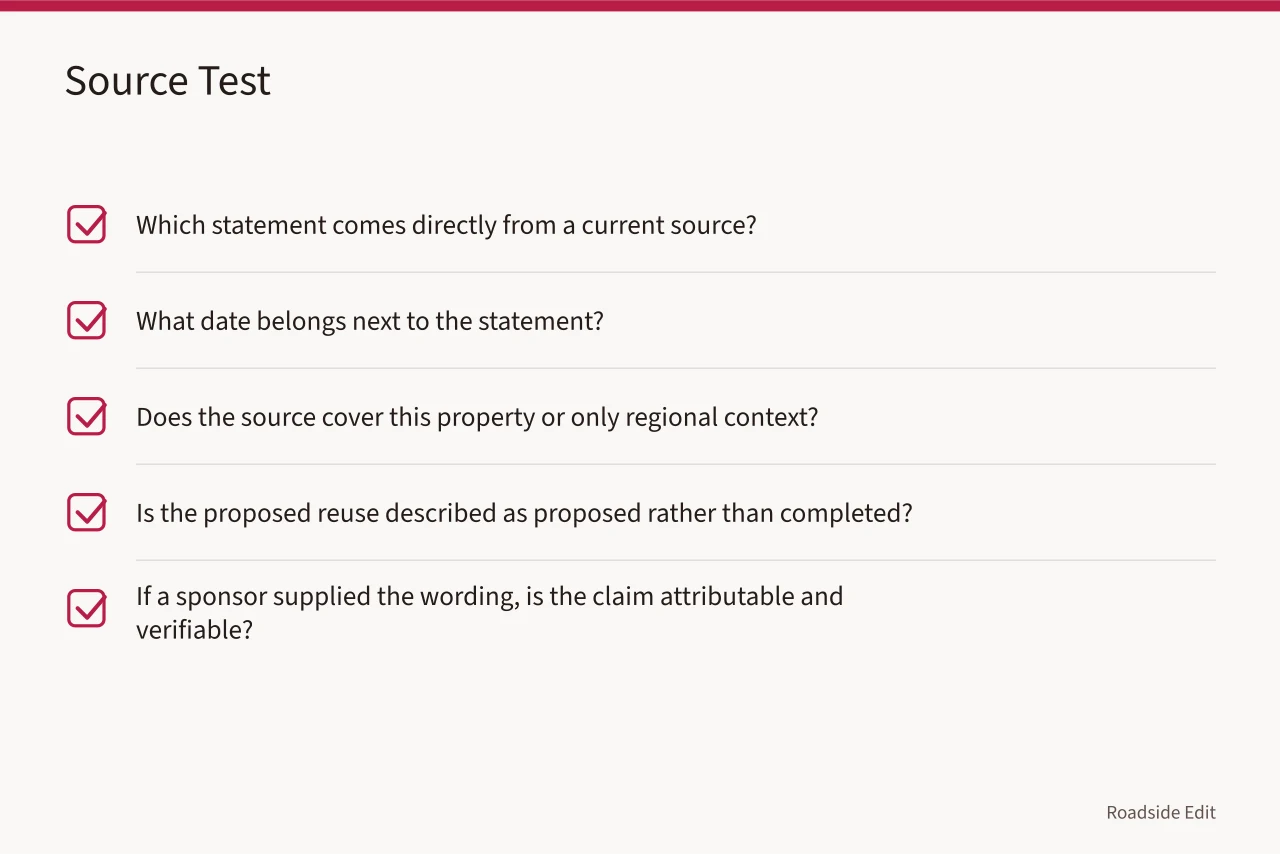
The answer may be to omit a claim. That is better than turning a broad regional reference into a promise about a building the source never examined.
Write a comparison that readers can audit
Readers should see why a source appears. Put the link beside the limited claim it confirms, add the source date when it changes the meaning, and describe uncertainty in plain language.
Avoid "fully restored" unless a responsible party gives a precise basis. Avoid "open to the public" unless the article has current, specific access details.
For paid placement, apply the same test. A sponsor can state the name of a business, a scheduled event, or an announced service. The page should not use paid copy to make an unsupported preservation, safety, or regulatory claim. If the editor cannot confirm it, attribute it, narrow it, or leave it out.
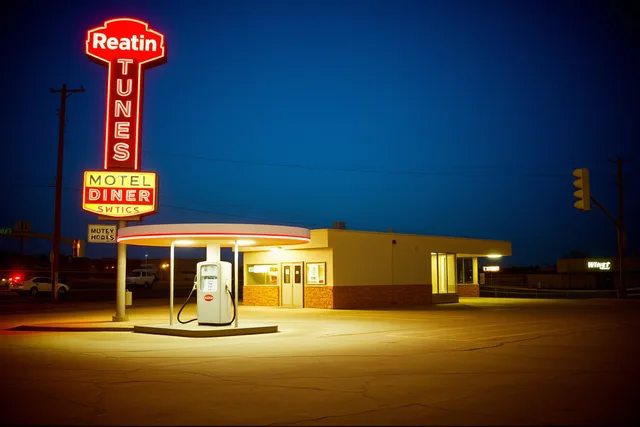
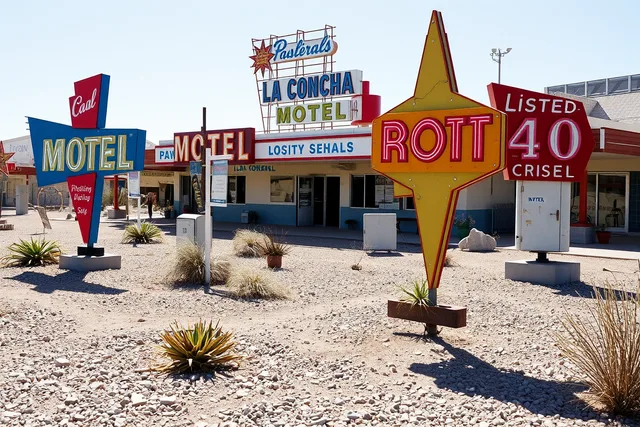
The photograph above is historical context only. It does not document a different station's current condition, access, or water-related planning needs.
Common questions
Can a regional source prove a site is outside a hazard area?
No. Use current, property-specific information and the responsible authority for that conclusion.
Is a planned reuse the same as an approved reuse?
No. Describe the work as proposed until the responsible party confirms approval and current status.
Should regional comparisons mention uncertainty?
Yes. State what the source covers, its date, and what still needs confirmation.