Guides
How gas station preservation cost planning works before you share a 2027 figure
Understand gas station preservation cost planning for 2027 with scope categories, case-study limits, source records, funding context, and editorial safeguards.
Gas station preservation cost planning is not one number found online. A former station can hold a documented history, a current business use, an assessment record, a public funding story, and a future proposal at once.
Each yields a different kind of cost information. An article should show that difference before naming a dollar figure.
This guide explains an editorial method for covering cost context around historic or former gas stations. It is not a bid, an appraisal, a financial recommendation, an environmental opinion, or a project plan for a specific property.
What to take away
- Name the property, date, and scope behind every published figure.
- Keep awards, estimates, expenditures, and total project costs in separate categories.
- Use a case study as historical context, not a replacement for property-specific work.
- Make unknowns visible rather than filling them with a generic range.
- Keep sponsored claims and supplied project numbers clearly attributed.
Start with categories instead of totals
The word "cost" can mean several things in a project story. It might mean the expense of archival research, a grant award, an environmental assessment, a defined cleanup activity, qualified rehabilitation expenditures, total project cost, or a proposed operating budget. Combining those categories makes an article sound decisive while giving the reader less information.
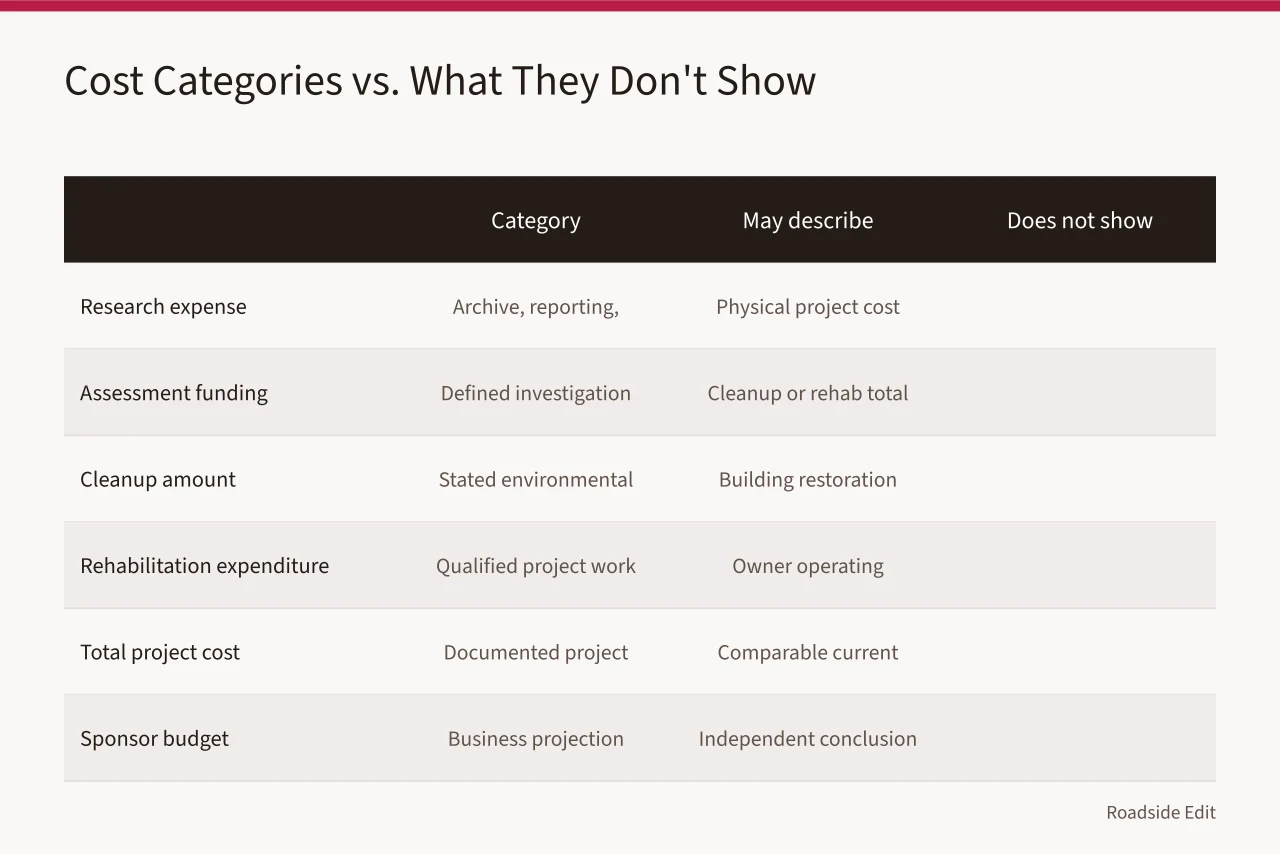
Start a private cost ledger with the source, date, property, category, scope, and stated limitation. Then write only what the record can support. A grant is not automatically the total budget. A project total may include work outside a particular building. A historical cost figure is not a current price.
| Category | What it may describe | What it does not automatically show |
|---|---|---|
| Research expense | Archive, reporting, image, or rights work | Physical project cost |
| Assessment funding | Defined investigation or analysis | Cleanup or rehabilitation total |
| Cleanup amount | Stated environmental work | Building restoration cost |
| Rehabilitation expenditure | Defined qualified project work | All owner or operating expenses |
| Total project cost | A project's documented total | A comparable current quote |
| Sponsor budget | Business-supplied projection | Independent conclusion |
The goal is not to make an article timid. It is to make it usable. A reader can understand a clearly labeled case record and decide what questions to ask next. A broad, unsourced range only creates a false sense of certainty.
Use case studies with a narrow claim
A public case study is valuable when the article identifies it as a case study. It may show how a named property was adapted, how a documented project described its scope, or what estimated figures were reported at the time.
It does not prove that another gas station needs the same work or will have a similar outcome.
The National Park Service's Forty-Four & Sixty-Six Service Station case study identifies the Boise property, its completed rehabilitation date, original and new uses, and its stated project figures. That supports a narrow sentence about that named case. It should never be used as a default cost for a different station, a different year, or a different project scope.
This is especially important for visual comparisons. Two stations can both have a wide canopy or a familiar brand style while having different ownership histories, material conditions, use plans, code issues, and site questions. A photograph is not a price comparison.
Ask what is included before sharing a figure
Every number needs a short fact check. Before writing, ask:
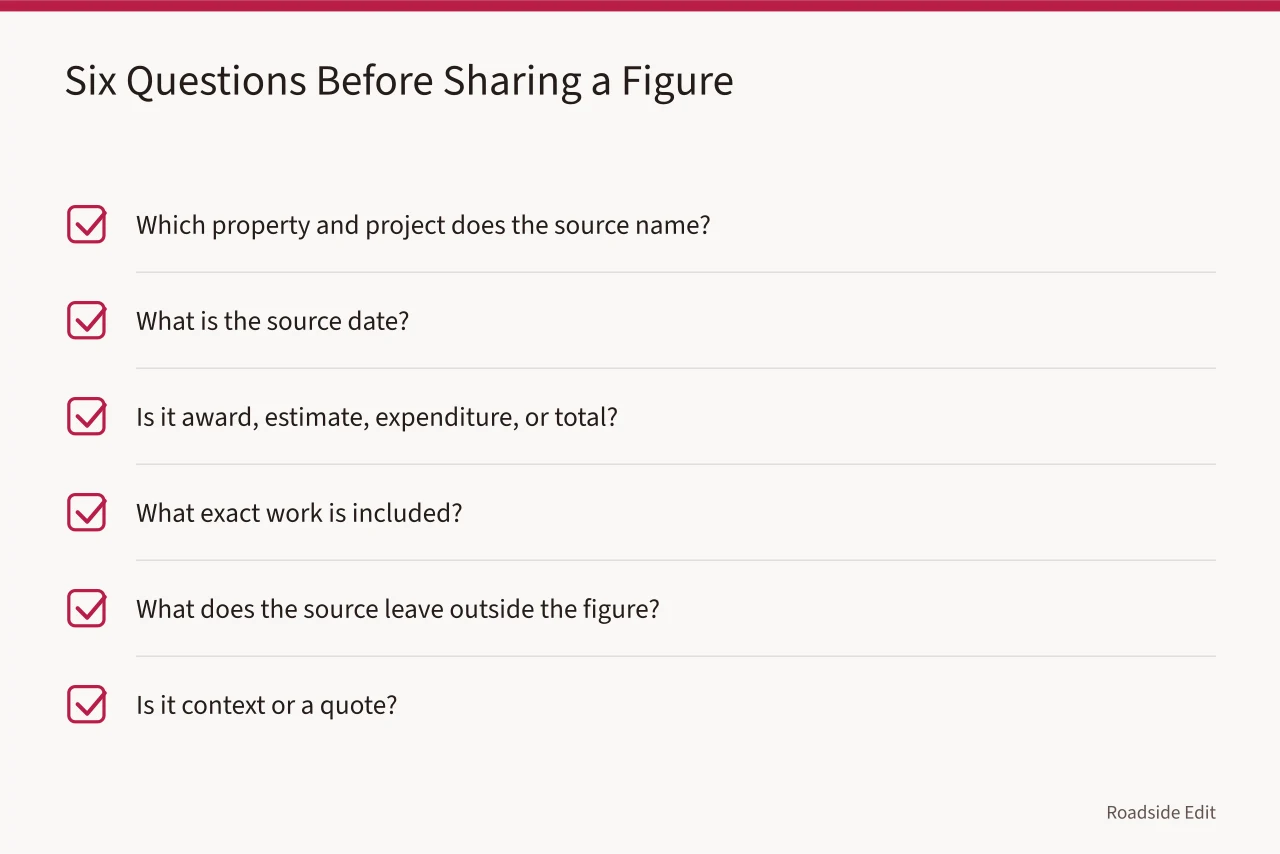
If the source answers only one or two questions, the article should reflect that limit. "An EPA record reported an assessment award for the named site" is accurate when that is all the record establishes. "A typical gas-station project costs..." is not justified by one award.
Keep environmental context in its own lane
Former gas stations can raise questions that an editor cannot answer from a roadside image or a building history. An agency announcement may describe a particular assessment, excavation, or grant. That information should be kept tied to its property, date, and stated work.
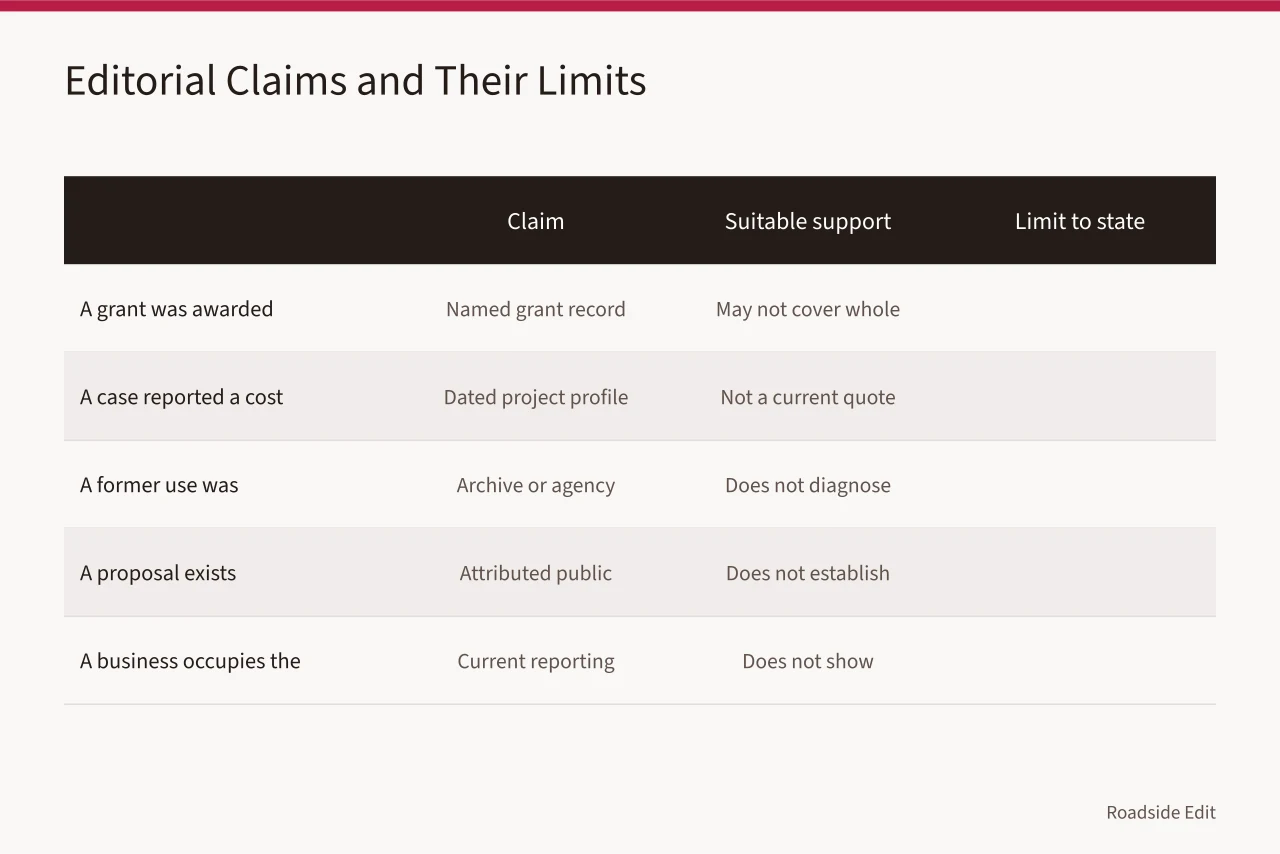
Do not use vacancy, an old pump island, or a weathered canopy as proof of an environmental condition. Do not use one community's cleanup story as a financial forecast for another town. Property-specific assessment and the relevant public process determine those facts.
| Editorial claim | Suitable support | Limit to state |
|---|---|---|
| A grant was awarded | Named grant record | It may not cover the whole project |
| A case project reported a cost | Dated project profile | It is not a current quote |
| A former use was documented | Archive or agency record | It does not diagnose current conditions |
| A proposal exists | Attributed public statement | It does not establish approval |
| A business occupies the site | Current reporting | It does not show financial viability |
Make sponsored participation transparent
Cost-oriented pages often attract businesses that want a profile, a directory listing, or a place in a resource list. Those can be useful products when the boundary is explicit. A sponsor can provide a project description, a statement of its own current use, and images with source details. The article should attribute that information and label the commercial relationship.
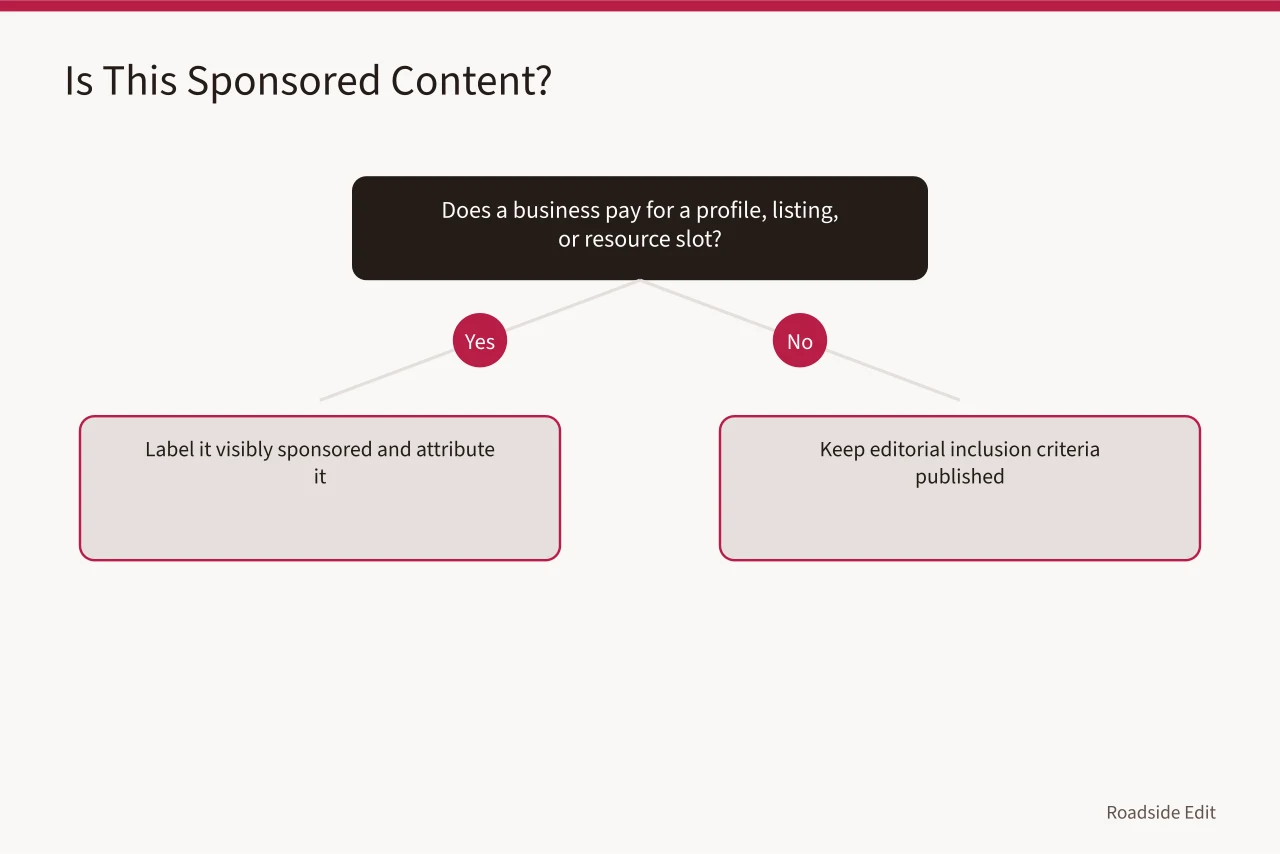
Payment should never buy an undisclosed historic designation, a ranking, a return-on-investment claim, or a technical conclusion. An editorial list should have published inclusion criteria. A paid profile should be visibly sponsored. That makes the page more credible to readers and more reliable for businesses that may want to participate later.
The same categories apply to a project spreadsheet. The U.S. Government Accountability Office's cost-estimating guide describes cost estimating as a structured process tied to a defined technical basis, assumptions, and data.
It supports the narrow editorial point: a dollar amount has meaning only with a stated scope and method. The guide does not provide a preservation budget for an individual former station.
When a project history includes older documents, describe their role accurately. The National Archives explains what makes a primary source: a source can be direct evidence for a specific question without resolving every later question. A contemporaneous grant record may support a sentence about an award at that time yet not a current cost or condition.
Disclosures should be direct and close to a sponsored claim. The Federal Trade Commission's endorsement guidance addresses disclosure of material connections that could affect how readers evaluate an endorsement. That makes it a useful editorial standard for separating supplied business information from independent reporting.
Use images without financial implication
Images can make an article feel as though it has inspected a property when it has not. Use visual material to add context, not to imply that a building has the same cost, status, or project stage as the paragraph beside it.
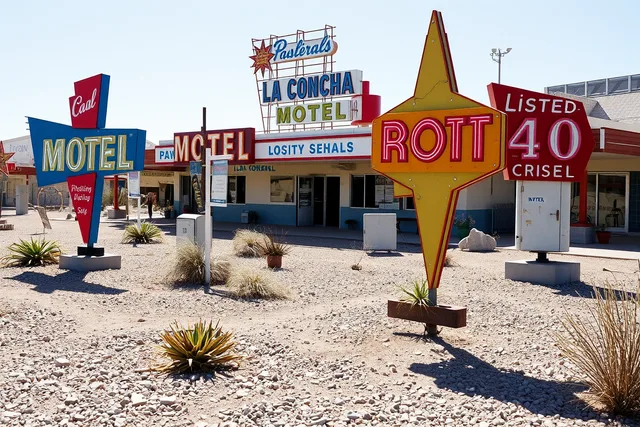
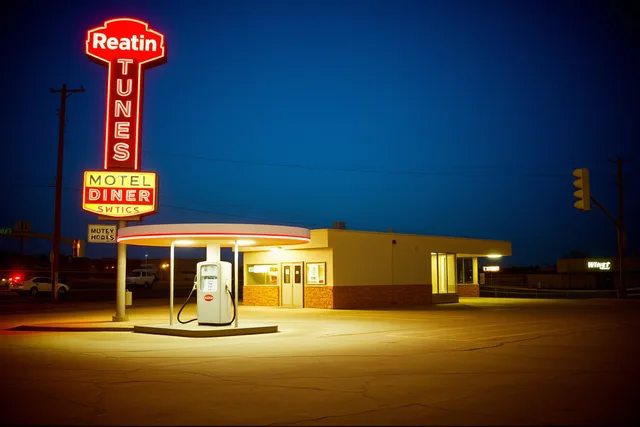
This image is illustrative and does not document the costs, funding, or condition of an individual property discussed in this guide.
For any image, retain the source page, creator or collection where known, date where known, license note, and caption basis. For original photography, retain the visit date and location. For a supplied image, mark it as supplied rather than presenting it as independent reporting.
Run a cost-claim edit before publication
Use a focused final review:
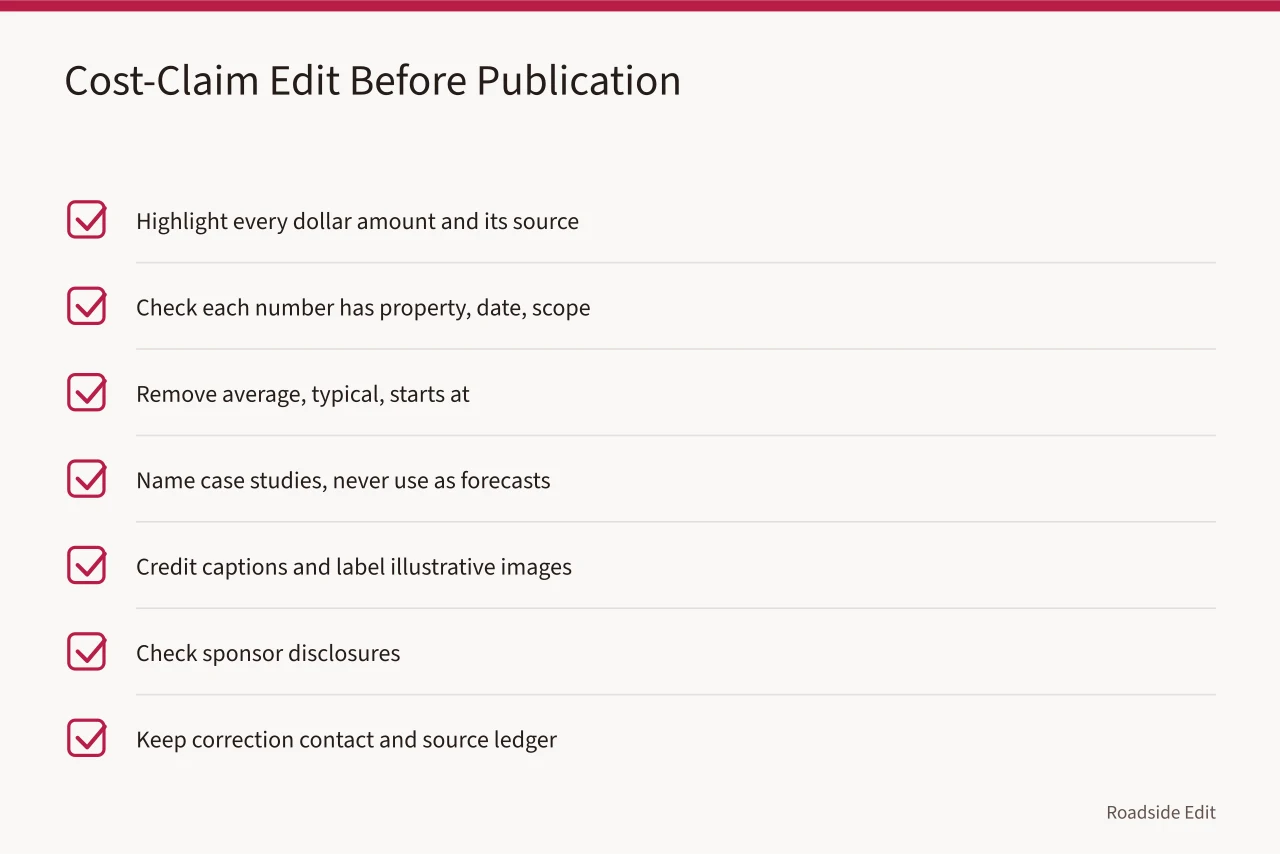
Common edits are straightforward. Change "restoration cost" to "the source's stated project cost" when the record does not establish a pure restoration scope. Change "the owner will receive funding" to "the organization announced an application" when the source only describes a plan. Change "the site needs cleanup" to a narrow, attributed statement or remove it.
Preserve the correction path
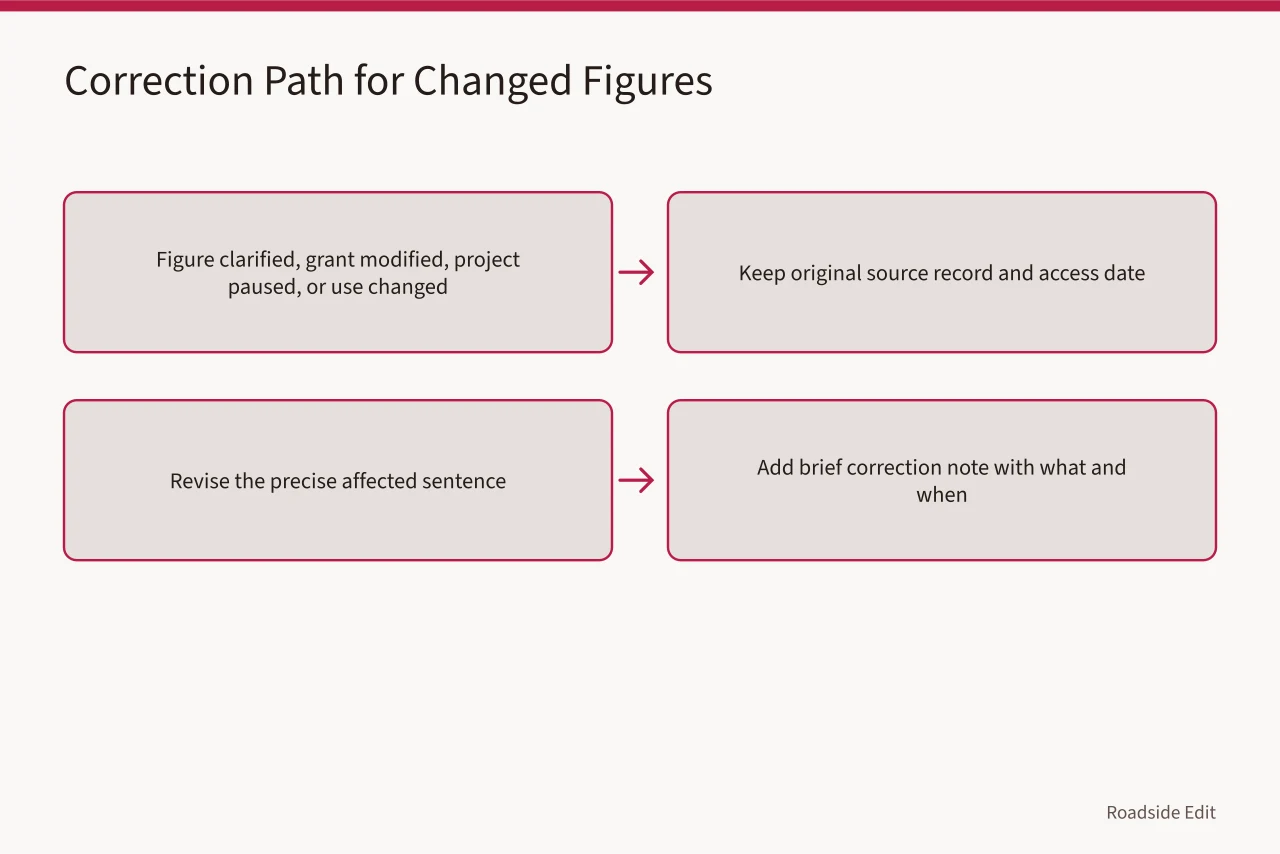
Cost and project information can change quickly. A figure may be clarified, a grant may be modified, a project may pause, or a planned use may change. Keep the original source record and the access date. If an update affects a material claim, revise the precise sentence and add a brief correction note explaining what changed and when.
This process is part of quality control. It helps a publication stay useful without pretending that an older page remains current forever.
Keep the reader's decision in view
The reader may be an owner, a local volunteer, a journalist, or a potential advertiser. Each needs honest context, not a persuasive total. A page that identifies categories and limits can help them ask better questions of the right people. It should never substitute for a property-specific review or make a financial decision on their behalf.
Common questions
Can this guide provide a cost estimate for a specific station?
No. A specific estimate needs a property-specific scope, current information, and the relevant qualified work. This guide explains how to read public cost context responsibly.
Is a grant award the same as a total project budget?
No. A grant may cover one defined activity. Report it with its source, date, and scope rather than treating it as the entire budget.
Can a case-study figure be useful to readers?
Yes, when the case is named, the figure is dated, and the article makes clear that its scope and circumstances belong to that project.
What should happen when a source figure is unclear?
Find a clearer source, state the limitation, or leave the number out. A precise omission is better than a misleading comparison.