Guides
Part of How to build a vintage diner interiors case study readers can trust
How to keep a vintage diner interiors case study record for 2027
Keep a 2027 diner interiors case study record with dated research questions, disclosure notes, image credits and a correction log that later editors can follow.
A diner case study record is not a folder of clippings. It is the chain that lets the next editor check a sentence about booth laminate, chrome-edge trim or a back-bar mirror without re-reporting the story. Two documents carry that chain: a research question and a disclosure note.
What to take away
- Write the research question before the first site visit, and date it.
- Log every claim as observed, reported or historical, with the date it was gathered.
- Credit each image to its creator and state what the image cannot prove.
- Keep a disclosure note whenever a contributor, supplier or sponsor has a stake in the page.
- Record each correction with the old wording, the evidence and the decision date.
The two records this article covers
Most editorial files fail at the same point. Nobody wrote down what the page was trying to answer, so every later draft answers a slightly different question.
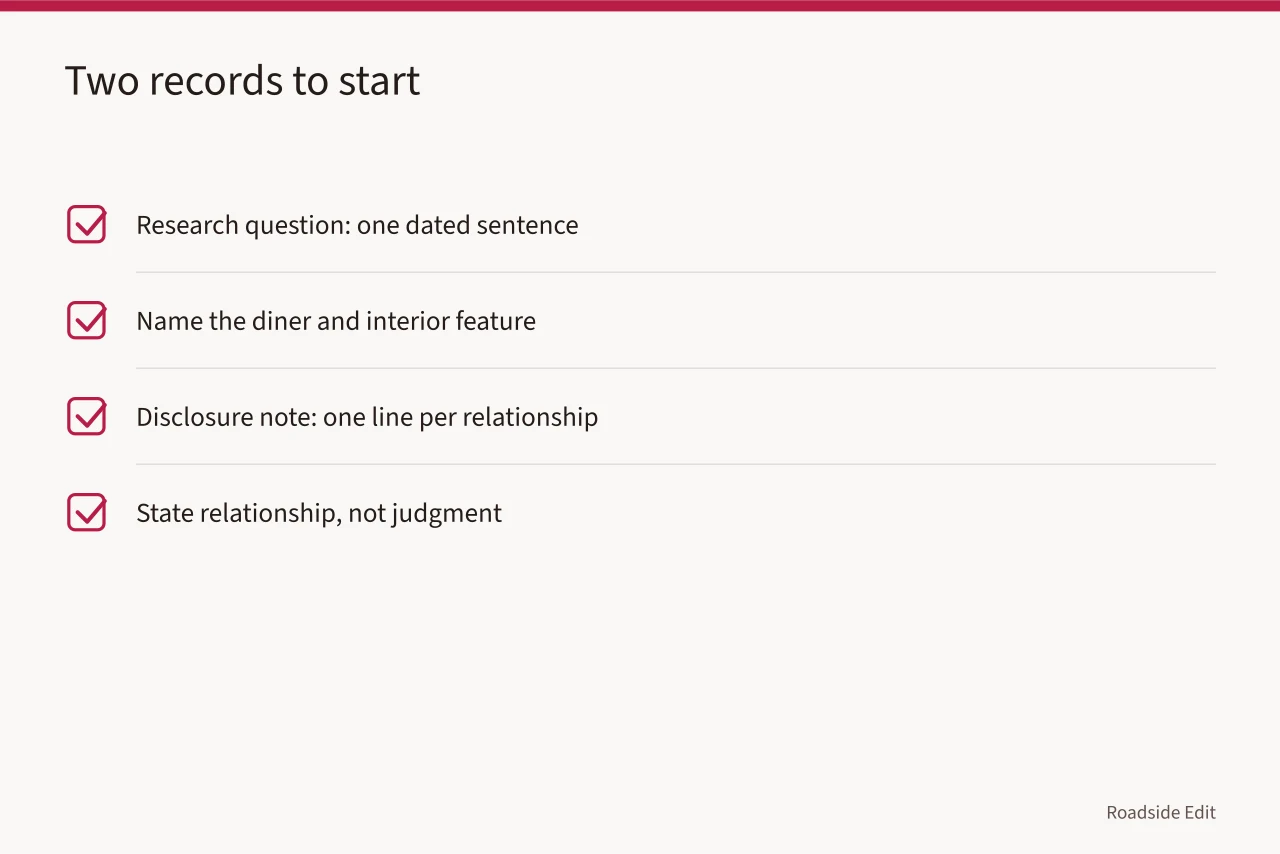
Research question. One sentence, dated, naming the diner and the interior feature under study. "How did the 1948 counter at the Roscoe Diner get its laminate replaced?" What survives of the original? A question that names a feature and a date range keeps a writer focused. It prevents drifting into a general history of diner design.
Disclosure note. One line per relationship that a reader would want to know about. A fabricator who supplied replacement laminate, a collector who sold a booth, a preservation group that paid for travel. The note states the relationship, not a judgment about it.
Name the record type
Label each item in the file as observed, reported or historical. An observed item is what the writer or photographer saw on a stated date. A reported item is an attributed statement from an owner, curator or supplier.
A historical item is a dated archive, catalog entry or public record. The labels stop a 1970s trade photograph from reading as a current condition report, and stop a supplier's description of a booth from reading as independent evidence.
The National Archives explains what makes a source primary. A dated photograph, an interview and a catalog entry can all be useful, and each establishes a different kind of fact.
The NPS documentation project as a model
The National Park Service account of its historical documentation project describes measured drawings, large-format photographs and written histories produced to a fixed standard. It records what each drawing covers and what was left out. The documentation-method article covers that project, not a diner file.
The transferable habit is stating exclusions. A measured drawing of a counter elevation that omits the back bar tells a later reader where the record stops. A diner file that says "no original stools survive at this address as of the survey date" is more useful than one that stays silent.
Media records
For each image, save several details. These include the local file name and the creator shown by the source. Also save the credit page and the capture date if known. Finally, save the caption's role. A historic photograph used as context must not drift into evidence for a different address.
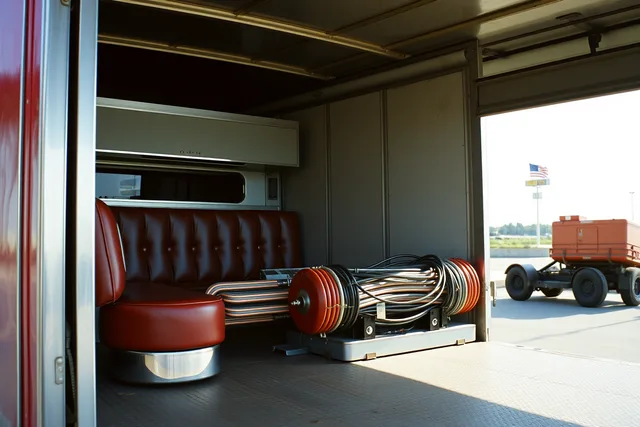
The Roscoe Diner wall photograph below is contextual media. It shows a wall finish, not a condition assessment.
Keep corrections visible
When a claim changes, keep the source that prompted the review, the original wording, the decision date and the corrected language. Do not erase the context that explains why the later sentence is more careful.
The National Archives records-management overview supports keeping records with enough context for later review. For a diner file that means linking the exact claim, its source, the date and the editorial decision, not treating a notes file as a condition survey.
The Federal Trade Commission's endorsement guidance supports recording paid or material relationships when they may affect how a reader reads the page. A disclosure note makes a supplied update transparent without treating it as independent confirmation.
Where the other diner files pick up
Budget and fabrication costs for interior work sit in the diner interiors budget notes, where survey days, travel and shop time are kept as separate named variables rather than one total.
The motel exterior case study questions show the same record types applied to brick veneer, curtain-wall glazing and butterfly roofs, which is useful when a diner sits inside a larger roadside complex.
The case study method sets out how a single property becomes a repeatable file, and it is the right place to start if this is your first record.
Common questions
Should a writer save every source they considered?
Save the sources that support material claims, plus a short note on major sources rejected as too broad or undated. A rejected-source note explains a gap that a later editor would otherwise try to fill.
What is a source limit?
It is a line stating what the source can establish and what it cannot. A 1962 equipment catalog proves what was offered for sale that year, not what was installed at a specific counter.
Can a paid placement appear in a diner case study?
Yes, when the paid status and the page's inclusion method are clear to readers. The disclosure note records the relationship; the research question still governs what the page claims.