Costs
Part of How to build a vintage diner interiors case study readers can trust
How to budget a vintage diner interiors case study method before you start
Budget a 2027 diner interior case study around survey days, photo rights, and correction time, not around a restoration figure you cannot source.
A vintage diner interior study is priced by survey days, not by square footage. Budget the hours spent reading a room before you budget anything else.
What to take away
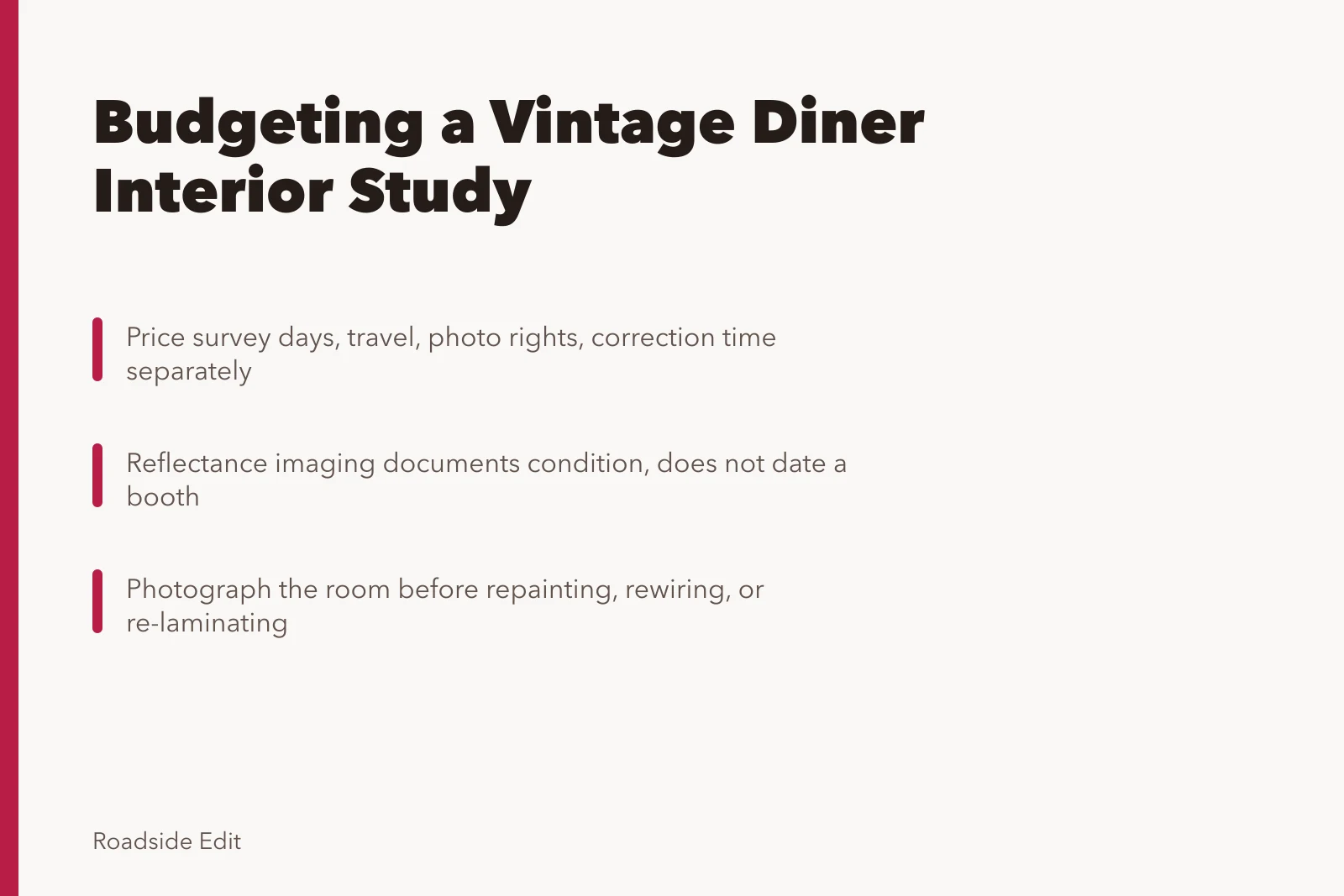
- Price survey days, travel, photo rights, and correction time as separate lines.
- A reflectance-imaging record documents condition; it does not date a booth or a counter.
- Photograph the room before anyone repaints, rewires, or re-laminates it.
- Keep the source sheet and media credits with the budget record.
- Name the State Historic Preservation Office or local landmarks commission before you write a scope.
Read the room before you price the work
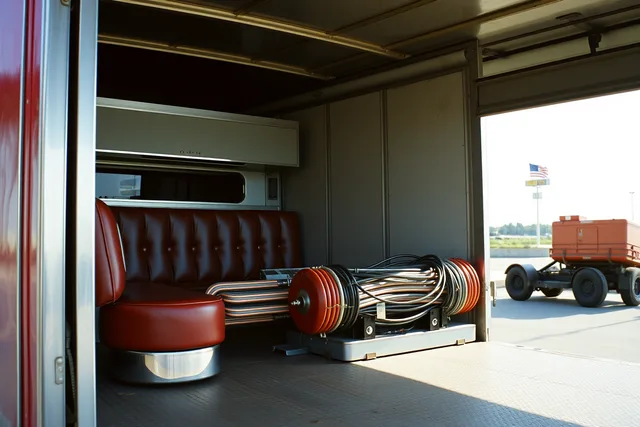
Diner interiors date by material, not by style. Porcelain-enamel panels, stainless trim, and terrazzo floors point to one era of construction. Later laminate booths, vinyl stools, and drop ceilings point to a remodel.
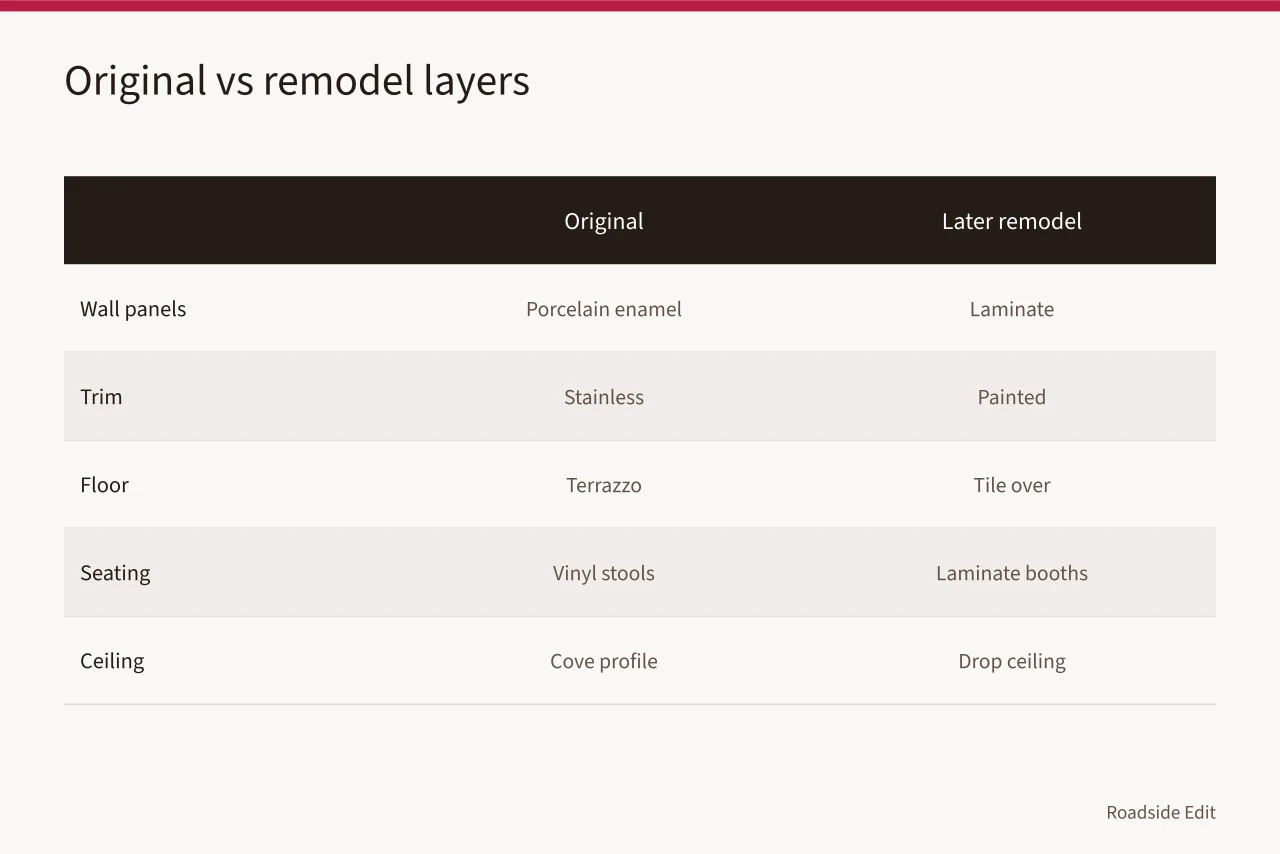
A survey day is the unit that separates those layers. One day covers a walkthrough, measured sketches, and a photo set. A second day covers the back bar, the restrooms, and the kitchen pass-through.
Budget the second day. Most interiors were altered in stages, and the later work is usually the part nobody has documented.
What the reflectance-imaging example actually shows
The National Park Service describes a project that used specialized reflectance-imaging photography to recover details not visible in ordinary light. The cultural-resource imaging article concerns a single monument, not a diner.
Read it as a method note. It shows that an imaging technique has a stated purpose and a stated limit. A budget line for photography should carry both, so no reader treats a photograph as a full record of the room.
Scope the interior by component
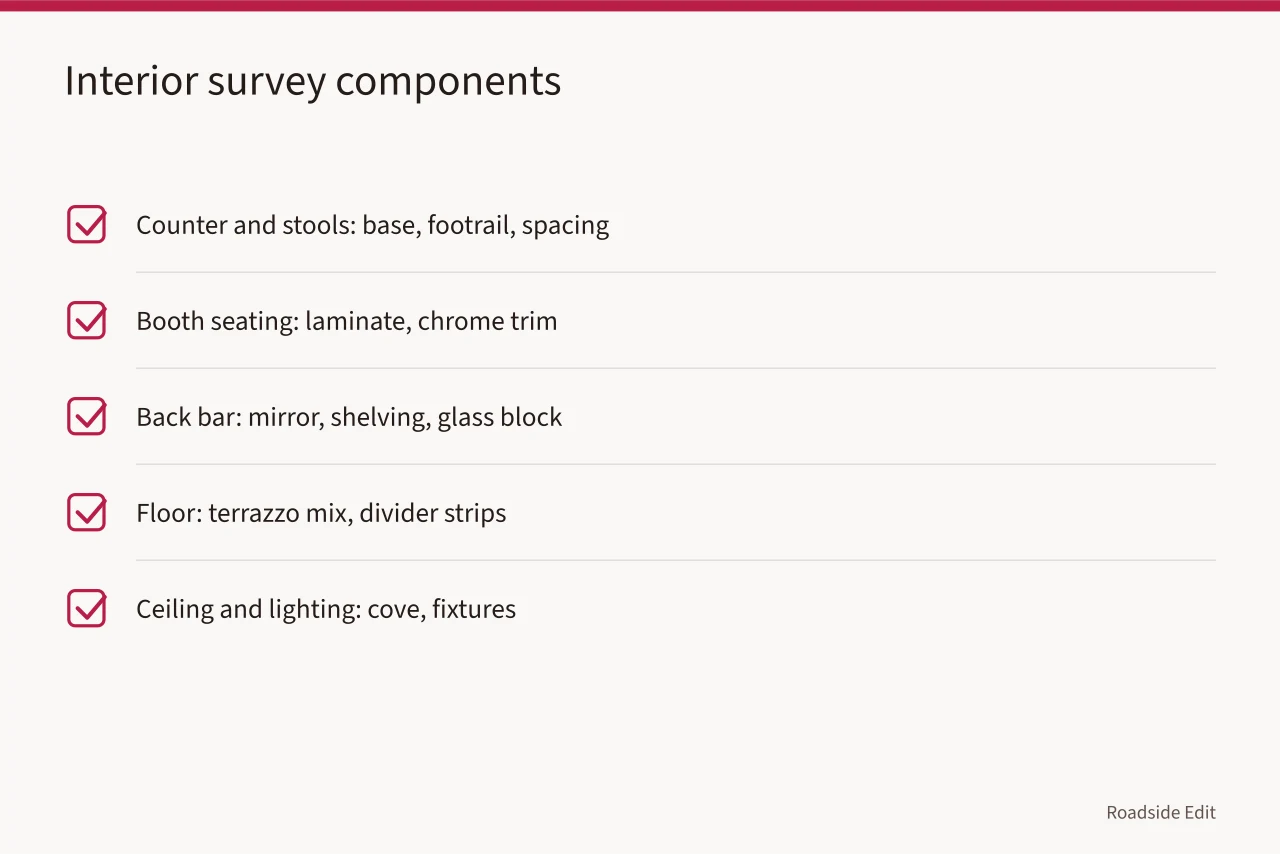
| Component | What the survey records | Common loss |
|---|---|---|
| Counter and stools | Base material, footrail, stool spacing | Replaced stools, new laminate top |
| Booth seating | Laminate pattern, chrome edge trim | Reupholstered backs, painted trim |
| Back bar | Mirror, shelving, glass block | Mirrors removed, shelving rebuilt |
| Floor | Terrazzo color mix, divider strips | Tile over terrazzo, sealed cracks |
| Ceiling and lighting | Cove profile, fixture type | Drop ceiling, fluorescent retrofit |
Each row is a separate survey task with its own photo set. A component you skip is a component you cannot describe later.
Price the research process honestly
Break the work into visible tasks:
- archive search
- image licensing
- interview preparation
- transcription
- citation check
- correction handling Each task carries its own deadline and approval point.
The Government Accountability Office's cost-estimating guide sets out why a defined purpose, documented assumptions, and a transparent basis matter in an estimate. That is the discipline an editorial budget needs. It says nothing about what a diner project costs.
Keep the research total separate from any construction figure quoted in a historical source. A study can report a sourced number in context. It cannot use its own production budget to imply a cost for someone else's building.
Keep a small research reserve
A reserve covers a missing record or a caption that needs fixing. It is not a fund for filling a gap with a plausible story.
Spend it on a better record, narrower wording, or a stated uncertainty. The National Archives records-management overview supports keeping the decision trail when a research plan changes.
Use a simple approval rule
When a new archive request, rights question, or correction appears, record three things. Record why it matters, the added effort, and who approved it. That keeps the evidence trail intact when a deadline moves.
For sponsored placements, budget a disclosure review alongside copyediting. The Federal Trade Commission's endorsement guidance covers listings where payment could affect how a reader reads the entry. Payment for placement must not turn an entry into an unmarked recommendation.
Where the diner study differs from other roadside work
A motel exterior is read from the street, so a survey can be done in a morning. A diner interior is read from the inside, and the parts that date it are the parts least often photographed.
That is why the case study records for diner interiors put the counter, the booth run, and the back bar in the first pass. It is also why the historic motel case study method does not transfer directly: the exterior sequence does not cover a room.
The gas station case study budget notes show the same split for forecourt work, where the survey unit is the pump island rather than the room.
Worked example: one diner, two survey days
Take a 1950s diner with a later laminate remodel. Day one covers the street elevation, the entry vestibule, and the counter run. Day two covers the booth seating, the back bar, and the kitchen pass-through.
Set the total as survey days x day rate, plus travel days x per diem, plus a photo-rights line, plus a reserve you name as a percentage of survey cost. Substitute your own figures. Do not publish a per-day rate you have not confirmed with the crew doing the work.
Common questions
Should a case study include construction pricing?
Only when it is specifically sourced and clearly limited to that source. An editorial research budget is not a construction estimate.
Why budget for corrections?
A new record or a factual challenge may require review, revised wording, and a visible correction note. That work has a cost like any other task.
Can an image be used without a credit check?
No. Confirm the source and the applicable rights or license before publication, and record the credit with the budget file.
Does a reflectance-imaging record date a diner interior?
No. It documents condition and reveals detail. Dating comes from materials, construction records, and the primary survey.