Guides
How to build a vintage diner interiors case study readers can trust
Build stronger vintage diner interior case studies in 2027 with dated evidence, clear limits, transparent captions, disclosures, and corrections.
A good vintage diner interior case study does not turn one photograph into a verdict. It makes a smaller, more useful promise.
It shows what a dated record says, what an editor observed or was told, and what remains unconfirmed. That gives readers a richer picture while treating an operating business, a historic place, and an archive fairly.
This is an editorial method for a feature, local guide, sponsored profile, or archive-led story. It is not a building assessment, a preservation plan, or a claim that one diner represents every diner of its era.
What to take away
- Start with one answerable question instead of a broad claim about a whole style.
- Separate documented facts, current observations, and supplied information in the working file.
- Give every image a date, source, and honest caption.
- Show uncertainty plainly, especially when a record is incomplete.
- Keep commercial placements disclosed and distinct from editorial conclusions.
Define the story before collecting material
"Vintage diner interiors" is too wide to be a case study by itself. A reader needs to know which room, period, design decision, or change the article is examining. The best scope is narrow enough that every paragraph can be traced back to a source or a clearly labeled observation.
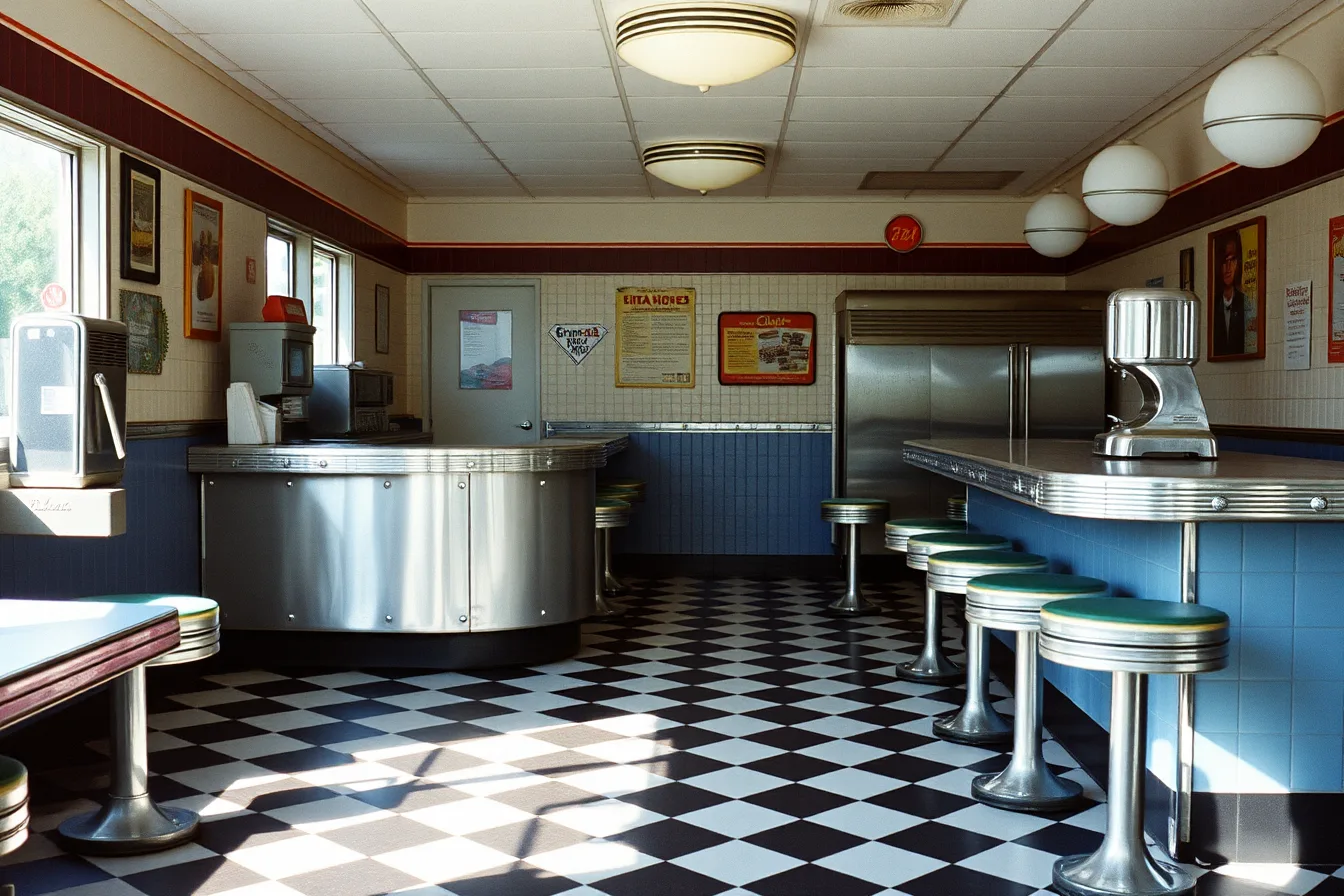
For example, an article might ask how a particular lunch counter appears in a 1950s survey photograph, what a current operator says has changed, and which details cannot be dated from the available material. That is stronger than calling the counter "original," "restored," or "unchanged" without evidence.
Use a one-sentence editorial question before interviews, photography, or outreach begin. It keeps the feature from drifting into an unsourced nostalgia piece and helps a sponsor understand what a paid placement can, and cannot, influence.
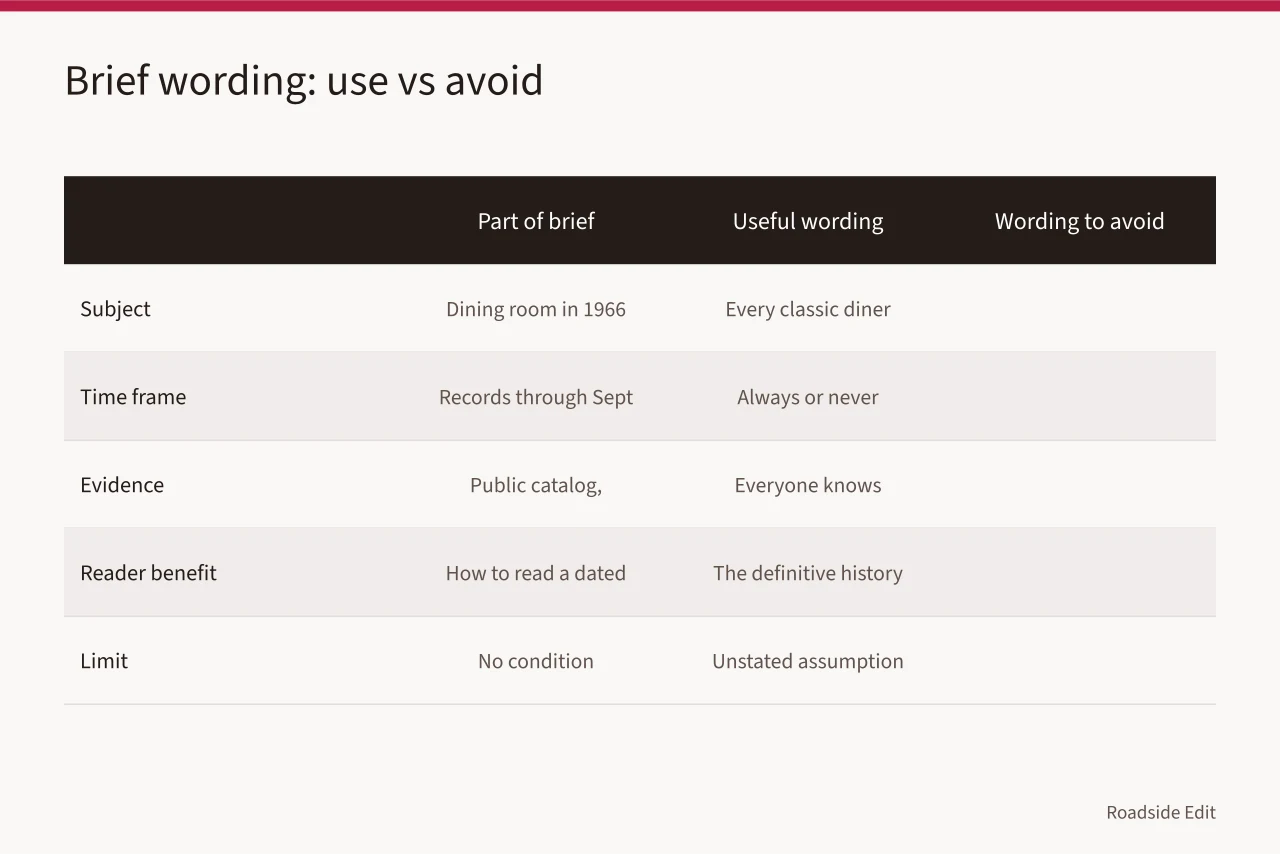
| Part of the brief | Useful wording | Wording to avoid |
|---|---|---|
| Subject | "The dining room shown in a 1966 image" | "Every classic diner interior" |
| Time frame | "Records available through September 2026" | "Always" or "never" |
| Evidence | "A public catalog and an attributed interview" | "Everyone knows" |
| Reader benefit | "How to read a dated room record" | "The definitive history" |
| Limit | "No condition assessment was performed" | An unstated assumption |
The scope is also a guardrail for listicles. A list of notable diners can be useful, but each entry should say what earned inclusion: an accessible archive record, a documented design feature, a current visitor program, or a disclosed nomination. A paid business should never purchase an undisclosed place in an editorial ranking.
Build an evidence stack, not a scrapbook
Case studies become reliable when they treat different material differently. A period photograph shows what was visible when the image was made. A survey record identifies a resource and describes material collected for that record.
An interview documents what a named person says. A current site visit records what the writer saw on a stated date. These sources complement one another, but none proves every other point.
The National Park Service's documentation guidance explains that drawings, photographs, and written material can work together in a record. That is a useful editorial principle: preserve the difference between evidence types instead of flattening them into one confident narrative.
Create a private source sheet before drafting. It may be simple, but it should let another editor retrace the article.
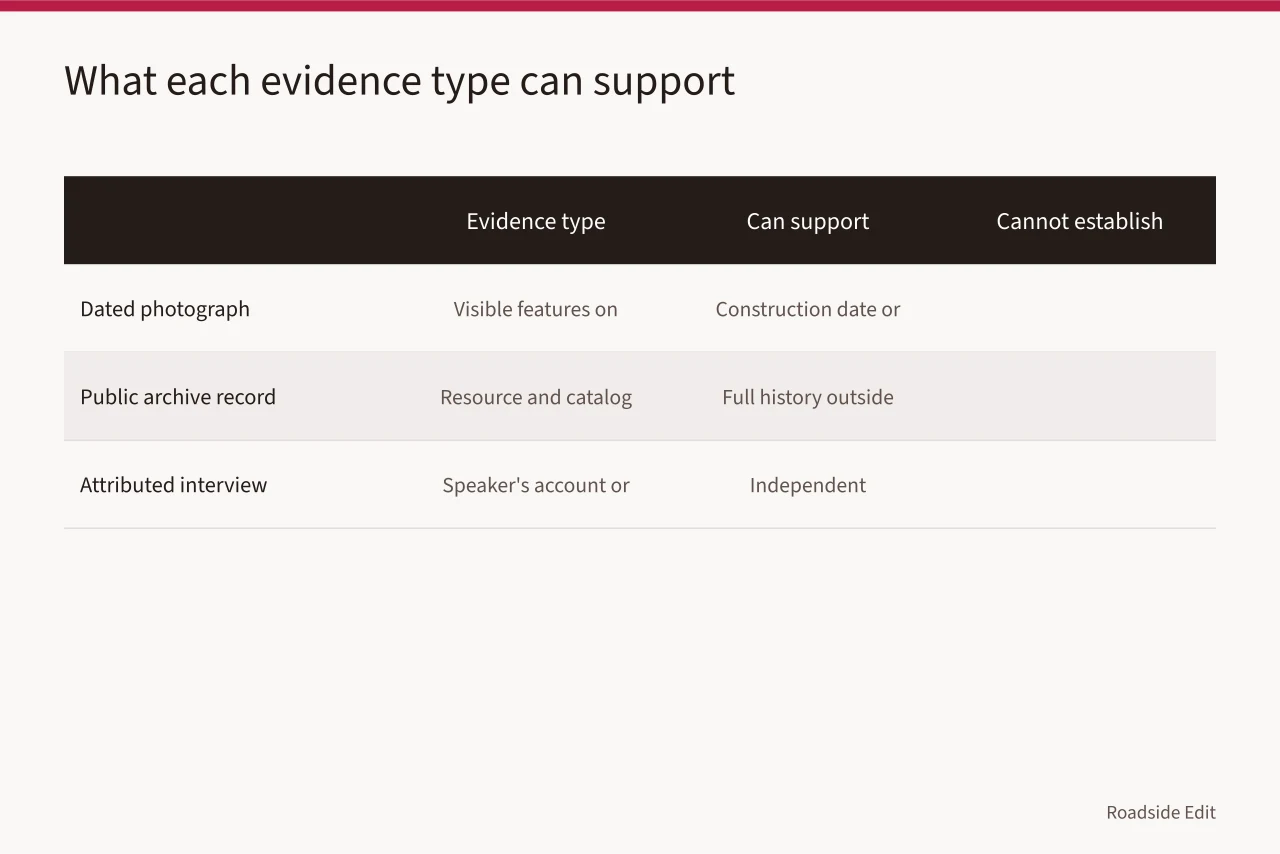
| Evidence type | What it can reasonably support | What it cannot establish alone |
|---|---|---|
| Dated photograph | Visible features on the stated date | Construction date, original status, or present condition |
| Public archive record | The resource, collection, and catalog details it names | A full history outside the record |
| Attributed interview | The speaker's account or recollection | Independent confirmation of every statement |
| Current observation | What the writer saw during a stated visit | Hidden materials or a prior condition |
| Supplied business copy | A disclosed description from the business | An impartial editorial conclusion |
Use the table to make stories more specific, not to avoid them. If an owner says a booth was rebuilt, write "described by the owner as rebuilt" unless a separate source establishes more.
If a photograph shows a tiled floor, say the floor appears in the dated image. That wording is precise without being timid.
Use a chronology that readers can follow
Interior stories often get confusing because a detail is described as though it belongs to one moment in time. A diner may have been built in one decade, photographed in another, altered later, and visited by the writer today. Place those moments in order.
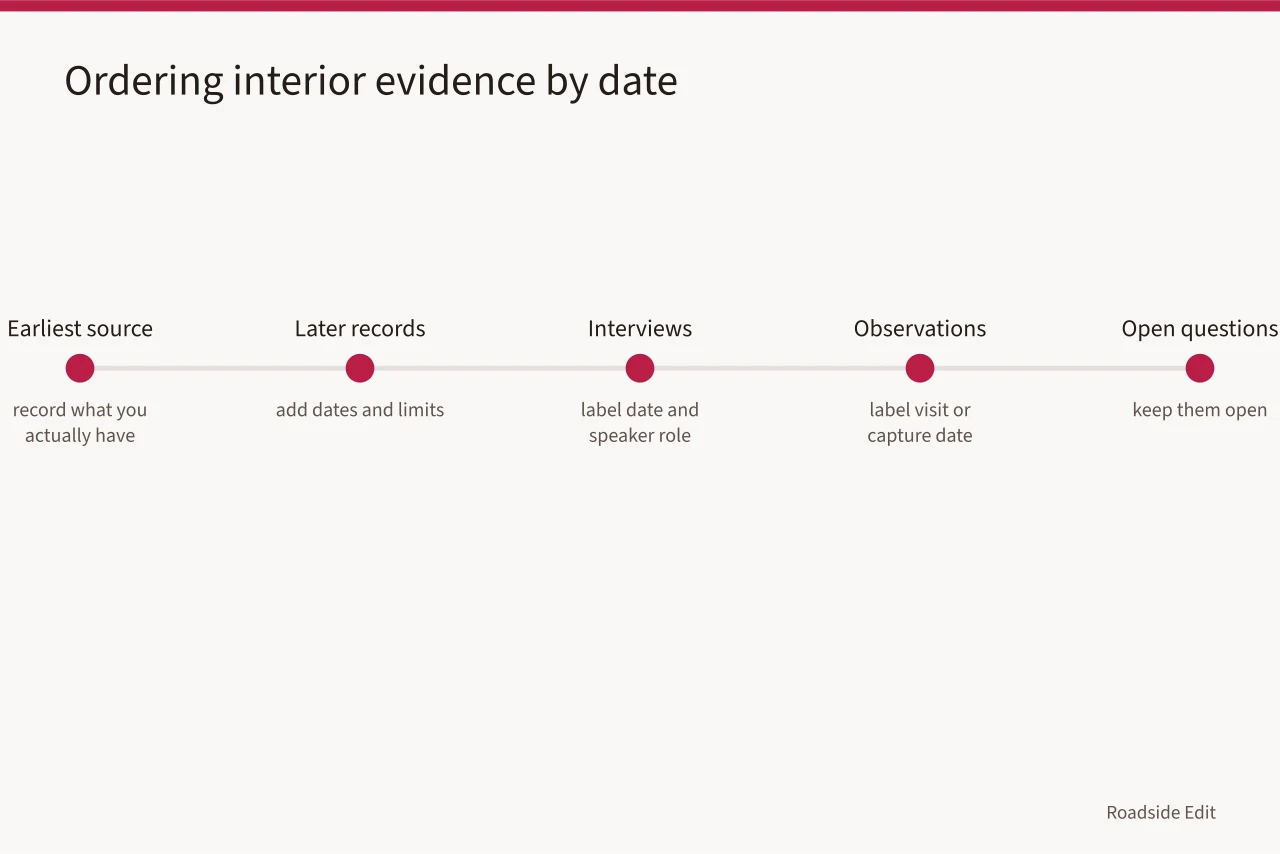
A timeline avoids an easy mistake: importing a feature from a 1940s photo into the present tense. It makes corrections manageable.
If a new image changes understanding of a room, add the record, adjust the sentence it affects, and leave a short correction note. An accurate revision helps readers more than a polished but brittle claim.
Write captions as evidence, not decoration
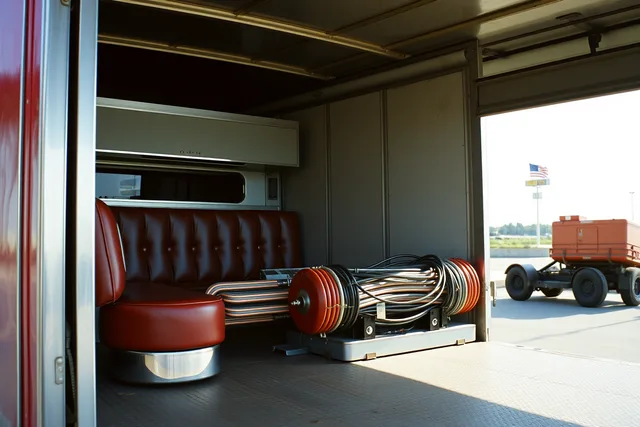
Images carry a lot of narrative weight in design coverage. That makes image language worth slowing down for. A responsible caption identifies where an image came from, whether it is historical or illustrative, and what it does not show. It should never imply a relationship between the image and an uninspected business simply because they share a style.
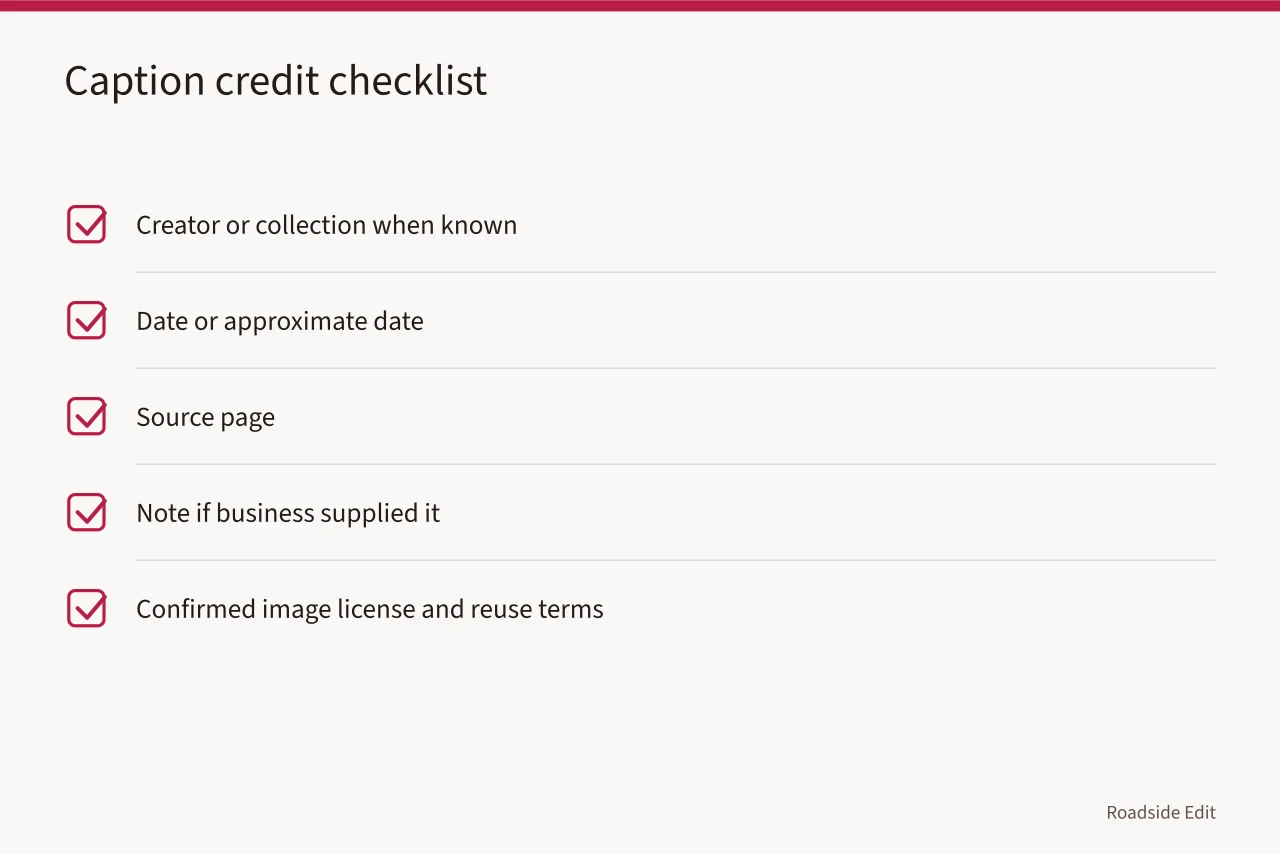
That credit does two jobs. It tells readers where the media came from and stops the image from doing evidentiary work it cannot do.
For an image tied to the featured property, include the creator or collection when known, the date or approximate date when available, the source page, and a note if the business provided it. Confirm the image license and any reuse conditions before publication.
Separate editorial work from paid placements
Roadside and preservation topics can attract legitimate businesses that want inclusion in a guide. That can work when the arrangement is transparent. What matters is that a sponsored profile, paid directory entry, or affiliate disclosure does not quietly become a claim of historic significance, design quality, safety, or authenticity.
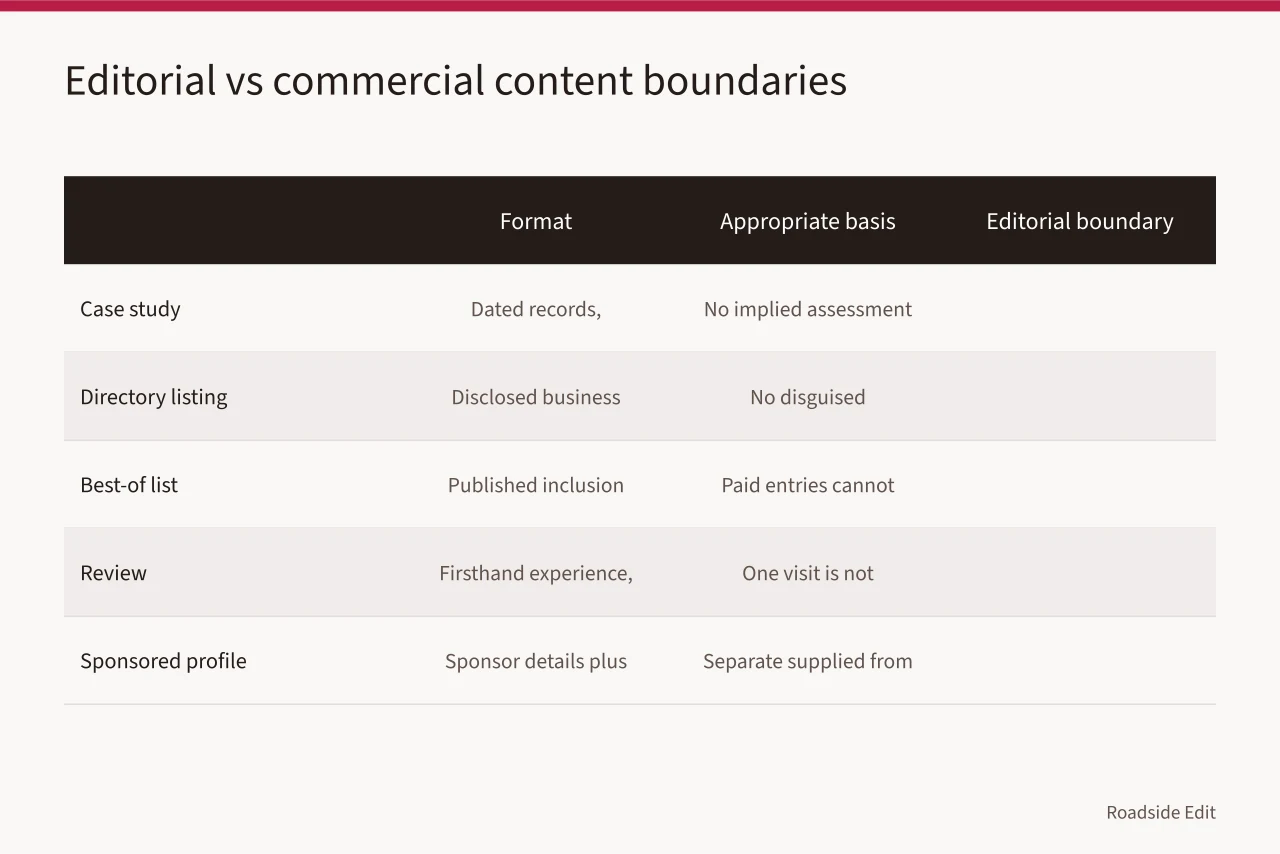
Give editorial and commercial material different labels and different review paths. Editorial features should be selected according to a published method. Sponsored material should name the sponsor and avoid unverified comparative language. A business can provide photos, menus, history notes, and access, but it cannot supply the final fact-check on a claim about itself.
| Content format | Appropriate basis | Required editorial boundary |
|---|---|---|
| Case study | Dated records and attributed reporting | No implied assessment beyond the evidence |
| Directory listing | Disclosed business submission | No disguised endorsement |
| "Best of" list | Published inclusion criteria | Paid entries cannot buy rank |
| Review | Firsthand experience with date and scope | No claim that one visit proves universal quality |
| Sponsored profile | Sponsor-supplied details plus disclosure | Distinguish supplied statements from reporting |
The point is not to make the page sound legalistic. Plain labels build trust. Readers can understand a disclosure in one sentence, and advertisers benefit when the ground rules are clear from the beginning.
Keep a claim ledger while drafting
A claim ledger is a small working document that connects each significant statement to its support. It is especially useful when several people contribute research, photography, or edits. The ledger should not appear on the published page, but the habit improves the published page.
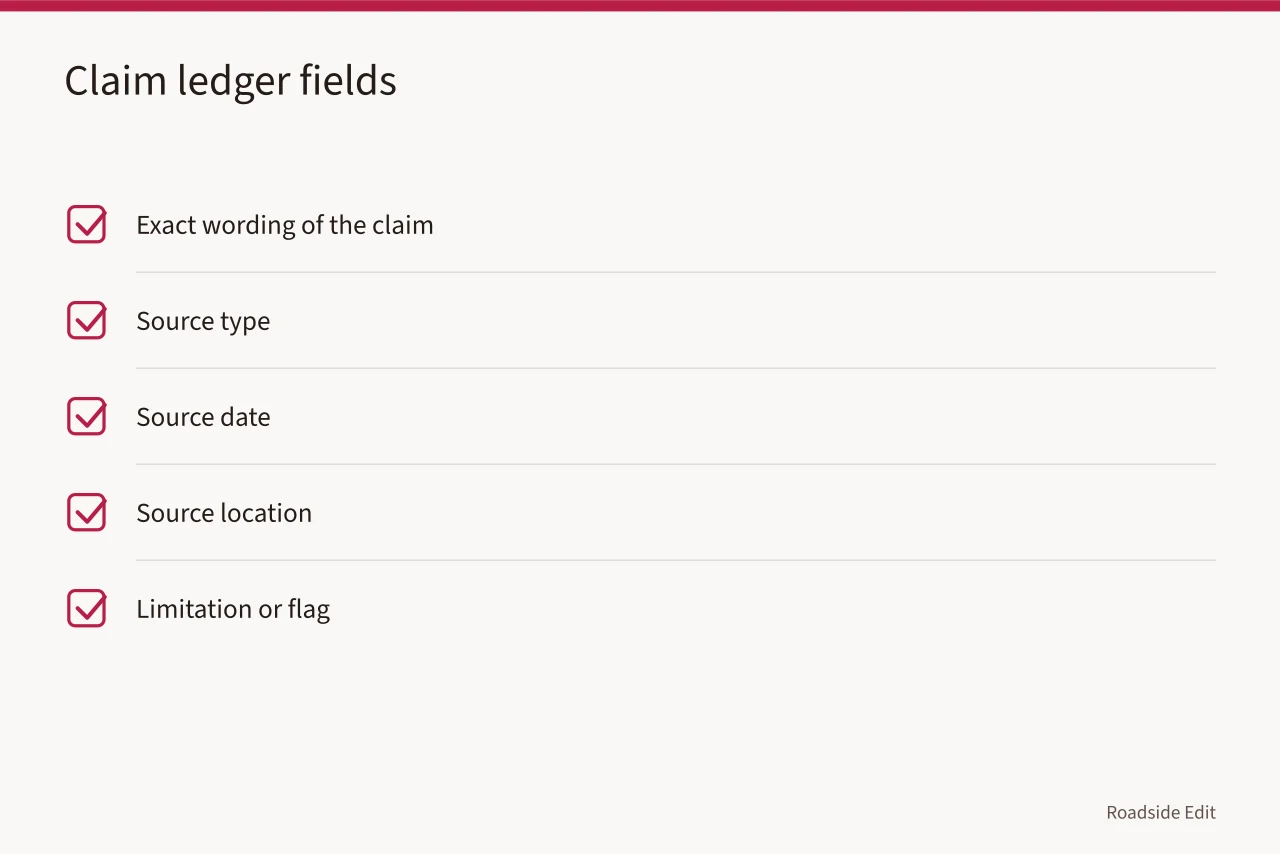
For each claim, record the exact wording, source type, source date, source location, and any limitation. Flag statements that rely on memory, marketing language, a cropped image, or a source that does not quite say what the draft says. Those are not necessarily unusable, but they need attribution, narrower language, another source, or removal.
This discipline also protects writers from accidental repetition. Two articles may mention similar visual cues, yet one can focus on a documented counter plan while another focuses on a photographer's view, a local menu tradition, or a present-day accessibility change. The source trail makes the distinction visible before the drafts begin to sound alike.
Make uncertainty useful to the reader
An unanswered question can be valuable if framed well.
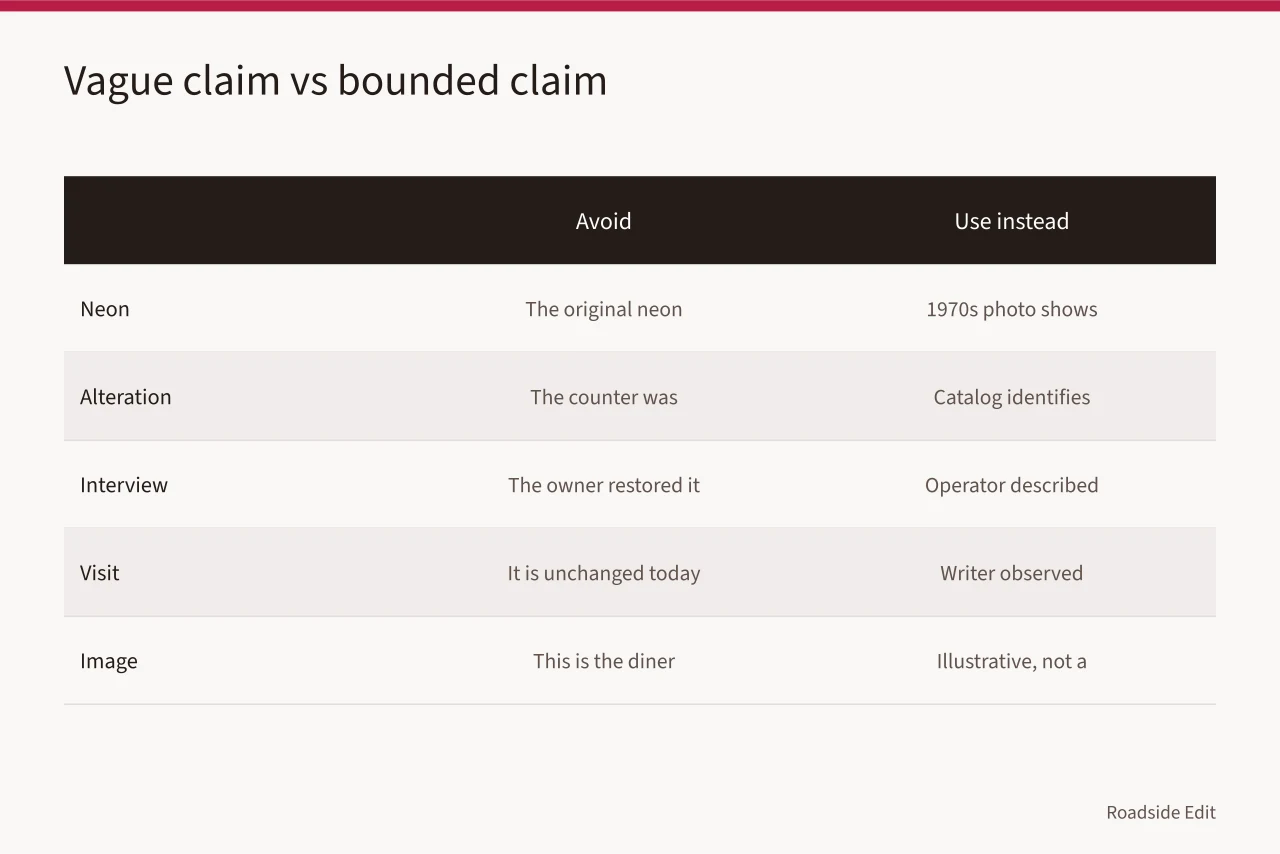
Instead of "the original neon remains," write: "The available 1970s photograph shows neon at the facade; the article does not establish whether the current sign is the same installation."
That sentence helps a reader understand both the record and its boundary.
Useful uncertainty language includes:
- "The catalog identifies the image, but does not date the alteration."
- "The operator described this change during a 2026 interview."
- "The writer observed this feature during a visit on the stated date."
- "No independent documentation was located for that detail."
- "This image is illustrative, not a record of the featured diner."
Avoid turning limits into a formula. Use them only where they matter. A feature that labels uncertainty selectively reads like careful reporting, not a disclaimer pasted onto every paragraph.
A practical editing sequence
Before sending a diner interior case study to an editor, use this final pass:
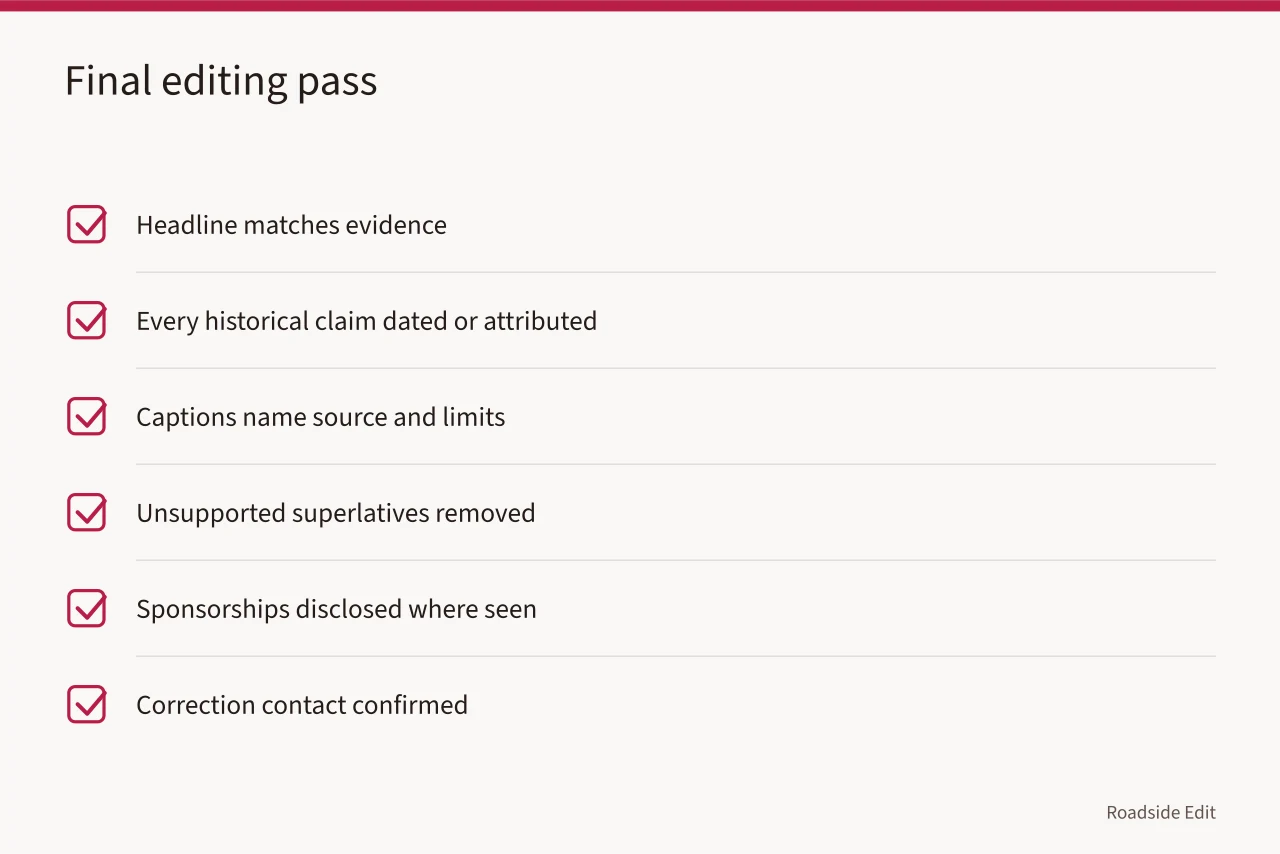
This produces a stronger story even when the available record is thin. A transparent short feature can be more useful than a long article that hides where its information came from.
The National Archives records-management overview supports keeping an identifiable record and review history for information that may need future management. For a case-study ledger, this means preserving the source, date, wording, and correction decision behind material claims. It does not transform the editorial file into an assessment of a diner.
The Library of Congress primary-source analysis guide separates observation from reflection and further investigation. That sequence supports the central case-study method: first describe what the record identifies, then make any interpretation modest and traceable.
The Federal Trade Commission's endorsement guidance supports clearly disclosing a relationship that could affect how readers weigh a recommendation or listing. A paid placement can be useful content when it is labeled, but the payment cannot stand in for independent reporting.
Common questions
Is a vintage diner interior case study the same as a preservation report?
No. A case study is editorial coverage of identified records, observations, and attributed accounts. A preservation report requires a different scope, expertise, and evidentiary standard.
Can an article call a feature "original" based on one old photo?
No. A dated photograph can support a statement about what was visible when it was made. It does not by itself prove that a feature was original, survives today, or was never changed.
How should a paid diner listing appear in a related guide?
Label it clearly as sponsored or paid, separate it from editorial rankings, and attribute business-supplied details. The payment should not determine an undisclosed editorial conclusion.
What belongs in a correction note?
State what changed, when it changed, and why. Link to the newly available record only when that link directly supports the corrected sentence.
In this guide
- How to budget a vintage diner interiors case study method before you startBudget a 2027 diner interior case study around survey days, photo rights, and correction time, not around a restoration figure you cannot source.
- How to keep a vintage diner interiors case study record for 2027Keep a 2027 diner interiors case study record with dated research questions, disclosure notes, image credits and a correction log that later editors can follow.