Costs
Part of How to build a gas station preservation case study method with dated evidence
How to read 2027 station preservation case study budgets without mixing scope and cost
Read 2027 former-station case-study budgets with better context by separating project scope, funding sources, time periods, estimates, awards, and final costs.
Former gas-station case studies often include a dollar amount. That number can be useful, but it is not self-explanatory. It may be a preliminary estimate, a grant award, a loan, a construction contract, a cleanup invoice, a total development budget, or a final amount paid. A reader needs the category, date, and source before using it as context.
What to take away
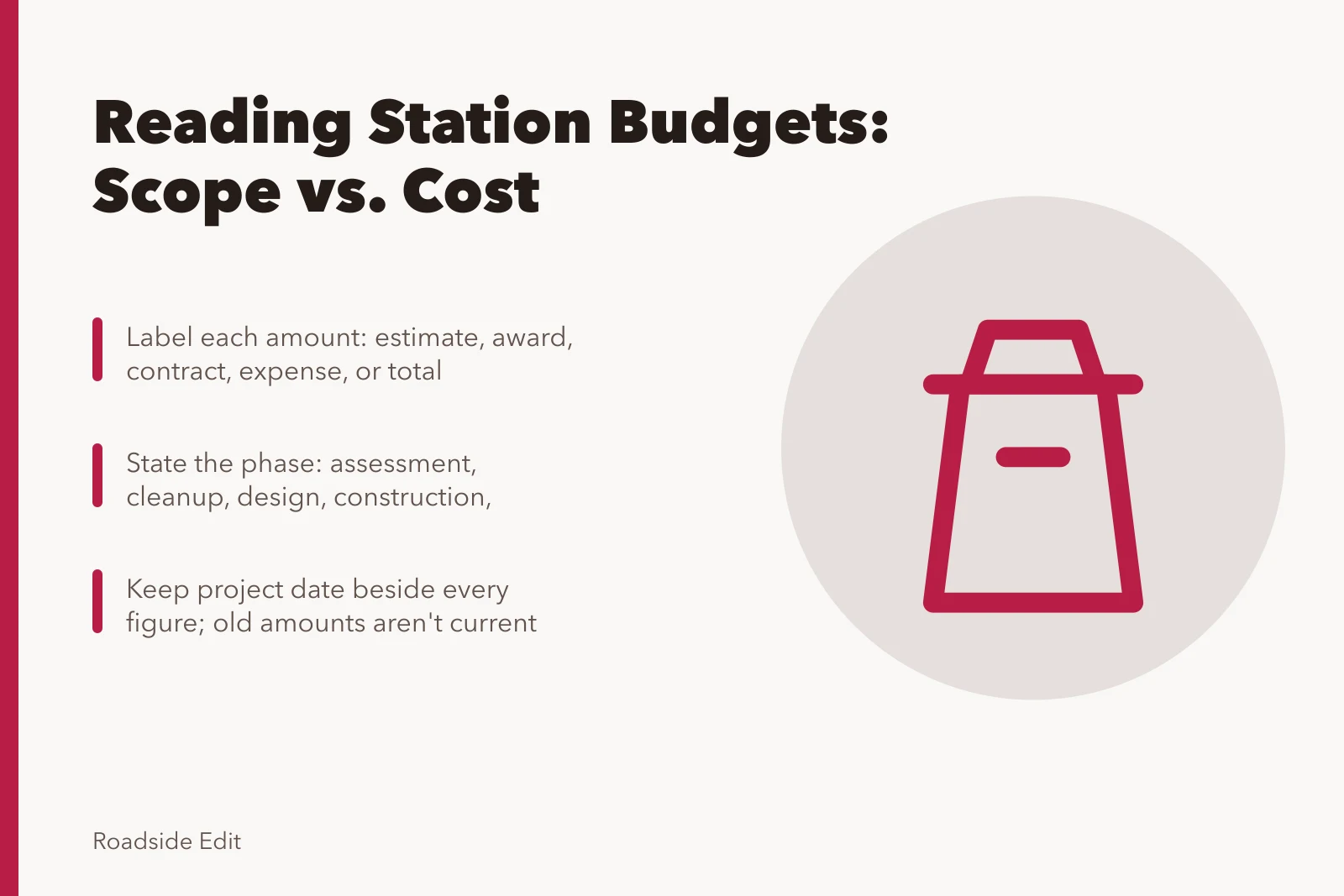
- Attach a plain label to every amount: estimate, award, contract, expense, or total project budget.
- State the phase the amount covers. Assessment, cleanup, design, construction, and ongoing operations are different work.
- Keep the project date beside the number, because an older amount does not describe a current price.
- Treat a case-study figure as evidence about that one project, not as a quote for another property.
Start with the number's job
The same amount can tell very different stories. A grant award tells readers that money was awarded for a defined purpose. It does not prove that the work cost that amount, that every dollar was spent, or that the award covered later phases.
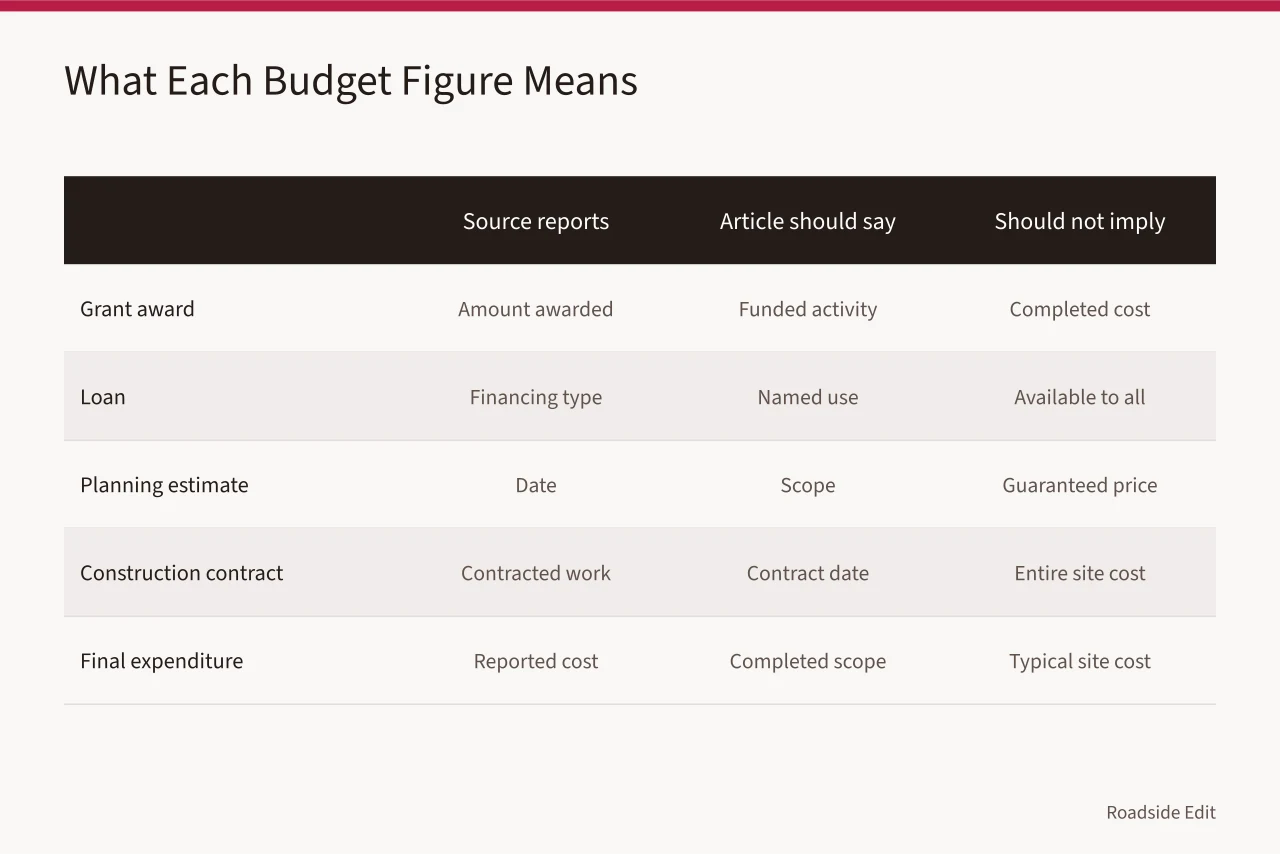
A final contract amount identifies a procurement decision, but it may exclude site acquisition, permits, design, or later change orders. A total project figure may combine costs that should stay separate in an article about a former service station.
Before writing a budget sentence, ask one narrow question: what did this figure pay for? The answer belongs in the same sentence as the amount. If the source cannot answer it, the figure belongs in editorial notes rather than published copy.
| What a source reports | What the article should say | What it should not imply |
|---|---|---|
| Grant award | Amount awarded and funded activity | Completed cost of all work |
| Loan or financing | Type of financing and named use | A funding option available to every owner |
| Planning estimate | Date, scope, and estimate status | A current bid or guaranteed price |
| Construction contract | Contracted work and contract date | Entire site-development cost |
| Final expenditure | Reported cost and completed scope | A typical cost for similar sites |
Read case studies as examples, not price sheets
The Environmental Protection Agency describes its Clean Water State Revolving Fund publication as case studies of communities that used Brownfields grants and loans alongside CWSRF financing for assessment and cleanup. EPA's financing case-study page supports using those examples to explain a particular financing arrangement. It does not turn one community's funding mix into a general restoration budget.
That distinction matters with former gas stations. One property may need assessment only. Another may have cleanup work that affects its budget and schedule.
A third may be structurally sound but need substantial rehabilitation. A careful case study says which facts its source documents. It should not borrow a number from a different place or phase.
Use a source's own labels when available. "Awarded," "estimated," "contract amount," and "project cost" are not interchangeable. A short editorial label in brackets can clarify an unclear source, but it cannot change what the source reported.
Build a scope note before drafting
For each project, make a short note with these fields:
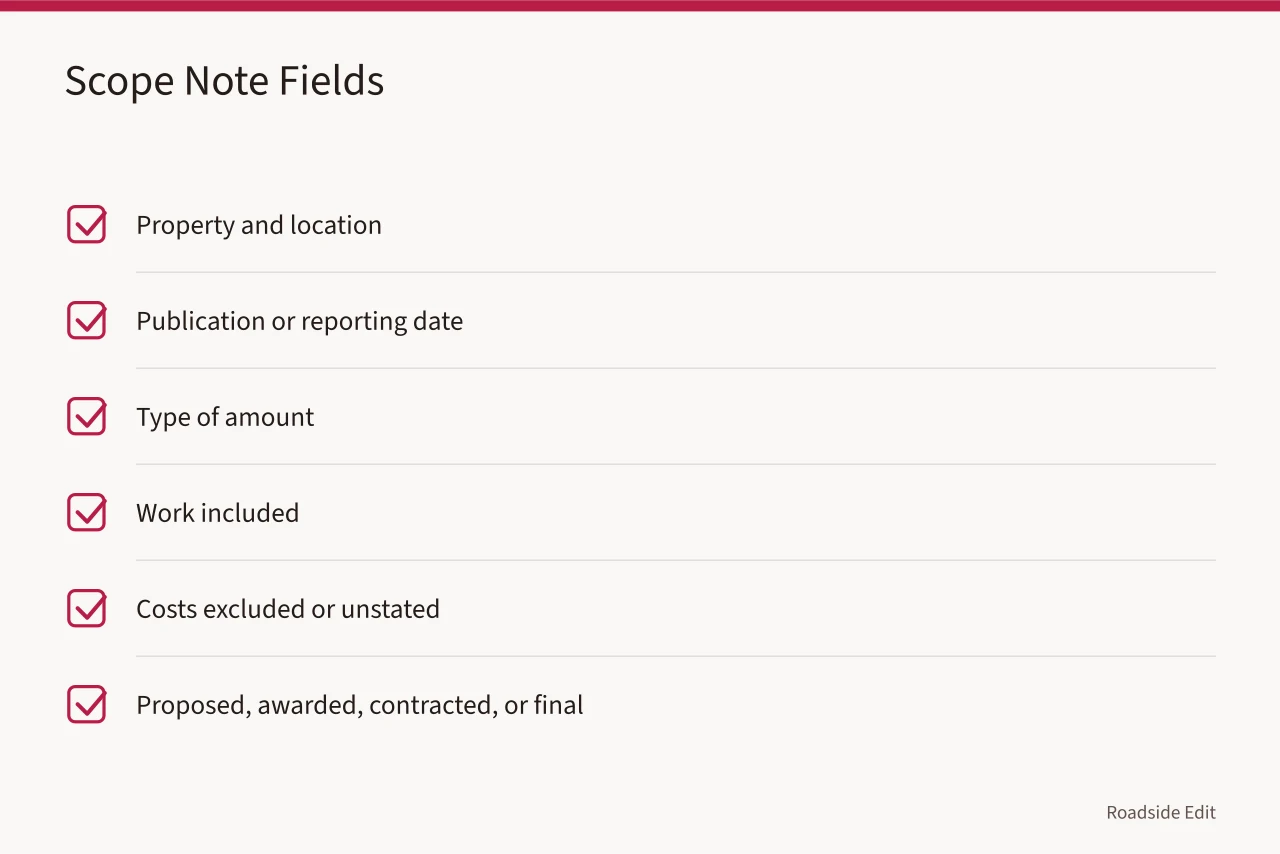
This keeps later updates honest. It also gives an editor a quick way to see why one amount cannot be compared directly with another. Two projects can share an apparent price range while covering completely different work.
The Government Accountability Office's cost-estimating guide identifies scope, schedule, a technical baseline, assumptions, and data as elements of a reliable estimate. It identifies methods, risk, documentation, and updates with actual costs as elements.
GAO's Cost Estimating and Assessment Guide supports one rule: publish no estimate without its stated scope and date. The guide is not a station-restoration price list, so this article does not use it to assign property costs.
Separate a budget from the evidence behind it
The most useful case study has a trail back to its source records. Keep the original report, award notice, public meeting material, contract record, or agency profile with the editorial file. A later reader should be able to distinguish a statement that the source made from an editor's explanation of it.
The National Archives explains primary sources are materials created at the time of an event or by people with direct knowledge. National Archives guidance on primary sources supports giving more weight to a dated award notice or contract record than an undated retelling.
That does not mean every primary record answers every budget question. The document still has to identify the amount and scope being discussed.
When records conflict, do not average them. Identify the date and stage of each number. An early proposal and a final accounting can both be accurate for their own moments. Explain the difference if it affects the reader's understanding, or omit the comparison if the available records do not make the relationship clear.
Write budget language that stays inside the evidence
These patterns help:
- "A city report lists a $___ award for the assessment phase."
- "The project profile gives a total amount and names the included activities."
- "A planning document estimated the work in [year]; the document does not report a final cost."
- "The available source describes a financing package rather than a completed expenditure."
Avoid lines such as "restoration costs $" or "owners can expect to spend $" unless a current, independent source actually supports a broader market statement. A property-level case study rarely does. The narrower sentence is more useful because it tells readers what they can verify.
Paid placement and budget claims
An advertiser, contractor, owner, or local organization may have useful project records. A paid placement can quote those records when the copy labels the relationship, dates the information, and confines its claim to material the source supports. It should not read as an independent review if payment or another material connection affected the recommendation.
The Federal Trade Commission says an endorsement must reflect the endorser's honest opinion. An unexpected material connection that could affect how consumers assess it should be disclosed clearly and conspicuously.
FTC guidance on endorsements and disclosures supports a close, plain disclosure when a placement includes a recommendation. It does not require an editorial article with no endorsement and no material connection to invent a sponsorship label.
Use one disclosure written for the actual relationship. "Paid placement by [organization]" may be clearer than a vague thank-you. Keep it near the promotional claim it qualifies. If the organization provides a budget figure, attribute the number to that organization and preserve the document date.
The photograph is illustrative only. It does not document a budget, ownership record, or funding status for another project.
A final editing check
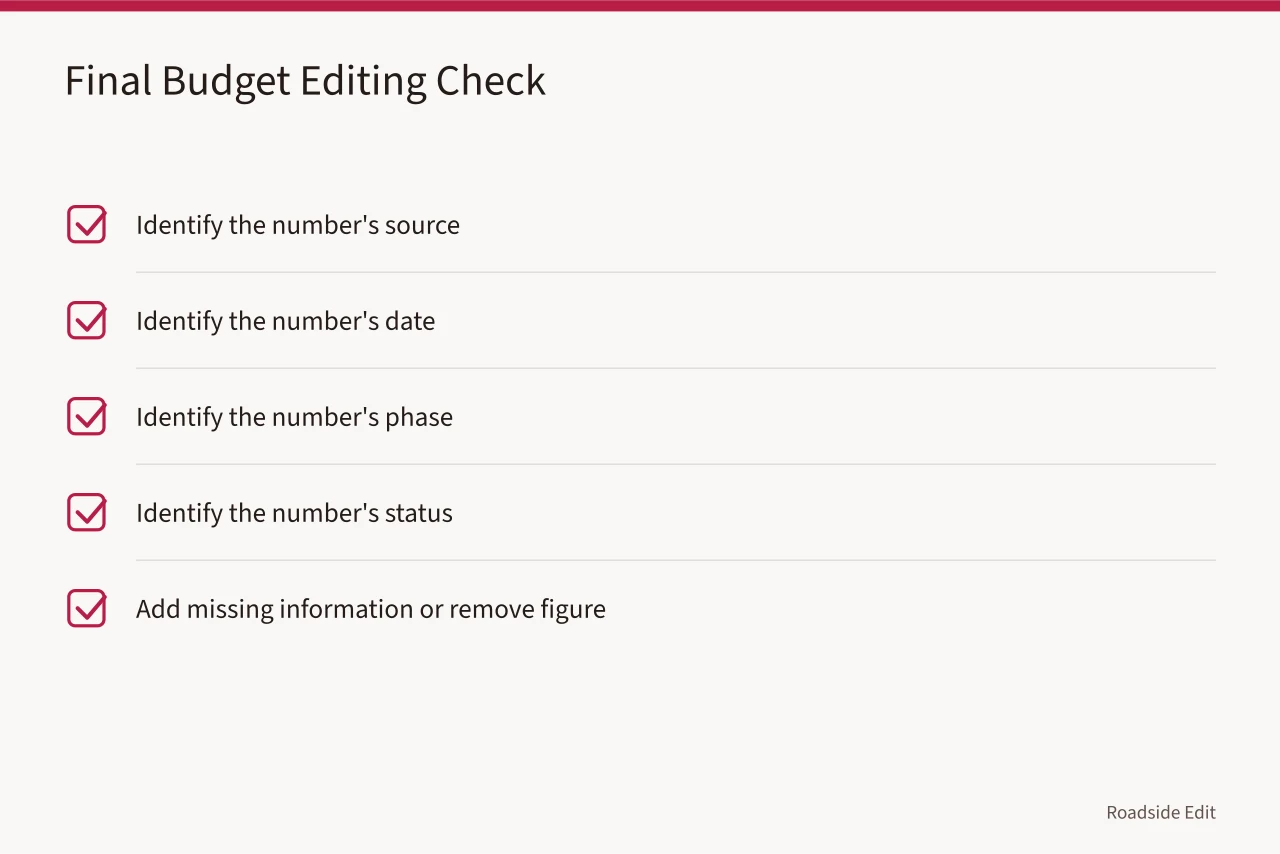
Before publication, read every dollar figure with its surrounding sentence only. Can a reader identify the number's source, date, phase, and status? If not, add that information or remove the figure. A budget note earns trust by being specific about its limits.
Common questions
Is a grant award the same as a completed project cost?
No. An award may support one phase, carry conditions, or cover only part of the work. Describe it as an award unless the source documents final spending.
Can a paid placement include a project budget?
Yes, if the amount is dated, attributed, and clearly scoped. The placement should disclose a material connection when its content includes an endorsement affected by that connection.
Should every article list every cost category?
No. Include only categories the source supports. State a material exclusion when leaving it unnamed would make the amount misleading.