Guides
Part of How to run a motel exterior case study method with clear sourcing
Motel exterior case study questions: build the evidence file before you write
Motel exterior case study questions for 2027 help U.S. readers distinguish project records, visible facts, unanswered conditions, and responsible next contacts.
Motel exterior case study questions for 2027 should reveal the limits of the record before the article turns into a conclusion. Start with what the source can establish, then identify what a photo or announcement cannot answer.
What to take away
- Ask what the source says, not what the editor hopes it implies.
- Ask whether the source is about a plan, a funded award, or completed work.
- Ask who can confirm a fact that the record leaves open.
- Keep a provider's answer as an attributed submission.
Questions for the evidence file
| Question | Reason to ask it |
|---|
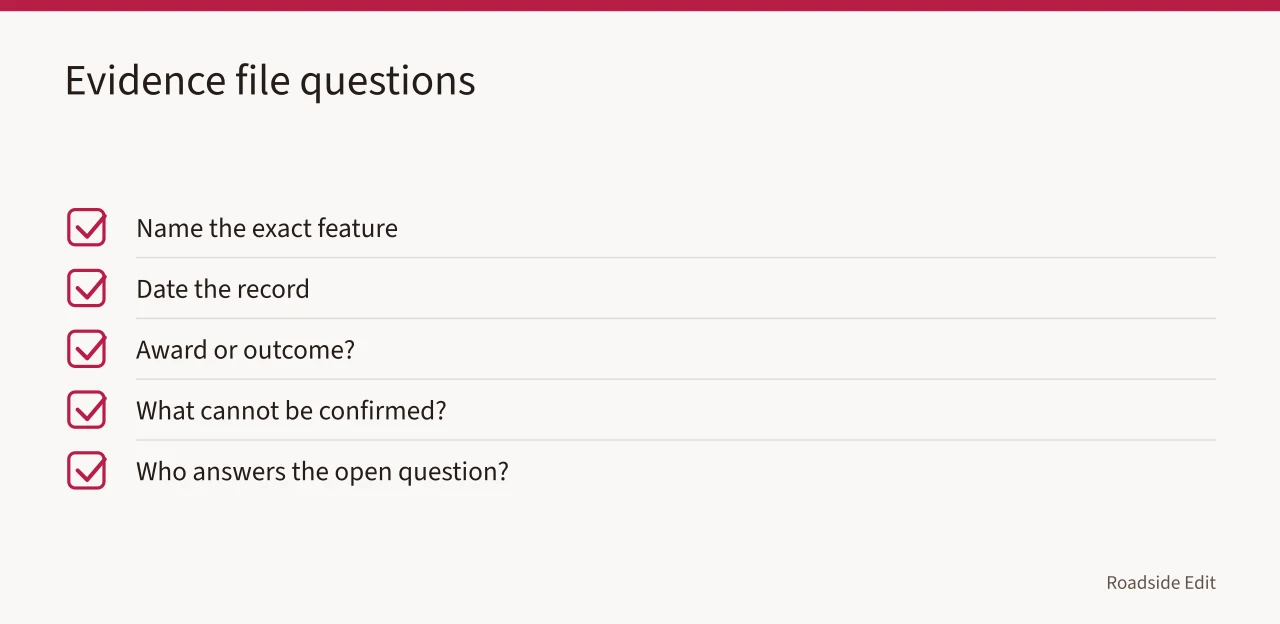
Ask whether the record describes a phase
The NPS 2021 Route 66 grant announcement describes projects as grant-supported work and gives specific project examples. Read the NPS 2021 Route 66 cost-share awards. That page supports a question editors should always ask: does this source describe a phase of work, or does it document the final result?
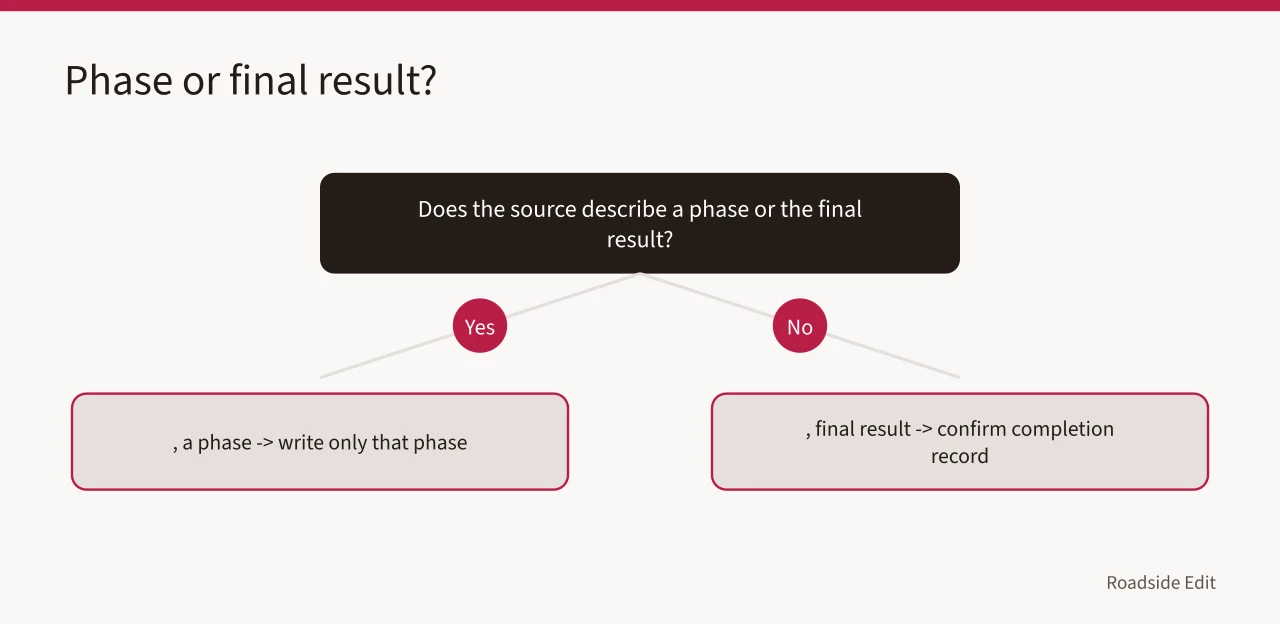
Do not write past the answer. If the source only names a roof project, do not describe unrelated exterior work. If it says a project was awarded, do not write that the property has been restored. The unanswered part belongs in an open-question note, not in the article's conclusion.
Ask questions that a reader can act on
Useful next questions often concern permission, records, access, or a contact that can confirm project status. Avoid directing readers to inspect wiring, enter restricted areas, or decide whether a condition is safe. A case study can route a question without trying to resolve it.
Build a case-study timeline before writing the result
Put each dated item on a timeline and include source title, date, place identified, event described, and status it supports.
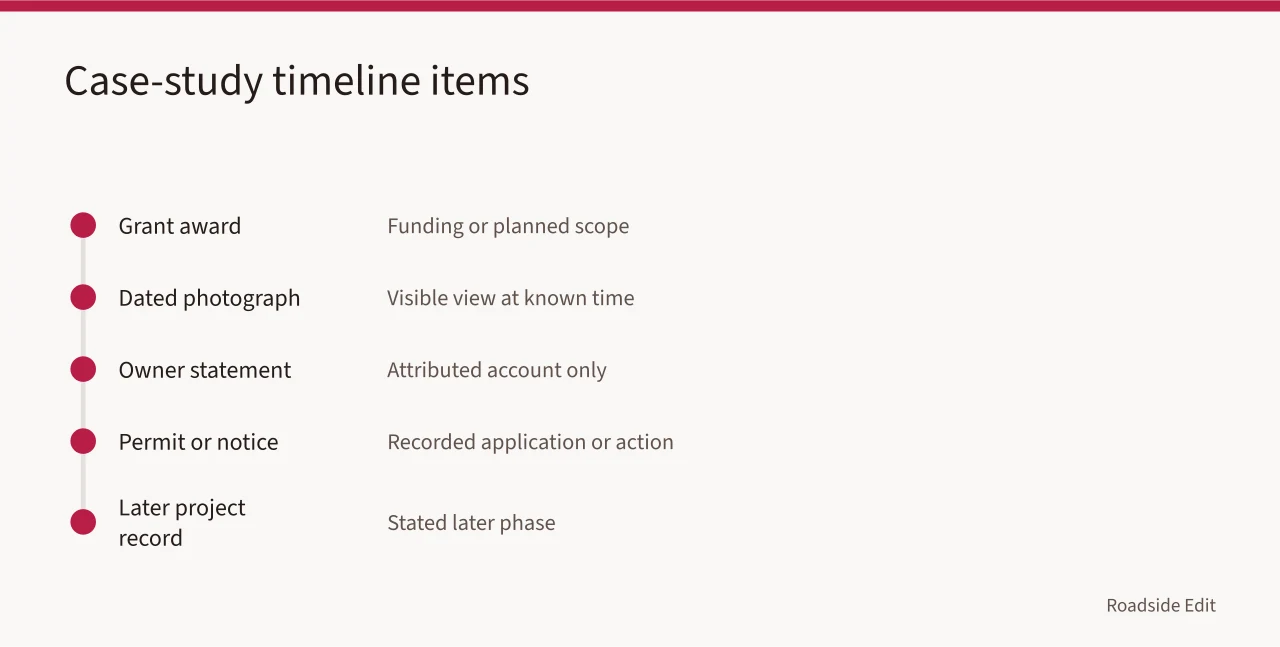
Grant announcements, proposals, public meeting notices, provider statements, and photographs are different records, and invoices and completion reports also differ. Do not let a later source turn an earlier plan into a completed result without saying what changed.
| Timeline item | What it may support | What it cannot establish alone |
|---|---|---|
| Grant award | Funding or planned scope stated by the award source | Completion or public benefit |
| Dated photograph | A visible view at a known time | Cause, safety, or hidden condition |
| Owner statement | A clearly attributed account | Independent confirmation |
| Permit or public notice | A recorded application or action | All work completed at the site |
| Later project record | A stated later phase | Details missing from that record |
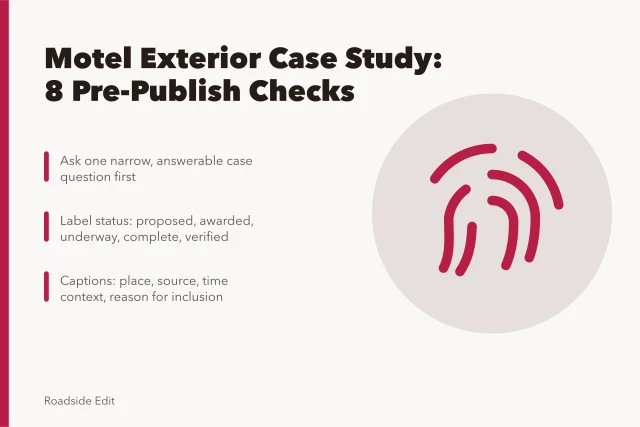
Use exact verbs in the article. A project may be proposed, funded, announced, under review, underway, or completed. Each has a different meaning. If the record does not identify a status, use a phrase such as "the available source does not confirm the later outcome." That is more useful than guessing because it gives readers a specific research target.
Test every conclusion against its source
Before publishing, ask four questions of each consequential sentence. Does the linked source identify the same motel, feature, or project, and does it support the date in that sentence? Is the article describing what the source reports, rather than adding a conclusion of its own? Does another source say something that limits or contradicts the first?
If sources conflict, explain the conflict or narrow the statement; do not remove the inconvenient record to smooth the story.
This check matters most for before-and-after claims. Two views may show the same sign or building from different angles, seasons, or years. They document a visual difference only when the location and dates are known.
They cannot show why the change occurred, who did the work, what it cost, whether approval was required, or whether the result lasts.
Preserve a correction path
Case studies often improve when an owner, local historian, agency, or provider supplies a dated record. Keep a correction note that names the original claim, the new source, the change made, and the date of review. Attribute submitted material. Do not make an owner or provider responsible for statements the article independently inferred from an image.
For a public-facing article, remove private contact details, restricted-access information, and unsupported project claims. A precise correction record is enough. It allows a reader to see the difference between a fact that was confirmed, a statement supplied by a participant, and a question that remains open.
The National Archives advises that photographic materials need context about their history and handling. Read National Archives guidance on photographs. It does not authenticate a particular case-study image. It supports retaining the source page, date, and limit of the copy used.
The Library of Congress offers guidance on care and handling of photographic collections. Review Library of Congress photographic care guidance. It is not a finding about a motel. It reinforces that an original, a digital copy, and a later reproduction can carry different context.
The U.S. Copyright Office says fair use is assessed case by case. Read the Copyright Office fair-use overview. It does not decide whether a particular image may be republished. It supports checking permission or stated license terms before reuse.
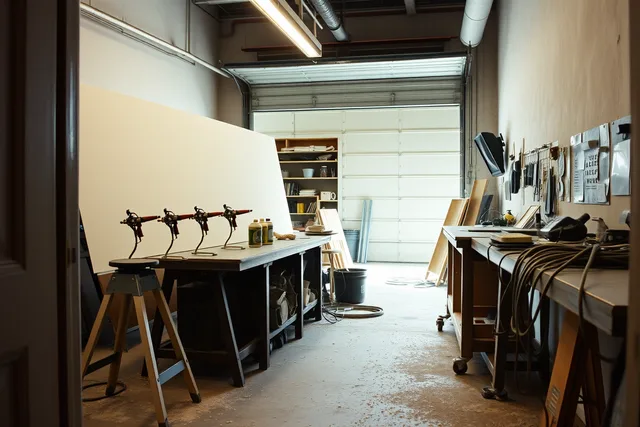
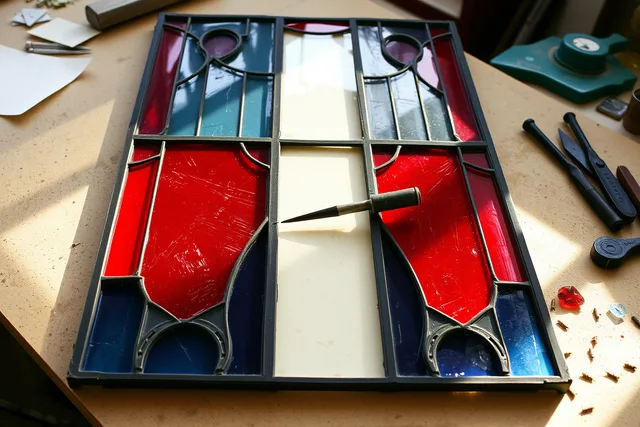
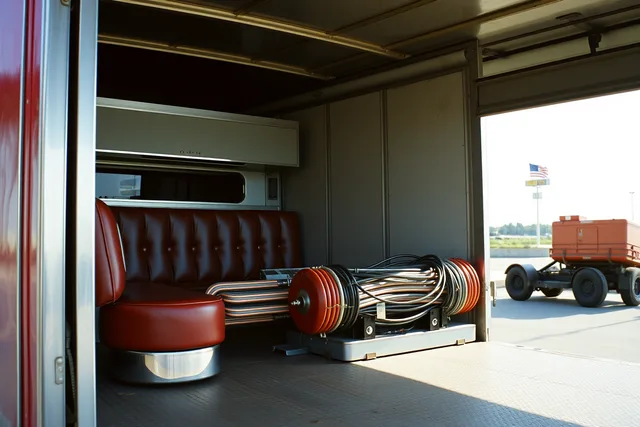
The image is illustrative. It does not establish a motel's current condition, ownership, safety, or project result.
Common questions
Can a case study answer a technical repair question?
Only when a source or qualified assessment supports that exact answer. Otherwise, record the question and its limit.
Why does project phase matter?
An award, proposal, and completed project are different facts. Readers need to know which one the article documents.
Can an owner correct a case study?
Yes. Attribute the submission, retain its date, and update factual text only when the supporting record warrants it.