
Guides
How to run a motel exterior case study method with clear sourcing
Motel exterior case study method for 2027 helps U.S. publishers build source-led stories with dated evidence, clear status, corrections, and disclosures.
A useful motel exterior case study starts with one question the evidence can answer, not a dramatic before-and-after claim.
That question might concern a dated public announcement, a cataloged photograph, a defined preservation project, or an owner-supplied update. It should not ask a public article to diagnose a building or confirm work no source documented.
This method gives each record a role. It helps publishers create articles that can be corrected later without quietly rewriting the past. It also leaves a clear boundary between editorial evidence and a provider's commercial message.
What to take away
- Pick one question that a reader can trace to specific sources and dates.
- Separate a visible observation, a source-backed fact, a submitted statement, and an editorial conclusion.
- Follow project status as the record states it: planned, awarded, proposed, reported complete, or unknown.
- Make every image credit point to the page that supplied the image record.
- Put sponsor and provider material in its own labeled section, away from source-backed reporting.
Choose a question with an evidence boundary
The topic "motel renovation" is too broad for one case study. It pulls in history, condition, money, permits, and business claims that may not share a source. A better question stays close to a record:
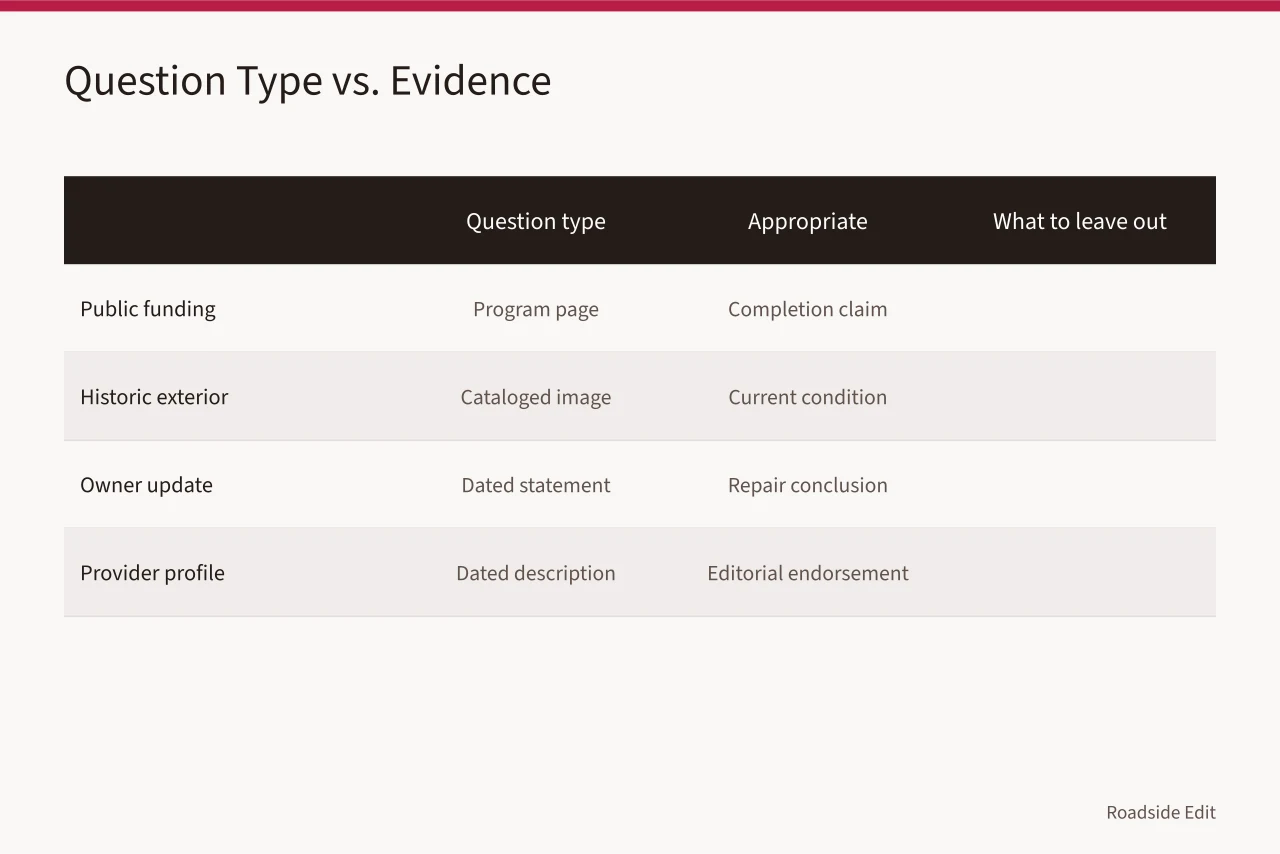
- What work did a named public announcement say a project would support?
- What does a catalog record identify in a historic exterior image?
- Which records establish a project's stated phase and which questions remain open?
- What did an owner or provider submit, and how should readers understand the source of that statement?
The final question is just as useful as the first. If a record does not establish current condition, completion, ownership, or cause, the article should say so. That is not a gap to cover with an educated guess. It is the limit of the case study.
| Question type | Appropriate evidence | What to leave out |
|---|---|---|
| Public funding or preservation action | Original program page or report | Current completion claim without later record |
| Historic exterior view | Cataloged image and exact credit page | A current condition finding |
| Owner update | Dated, attributed owner statement | An independent repair conclusion |
| Provider profile | Dated service description and disclosure | An editorial endorsement |
Build a source packet before writing
Collect the few records that support the article's central claim. Save the direct source page, title, date if given, access date, and the exact point it supports. A source packet is not a pile of browser tabs. It is a short, reviewable set that another editor can read in one sitting.
Each article packet should contain:
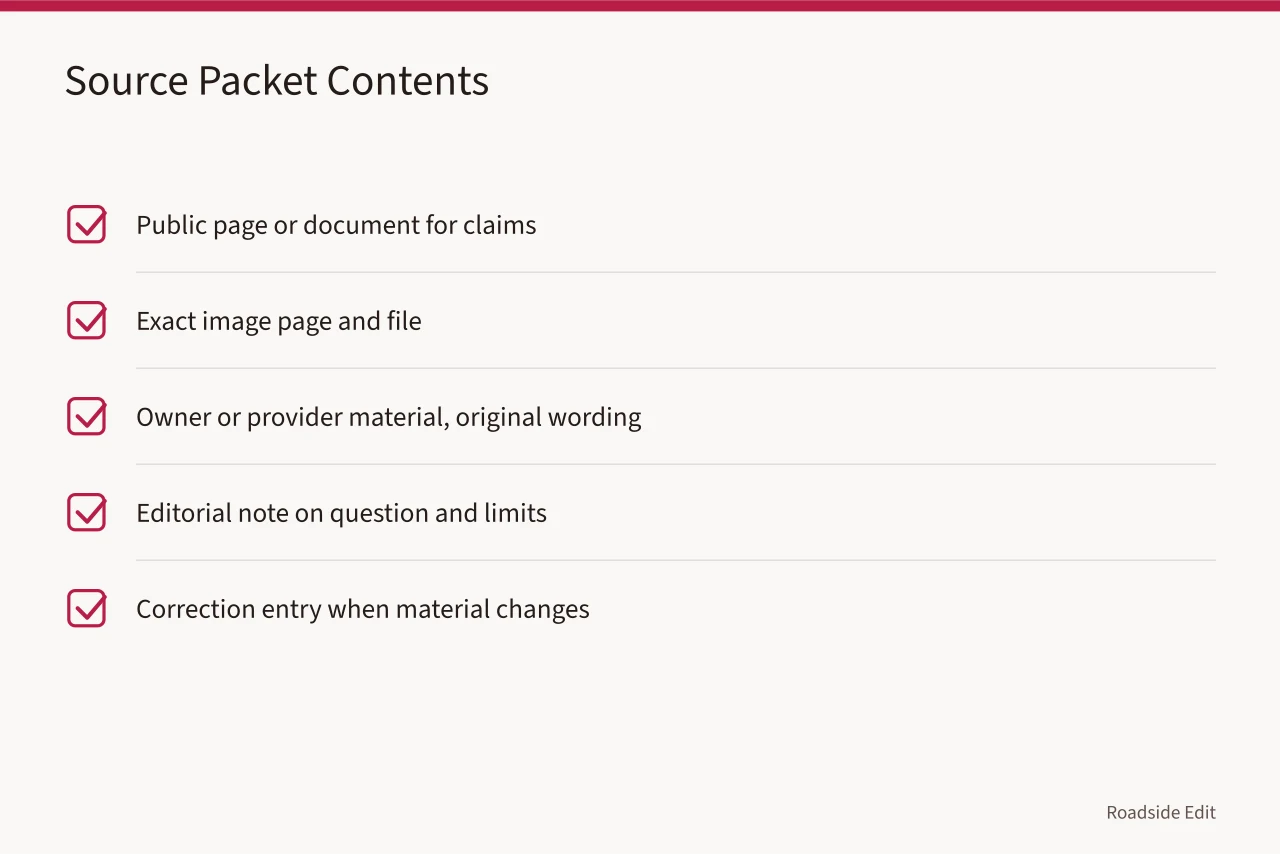
The National Archives agency recordkeeping requirements say records about the same project, transaction, study, or subject should stay together when that relationship gives context.
That policy covers federal agencies. For a case-study file, the lesson still holds: keep the public record, photo credit, submitted update, and later correction together when they describe the same subject.
Name source files so another editor can find them without guessing. A simple convention such as YYYY-MM-DD_source_subject works. Do not replace an original image or document with an edited derivative if the original is still available. The original preserves the caption context, source path, and any details needed for a correction.
Separate observation from conclusion
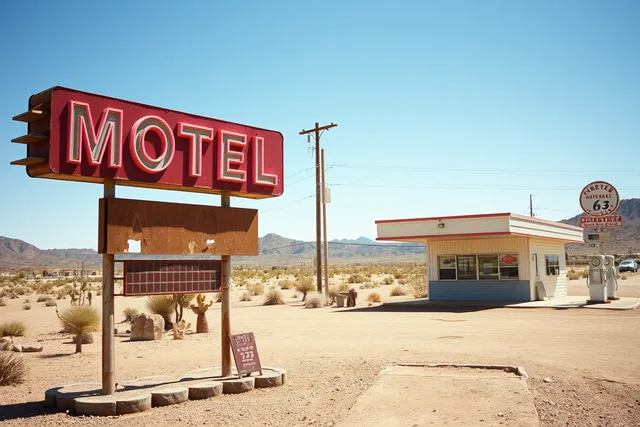
A photograph and a published record can both be useful. They do different jobs. A photograph may show a facade, sign, entry, or roofline from a particular view. A public page may state that a project was announced or funded. Neither record automatically establishes a hidden condition, legal status, completion outcome, or current price.
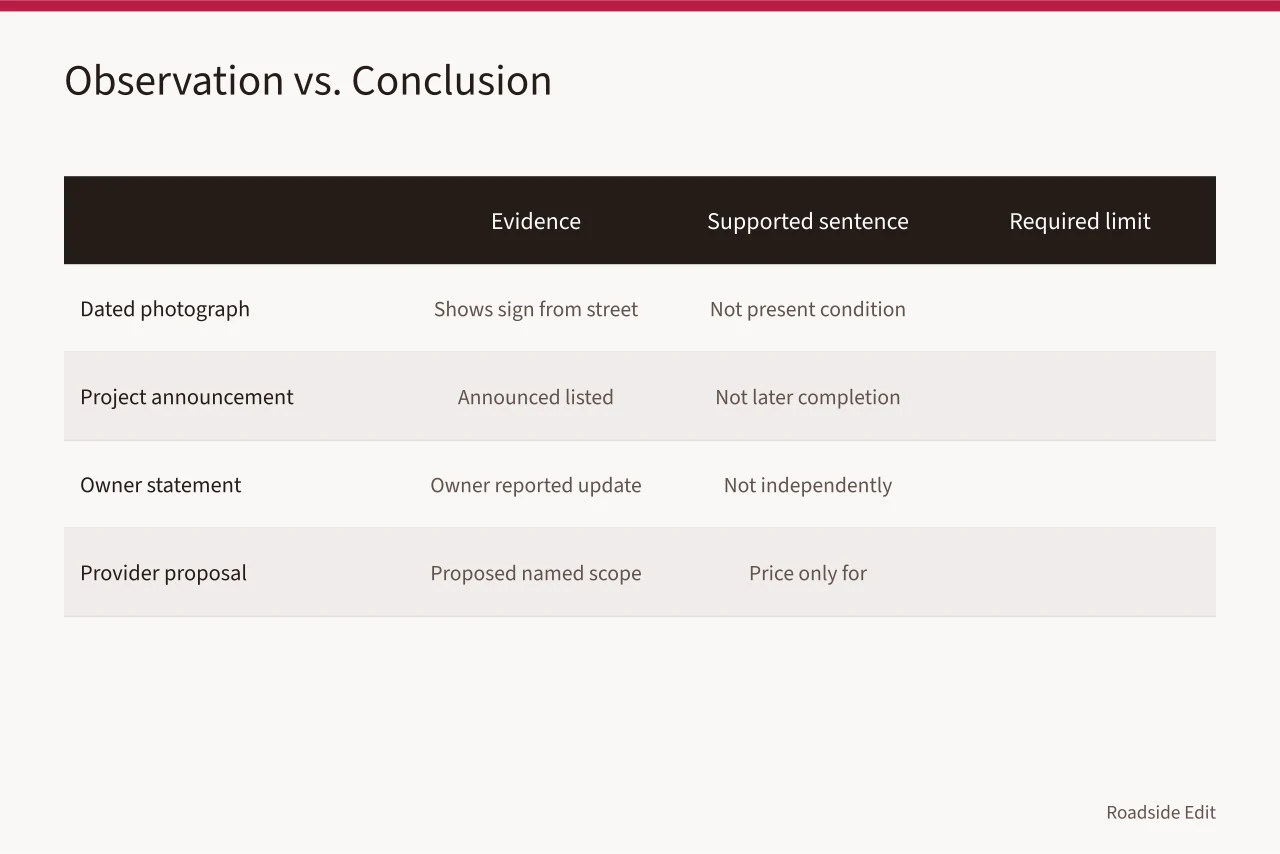
Write two sentences when necessary. First state what the evidence shows. Then state the limit.
| Evidence | Supported sentence | Required limit |
|---|---|---|
| Dated photograph | "The image shows the motel sign from the street." | "It does not show the sign's present condition." |
| Project announcement | "The program announced the listed project." | "The announcement does not prove later completion." |
| Owner statement | "The owner reported the stated update." | "The statement has not been independently verified." |
| Provider proposal | "The provider proposed the named scope." | "The price applies only to that proposal." |
The National Park Service's Preservation Brief 47 describes planned, cyclical exterior maintenance and the value of regular inspection. It does not diagnose any motel in a photograph. For an editor, it supports the more limited practice of recording a visible feature and arranging the next responsible review rather than declaring what caused the feature or how it must be repaired.
Follow a project by status, not by optimism
Case studies are often published because a project is interesting before it is complete. That is fine. The text must match the status the source actually gives. "Awarded" is not "completed." "Planned" is not "underway." "Reported complete" is not a universal warranty about the property.
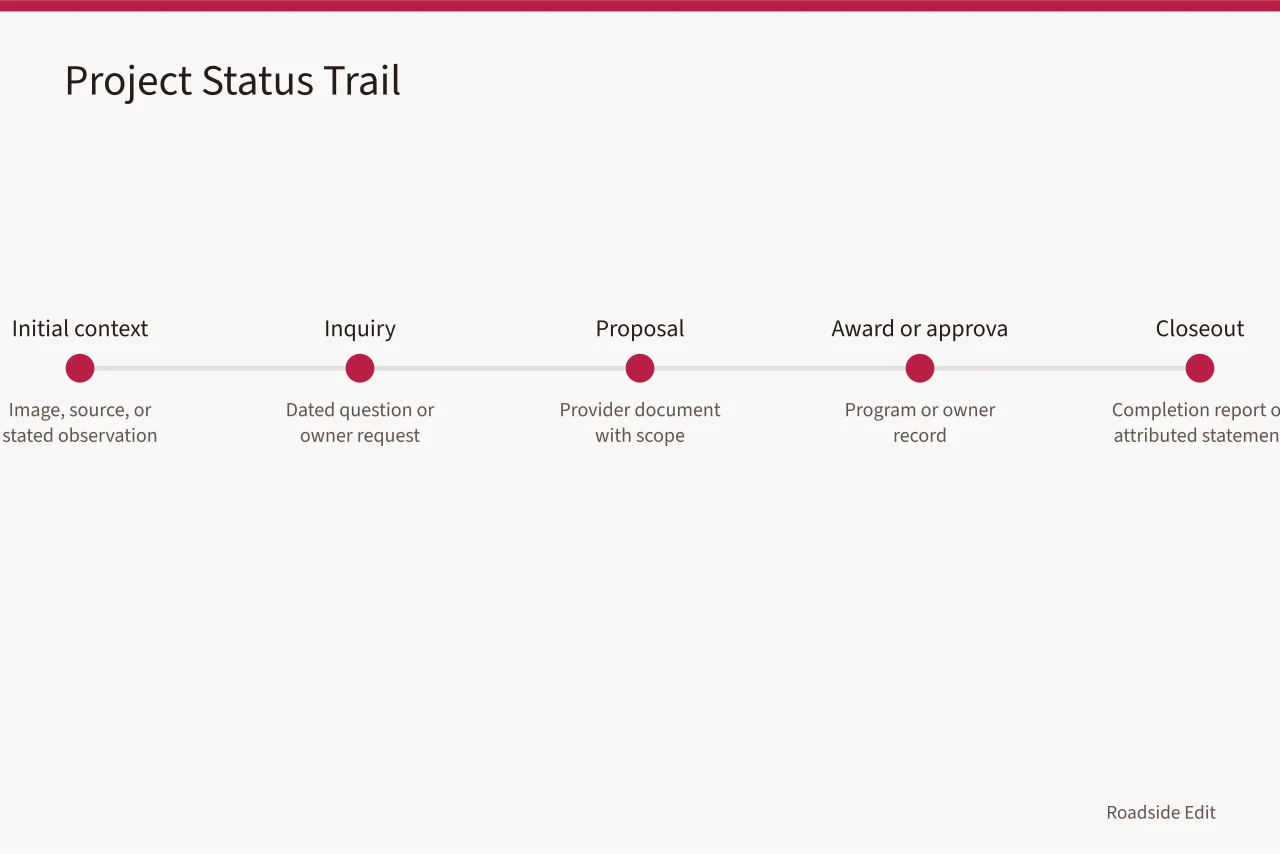
The National Park Service's 2019 Route 66 cost-share announcement identified funded work at several Route 66 properties. Use an announcement like this for the funded work and project status it names. Do not stretch it into a current condition report or a cost estimate for another motel.
Use a status trail so the reader can follow each stage:
| Stage | Required record | Publication wording |
|---|---|---|
| Initial context | Image, source, or stated observation | "The record identifies..." |
| Inquiry | Dated question or owner request | "The file records a request for..." |
| Proposal | Provider document with scope | "The provider proposed..." |
| Award or approval | Program or owner record | "The source announces or approves..." |
| Closeout | Completion report or attributed statement | "The report states..." |
When no closeout record exists, end the article with the latest documented stage. Do not imply that silence proves no work happened. Use direct wording: "The cited materials do not provide a later completion record." That gives readers a fair status without pretending to know why the record ends.
Give images their own fact check
An image can make a case study readable, but it creates the easiest place for a false claim. Check the source page, file title, location if stated, collection name, and rights or credit instructions.
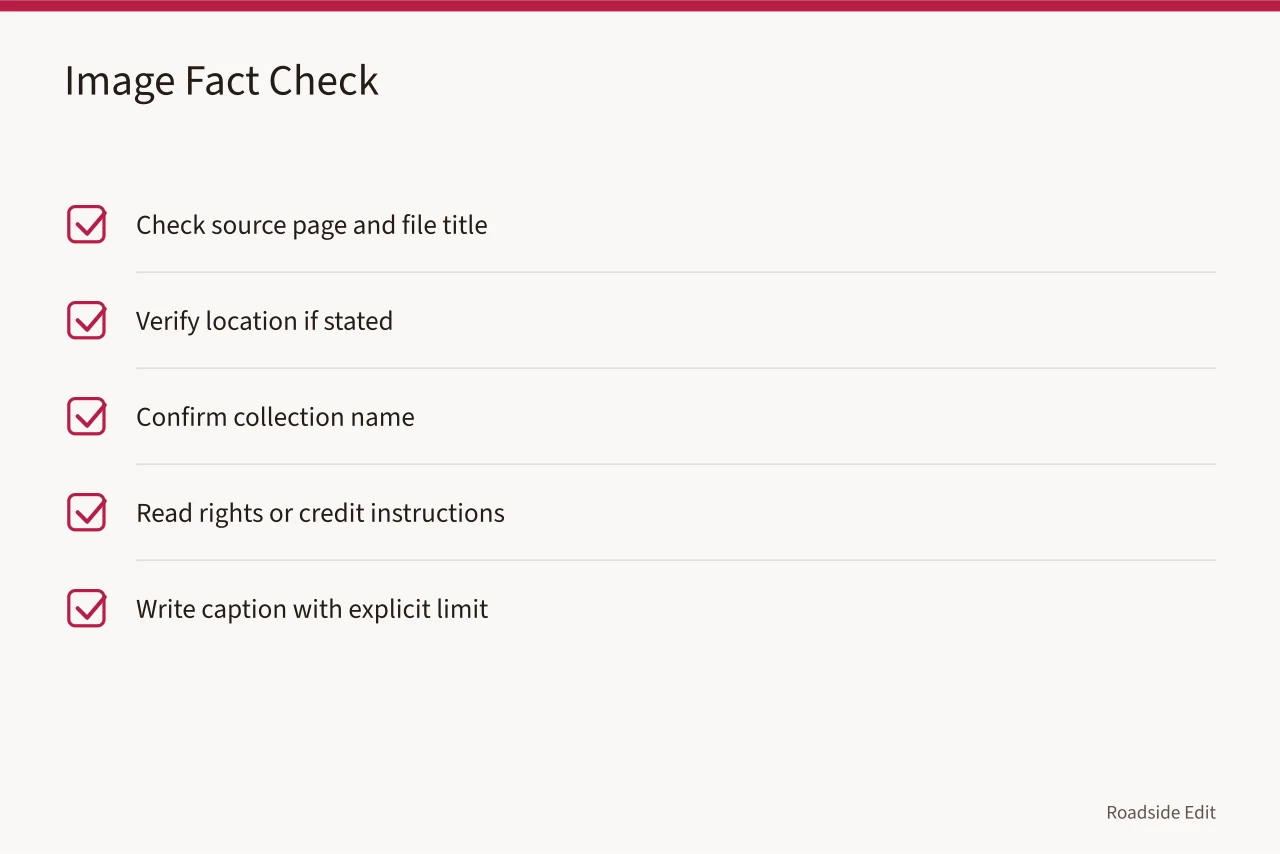
Write a caption identifying the image and its use in the article. Do not let an illustrative image appear to document the property's present state.
The figure needs an explicit limit in the surrounding text. The catalog record can support its own title and collection details. It cannot verify a current repair, a present owner, safety status, or a work plan that arose later.
Put commercial material where readers can recognize it
Owners, operators, suppliers, and contractors may contribute an update or buy a placement on a case-study site; that adds useful information if the article separates it from independent reporting.
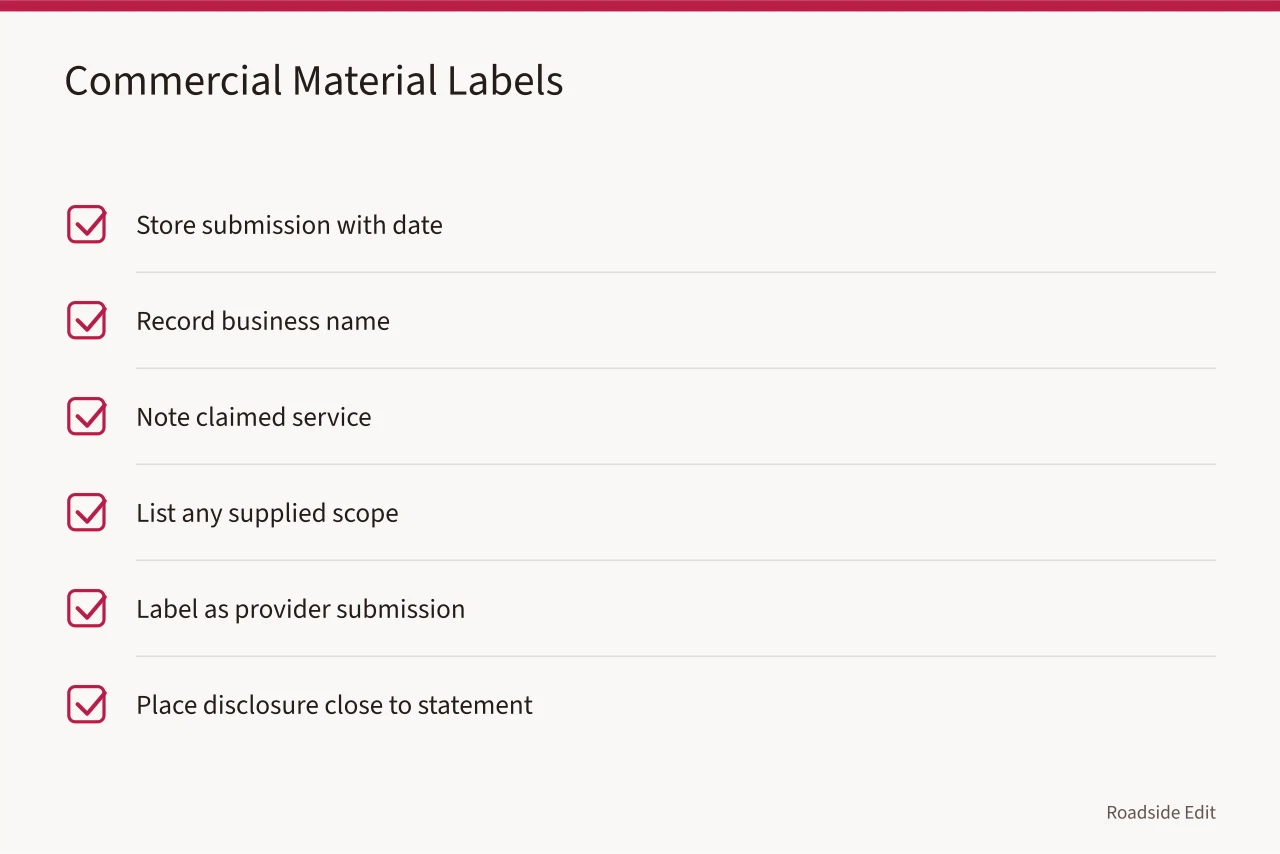
Store the provider's submission with its date, business name, claimed service, and any scope it supplies. Publish it with an ordinary label, such as "provider submission" or "sponsored listing."
The Federal Trade Commission's endorsement guidance addresses disclosures for material connections that could affect how readers evaluate an endorsement. Put disclosure close to the provider statement. A vague mention in the footer does not help a reader judge a specific claim.
Do not let a paid statement alter a source-backed account of history, condition, or project status without a separate source. A provider can say what it offered or did. The article should attribute that statement and reserve independent conclusions for evidence that supports them.
Write a correction path into every article
Records change. A new public report may appear. An owner may send a dated document. An image catalog may update its title. Each case-study article needs a visible correction route and a private change log.
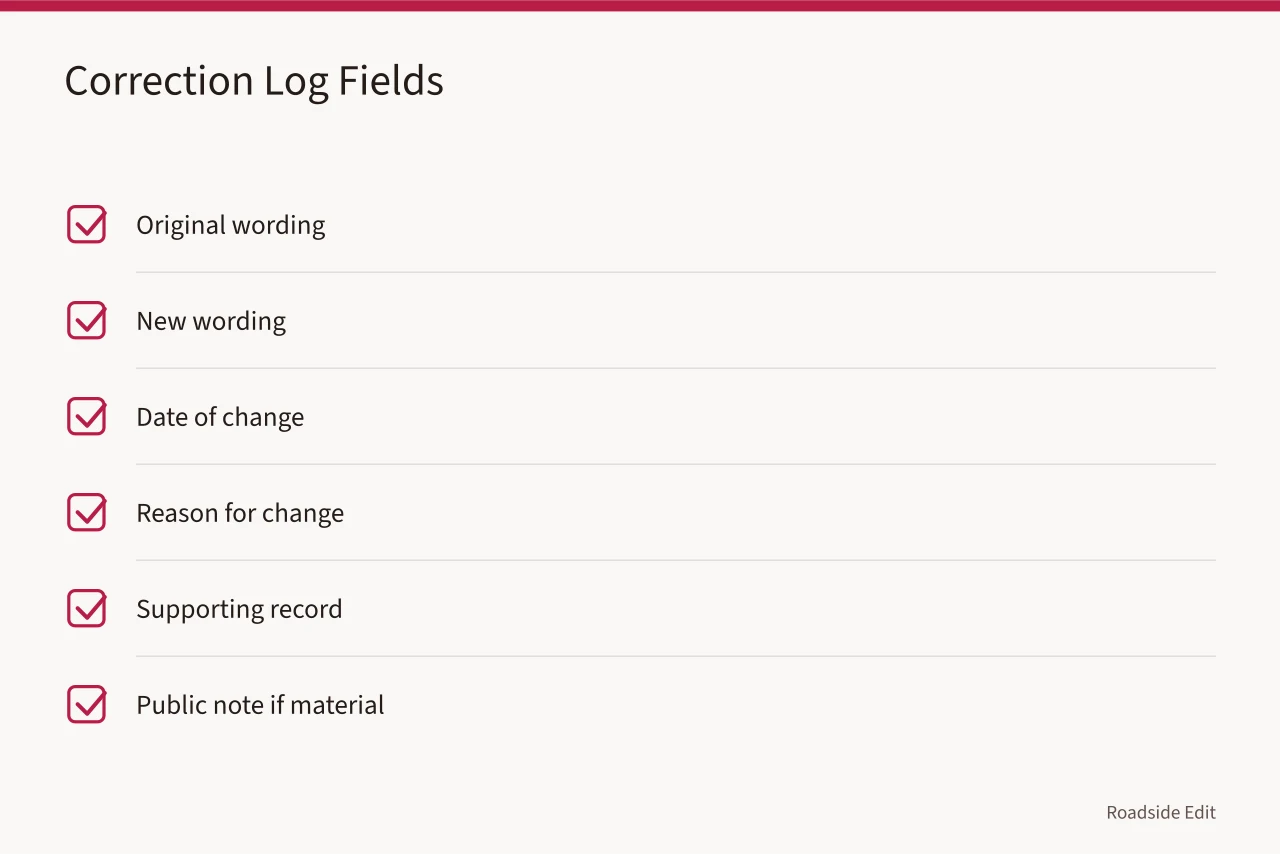
The public route can be a short line that asks for a specific source or attributable statement. The internal log should record the original wording, new wording, date, reason for the change, and supporting record. If the correction materially changes the case-study status or central claim, add a public correction note near the relevant section.
Do not silently replace a sentence that once described a proposal with a sentence that says work is complete. Keep the old stage in the history and add the later record. That method makes future updates easier because the evidence path stays intact.
A publication workflow for one case study
Use this sequence each time:
- Write one narrow question and one sentence defining what the evidence cannot answer.
- Assemble direct source pages and original submitted materials.
- Build a status trail with dates and scope labels.
- Draft only claims that the records support, with limits next to claims likely to be overread.
- Check image credit against the source page, then place it in a figure caption.
- Label commercial material and disclose a paid relationship beside it.
- Review for claims that have changed status, then create a correction note if needed.
This workflow keeps a case study human and readable without making it casual about facts. It also gives the site room to publish future updates as new records appear rather than producing a second article that repeats the first one.
Common questions
Can a case study use an old public funding announcement?
Yes. Identify it as a historical record and use it only for the project, date, and status it describes. Do not use it as a current repair estimate.
Does a cataloged photo establish current condition?
No. It supports the image's documented view and catalog information. Current condition needs current, property-specific evidence.
Can a provider pay to add information to a case study?
Yes, if the content is labeled as provider or sponsored material, the relationship is disclosed close to the claim, and it does not replace source-backed reporting.
What should happen when a later source changes the project status?
Add a dated correction or update that identifies the new source. Preserve the earlier stage in the article history instead of silently rewriting it.