Guides
Part of Gas station preservation: regional adaptation questions to ask before 2027 plans
How a 2027 gas station preservation checklist handles regional scope
Use a 2027 gas station regional preservation checklist to record local conditions, proposed use, seasonal operations, and questions that need review.
Use this regional checklist before preparing a property profile, reuse idea, event note, or sponsored listing for a historic or former gas station. It organizes known facts and open questions. It is not a condition assessment, a climate-risk assessment, a building specification, or approval to open a site to the public.
What to take away
- Start with a dated record of the setting, existing evidence, and proposed use.
- Treat weather and operating patterns as questions for the actual location, not as facts inferred from a region.
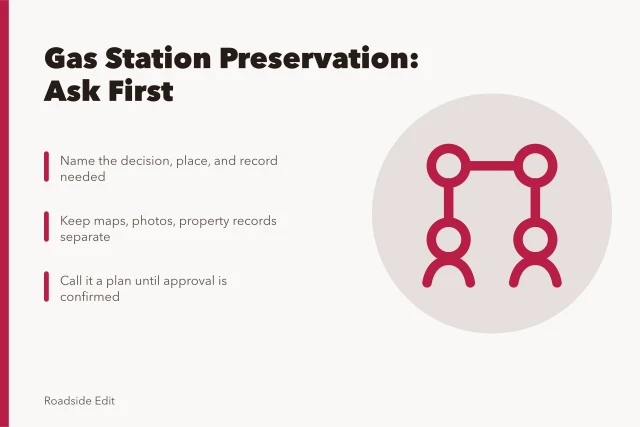
- Keep a clear line between a preservation idea and a verified condition.
- Name the person who can confirm or correct each public statement.
Build a regional record before writing a site story
Regional context can help an editor ask better questions. It cannot settle them. A station near a flood-prone road, in a snow country town, or beside a busy highway may need different records and different technical review. The checklist should therefore capture what is known, where it came from, and what still needs confirmation.
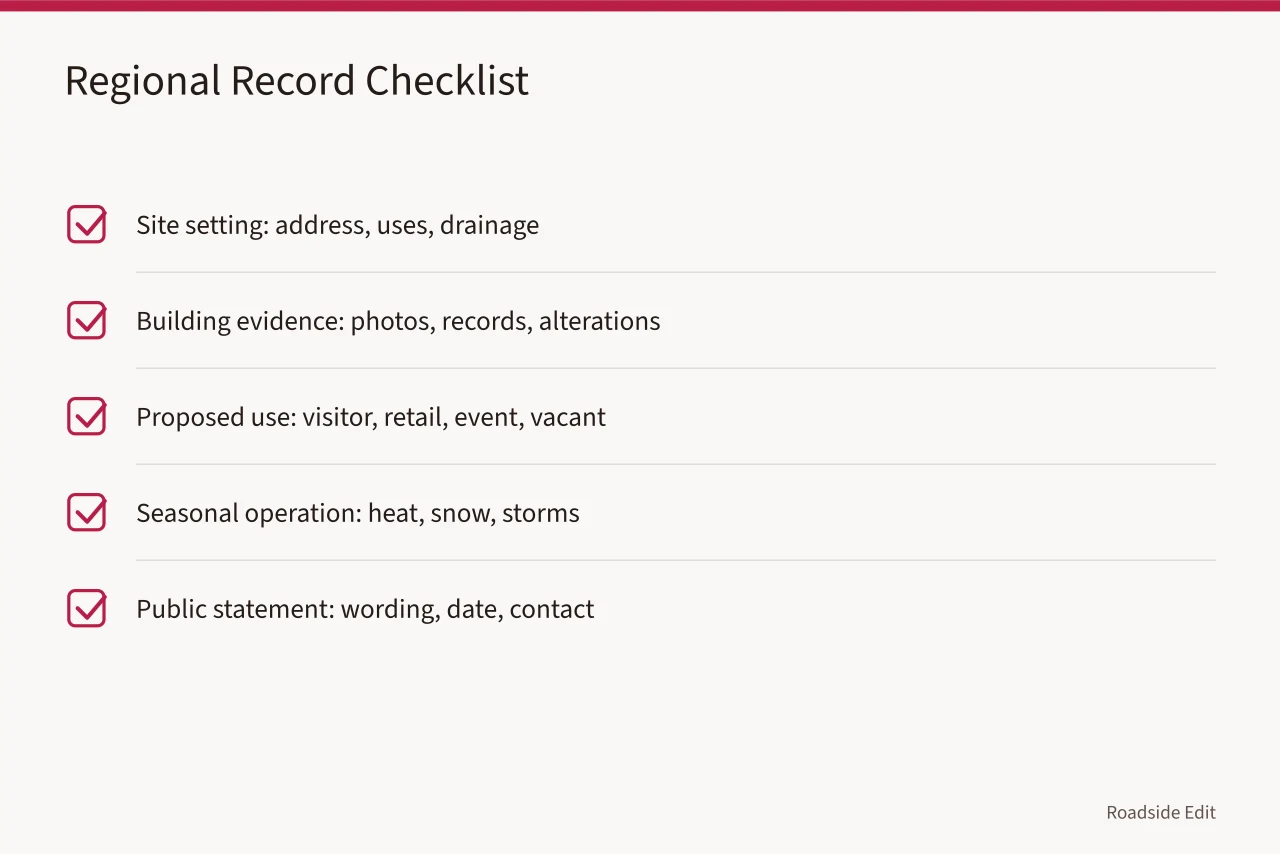
| Check | Record today | Ask before publishing |
|---|---|---|
| Site setting | Address, surrounding uses, public approach, and visible drainage context | Does a current local source support any statement about access or exposure? |
| Building evidence | Dated photographs, owner records, plans, and known alterations | Who can confirm the date and condition of the material described? |
| Proposed use | Visitor, retail, event, office, storage, or vacant status | Is this an active use, a proposal, or an idea still under discussion? |
| Seasonal operation | Questions about heat, cold, storms, snow, water, wind, or smoke | Is the information current and specific to this property? |
| Public statement | Draft wording, source date, and correction contact | Does the sentence promise more than the evidence proves? |
The National Park Service coastal adaptation case studies describe planning actions that use data and anticipated conditions, including documentation and protection of historic resources. Those are case studies from coastal and Great Lakes parks, not instructions for every gas station. Their useful lesson for an editor is narrower: record the evidence and the planning question before writing a conclusion.
Separate documentation from treatment decisions
Begin with documentation. The Library of Congress explains that the HABS and HAER collection includes measured drawings, photographs, written histories, and related material. A local station rarely has that full record, but the categories still help.
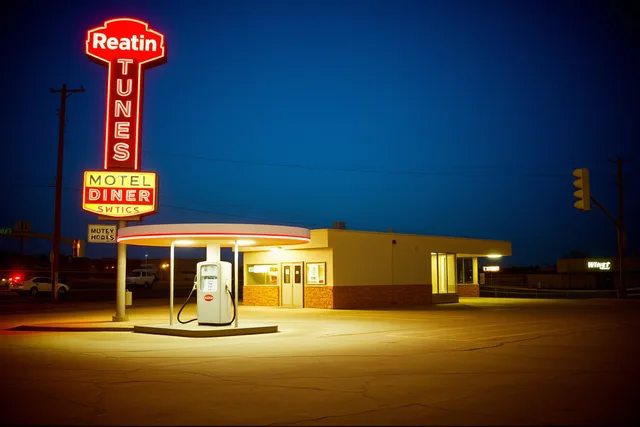
A dated exterior photo, a sketch of the site, a note on a known alteration, and a source for the station's historic name are more useful than a broad claim that the building is "original" or "restored."
The record should identify evidence without pretending to resolve technical questions. A photo may show a canopy was present the day it was taken, but it does not establish structural safety, material condition, or visitor suitability.
A former operator's recollection may help identify a past use. It does not replace a date, a permit record, or a current owner statement.
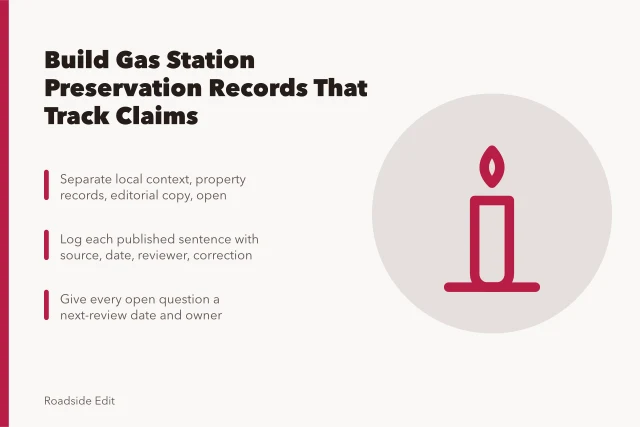
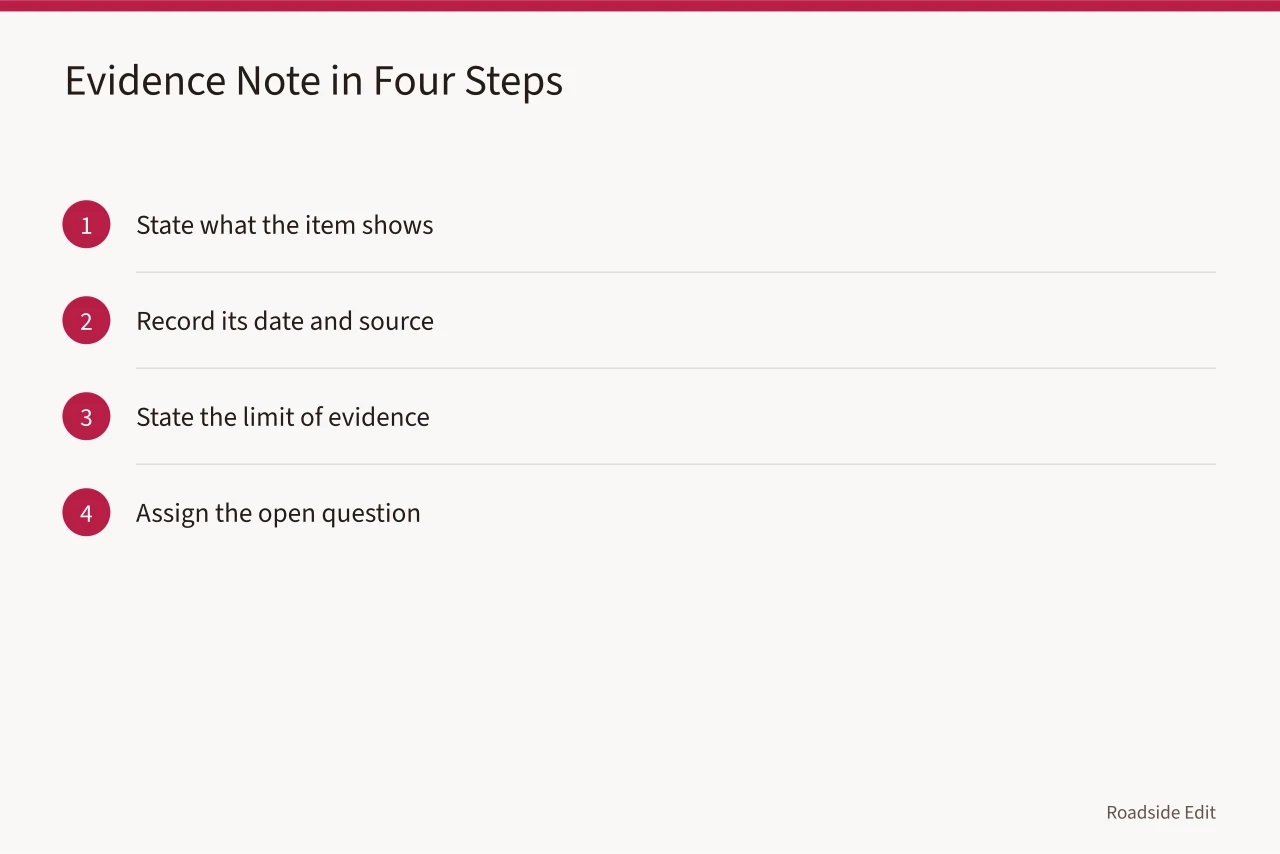
Use a short evidence note for each item:
- State what the item shows or says.
- Record its date and source.
- State the limit of the evidence when the limit matters.
- Assign an open question to the owner, project lead, or qualified reviewer.
The National Park Service's Preservation Brief 31 places documentation and condition assessment before stabilization and mothballing steps. That sequence does not tell an editor what work a station needs. It does support the editorial rule that a public description should not jump from an old photograph to a claim about present readiness.
Make regional questions specific enough to answer
Avoid labels such as "weather resistant," "safe year-round," or "built for the local climate" unless a qualified, current source supports them. Replace those labels with a question that can be answered later.
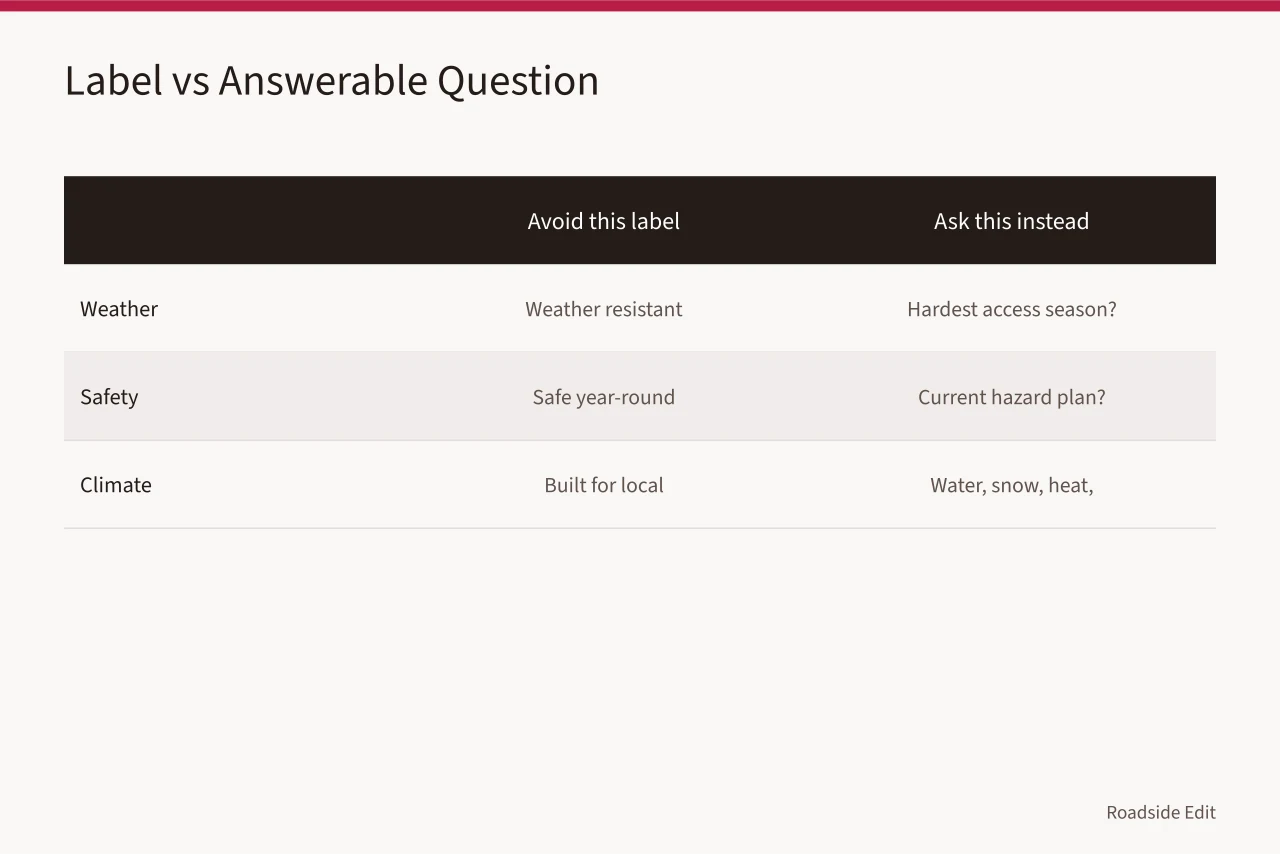
For a former roadside station, a useful regional question is: "Has the project team identified the local season when public access is most difficult?" Another: "Is there a current plan for water entry, snow removal, heat, or smoke during operations?"
These questions assume no hazard exists. They keep the research task visible.
The FEMA hazard mitigation planning process says planning varies by state, local, tribal, and territorial government. Core steps include organizing resources, assessing risk, developing a strategy, and adopting the plan.
A site checklist is not a FEMA plan and should never be presented as one. It can still follow the same plain discipline: gather local information, identify the question, and avoid substituting a general regional label for a site finding.
Write public copy that leaves room for verification
Clear copy tells readers what the project has done and what remains unresolved. It also helps a future editor correct the record without rewriting a grand claim.
| Better public wording | Why it works |
|---|---|
| "The group is compiling dated photographs and owner records before choosing a reuse concept." | It describes an activity that can be checked. |
| "The proposed event use is under review; seasonal access questions have not been published as settled." | It distinguishes an idea from an operating commitment. |
| "The listing will be updated when the project contact confirms the current condition." | It gives readers a correction path. |
Avoid: "The station is ready for all-weather public use." That sentence combines a condition finding, an operational claim, and a safety implication. A general regional checklist cannot prove any of them.
Before sending copy for publication, confirm the source date, the person responsible for an update, and whether the article describes a current fact or a future proposal. If the answer is unknown, say less. A careful, limited sentence is more credible than a polished certainty that the record cannot support.
Common questions
Should every station use the same regional checklist?
Use the same record structure, then add questions that match the actual location, available evidence, and proposed use. A regional label alone is never a finding about one property.
Can a historic photograph settle a current weather or access question?
No. It can document the image date and visible features. It cannot verify current operations, safety, drainage, building condition, or local access.
Who should update a regional preservation record?
The owner or responsible project contact should confirm changing facts. An editor should retain source dates, identify unresolved points, and correct public copy when stronger evidence arrives.
Does this checklist authorize preservation work?
No. It is an editorial research tool. A property-specific assessment, permits, and qualified professional advice may be needed before any work or public use is planned.