Guides
Gas station preservation safety records: how owners separate facts from open questions
Build 2027 gas station preservation safety records that separate known facts, open questions, source materials, and next decisions without overclaiming.
Safety records for a former gas station should make uncertainty visible. The point is not to assemble an impressive binder. It is to show what is known, where the information came from, what the project has not yet determined, and who is responsible for the next decision. That record supports accurate articles and safer handoffs.
What to take away
- Store source documents separately from public descriptions and sponsor copy.
- Record the date, source, scope, and limits of every claim.
- Keep open questions open until a suitable project record resolves them.
- Do not turn missing information into a reassuring conclusion.
Use four record groups
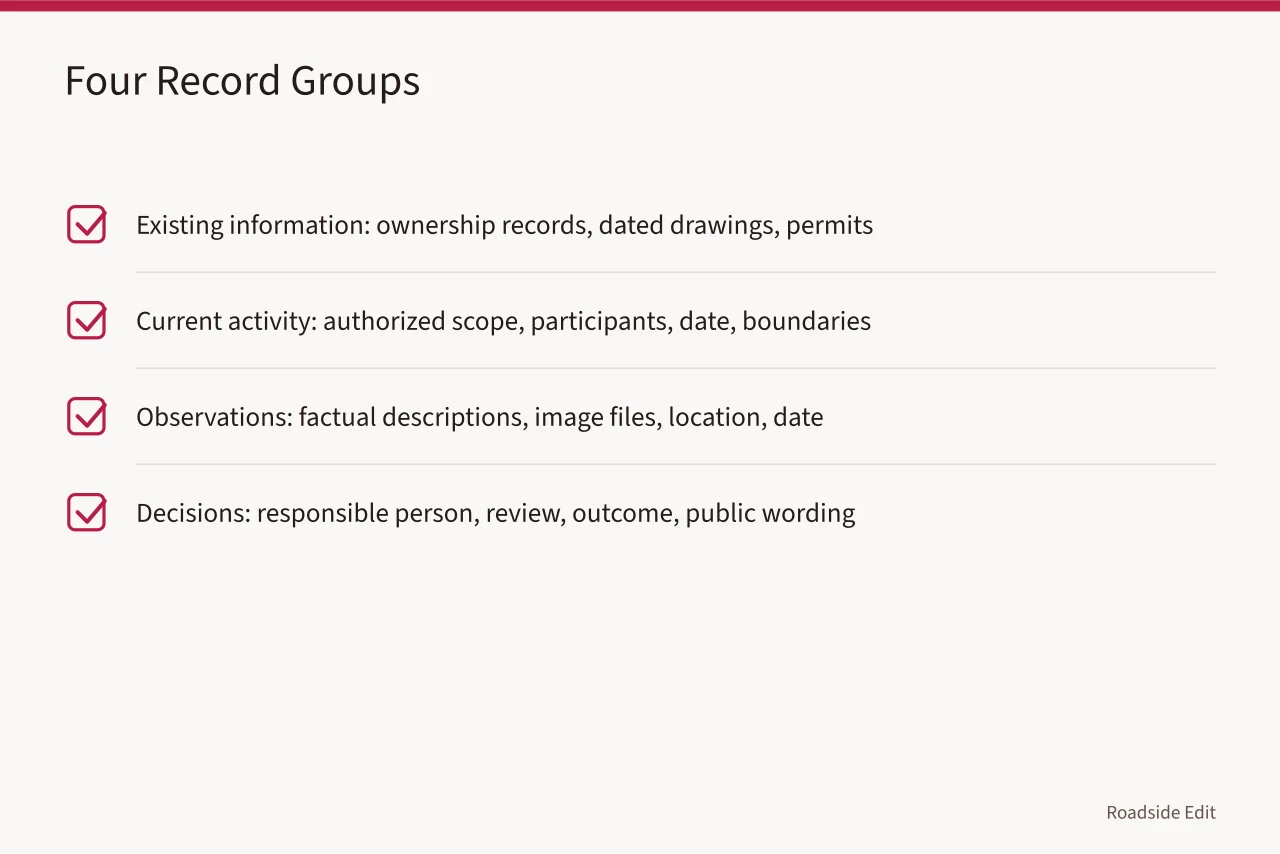
| Record group | What belongs there |
|---|---|
| Existing information | Ownership-provided records, dated drawings, previous reports, permits, and approved photographs |
| Current activity | Authorized scope, participants, date, boundaries, and closeout notes |
| Observations | Factual descriptions, image files, location, date, and notification record |
| Decisions | Responsible person, review requested, outcome, date, and public wording approved |
EPA's renovation and repair steps for PCB-containing materials say older building materials may need awareness and protective measures during renovation or repair.
The page does not establish conditions at a specific station. It supports a records-first approach when work could disturb older materials: identify existing information, define the work, then use the appropriate responsible process before presenting a conclusion.
Separate evidence from copy
An editorial page may state that a station is being considered for reuse, that an owner supplied historical information, or that a preservation group announced an event. It should not say a condition is safe, a material is absent, or a route meets requirements unless the supporting record is specific and current enough to support that statement.
Keep supplied business text in its own field with the supplier and date. If a sponsor asks for a correction, compare the requested wording with the record. Correct factual errors promptly, but do not replace an accurate qualification with marketing language.
Use a practical claim log
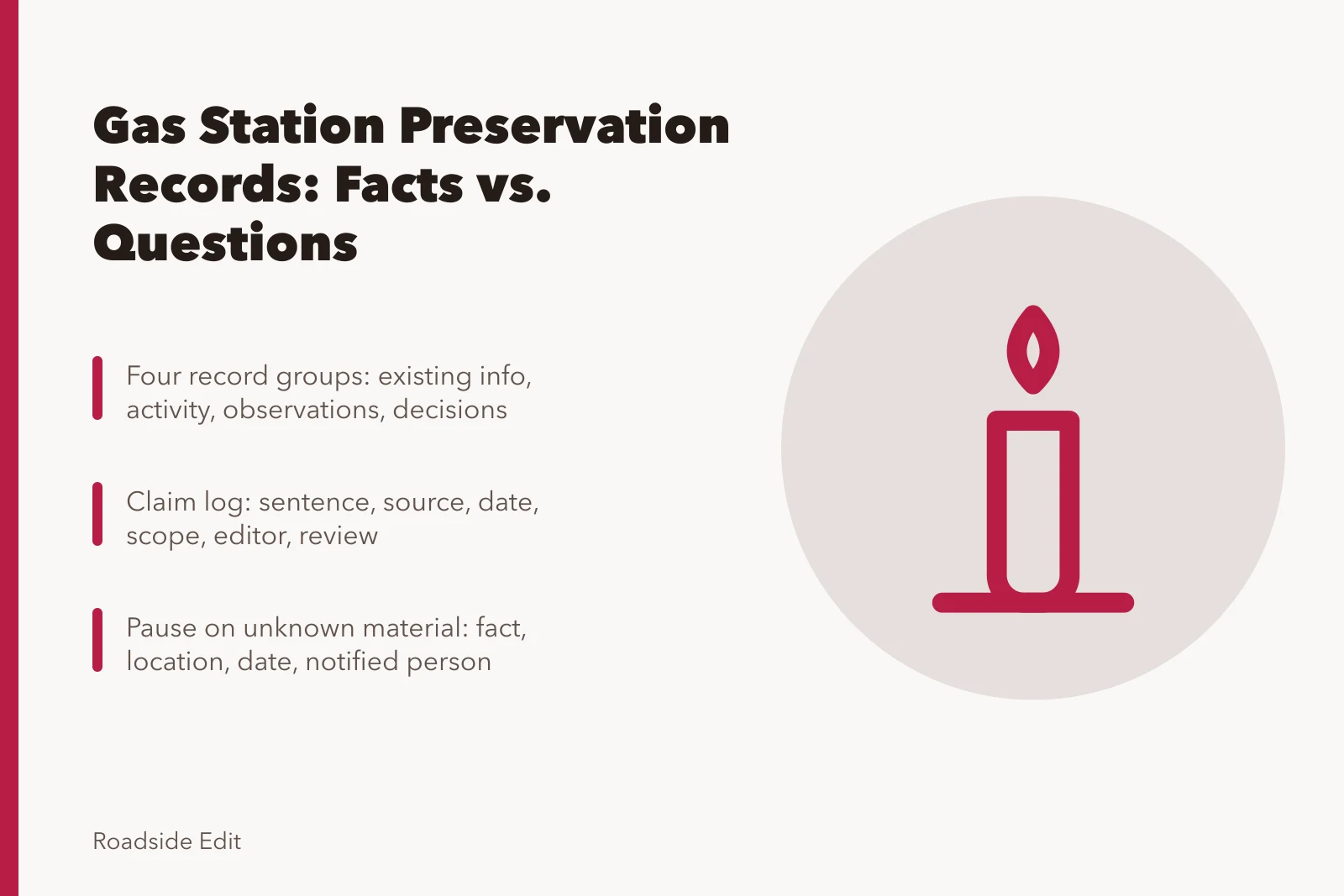
For each public statement, keep a short log: the sentence, its source, source date, the exact project or property it covers, the editor who checked it, and the next review date. A log is particularly useful when a property changes ownership, enters construction, or begins hosting occasional events.
Record a pause without calling it a diagnosis
When an observer finds an unknown material or unexpected condition, the record should state the observable fact, location, date, and person notified. Do not turn that handoff into a finding about the material or property.
OSHA's asbestos construction standard defines disturbance of asbestos-containing material within regulated construction work. For a general readership, the boundary is clear: do not make an article the vehicle for sampling, removal, or a material diagnosis.
The evidence file should remain usable after the responsible team takes over. The National Park Service says documentation and treatment of historic properties can be integrated through a research design.
Preserve the original note and any later authorized update as separate dated records. A later work description can explain what was done, but it should not rewrite the earlier observation as though the issue had already been understood.
Commercial information needs the same separation. The Federal Trade Commission's endorsement guidance addresses the need for clear disclosure of material connections in endorsements. Mark supplied contractor or business copy, and locate the disclosure near any resulting public statement. That keeps a paid placement from being mistaken for an independent safety finding.
At publication time, retain only claims that fit their record. A site-access note can establish that an area was closed to the visitor. A work order can establish that a stated task was ordered. Neither document alone establishes that all risks were resolved. That distinction is what makes a safety record useful rather than falsely reassuring.
The same rule applies to a correction. State the new verified fact, name the date of the change, and leave unverified questions open until a suitable record answers them.
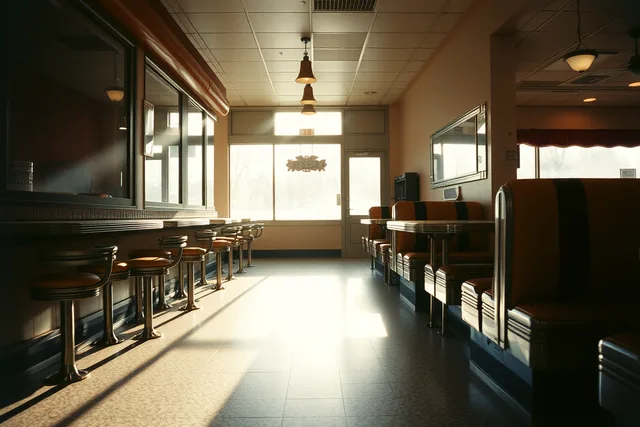
This historical image is not a current site record.
Common questions
How long should safety records be retained?
Follow the owner's applicable record policy and any relevant requirements. For editorial use, retain the source behind a current claim while the claim remains published.
Can a newspaper article be the only source for a current condition?
Usually not. Treat it as historical context unless it is corroborated by current, property-specific information.
What should be changed after a project decision?
Update the decision log, revise affected public language, and keep the earlier wording and source history in the editorial record.