Reviews
Gas station preservation safety checklist comparison questions before 2027 work
Safety checklist comparison for gas station preservation work before 2027: Phase I and II standards, UST Finder, confined space, asbestos, and FEMA P-154.
A former gas station can become a shop, an office, an event venue, or a building that stays closed while its future is decided. Each of those uses triggers a different checklist. The safety questions should start with the proposed use and the records already on hand, not with a photograph or the word "historic."
This is a checklist comparison, not a determination. Nothing here says a property is safe, free of hazardous material, or approved for occupancy. Those conclusions need current, property-specific information and the people responsible for the project.
What to take away
- Match the checklist to its trigger: a purchase, a tank opening, a wall cut, a public event, or a structural screen.
- Compare what each checklist covers, who requires it, and when it expires.
- Ask which items are legal requirements and which are voluntary guidance.
- Treat an old image as historical context, not proof of a current condition.
- Name the person who can confirm a statement before it appears in a listing.
Compare six checklists that show up in station work
Checklists differ in who requires them, what they cover, and how long they stay valid. The table compares six that come up before 2027 project dates.
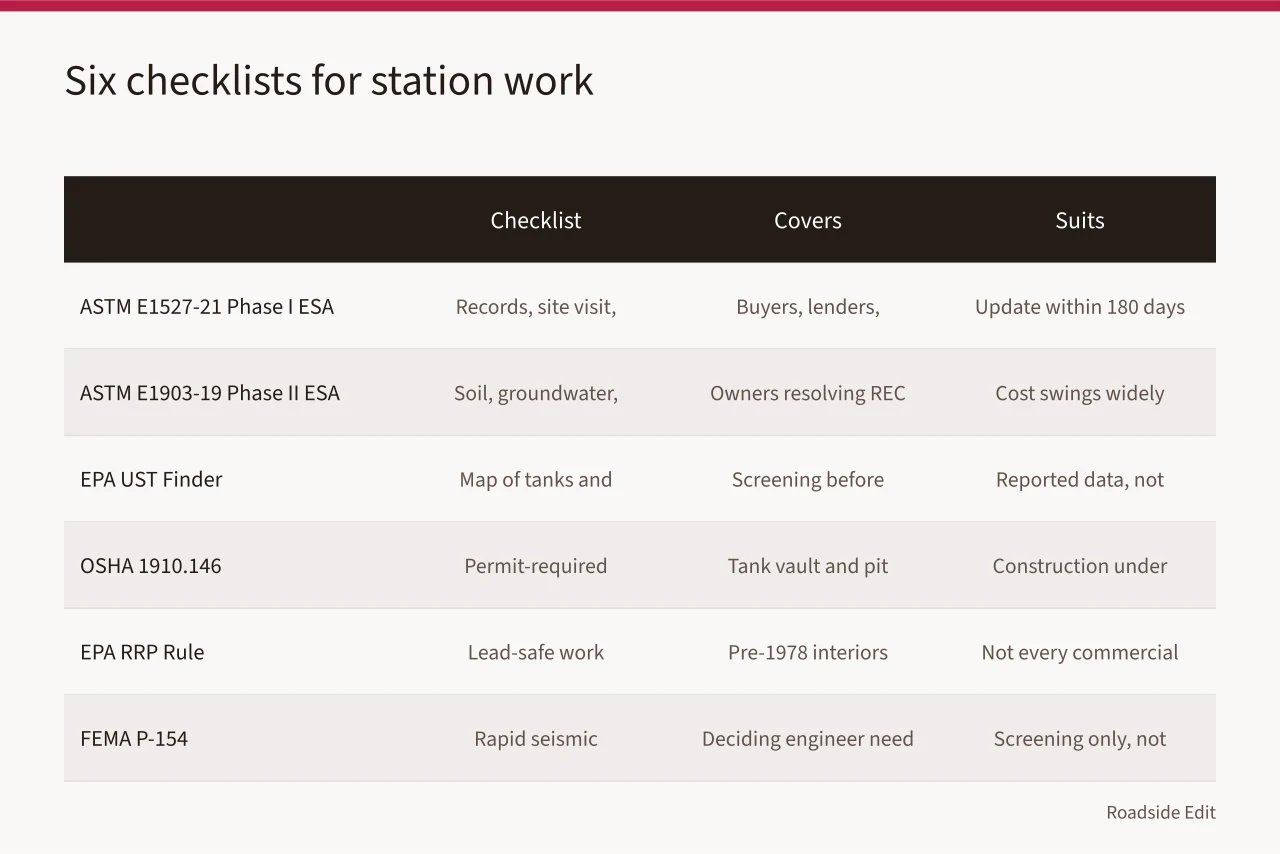
| Checklist or tool | What it covers | Who it suits | Notable limit |
|---|---|---|---|
| ASTM E1527-21 Phase I ESA | Records review, site visit, interviews, written findings on past uses | Buyers, lenders, grant applicants | Components need updating within 180 days |
| ASTM E1903-19 Phase II ESA | Soil, groundwater, and soil gas sampling to confirm a finding | Owners resolving a recognized environmental condition | Scope is case-specific, so cost swings widely |
| EPA UST Finder | National map of regulated underground storage tanks and reported releases | Teams screening a site before filing records requests | Shows reported data, not an inspection result |
| OSHA 1910.146 | Permit-required confined space entry in tank vaults and pits | Contractors and staff who enter tank space | Construction work falls under 1926 Subpart AA |
| EPA Renovation, Repair and Painting Rule | Lead-safe work practices, certified firms, trained renovators | Repainting or sanding pre-1978 interiors | Covers housing and child-occupied facilities, not every commercial building |
| FEMA P-154 | Rapid seismic screening score and collapse hazards | Teams deciding which buildings need an engineer | Screening only, not an engineering evaluation |
Several of these are voluntary standards rather than legal duties. FEMA publishes P-154 free, and EPA's UST Finder is open to anyone. A Phase I is usually ordered to satisfy a lender, while the confined space and asbestos rules carry enforcement.
Phase I and Phase II: the purchase checklists
The EPA treats ASTM E1527-21 as satisfying the all appropriate inquiries rule, which supports a defense to federal liability. The standard requires a records review, a site visit, interviews, and a written report.
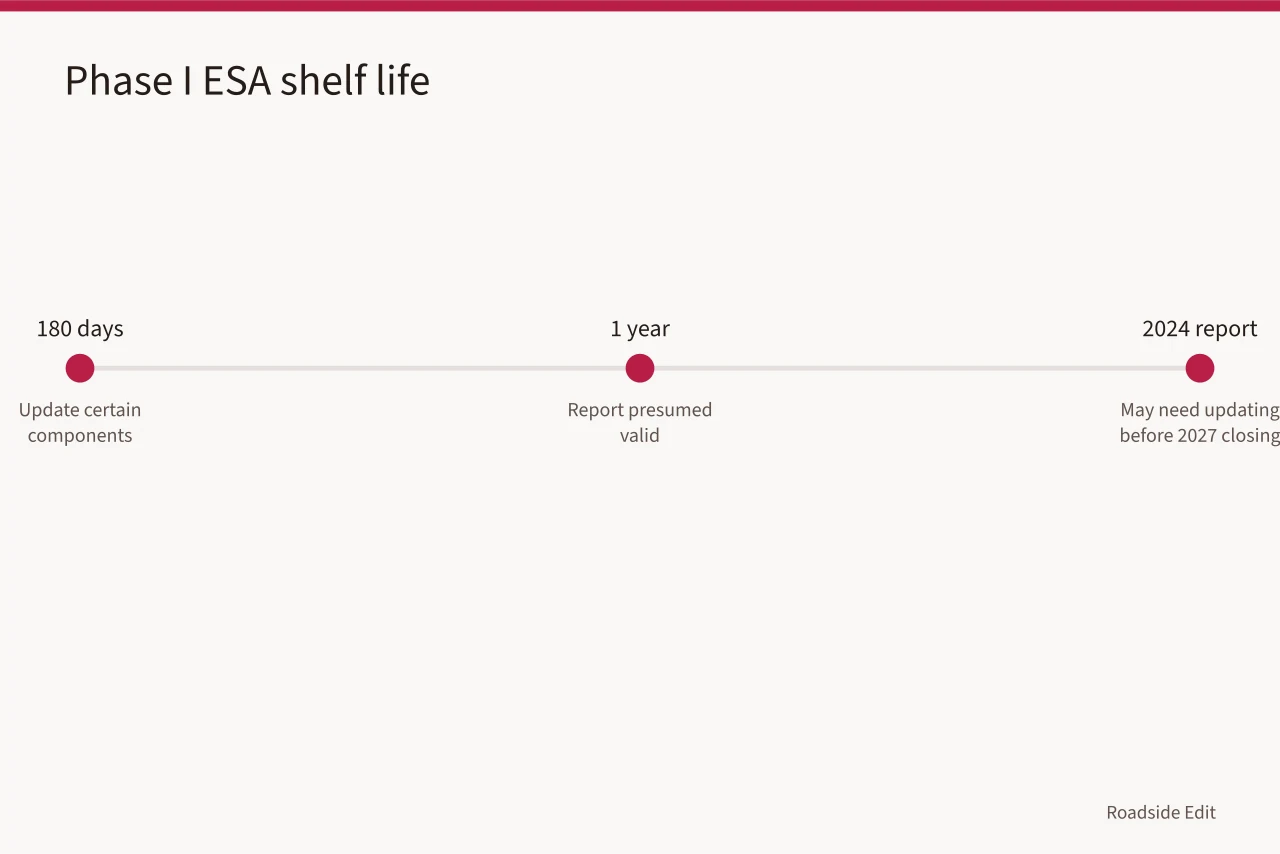
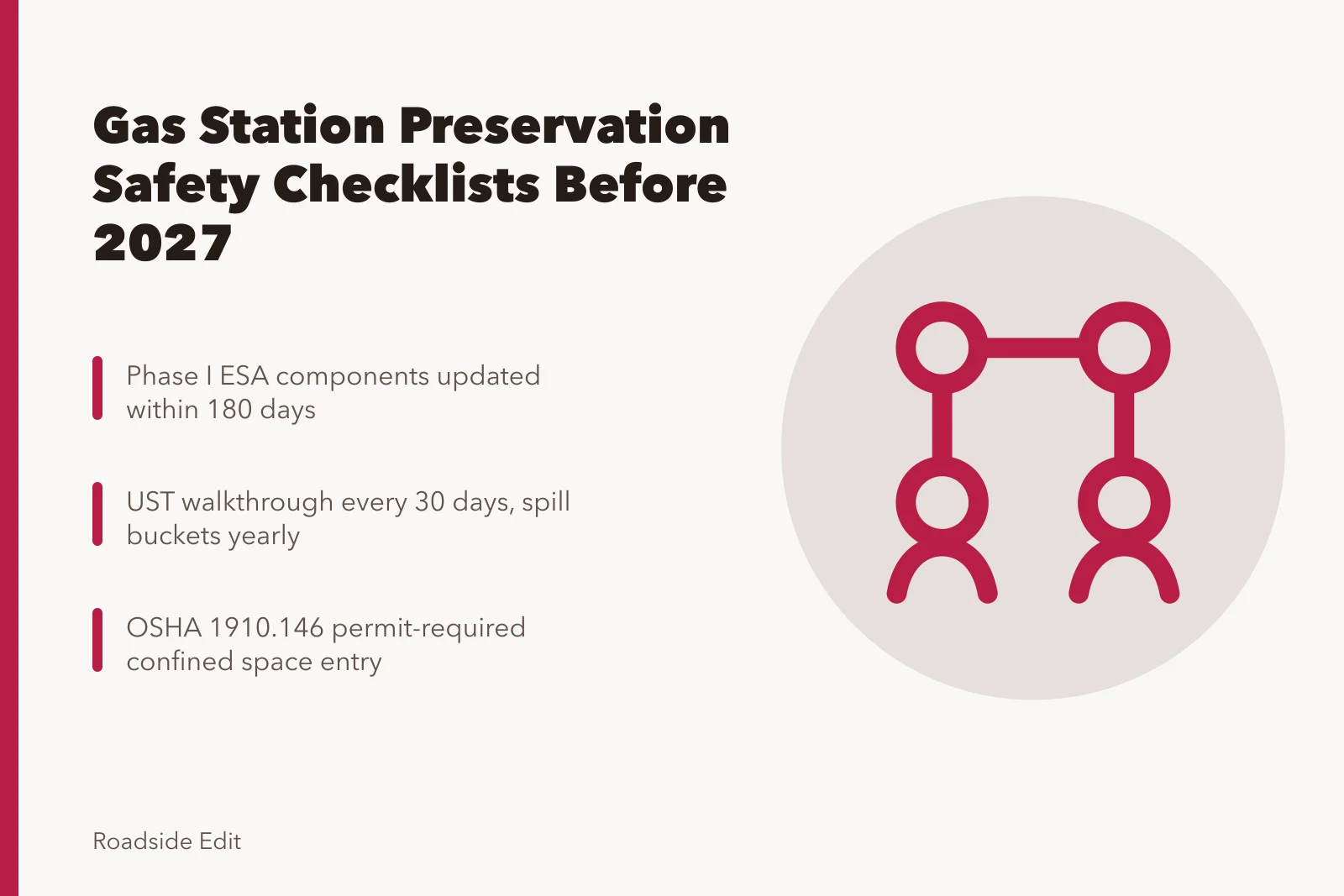
It also carries a shelf life. Certain components must be updated within 180 days, and the report is presumed valid for one year. A 2024 report may need updating before a 2027 closing.
Phase II work under ASTM E1903-19 is ordered, not required. A buyer or owner commissions it when a Phase I flags a recognized environmental condition. Borings, monitoring wells, and analytes drive the price.
Tank records and the 30-day walkthrough
The EPA's 2015 underground storage tank rule requires owner and operator training, a walkthrough every 30 days, and inspections of spill buckets and containment sumps every 12 months. Spill, sump, and overfill equipment must be tested every three years.
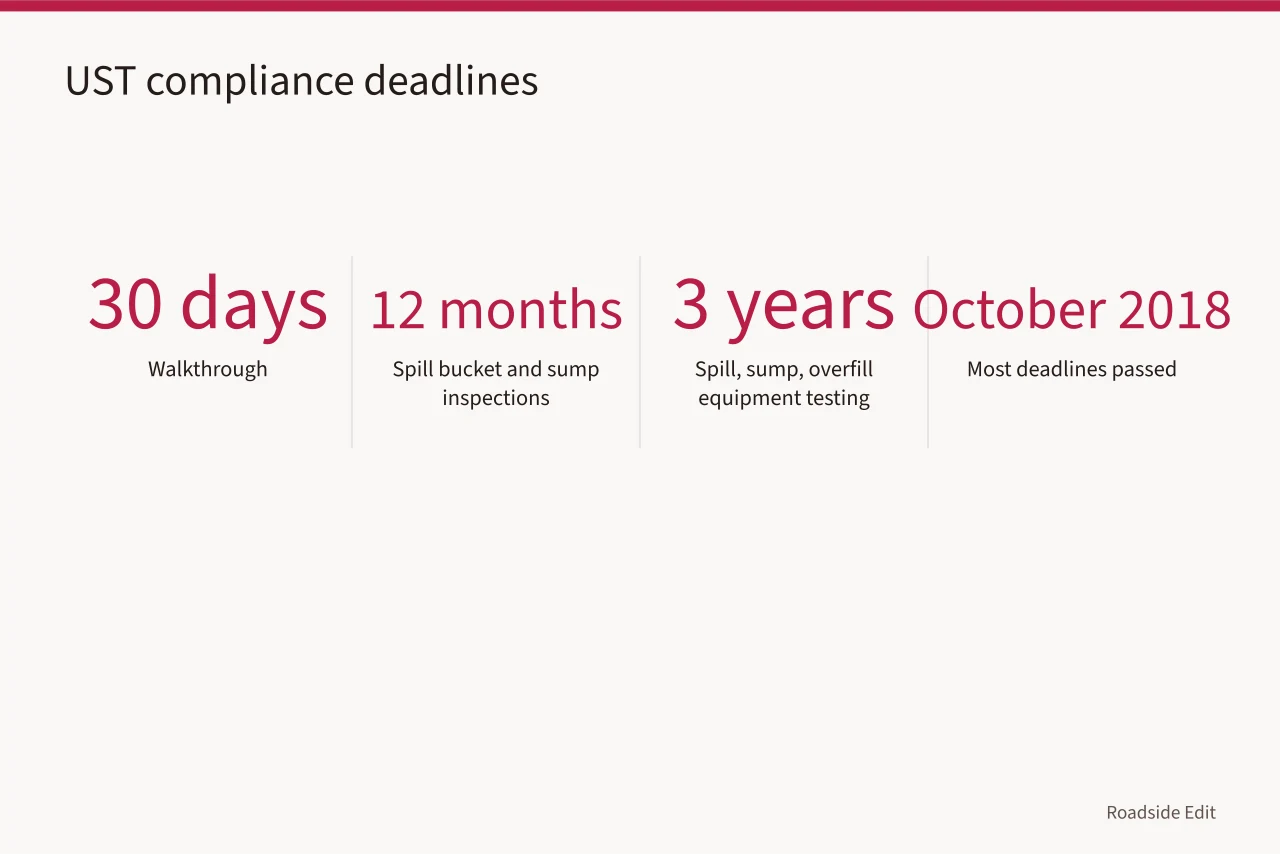
Most of those deadlines passed in October 2018. A preservation project that keeps a tank in service inherits them, even when the building above is mostly untouched.
Confined space before anyone enters a vault
OSHA 1910.146 covers permit-required confined spaces, including atmospheric testing before entry, an attendant outside, and rescue arrangements. Construction work falls under 1926 Subpart AA instead. A service bay pit or tank vault can qualify as a permit space.
Asbestos notice and lead-safe practices
The asbestos NESHAP, 40 CFR Part 61 Subpart M, sets a notice rule. Written notice goes to the responsible agency at least 10 working days before a demolition or renovation that disturbs regulated asbestos-containing material. The EPA's information for building owners and managers explains owner duties for asbestos-containing material in buildings.
Lead follows a different track. The EPA Renovation, Repair and Painting Rule covers pre-1978 housing and child-occupied facilities, so a converted commercial station may fall outside it. Where it applies, firms must be certified and renovators must complete an eight-hour course. Many states run their own programs.
Accessibility: compare a brief against the standards
The U.S. Access Board explains in its historic buildings and facilities session that ADA and ABA standards address historic buildings and facilities, with provisions that depend on the project.
The National Park Service's Preservation Brief 32 sets a planning sequence: review significance, assess existing and required accessibility, then evaluate options in a preservation context. Neither source replaces a site visit or a local determination.
A writer can still ask which entrance is planned, whether it is a proposal or a current operation, and who authorized the description. A proposed ramp is not an opened route. A renovation site is not a finished one.
Staffed use against visitor-only use
OSHA's emergency action plan minimum requirements list reporting emergencies, evacuation procedures, accounting for employees after evacuation, and named contacts. Those apply where the underlying rules and workplace facts call for them.
A staffed retail use and a one-day open house call for different records. That is why the comparison comes before the wording in a listing or a promotion.
Keep a short evidence log
The practical answer is a small, dated record for each public statement.
- Quote the exact proposed public statement.
- Record the person or document that supports it.
- Mark whether it describes a current condition, a proposal, or historical context.
- Add a review date and revise or remove the statement when it stops applying.
The format matters less than the distinction between what is known and what is still open. The editor reports supported information, and the responsible project participants address the property itself.
Common questions
Can a historic photograph prove that a station is safe to visit?
No. A photograph documents a past view. It cannot establish a current route, building condition, material condition, or approval for another property.
Does a Phase I ESA from 2024 still work in 2027?
Not automatically. ASTM E1527-21 components generally need updating within 180 days, and a report is presumed valid for one year. A lender or agency may ask for an updated version.
Should an editor describe a planned ramp as an accessible route?
No. Describe it as a proposal unless current, property-specific information supports a different statement.
Does an OSHA emergency action plan apply to every former gas station?
No. OSHA's cited guidance covers workplace emergency planning. Whether it applies depends on the work, the use, and the applicable rules.
What should happen when a source cannot confirm a safety statement?
Leave the statement out or describe the uncertainty plainly. Do not replace missing information with a promise or a conclusion drawn from an image.