Reviews
Part of Investigate first: the sequence that protects a historic motel restoration
How to assess a historic motel restoration tour
Assess historic motel restoration tours by checking the guide, itinerary, property access, regional context, preservation language, and where the fee goes.
What to take away
- Ask who leads it. An owner, an architect and a historian give three different tours of the same motel.
- A tour that shows only finished rooms is marketing. Ask for a property mid-restoration.
- Check access before booking. Restored motor courts vary in steps, gravel and room size.
- Watch the vocabulary. Anyone who calls every refit a restoration has not thought about it.
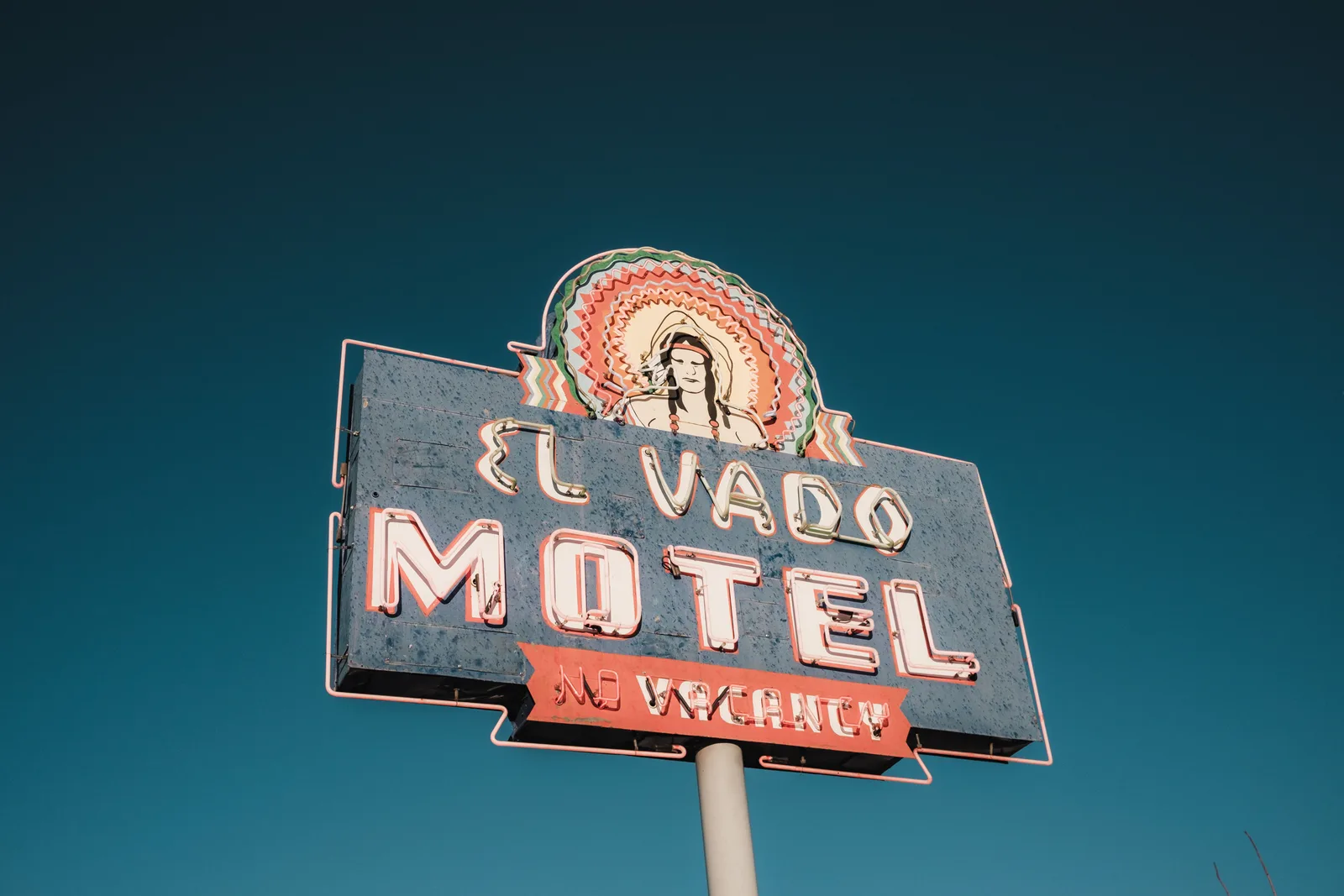
- Boots Court, Blue Swallow, El Vado, Wigwam, Wagon Wheel and Munger Moss are named as properties to ask about, not as confirmed stops on any specific tour.
- National Trust Tours, Road Scholar, Route 66 Tours and the Society for Commercial Archeology are leads to investigate, not specific tours verified here for motel-restoration access.
Assess a historic motel restoration tour by what it actually offers, not just its photographs. Two visits of similar length can be an education or a sales pitch. The difference is visible before you book. The motels and organizations named below are starting points, not specific tours verified here for restoration access. Check each itinerary and confirm access before booking.
Who is leading it
This question predicts most of the experience.
Tour Leader Types
Owner
- What they tell you
- Costs, breakage, regrets
- Honesty
- Honest, unsystematic
- Ask for
- Regrets and costs
Preservation Architect
- What they tell you
- Materials and methods
- Honesty
- Technical, systematic
- Ask for
- Material methods
Local Historian
- What they tell you
- People and the road
- Honesty
- Contextual, anecdotal
- Ask for
- Road history
Tour Guide
- What they tell you
- May be any or none
- Honesty
- Variable
- Ask for
- Preservation background
An owner tells you costs, breakage and regrets. This is honest and unsystematic. A preservation architect explains materials and methods. A local historian covers people and the road. A tour guide may be any of these or none.
National Trust Tours, the travel arm of the National Trust for Historic Preservation, lists expert-led Route 66 departures. Ask for the study leader's preservation background.
Road Scholar is a nonprofit educational travel group. Its Route 66 programs use instructors and field trips. Ask for a day-by-day syllabus.
Route 66 Tours, an Australian small-group operator, uses local guides. Ask whether owner visits are confirmed.
The Society for Commercial Archeology is a nonprofit for 20th century commercial architecture. Its conferences include tours. Conference registration is required.
What to ask about the itinerary
Ask for specifics before booking.
- How many properties, and how long at each?
Ask Before Booking
- How many properties, and how long at each?
- Interior access, or exterior only?
- Any work in progress, or finished only?
- Is entry to private property confirmed, or hoped for?
- Which properties are confirmed stops, and is access inside or outside only?
- Is any property actively under restoration, and what work can visitors see?
- How long is the visit at each stop, and what happens if access is unavailable?
That last point matters. Nobody can promise access to a building they do not own. Itineraries that list private properties without confirmed permission become drive-bys.
A tour with one motel mid-restoration is worth two that show only finished rooms. Scaffolding is where the learning is.
Named Motels to Request
Boots Court
- Location
- Carthage, MO
- Opened
- 1939
- Ask about
- Restoration file
Blue Swallow
- Location
- Tucumcari, NM
- Opened
- 1939
- Ask about
- Neon sign, garage doors
El Vado
- Location
- Albuquerque, NM
- Opened
- 1937
- Ask about
- Historic displays, tax credits
Wigwam
- Location
- Holbrook, AZ
- Opened
- 1950
- Ask about
- Concrete repairs
The regional context question
A tour that treats each motel as an isolated curiosity misses what happened. These buildings were built for a road. The road's history explains the building's plan.
The National Park Service's account of Route 66 in Arizona is a good measure of regional context. It shows how the alignment moved and what happened when the interstate bypassed towns. A guide who can explain the bypass can explain the motel.
Ask whether the tour covers why the corridor declined. Operators who skip it sell nostalgia.
The National Park Service Route 66 Corridor Preservation Program provides cost-share grants and technical help. Ask which motels received grants. The Route 66 Road Ahead Partnership coordinates preservation projects. Ask about local work.
Access, honestly assessed
Historic properties are difficult. Good operators say so.
The National Park Service's brief on making historic properties accessible explains how owners balance access against preservation. A restored 1940s motel may have level entry or only steps and gravel.
What to establish before paying:
Access Questions to Ask
- Walking distance and total time on your feet
- Surfaces, especially gravel forecourts and uneven paving
- Steps, and whether any interior is reachable without them
- Seating, restrooms, and shade or shelter
- Transport between properties, and whether it is accessible
- Are entrances step-free, and are there steps or thresholds?
- What surfaces are on the route, including gravel?
- Are motel rooms or other interiors included?
- How much walking and standing does the visit involve?
- Who can answer access questions before booking?
An operator who answers precisely has thought about it. One who says it should be fine has not.
Listen to the vocabulary
Treatment terms have specific meanings. A careful guide distinguishes original work, later historic changes, new work and recreation from evidence. A careless guide calls every attractive refit a restoration.
Treatment Terms Compared
Careful Guide
- Original work
- Distinguished
- Later historic changes
- Distinguished
- New work
- Distinguished
- Recreation from evidence
- Distinguished
- Uncertainty
- Says when not known
Careless Guide
- Original work
- Called restoration
- Later historic changes
- Called restoration
- New work
- Called restoration
- Recreation from evidence
- Called restoration
- Uncertainty
- Confident on everything
The same applies to uncertainty. The best guides say when something is not known. If every question gets a confident answer, some answers are invented.
The Neon Museum in Las Vegas offers guided tours of restored signs, including motel signs. Tickets are timed. Ask which signs are original.
The American Sign Museum in Cincinnati offers guided tours and shows sign restoration. Admission is ticketed. Ask about neon and porcelain.
These are useful for sign-specific questions, not evidence that a tour enters a motel. For a motel-restoration itinerary, confirm whether visitors enter the property, see its sign from outside, or only pass it on the road.
Where the money goes
Ask whether fees support anything beyond the operator: property maintenance, a local museum, an archive, a preservation group.
Also ask how the tour treats operating businesses. A motel with paying guests is somebody's home for the night. A group photographing doorways at nine in the morning is a problem the owner manages.
Judging it afterwards
The test is not whether you enjoyed it. It is whether you can now read an unfamiliar motel: guess its phases, spot replaced windows, tell an original sign from a remake.
A tour that gives you that is worth several that gave you photographs.
The building side of what a good tour should explain is in the restoration steps that matter. The interventions worth arguing about are what a guide should defend.
A useful tour leaves you able to identify who is leading, which property access is confirmed, and what regional history explains the site. You should also be able to distinguish documented treatment from conjecture and know where the fee goes.