Guides
How to compare roadside renovation provider selection in 2027
Choose roadside renovation help in 2027 by comparing defined scopes, relevant experience, written records, qualifications, change control, and public project claims.
Choosing help for a roadside renovation is not a search for one universally best provider. The right person or team depends on the documented scope, property type, project stage, local requirements, and questions that need qualified review. A good selection process makes those differences visible before a price, deadline, or public announcement hardens into a promise.
This guide is a planning and editorial framework for U.S. projects. It is not legal advice, a licensing determination, an endorsement, or a recommendation of a provider. Confirm current local requirements, qualifications, insurance, scope, and references through the appropriate sources for the actual project.
What to take away
- Start with a defined need, not a provider name or attractive estimate.
- Compare written scopes, relevant experience, communication process, and change handling.
- Verify claims through the responsible local or program source when they matter to the project.
- Keep the owner, coordinator, designer, contractor, and specialist roles distinct.
- Do not publish a provider claim as independent fact without a supportable source.
Define the help you actually need
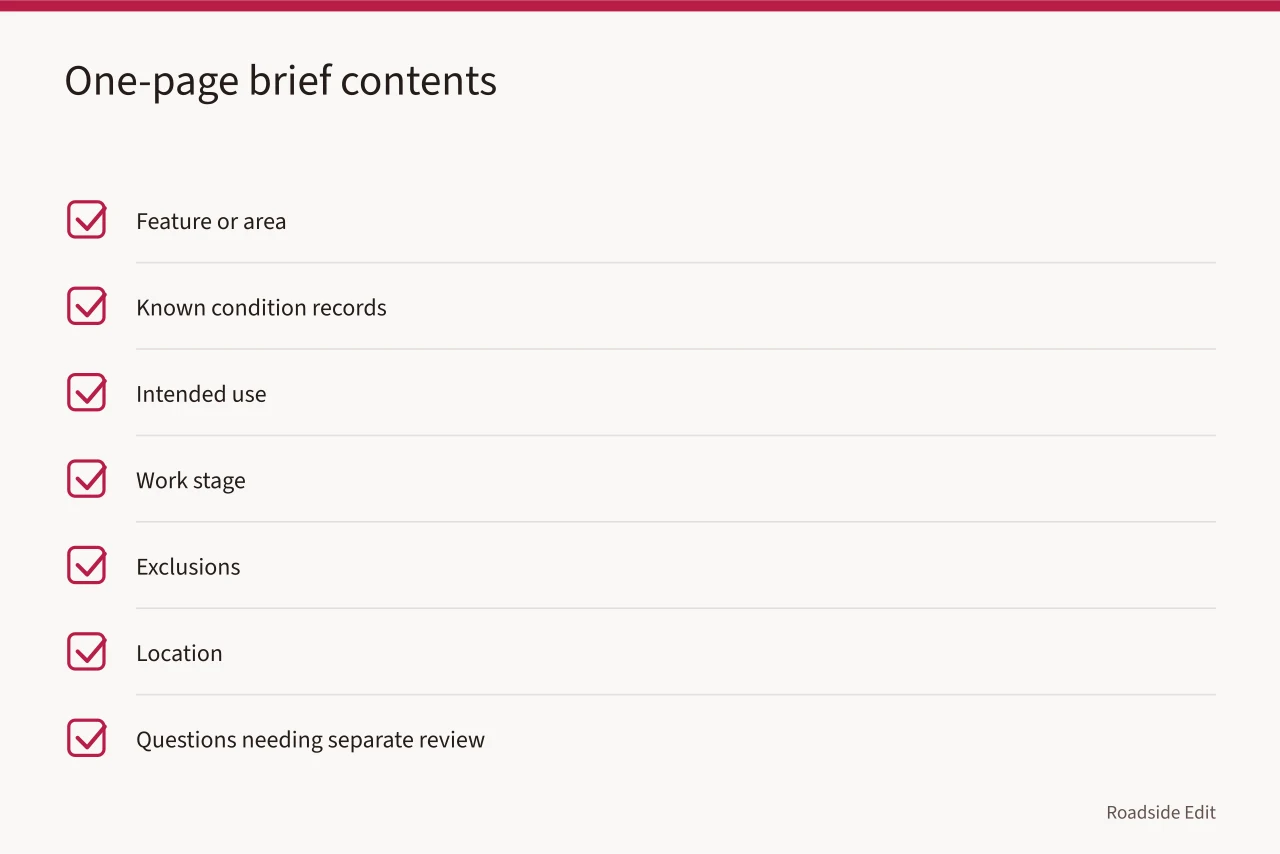
"Need a contractor" alone is not enough to compare proposals. Create a one-page brief covering feature or area, known condition records, intended use, and work stage. Add exclusions, location, and questions requiring separate review.
A small exterior repair and a larger change of use may need different inputs, while historic-property, access, materials, and utility questions may need different responsible parties.
Separate the decision into roles: an owner makes or authorizes decisions, a coordinator manages information and timing, and a design professional may define work within their scope.
A contractor provides proposed method and price, a specialist may address a particular technical question, and a writer reports evidence. When one person is assumed to do every job, gaps hide easily.
Compare scopes before prices
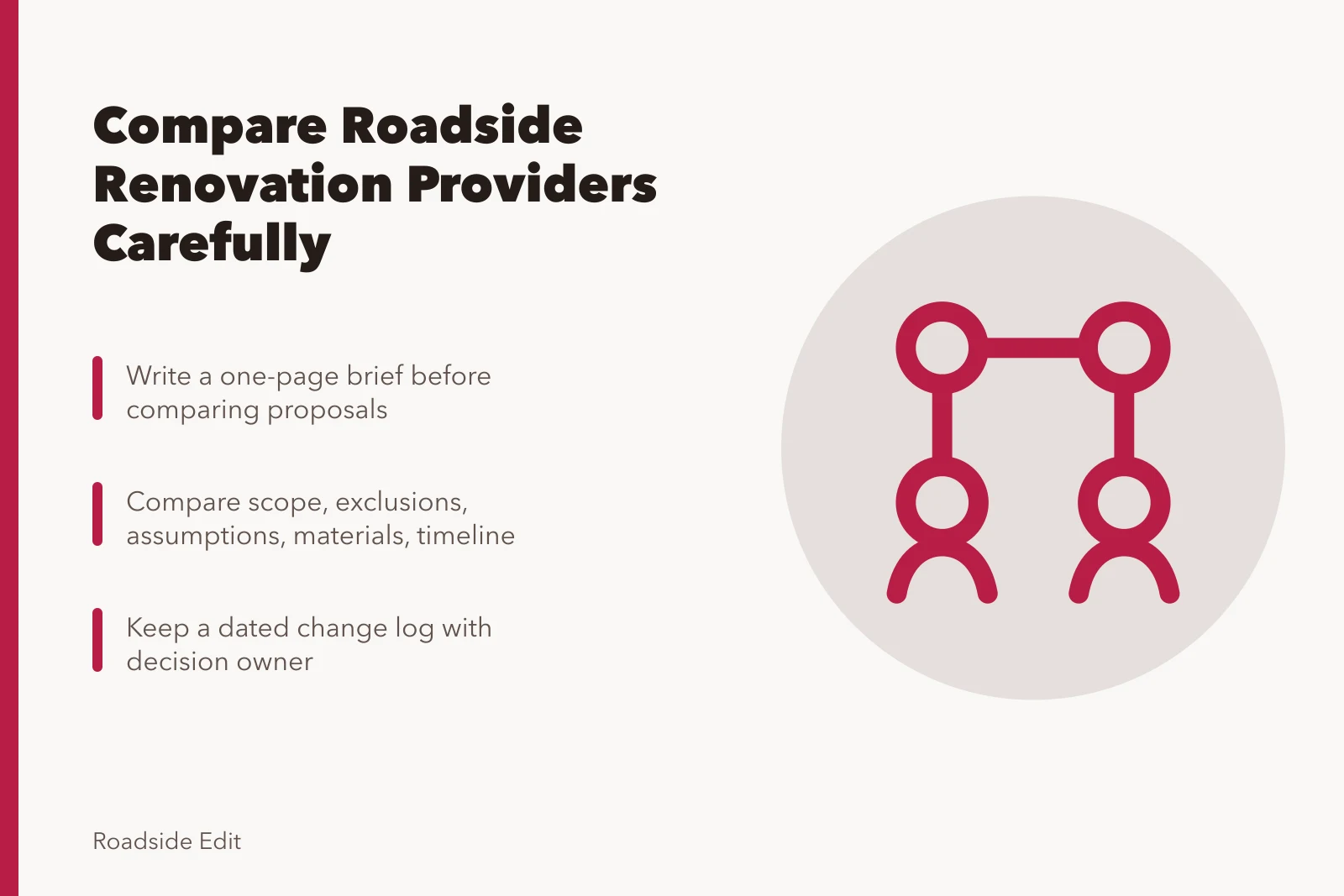
The lowest number is not necessarily the lowest comparable proposal. First compare what each document says it includes, what it excludes, the assumptions it makes, the materials or methods it identifies, its timeline, and how it handles unknowns. If two proposals describe different work, their prices do not answer the same question.
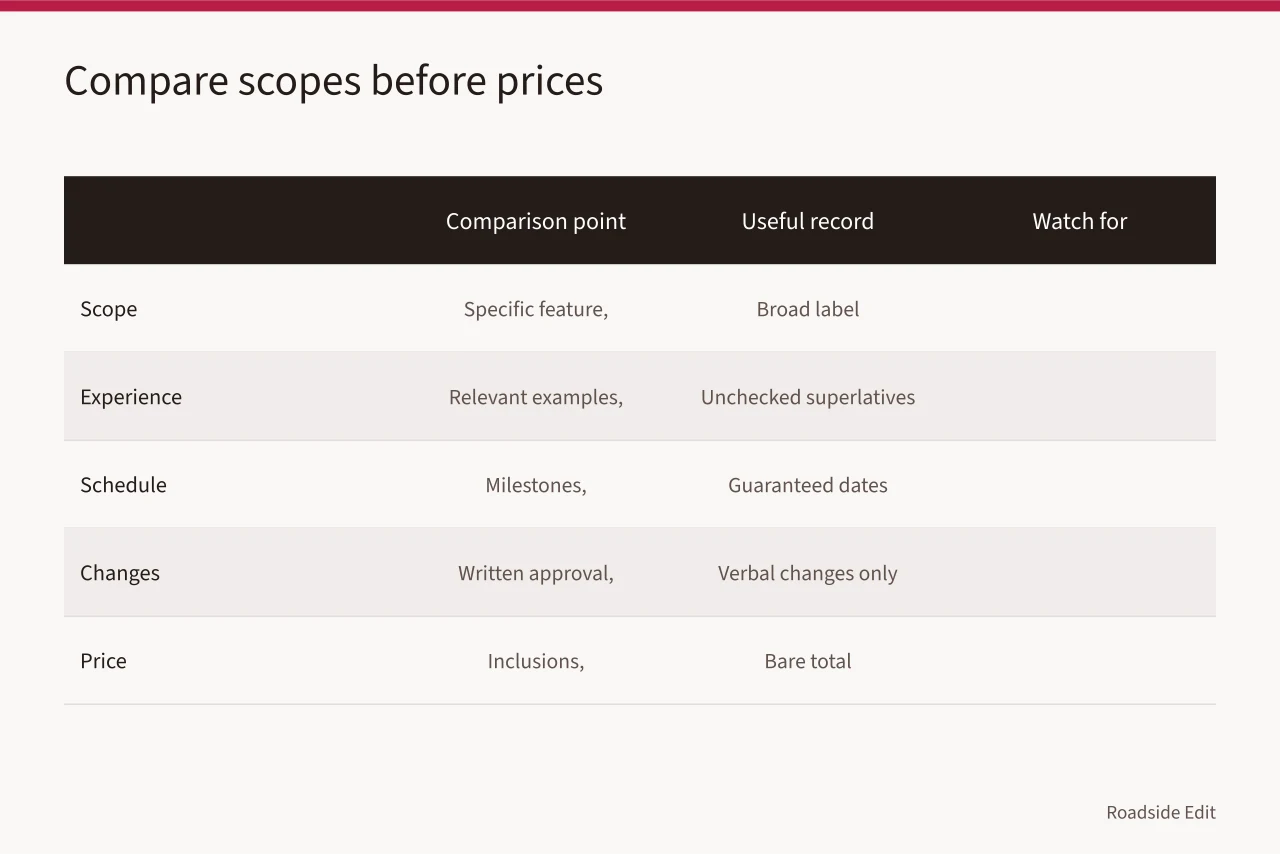
FTC advises consumers to get written estimates, verify license and insurance through state or county government, and read contracts carefully. Review the FTC's home-improvement scam guidance.
This is consumer guidance, not a contract for a particular roadside project. It supports a practical selection habit: compare written, specific information rather than relying on a verbal assurance or the lowest headline price.
Ask for relevant evidence, not a performance show
Ask candidates to explain experience that matches the proposed work. A polished portfolio is not a defined scope.
Relevant evidence may include examples of comparable project roles, responsible contacts where appropriate, a proposed work plan, qualifications needed for the stated work, and a transparent record of exclusions. Do not request or publish private client information merely to make an article sound authoritative.
For a historic property, an applicable preservation standard or local review can change the question. For work covered by a specific EPA program, firm status may matter. For a public-facing alteration, the project may need to address access through the proper process.
Identify the question early. Do not assume one provider automatically meets every requirement.
Establish change control before work begins
Projects evolve. A new condition, owner request, material availability issue, or agency question can change the work. The mistake is not the change. The mistake is proceeding without a dated record of what changed, who authorized it, how it affects price or schedule, and what the change does not resolve.
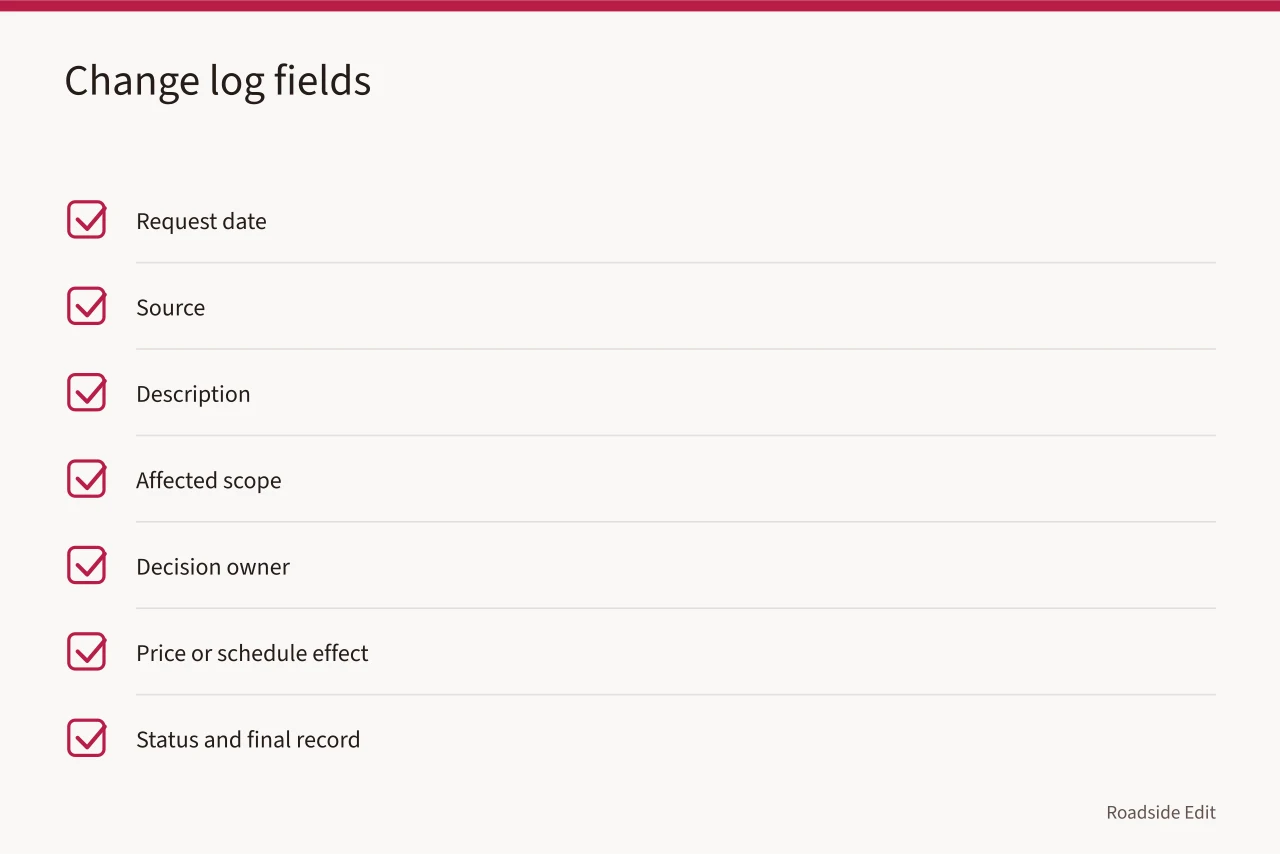
Use a simple change log: request date, source, description, affected scope, decision owner, price or schedule effect if known, status, and final record. Public updates should describe only the confirmed stage. Avoid declaring a project completed, approved, safe, or open because a change request exists.
Evaluate references for the question at hand
References can be useful when they answer a specific question.
A contact can confirm a provider performed a stated role, communicated during a defined project period, or completed a particular package.
That is not proof the same provider suits every property, budget, or technical issue. Keep questions factual and within the permission and privacy expectations of the person providing the reference.
Ask what work was actually included, who coordinated changes, whether the original scope changed, and what records exist. Do not ask a reference to make a broad quality ranking that the record cannot support. A reference is one input in a wider scope-and-evidence review, not a substitute for a current proposal or local verification.
Check provider claims at the right level
Provider claims include business identity, service area, relevant experience, program status, and license or insurance. They include employee qualifications and an offer for a stated project; each claim needs a fitting source.
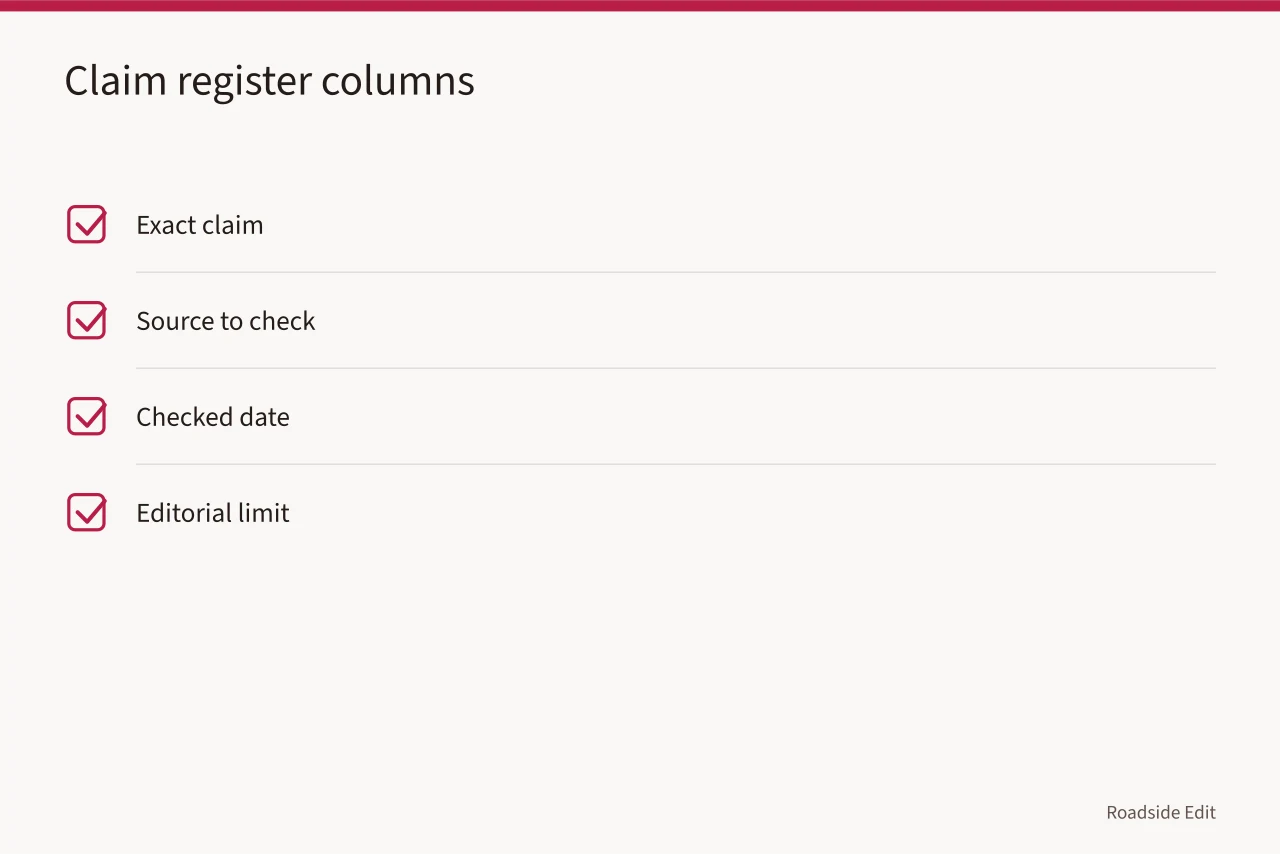
A company website may state services; a local authority may be the relevant source for a current license question. A program database may address a particular certification in the scope of that program, but none of those sources automatically answers the others.
Make a claim register with four columns: exact claim, source to check, checked date, and editorial limit.
For example, "the firm says it offers exterior preservation work" is a provider statement. "The firm is currently qualified for all local work" is broader and may lack support from that source. The register stops an editor from using a narrow fact as a broad endorsement.
Separate selection from supervision
Selecting a proposal does not end the owner's responsibility to maintain a clear information trail. The project should identify who receives updates, who can approve scope changes, who keeps original documents, and who confirms what may be published.
Supervisory or technical decisions must stay with the responsible project role. An editorial site can report a current, sourced update but should not become the place for unresolved construction or access decisions.
This distinction is especially important when a sponsored provider is involved. A placement can introduce a business, identify a stated service, and link to the provider's own confirmed information when the editorial policy allows it. It should not pressure the article into claiming work was selected, completed, insured, approved, or suitable beyond the current responsible record.
Compare schedule statements carefully
A proposed start or completion date is a planning fact, not a guarantee. Compare the dependencies behind each schedule: permits or approvals if applicable, materials, access to the site, sequencing with other work, owner decisions, weather constraints, and open questions. Record which dates are estimates and who may revise them.
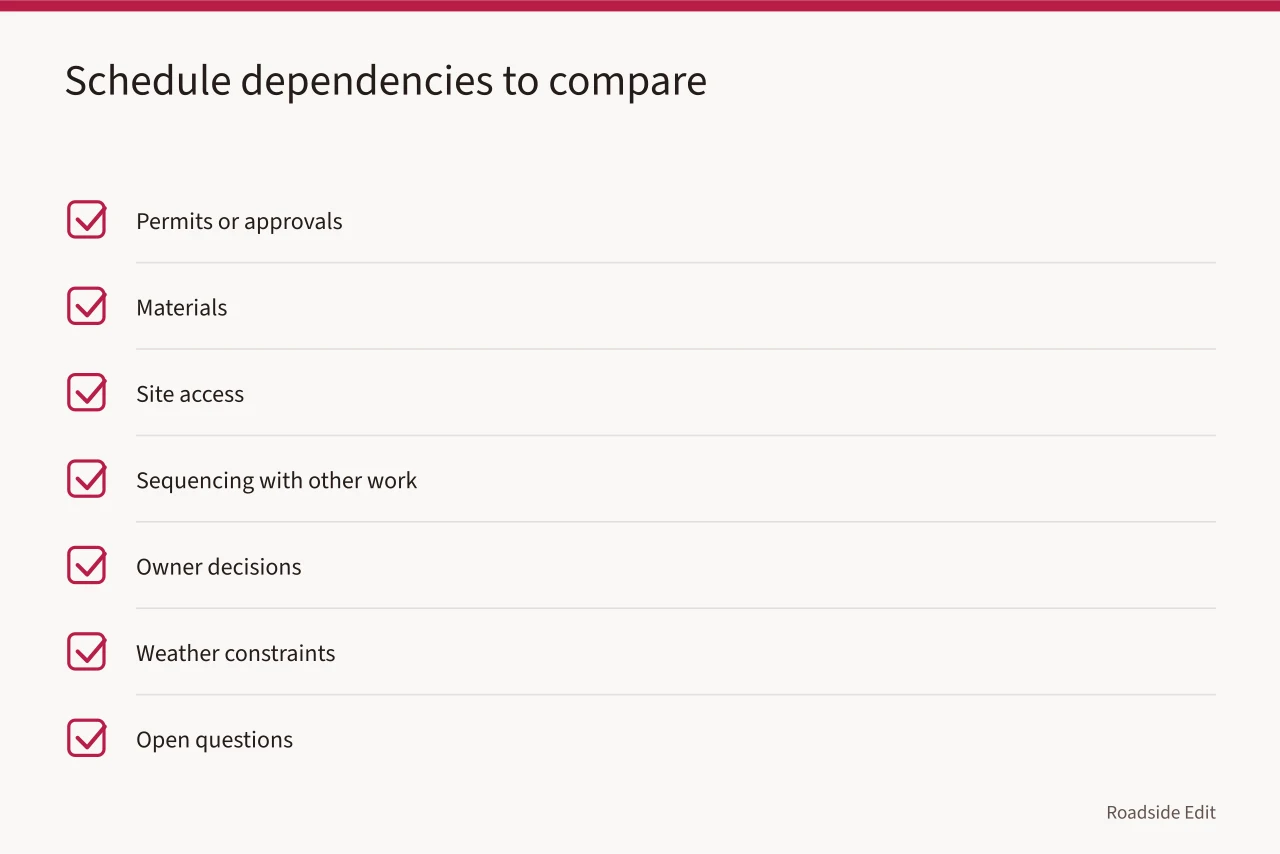
For public copy, distinguish "scheduled," "proposed," "reported," and "confirmed." Avoid a dramatic opening date when the responsible source has not confirmed it. Accurate stage language protects readers who may travel to a roadside location and protects the project from an old article that continues to circulate after plans change.
Make communication part of selection
Ask who receives the project brief, who can authorize a change, who reports status, and how an unresolved question is escalated. That answer beats a generic promise of good communication.
Defined responsibility helps a team maintain a factual project page, correct an outdated announcement, and prevent a content producer from interpreting technical evidence.
The National Park Service qualification standards describe qualifications used in a historic-preservation context. The GAO cost-estimating guide supports documenting assumptions and scope before treating a number as a final cost. The National Archives records-management guide supports retaining the decision trail. These sources inform process, not provider selection for a particular property.
The image is illustrative only and does not recommend a provider or document another project's work, condition, or status.
Keep provider coverage independent
An article can explain how to evaluate a written scope or why a project needs documented roles. It must not claim a provider is best, qualified for every task, or has completed work unless a current, appropriate source supports that exact statement.
Sponsored placements must remain attributable. A provider can describe its own confirmed services, but the site should not convert that into an unverified endorsement.
Review the decision before publication
Before publishing a hiring story or paid placement, check the project description against the current source and confirm that titles do not promise an outcome.
Attribute provider mentions, verify certifications, licenses, and insurance claims through the right source, and credit images accurately. If the record is incomplete, say less and name the next question.
Common questions
Does a written estimate prove that a provider is right for the project?
No. It provides information to compare with other defined scopes, qualifications, records, and the project's actual needs.
Can an article recommend one contractor?
Not without a defensible, current basis. It is safer to explain an evaluation process and attribute provider statements.
What should happen if the scope changes?
Record the change, identify the decision owner, update the affected records, and avoid making public claims beyond the confirmed stage.