Guides
Diner Exterior Paint Colours: Matching Period Palettes in Ontario
Ontario diner exterior paint colours include Benjamin Moore Historical, Sherwin-Williams Rookwood Red, Farrow & Ball Railings, and Para Paints Heritage.
What to take away
- Exterior colour on a designated Ontario diner is approved through a heritage permit, not chosen freely at the paint counter.
- Three routes exist: a manufacturer's heritage-matched range, custom matching from surviving paint, and a consultant-written specification.
- Named starting points include Benjamin Moore Historical Color Collection, Sherwin-Williams Rookwood Red SW 2801, Farrow & Ball Railings, and Para Paints Heritage Collection.
- No route settles sheen, substrate or fading.
- Photograph and sample existing paint before anything is stripped.
Where Ontario colour approval happens
Ontario publishes no provincial color list for diners. Rules come property by property through municipal designation and the heritage permit after an alteration.
Staff weigh a repaint against the Standards and Guidelines for the Conservation of Historic Places in Canada, the federal document linked at canada.ca. A color ignoring the building's own evidence draws comment, while a submission naming its source clears review with fewer questions.
The three routes to a period palette
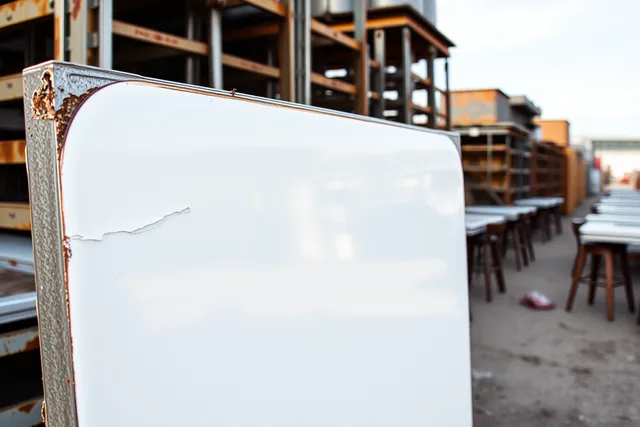
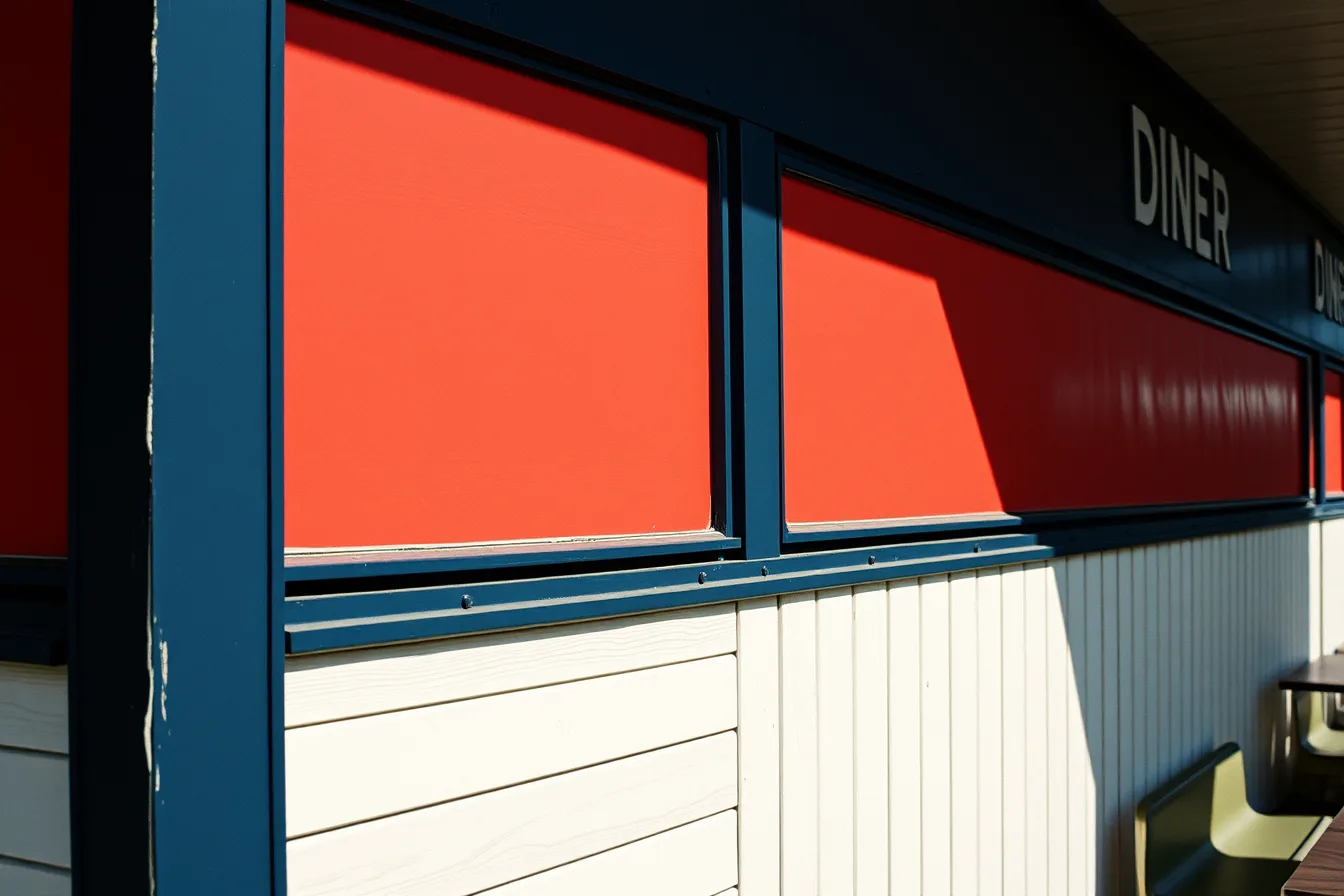
Diner exteriors settled into conventions: porcelain enamel panels, a painted fascia, and two or three colors separating base, band and trim. Wikipedia's article on diners covers the exterior color and design trends that period photographs record. Any repaint starts with recording what is there. The field method is set out in Roadside Renovation Photography.
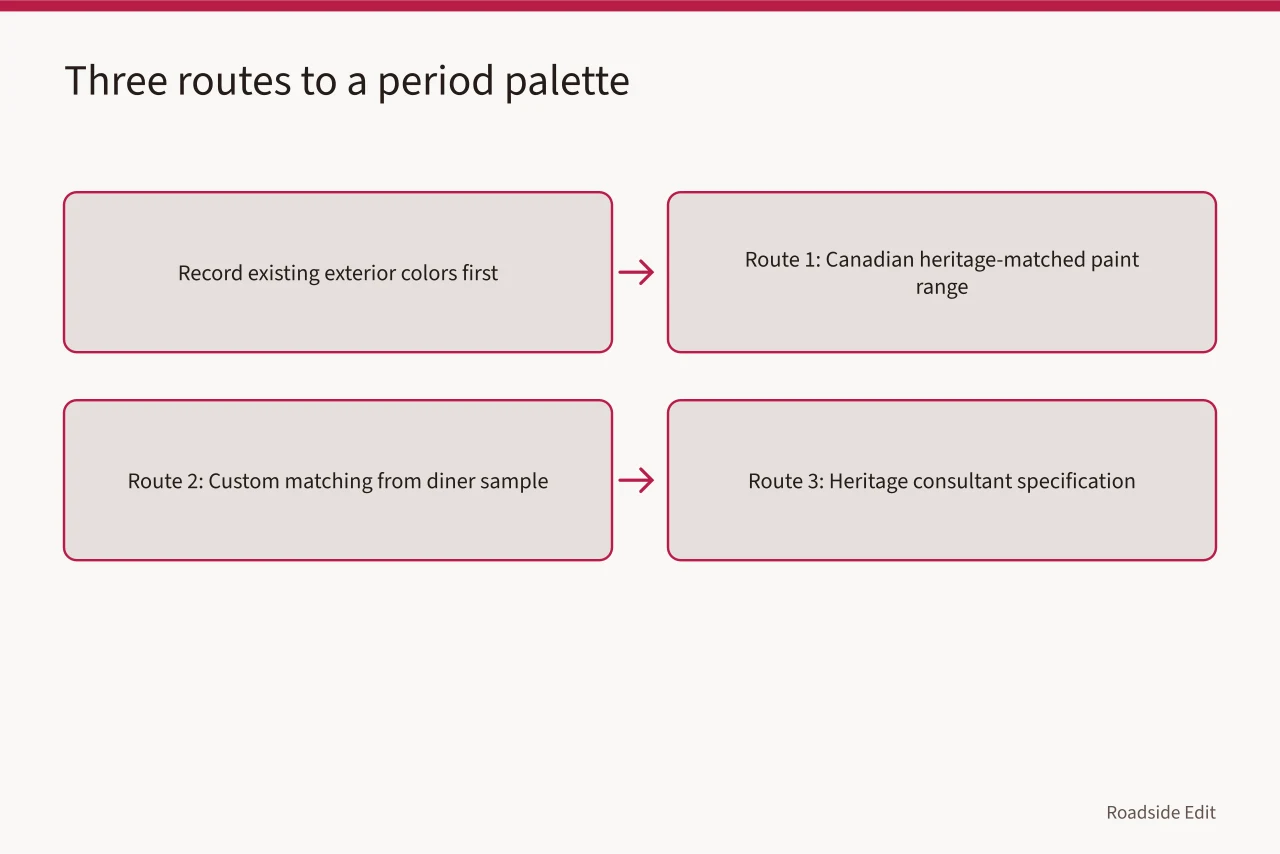
Route one is a Canadian paint range with heritage-matched colors. The named palettes below are the fastest way to show a committee a color reference.
Route two is custom matching from the diner itself. A painter or conservator takes a sample from a sheltered edge and matches it under controlled light.
Route three is specification by a heritage consultant, who reads the bylaw, photographs and surviving fabric, then writes the colors into the permit application. Signage carried the brightest color in the scheme, and the shapes and finishes that date a sign are covered in Mid-Century Motel Boomerang Signs.
Named palettes for common Ontario diner periods
| Period style | Named colour or palette | Where to get it | What it suits |
|---|---|---|---|
| 1930s steel diner | Benjamin Moore 'Hale Navy HC-154' | Ontario Benjamin Moore retailers | Fascia, deep blue-black trim |
| 1930s steel diner | Sherwin-Williams 'Rookwood Red SW 2801' | Ontario Sherwin-Williams stores | Porcelain enamel red panels |
| 1950s neon diner | Farrow & Ball 'Railings' and 'Incarnadine' | Ontario Farrow & Ball stockists | Dark trim and deep red accents |
| 1940s roadside diner | Benjamin Moore 'Yorktowne Green' | Ontario Benjamin Moore retailers | Cream and green two-tone fascia |
| Canadian period palette | Para Paints 'Heritage Colour Collection' | Para Paints dealers across Ontario | Pre-1960 wood and stucco accents |
The criteria matrix
| Criterion | Heritage-matched brand range | Custom matching from surviving paint | Consultant specification |
|---|---|---|---|
| Evidence base | Manufacturer's historic catalogue | Paint layers on this building | Fabric, bylaws and photographs |
| Fit to this diner | Generic for the period | Exact to the sampled layer | Tailored, and open to argument |
| Position with municipal staff | Usually accepted with a reference | Strong | Strong, since the author is known |
| Availability in Ontario | Retail counters | Requires a tinting appointment | Whatever the specifier names |
| Owner effort | Low | Medium | Low once the report lands |
| Weak point | The colour may never have been used here | The sample may come from a later repaint | Rests on one person's reading |
Where each route is the right answer
The brand range suits a diner that is not designated and an owner who wants a period look with a reference attached. Published palettes sit behind most of these ranges, and the NPS brief on neon signs records the colors used on diner facades.
Custom matching is the right answer when the first finish survives under later coats. A door edge, a sheltered panel or a fascia board can carry the original color.
The consultant route fits a contested permit, a diner inside a district with its own design guidelines, or a facade shared by two owners. When two routes look close, the deciding question is whether the diner is designated. Before hiring anyone for a contested repaint, owners should settle the questions in choosing help for a motel exterior.
Example: a designated diner on a main street
An illustrative sequence:
Photograph every elevation in flat, even light, then date the files.
Lift a sample from a sheltered edge where sun has not bleached the finish.
Send the sample for matching and keep the report with the permit file.
Submit the color with its source: a brand number or a match report.
What all three routes share
Each route rests on a judgment about what the building looked like, and none can prove it. Paint chalks, fades and shifts in tone. A color matched indoors reads differently on a west wall at four in the afternoon.
All three also depend on the substrate holding paint at all. Peeling on a metal canopy often points to a preparation problem that no color choice fixes, and the inspection sequence in Gas Station Canopy Restoration applies to diner fascia as well.
Common questions
Does Ontario require specific colours on a designated diner? No province-wide list exists. Color conditions come from the bylaw or the heritage permit, and staff apply the federal conservation standards to any repaint.
Can I use a Canadian heritage paint range? Yes, and it is usually the fastest route. Keep the color reference and be ready to explain why that color suits this building rather than the decade in general.
What if no original paint survives? Fall back on period photographs and published palettes, then say in the submission what the color is based on. A stated basis beats an unstated preference.
Who decides in the end? The municipality that issued the permit. Confirm the color condition with the heritage planner before ordering paint. If the work grows past a repaint, the hiring route is set out in Choosing Help for Roadside Renovation.