Guides
Part of Motel exterior safety checklist: what to record before you decide to stop
How to build a motel exterior safety checklist that stops at what staff can see
Motel exterior safety scope checklist for 2027 helps U.S. readers record safe observation limits, urgent escalation steps, responsible contacts, and useful evidence.
An exterior safety checklist records what a person can safely see, names a concern, and routes it to whoever can act. It is not a permit review, structural assessment, electrical inspection, or work plan.
That limit matters. A careful ground-level note is useful precisely because it does not pretend to answer questions that require access or professional judgment.
Use this guide for an owner, authorized manager, or editorial researcher who needs a safe record before an appropriate next step is decided. If there is an immediate threat to people, the first step is emergency response or the responsible property's urgent procedure, not a longer checklist.
What to take away
- Start with a safe, authorized viewpoint and record its limits.
- Describe only what can be seen, heard, or documented from that viewpoint.
- Do not use a photo to declare a cause, code status, or repair method.
- Assign urgent, electrical, access, and work-at-height issues to a responsible role.
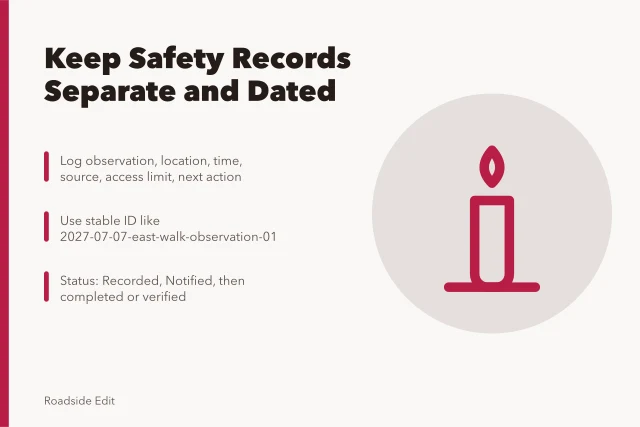
- Keep a short log of the notification and next decision, even when no image is taken.
Set the observation boundary first
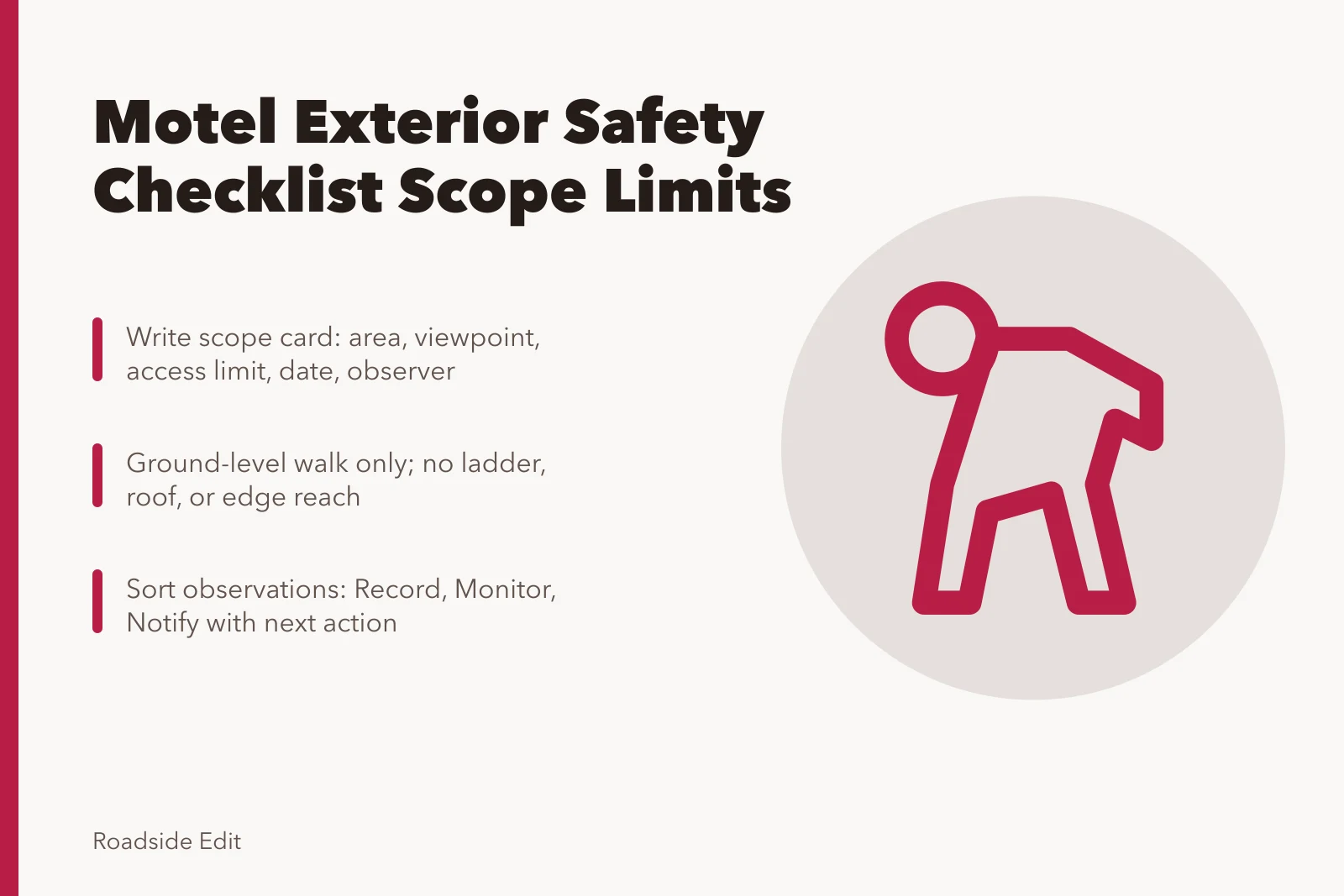
Before anyone walks the property, write a scope card. It identifies the area, permitted viewpoint, access limit, date, observer, and purpose. A scope card can be short, but it makes a large difference when a later reader tries to understand why an area was or was not documented.
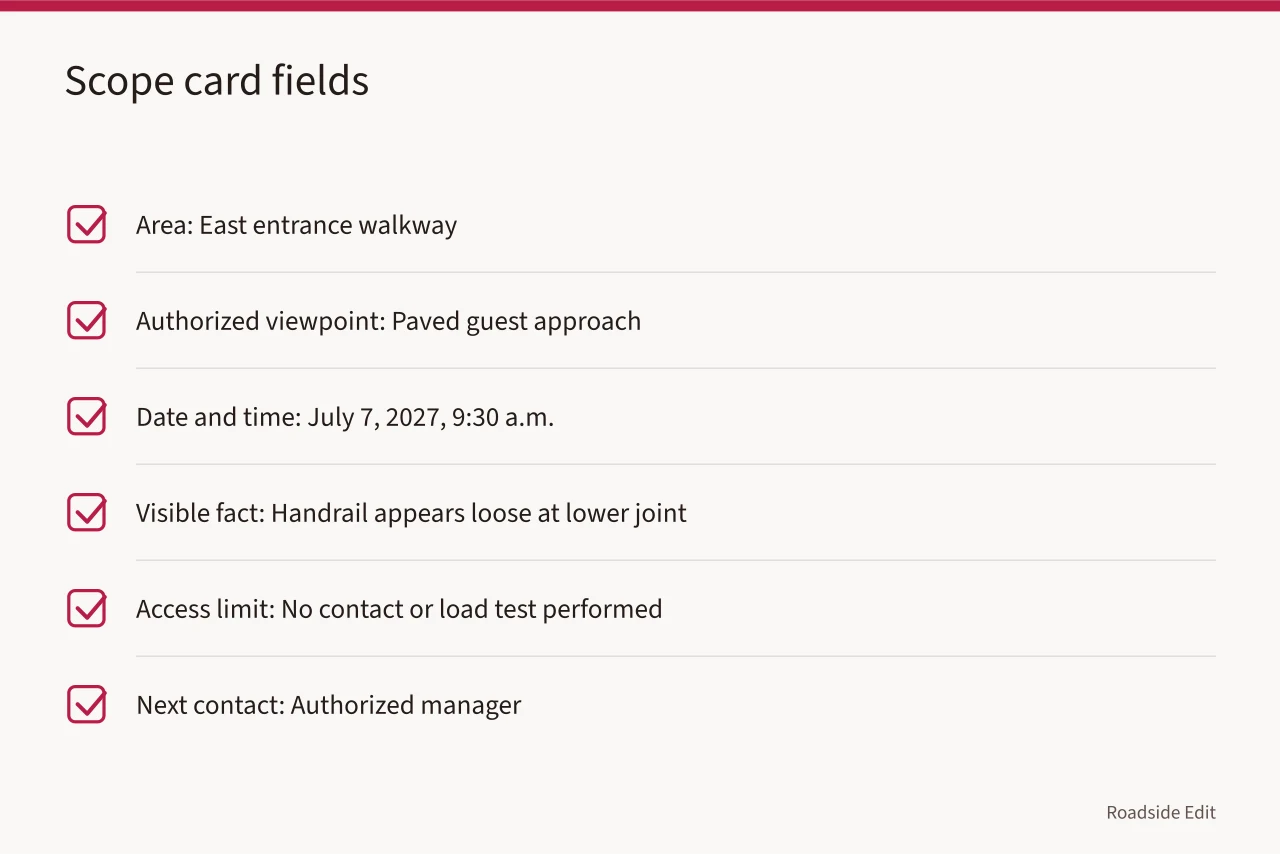
Do not test a railing, step behind a barrier, enter a traffic lane, climb a ladder, or open a panel to make the documentation look more complete. When a closer look is needed, the scope card should say so. "Not observed because access was not authorized" is a good record, not a failure.
Make a ground-level safety walk useful
Begin at the public or authorized entrance and follow the same route each time. Move slowly enough to notice changes, but do not create exposure for the observer. Take an overview photo only when it can be done without obstructing circulation or entering a questionable area.
Route and surface check
- Note visible debris, uneven-looking surfaces, water, ice, loose mats, or blocked routes.
- Describe the exact location using a stable landmark, such as "south side of the lobby door."
- Record a visible condition without calling it a code violation.
- Notify the responsible party when the observation may affect staff or guest access.
OSHA's walking-working-surfaces standard requires covered employers to keep such surfaces clean, orderly, and sanitary and to inspect them regularly and as necessary. The rule does not turn a public-facing motel checklist into an OSHA inspection. It does support the basic practice of recording a visible route condition, who received the report, and whether it was resolved.
Exterior features and overhead areas
- Look for visibly loose-looking trim, damaged signs, broken glass, or items that appear to have shifted.
- Keep well back from areas below an uncertain overhead feature.
- Photograph from a safe distance only if a photo will help the responsible party locate the issue.
- Do not estimate weight, stability, or likely failure from an image.
Lighting and electrical equipment
- Record unlit areas, damaged-looking covers, or exposed-looking equipment from a safe viewpoint.
- Do not touch, reset, open, or test equipment unless that task belongs to an authorized, qualified person.
- Treat a downed line, sparking, smoke, or electrical odor as a prompt to contact emergency services, the utility, or the responsible owner under the relevant urgent procedure.
OSHA requires electrical equipment to be free from recognized hazards that are likely to cause death or serious physical harm to employees. Read OSHA's general electrical-equipment requirement. That is an employer rule, not a diagnosis tool for a visitor or editor. Its safe takeaway is narrower: report a visible electrical concern without touching equipment or asserting the condition's technical cause.
Put work at height outside the casual checklist
No exterior content assignment justifies ladder work, roof access, or a reach over an unprotected edge. A photo of the roofline from the ground can document that the roofline was viewed. It cannot establish roof condition, ladder safety, anchorage, or an appropriate repair.
If a task involves elevation, write a handoff note: area, visible fact, ground-level image if available, access limitation, and responsible contact. Then stop. The person planning access needs a site-specific assessment and the authority to do that work.
OSHA's fall-protection interpretation for construction work discusses the application of fall-protection requirements to employees on defined walking-working surfaces. It does not tell a motel owner which treatment to use at a particular property. It supports the more limited rule here: work at height belongs in an authorized work plan, not in a casual observation route.
Sort observations by the next action
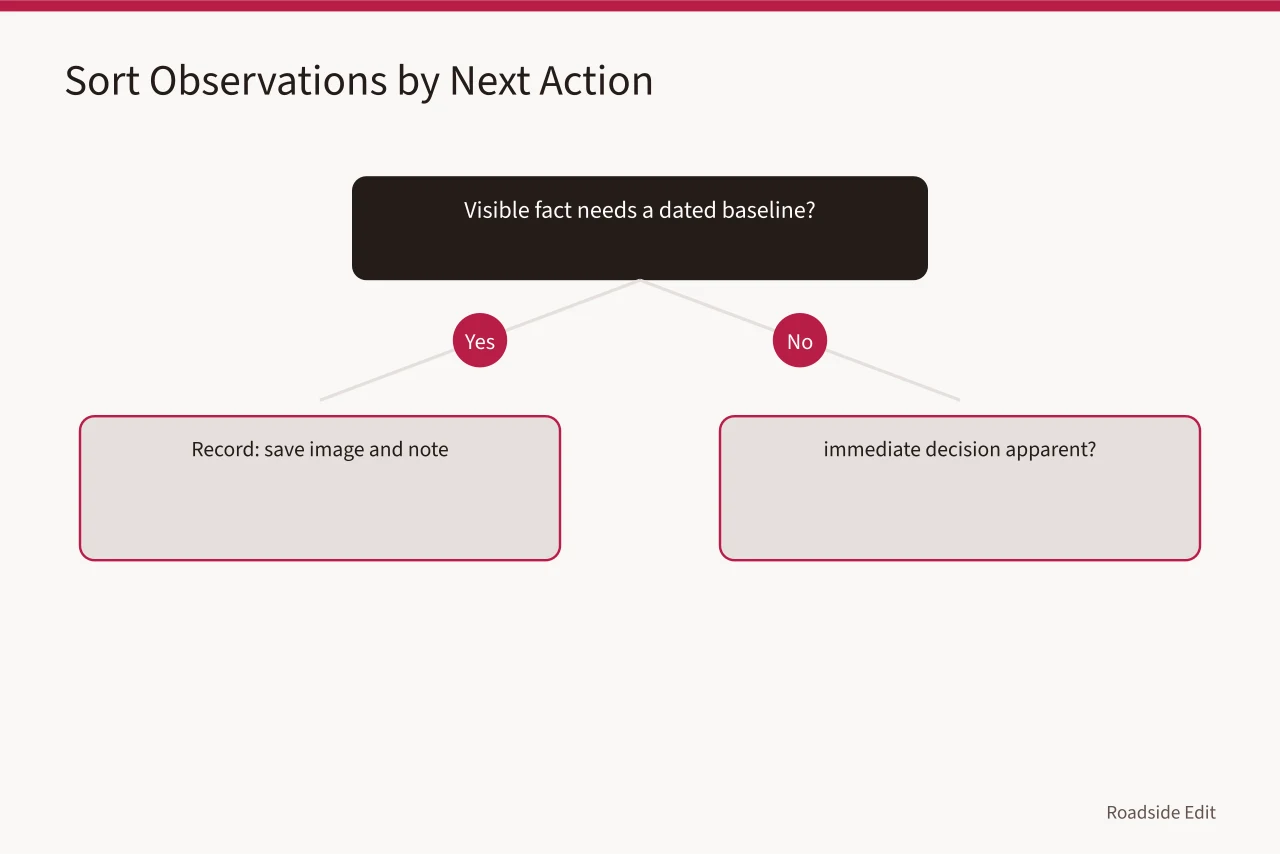
The checklist should not try to rank every condition by technical severity. It can sort the record by who needs to know next. Use straightforward statuses and review them at the end of the walk.
Do not place an issue in a low-priority category simply because the observer cannot explain it. Uncertainty can itself be the reason to notify the responsible person. Record that the condition was observed, not that it is harmless.
Write a notification that can be acted on
The best safety report is brief and specific. It starts with location and visible fact, then says what was not done. Avoid words such as "dangerous" or "safe" if the available evidence does not support them.
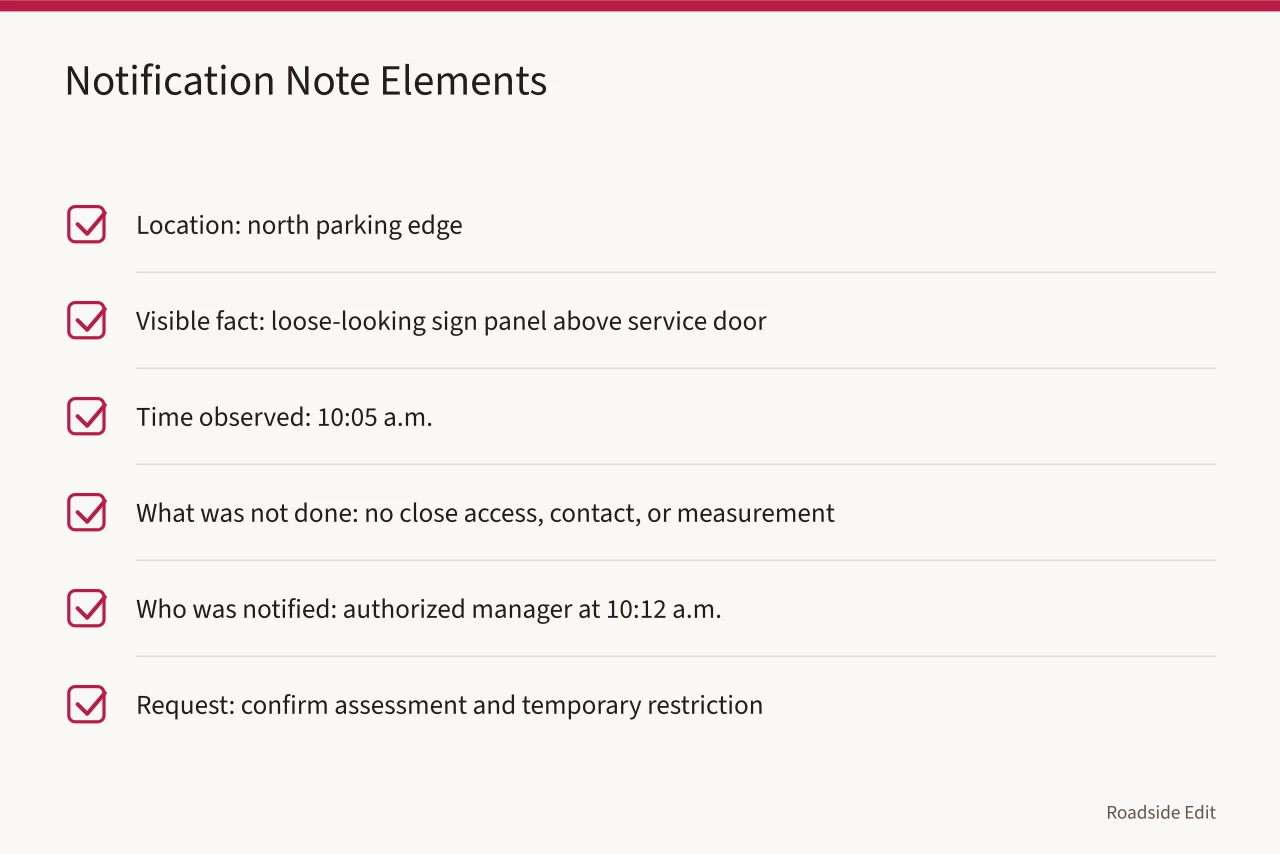
Example: "At 10:05 a.m., from the north parking edge, I observed a loose-looking sign panel above the service door. No close access, contact, or measurement was attempted. The authorized manager was notified at 10:12 a.m. Request: confirm who will assess it and whether the area needs temporary restriction."
This note gives the next person something useful without turning the observer into an inspector. Keep the notification channel and the response date with the same record. If the initial observation turns out to be wrong, add a correction note rather than erasing the first account.
Preserve maintenance evidence without making it public by default
Safety records can include images, vendor reports, and an owner's decision. They should not automatically become public content. Before publishing anything, check permission, privacy, source, date, and whether the item is necessary to the story. A paid placement or submitted provider profile is commercial material, not independent evidence that a condition exists or that a service is appropriate.
The National Park Service's Preservation Brief 47 recommends a planned approach to exterior maintenance, including documentation and regular attention to visible building features. The brief addresses historic buildings, not all motels. Its transferable lesson is that small observations work best when they are dated, organized, and followed by a responsible decision rather than left as isolated photos.
Review the checklist after an event
After severe weather, an accidental impact, or a new report, repeat the route only when it can be done safely and with authorized access. Record weather context, blocked viewpoints, and areas not checked. Do not pressure staff into entering an area because a checklist calls for an image.
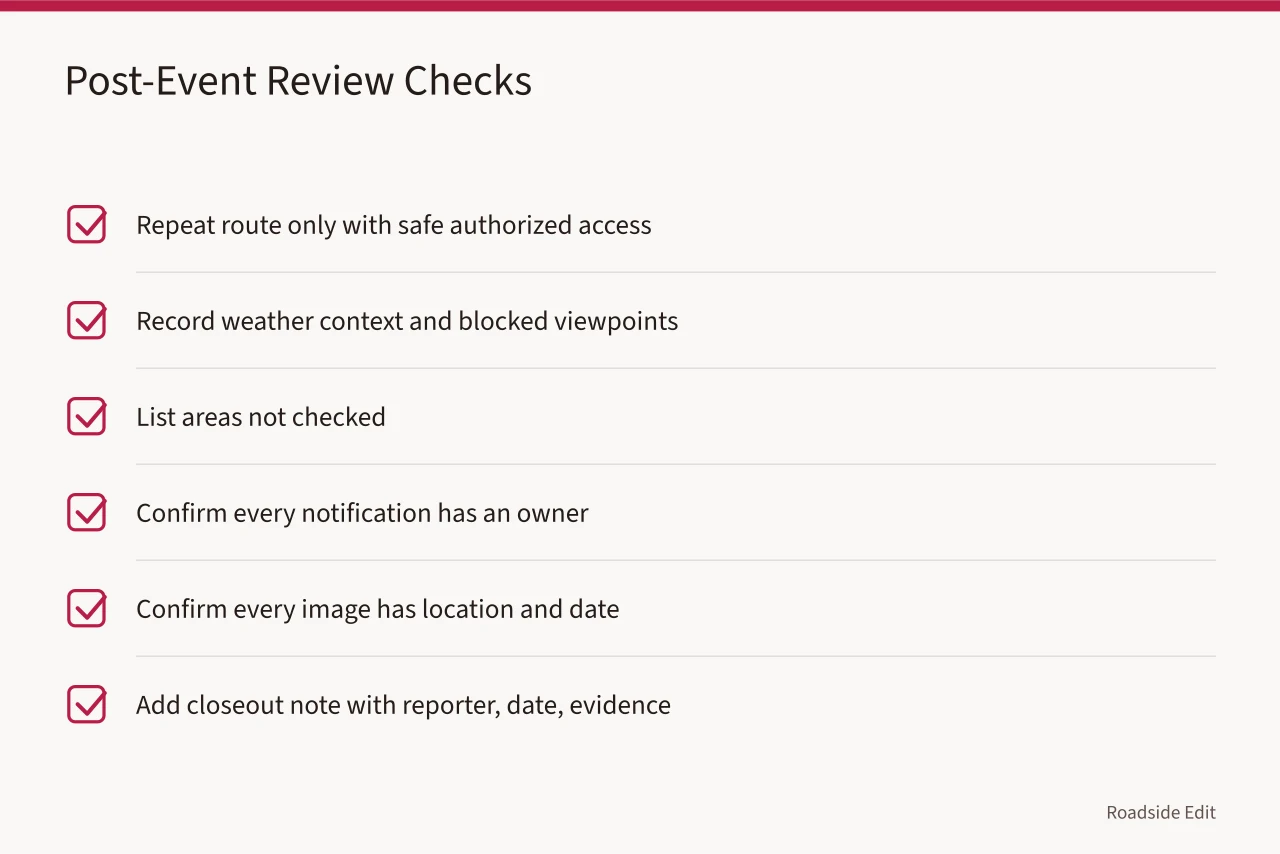
At the end of the review, check that every notification has an owner and every image has a location and date. Delete nothing just because the issue appears resolved. Add a closeout note that says who reported the completion, when, and what evidence is available. If the file does not independently verify the work, say it was reported complete.
Common questions
Does a safety checklist replace a site inspection?
No. It records a limited observation and routes it to the responsible person. Inspection, diagnosis, and repair planning require the appropriate authority and evidence.
Should a staff member climb a ladder for a better photo?
No. A better photo is not worth unplanned work at height. Record the ground-level view and access limit, then direct the question to an authorized person.
What should be included in an urgent notification?
State the location, visible fact, time, access limit, and contact made. Do not exaggerate the condition or state a technical conclusion that the record cannot establish.