Guides
Roadside design studio selection: how to compare providers before you commit
Choosing roadside design studio help in 2027: define the work, compare evidence, disclose commercial material, and keep a clear decision record.
Choosing help for a roadside project begins with the work, not a provider name. A reader may need historic research, a sign survey, a concept plan, public interpretation, architectural services, engineering, photography, construction, or community outreach. Those roles are not interchangeable. This guide helps U.S. readers prepare a fair selection process. It does not endorse firms, verify licenses, approve work, or decide legal duties.
The useful outcome is simpler: state the question, ask candidates for comparable information, check consequential claims in the right place, and retain a record of what was decided. That approach also keeps later editorial coverage honest when a business submits information or pays for visibility.
What to take away
- Define the decision before searching for names or prices.
- Match the requested work to evidence, access, and the relevant specialty.
- Compare candidates against one current brief, not impressions.
- Check claims that matter through the responsible authority or record.
- Label provider-supplied and paid material so readers can distinguish it from editorial reporting.
Define the decision before asking for help
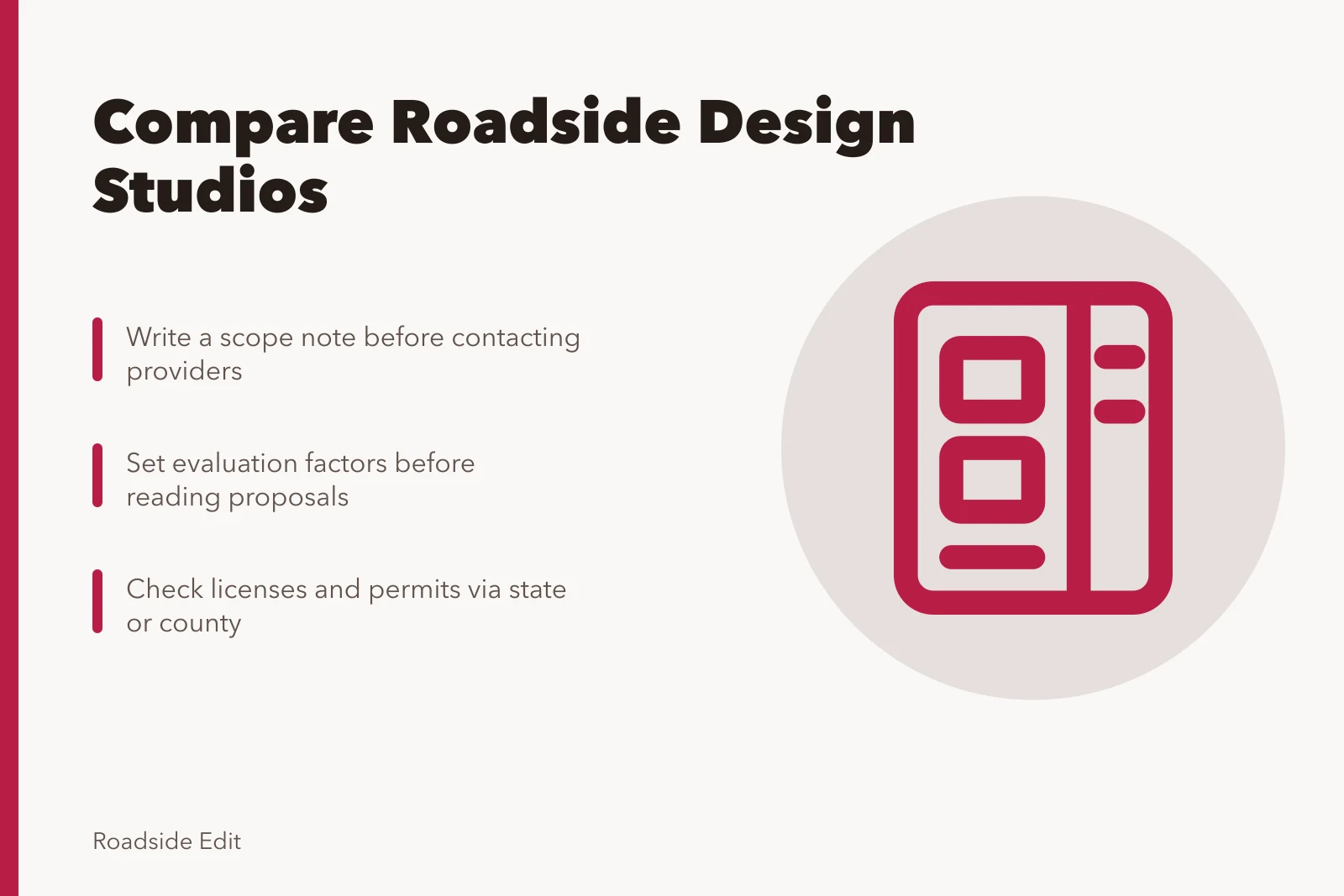
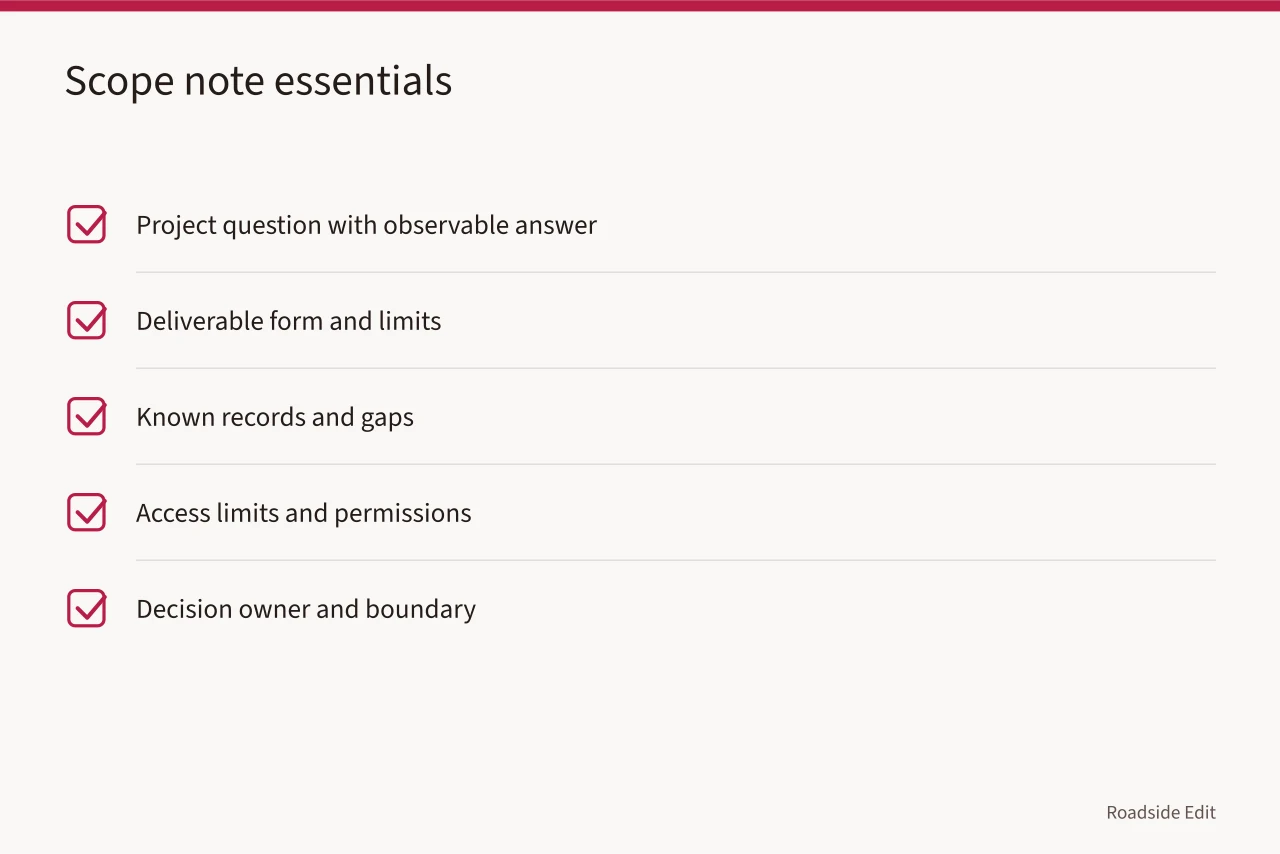
Write a short scope note before contacting anyone. It should say what needs to be learned or made, where the work is located, what information is already available, who can grant access, what the deliverable should look like, and what decisions remain outside the assignment. A phrase such as "help with an old roadside building" is not enough. One provider may picture a history memo while another assumes construction drawings.
Frame the request as a question with an observable answer. For example: "Document visible features of the neon sign and identify public records that may describe its age and changes." That is different from "Prepare drawings for a repair" or "Manage a contractor." The difference controls the evidence, cost basis, schedule, permissions, and people needed.
| Write down | Why it matters |
|---|
Do not make a candidate fill every blank by guessing. A response that names an unknown can be more useful than a polished proposal built on an unstated assumption. If the scope changes, issue a dated revision to every candidate being compared. Keep the earlier version so a later reader can understand why answers differ.
Choose comparison factors before reading proposals
Selection becomes less reliable when criteria appear after a favored response arrives. Decide which matters will be compared: understanding of the work, method, relevant evidence, stated assumptions, deliverables, communication, schedule conditions, and price basis. The factors do not need equal weight, but the reason for each should be visible.
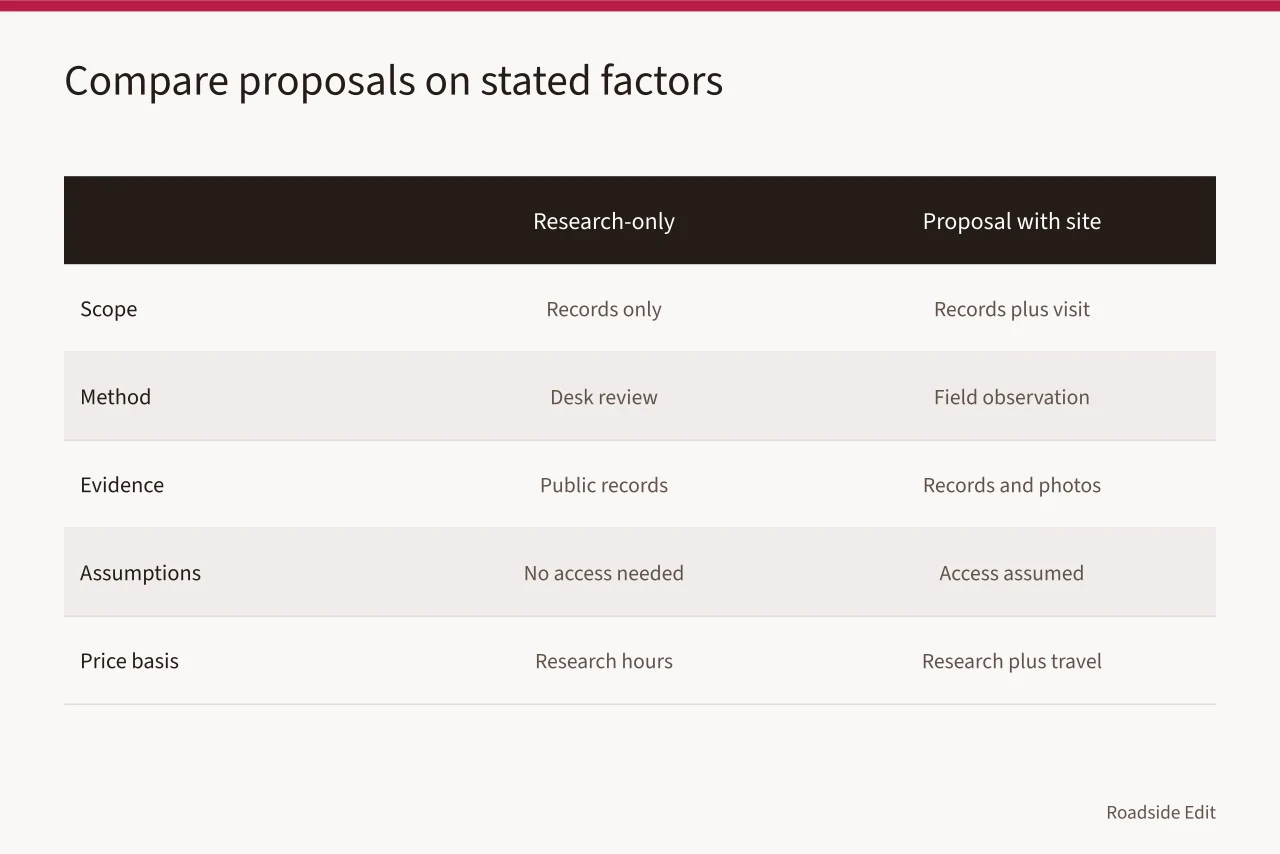
For federal negotiated acquisitions, the Federal Acquisition Regulation requires agencies to establish evaluation factors and significant subfactors for award. See the FAR rule on evaluation factors. That rule does not control a private roadside project. It is a useful reminder that a comparison should have stated factors before responses are evaluated, rather than an explanation created after a choice is made.
Avoid an automatic score if it hides a material difference. A research-only proposal and one that includes a site visit may both receive a high number while offering very different work. Use a narrative comparison beside any scoring sheet. Explain what each candidate addressed, what the candidate assumed, and what still needs confirmation.
| Comparison area | Useful question | Do not infer |
|---|---|---|
| Scope | What work do you understand us to be requesting? | That the final scope is settled. |
| Method | What records, observations, or steps would you use? | That the method guarantees a result. |
| Deliverable | What will be provided and in what format? | That the client has accepted it. |
| Experience | What example is relevant to this assignment? | Current availability or project fit. |
| Assumptions | What access, facts, or approvals are assumed? | That those conditions exist. |
| Changes | What would require revised work or price? | That a change has been authorized. |
Match the work to the needed expertise
A provider can be capable in one role and not be the right person for another. Begin by asking which disciplines the assignment may touch. Documentation of a property, structural analysis, public history, graphic design, construction administration, and community facilitation are distinct activities even when they concern the same roadside place.
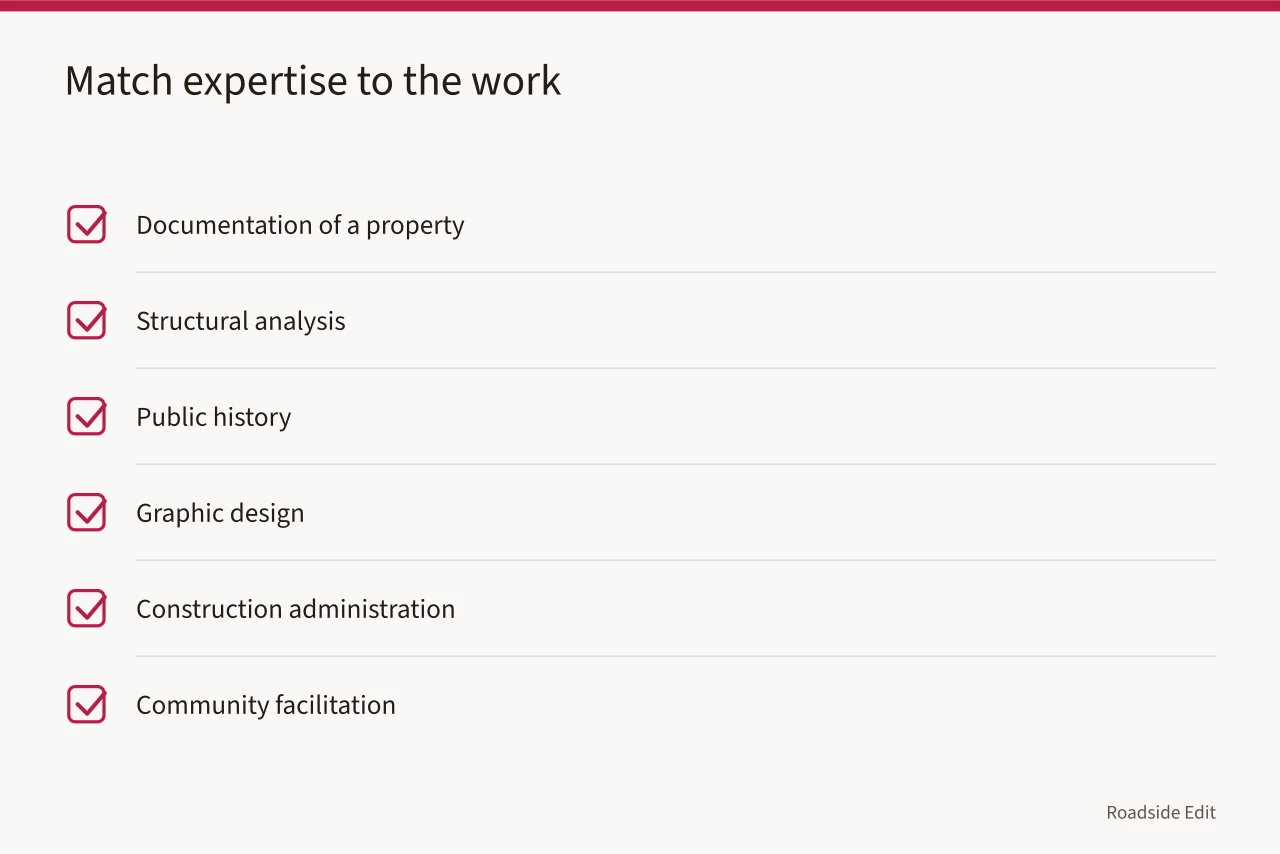
For historic-resource work, the National Park Service publishes the Secretary of the Interior's professional qualification standards across several disciplines. Review the National Park Service qualification standards. Those standards do not approve a provider, establish a local requirement, or decide who should be hired. They give readers a more precise vocabulary for asking which background is relevant to the assignment.
Request evidence tied to the proposed work. It might be a dated work sample, a description of the candidate's role, a reference, a resume, or an explanation of records used. Write down what the material establishes and what it does not. A portfolio photograph may show a finished project. It does not prove that one person performed every part, is now available, can work on a different site, or can promise the same result.
When a project may require a licensed professional, permit, or public review, identify the local agency that owns that question. A general article cannot replace a jurisdiction-specific check. Keep that verification apart from editorial research and from a provider's own marketing claims.
Check consequential claims in the right place
Not every statement needs the same treatment. A studio may accurately describe its preferred services or show a sample it created. Yet a claim about a license, insurance, permit, ownership, approval, or completed project should be checked through the responsible record when it will affect a decision. Do not turn a business biography into an independent finding without that step.
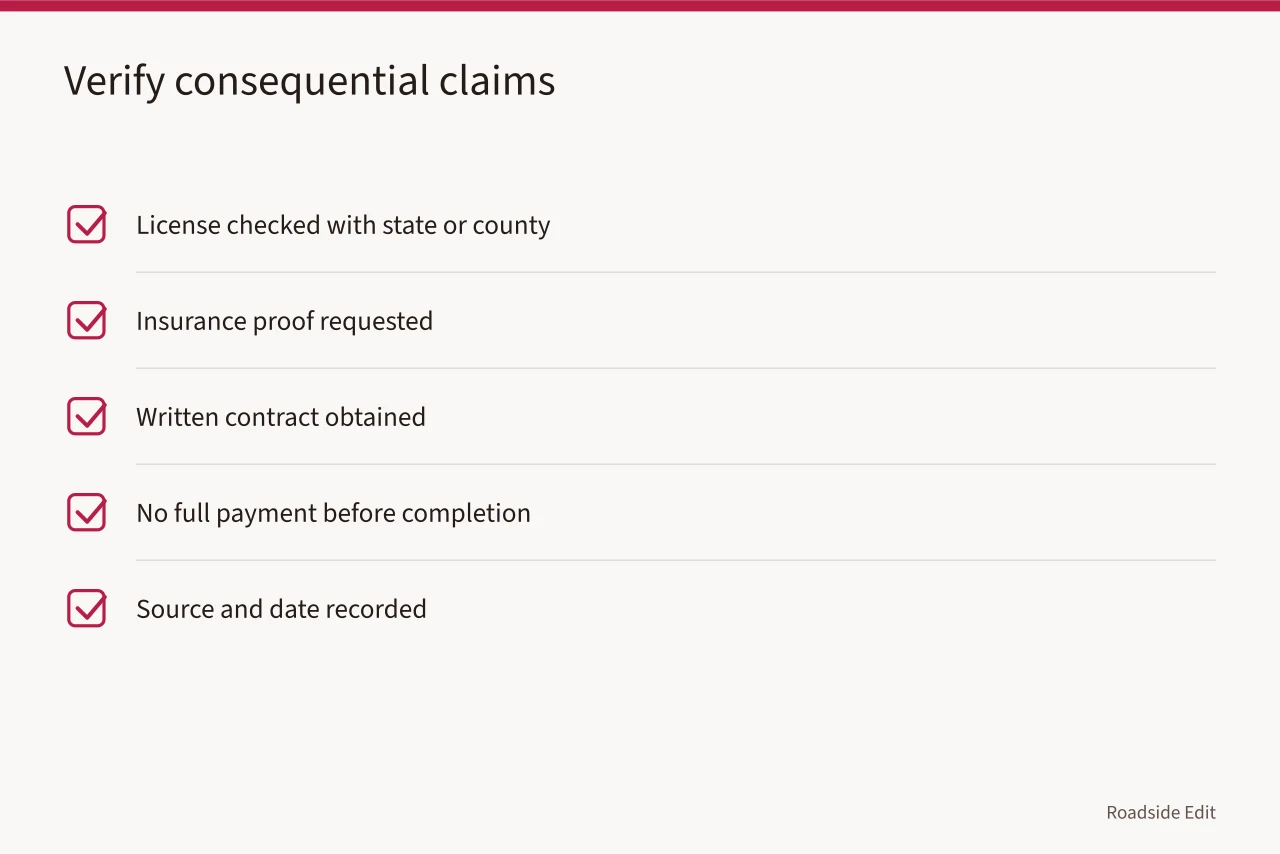
The Federal Trade Commission advises consumers to check a contractor's license with state or county government, ask for proof of insurance, get a written contract, and avoid full payment before work is complete. Read the FTC consumer alert on contractor scams. This is consumer-protection guidance, not a ranking formula for every kind of design studio. Its point here is narrow: a meaningful claim deserves verification beyond an advertisement or an unsolicited approach.
Record the source and date of each check. If a claim cannot be confirmed, say so in the decision note. Do not replace a missing record with a favorable assumption. A provider may update its own description, but the update remains attributed to the provider unless an independent source supports it.
Keep safety, access, and authority boundaries visible
Some projects involve a work site, a road edge, old materials, traffic exposure, or several parties whose duties overlap. A proposal cannot settle those responsibilities by itself. Ask who controls the work area, who grants site access, who can stop work, who approves changes, and who is responsible for any required safety process.
OSHA's construction standard includes accident-prevention responsibilities for covered construction work. Consult OSHA's accident-prevention requirements. The provision does not determine how a particular project is organized or apply in the same way to every person named in a proposal. It supports the basic practice of identifying the responsible party for the relevant work rather than treating a provider's presentation as a safety assurance.
Separate a concept from authorization. A concept image, condition note, or estimate can be useful early material. It is not a permit, construction direction, structural finding, or approval. The same caution applies to local-history descriptions. An old-looking sign or motel is not automatically a designated historic resource. Check status with the appropriate owner or agency record.
Compare responses without manufacturing a winner
Send the same current scope note and core questions to each candidate where practical. Then compare answers on the record. Note when one candidate had access to photographs, records, or a site visit that the others did not. Such differences can explain a response. They should not be disguised as a universal quality score.
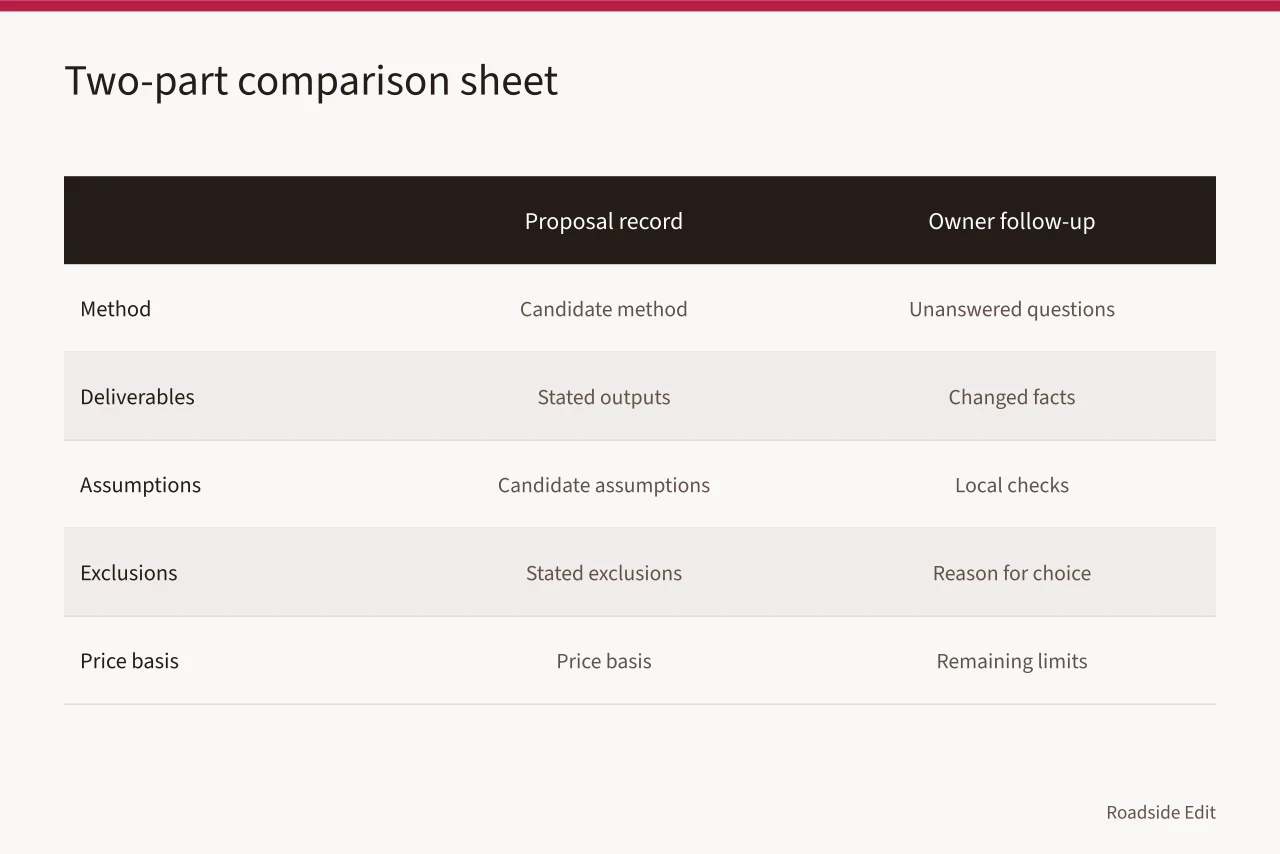
A usable comparison sheet has two parts. First, it captures the proposal: method, deliverables, assumptions, exclusions, timing conditions, and price basis. Second, it captures the owner's follow-up: unanswered questions, changed facts, local checks, and the reason a choice was made. Keep business materials and editorial research in distinct columns.
| Record | What to retain | Why retain it |
|---|---|---|
| Scope version | Dated brief and later clarifications | Shows the basis for each response. |
| Candidate response | Proposal and relevant attachments | Preserves what the candidate actually stated. |
| Verification note | Authority consulted, date, and result | Distinguishes checked facts from claims. |
| Change note | New conditions, access limits, or revised requests | Prevents an outdated proposal appearing current. |
| Decision note | Reason for the choice and remaining limits | Makes the handoff understandable later. |
Do not publish private proposals or personal information just because they helped with a choice. If an article later mentions a provider, write only what the available record supports. "Selected for a limited documentation task" is not the same claim as "best provider," "approved project," or "successful restoration."
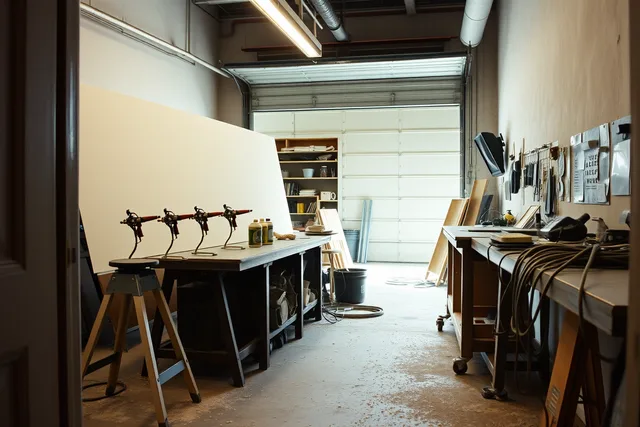
The image is illustrative. It does not identify a project team, establish a building's status, or support a claim about any provider.
Disclose paid and provider-submitted material
RoadsideEdit may publish paid profiles, sponsored listings, or descriptions supplied by businesses. These can help readers find names, provided the relationship is clear. A paid placement should not read like an independent recommendation. A provider's account of its services should be labeled as provider-submitted information, even when it is useful and accurate.
Use a consistent disclosure system:
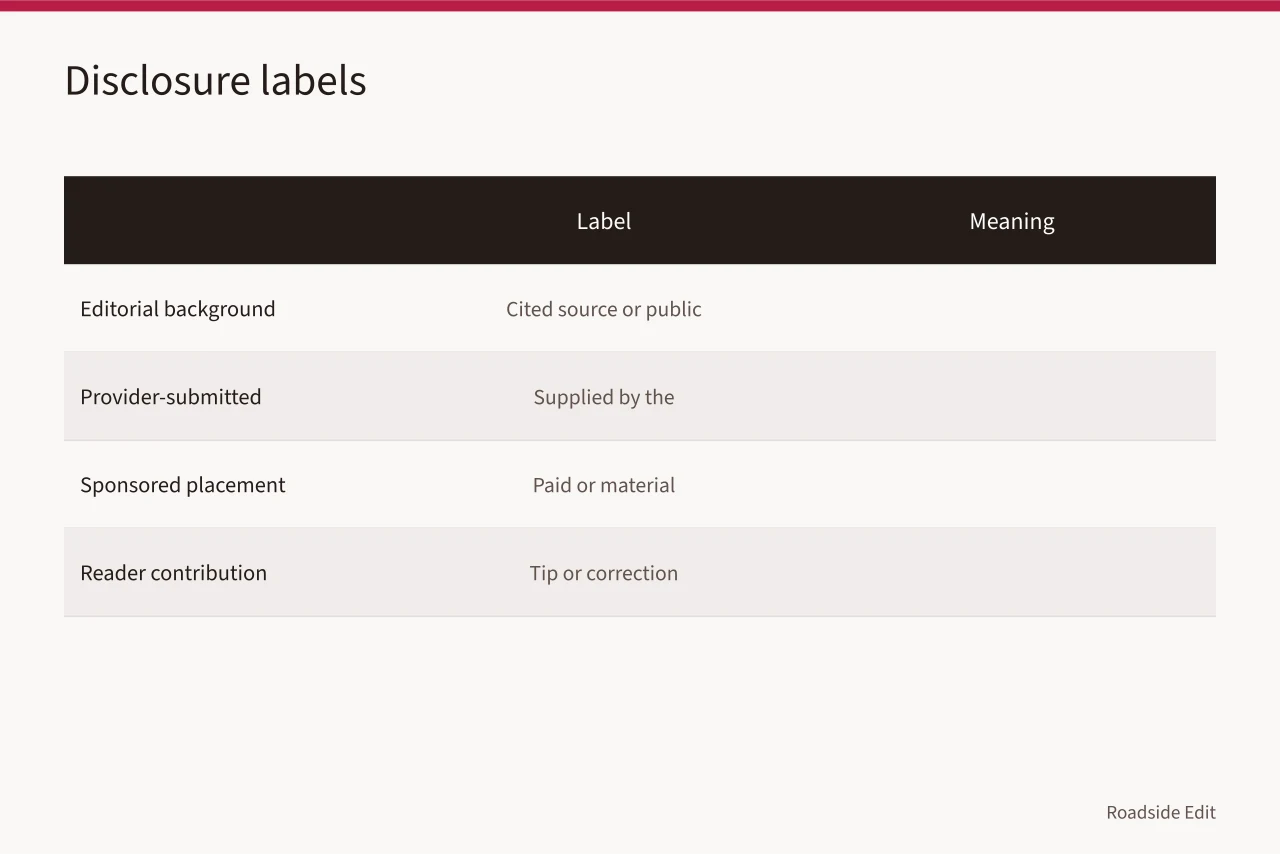
The labels protect both readers and businesses. They let a studio describe its work without asking the publication to make claims it cannot confirm. They also make a later correction easier because the source and status of the statement are visible.
Make the handoff usable
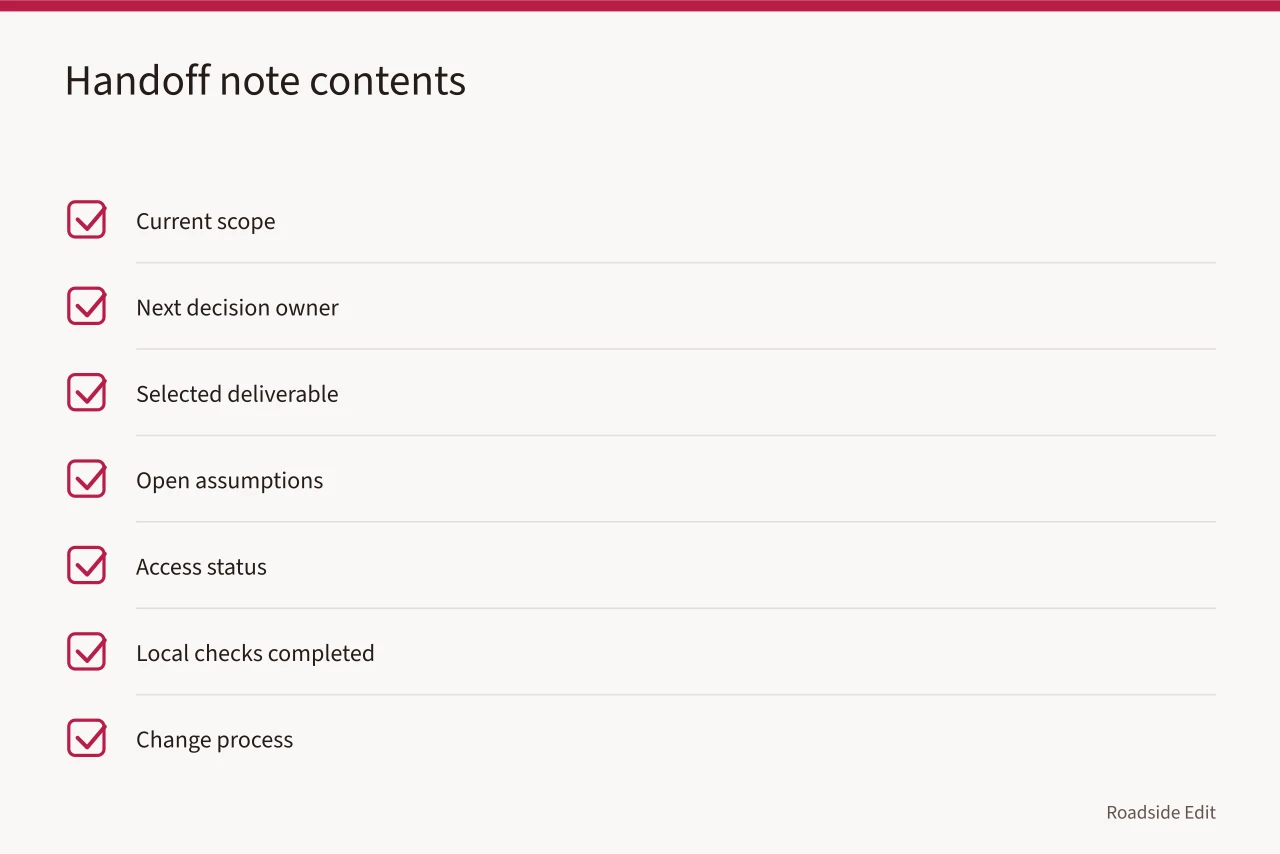
At the end of a selection process, prepare a compact handoff note. Include the current scope, the person responsible for the next decision, selected deliverable, assumptions still open, access status, local checks completed, and the process for a change. A new team member should be able to understand the file without guessing what an earlier conversation meant.
Pause selection when the question is still vague, access is unresolved, records conflict, the responsible authority is unknown, or a candidate's response rests on a fact nobody has checked. A pause is often the careful result. It leaves room to obtain the missing record instead of treating an attractive proposal as proof.
Common questions
Should a reader hire a studio based on a portfolio alone?
No. A portfolio can be one source of evidence, but it does not settle project fit, required credentials, current availability, insurance, access, or local approval.
Can a sponsored listing be useful?
Yes, if its paid status and the source of its information are clear. It should not be presented as independent editorial approval.
What if two proposals have different prices?
First compare the scope, assumptions, deliverables, access, and change terms. Different prices can reflect different work, not simply better or worse value.
Who decides whether a project needs a permit or specialist?
The answer depends on the work and location. Identify the relevant local authority and ask a provider to state what information would be needed for that check.
In this guide
- Hiring a roadside design studio: how to brief, compare and chooseRoadside design studio hiring checklist for 2027: define the brief, compare like-for-like responses, check local requirements, and document the selection.
- How roadside design studios shape provider selection and budget notesRoadside design studios set the survey and documentation scope that decides which specialists a preservation project hires and what its budget lines cover.