Guides
Part of Roadside design studio selection: how to compare providers before you commit
Hiring a roadside design studio: how to brief, compare and choose
Roadside design studio hiring checklist for 2027: define the brief, compare like-for-like responses, check local requirements, and document the selection.
Hiring help for a roadside design project gets harder when the request is fuzzy. One person may think the job is a visual concept. Another may expect measured drawings, a condition report, coordination with an agency, or construction-ready documents. Those are different assignments. A polished proposal cannot repair a brief that never defined the decision.
This checklist helps a project owner or editorial team prepare a fair selection process for research, documentation, design, preservation, photography, or consulting work. It does not verify a provider, decide whether a license is required, approve a contract, or replace advice from the appropriate local authority or professional.
What to take away
- Write the decision and deliverables before inviting anyone to respond.
- Give each candidate the same written brief and the same chance to state exclusions.
- Check requirements with the authority that governs the actual project, not with a generic internet list.
- Keep a dated selection record that distinguishes proposals, references, and final decisions.
Define the work before searching for a provider
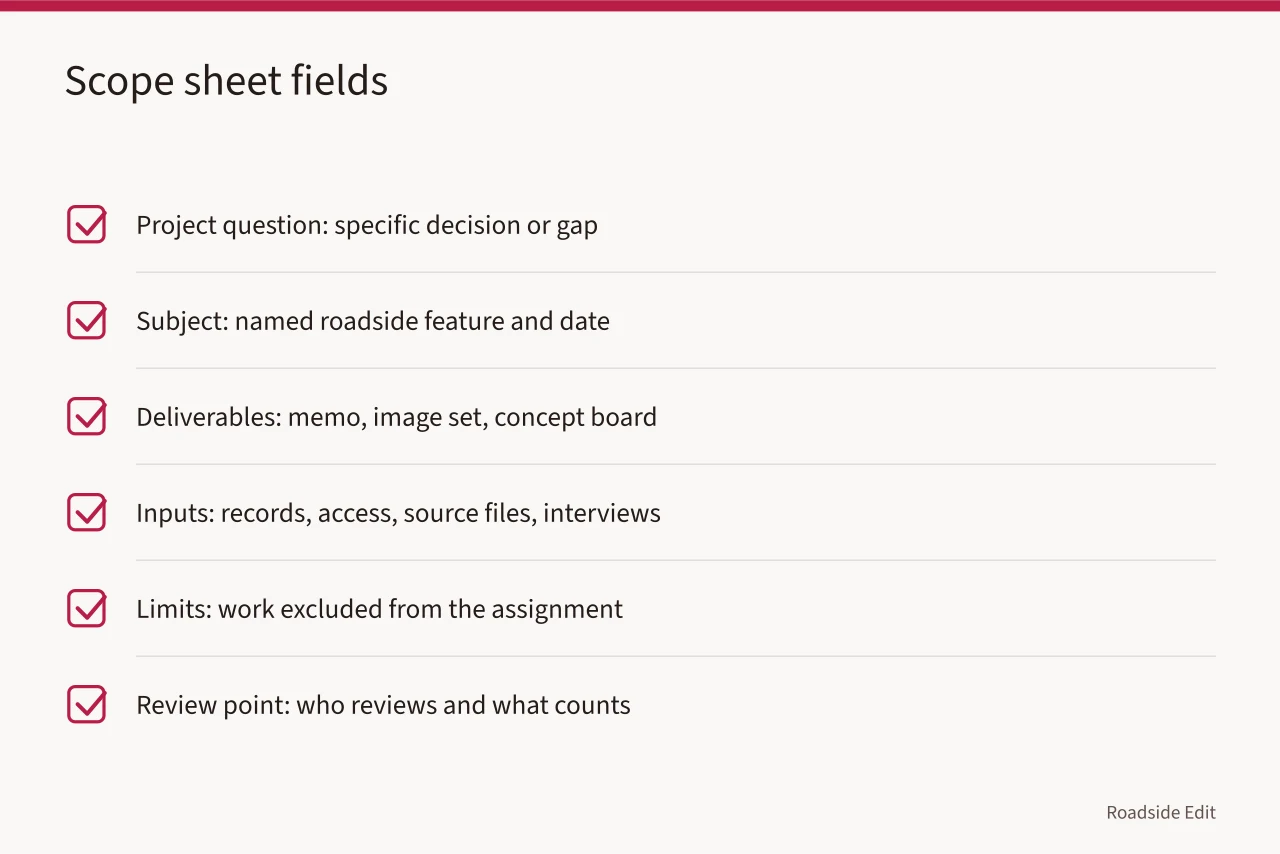
Start with the decision the work must inform. "Improve the motel facade" is an ambition, not a scope. "Document visible facade features from lawful public viewpoints and prepare three concept directions for an owner meeting" is a usable starting point. It tells a candidate what the assignment includes and what remains outside it.
Use a scope sheet with the following fields:
| Field | What the brief should state |
|---|
Do not hide a second project in a short brief; a writer cannot quietly become a code consultant. A photographer cannot promise permission for a site visit. A designer cannot make an engineering or permitting decision because the client wants a concept quickly.
Put those possible needs in an "outside scope" section so candidates can identify if another role is needed.
The National Park Service's design quality-review guidance organizes projects around review phases and technical reports. Review the NPS quality-assurance guidance. Federal project procedures are not a template for every private assignment. The useful principle is that a client should identify review stages and expected documents before judging responses.
Send one comparable brief
Candidates can only be compared fairly when they receive the same base information. Send the scope sheet, relevant public records or source files, a contact method for questions, and a response deadline. If the brief changes, give the update to everyone who is still under consideration.
Ask each candidate to respond to the same prompts:
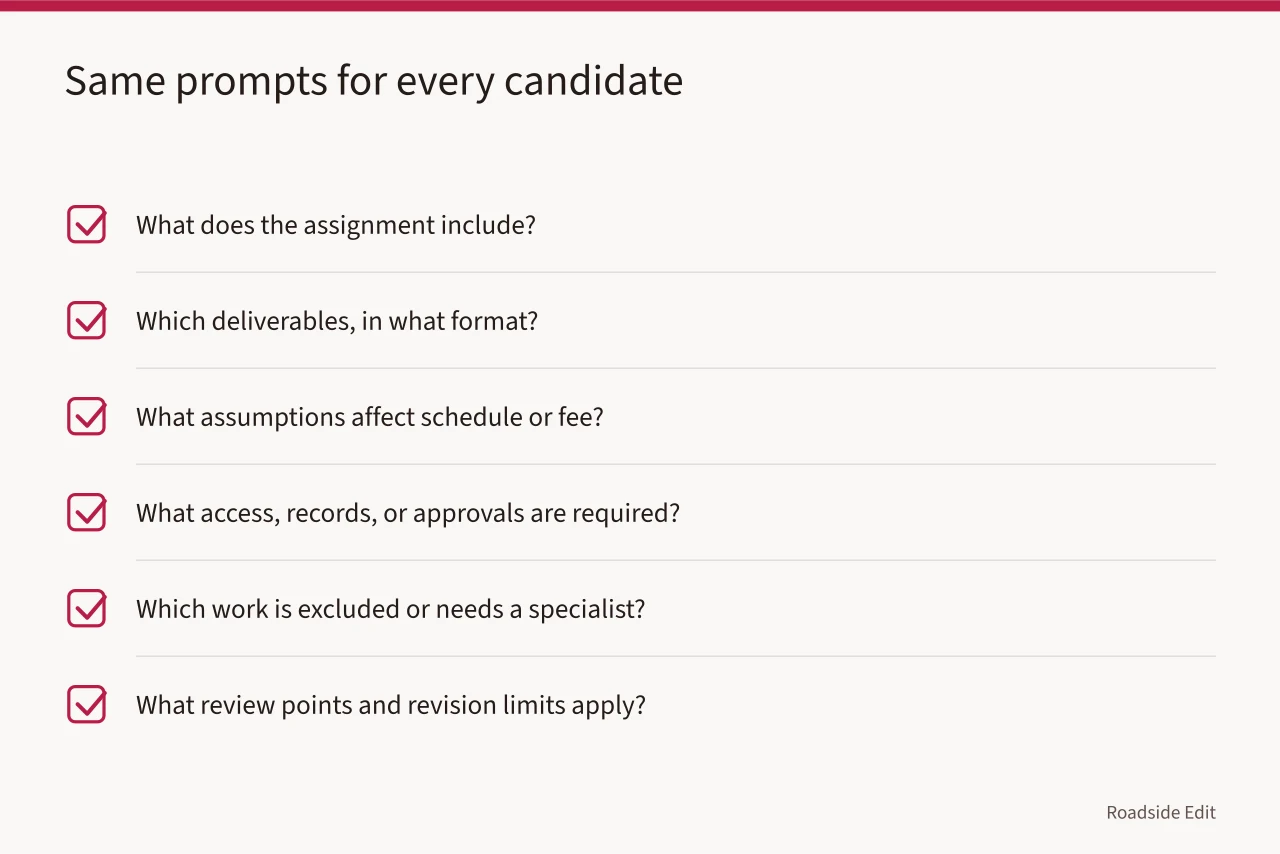
The Federal Trade Commission tells consumers to get multiple written estimates for home-improvement work. It says a written estimate should include the work description, materials, completion date, and price. Read the FTC's hiring guidance.
That advice is aimed at home-improvement projects, not every design-studio service. It still explains why an oral price or general promise is hard to compare with a response stating scope, timing, and basis for cost.
Do not assume the lowest response is the simplest choice; a low figure may omit research, travel, revision time, file delivery, or insurance. It may also omit a needed consultant. A higher figure may include items outside the first phase.
Ask for clarification first, then revise the comparison sheet, and do not invent missing work to make the offers look equal.
Check fit with evidence, not reputation alone
A portfolio can show past work. It does not prove that a provider understands this assignment, has current availability, holds a local credential, or can work within the brief's limits. Read it as one part of the review.
The National Park Service's stone-building preservation guidance recommends a submission that names past similar work, the experienced workers assigned, a work plan, and a reasonable price. Read NPS preservation-management guidance.
The document covers preservation work on stone buildings. It sets no universal hiring rule. Its categories give a project team a useful way to test relevance: comparable work, identified responsibility, proposed method, and a price tied to that method.
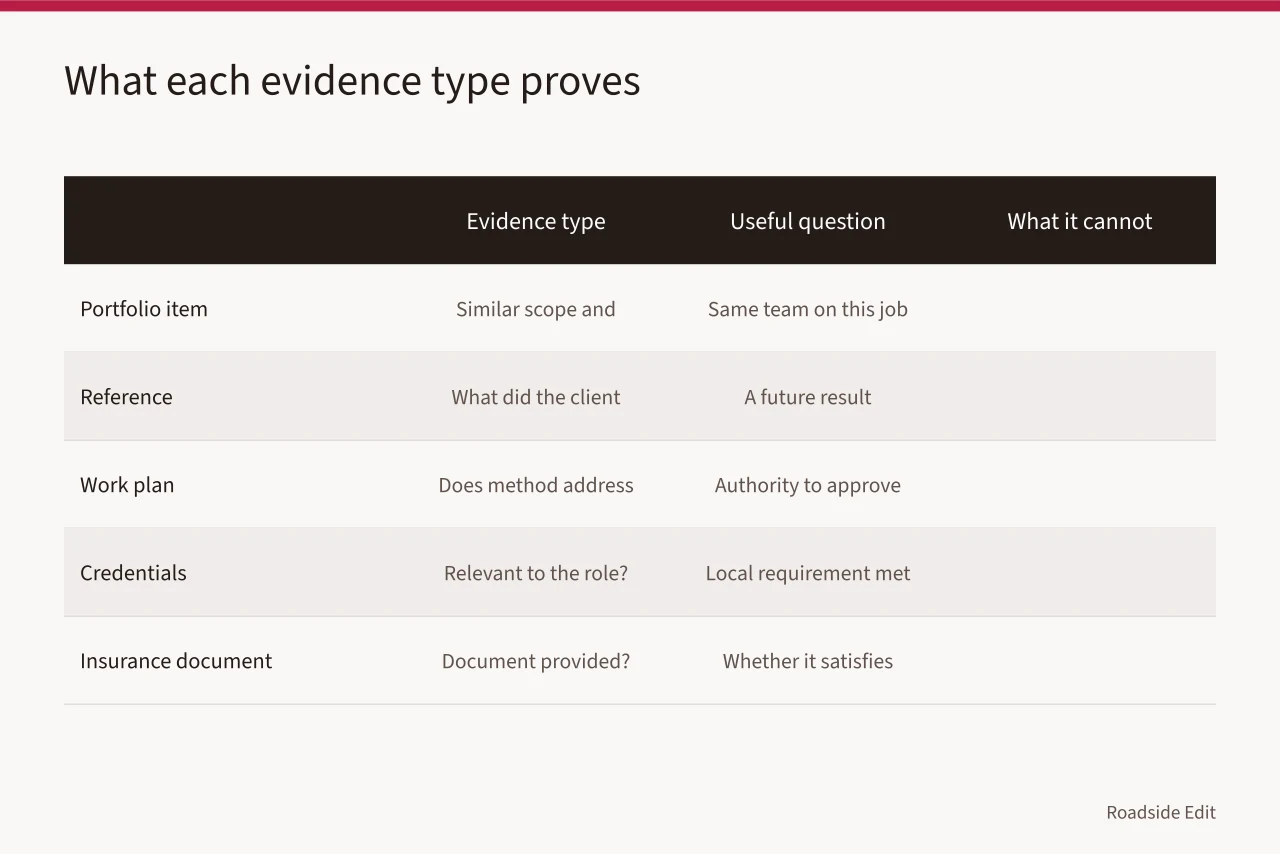
| Evidence type | Useful question | What it cannot confirm by itself |
|---|---|---|
| Portfolio item | Is the work similar in scope and constraints? | Whether the same team will work on this job |
| Reference | What did the client say about the stated project? | A guarantee of a future result |
| Work plan | Does the method address the brief? | Authority to approve project changes |
| Credentials | Does the provider identify a credential relevant to the role? | Whether a local requirement is met |
| Insurance document | Is a document provided for review? | Whether it satisfies the project owner's needs |
Ask references questions that can be answered. "What was the original deliverable?" "How were changes documented?" "Were the final files delivered in the agreed format?" Broad questions such as "Were they great?" invite praise but produce little evidence.
Verify local requirements in the right place
Licensing, permits, insurance, professional seals, public-procurement rules, and property access can vary by role and location. The client should find the state, county, city, agency, or property source that controls the actual question. A provider's website may tell you what services it markets. It is not the final authority on a local requirement.
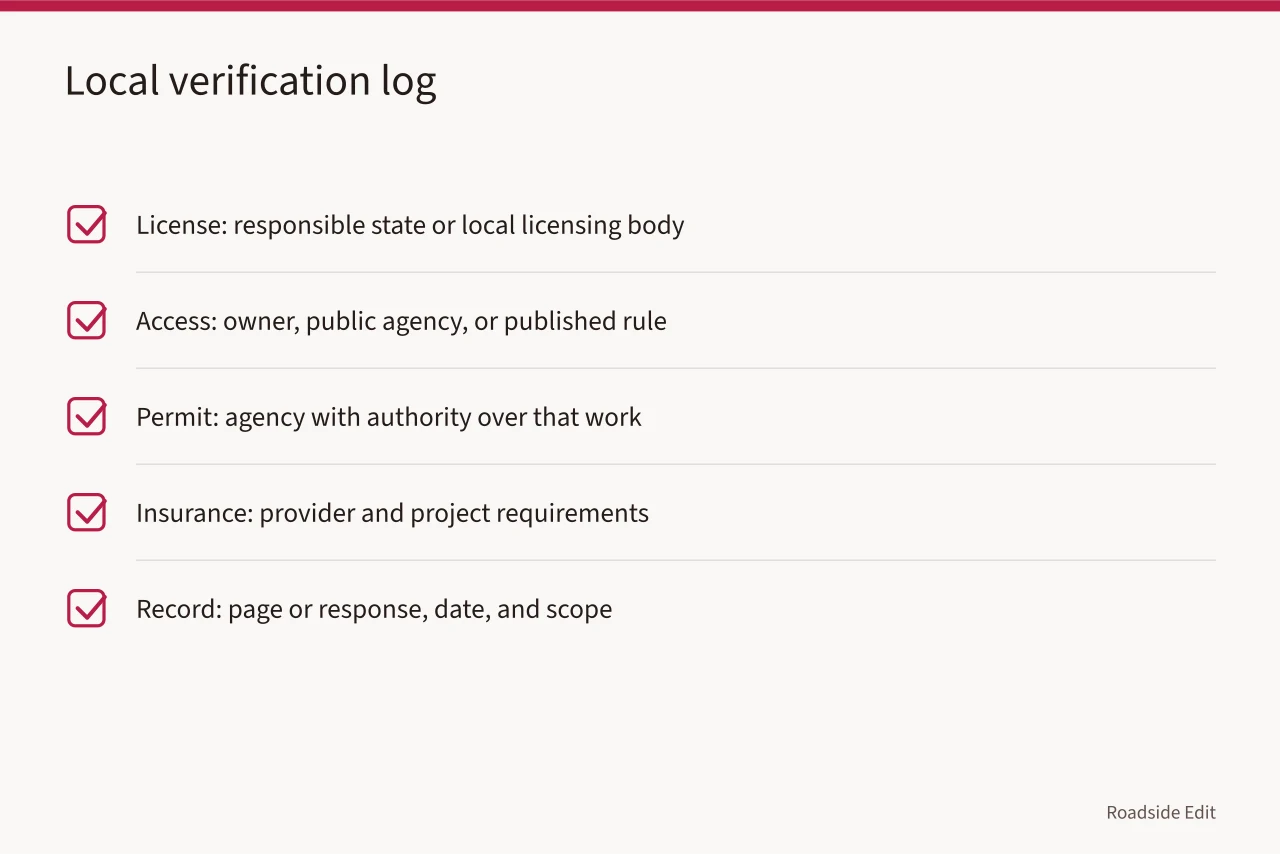
Some roles may have requirements set by a local jurisdiction or authority. This does not mean every roadside design assignment requires a license. The project record should identify the requirement being checked, the office or official page consulted, the date, and the result.
Use a verification log:
| Question | Source to consult | Record to keep |
|---|---|---|
| Is a license relevant to this role? | Responsible state or local licensing body | Page or written response, date, and scope of result |
| Is access needed for the proposed task? | Owner, public agency, or published access rule | Permission note or stated boundary |
| Is a permit or review involved? | Agency with authority over that work | Specific program or record, not a generic blog post |
| Is insurance requested? | Provider and project requirements | Document date and stated coverage details |
If the answer is unclear, do not use the uncertainty as a reason to select someone quickly. Keep the role limited to work that is clearly authorized, or pause until the responsible party can decide.
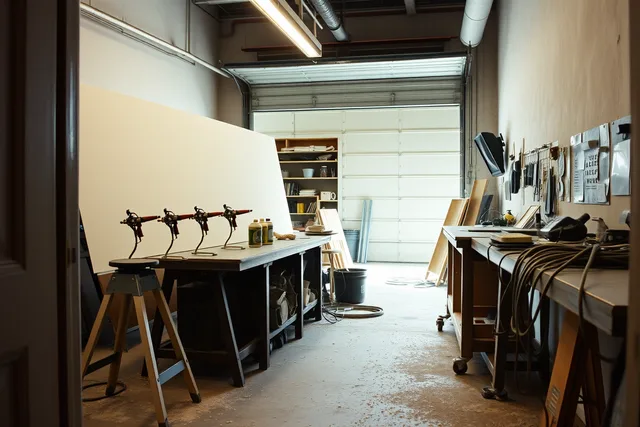
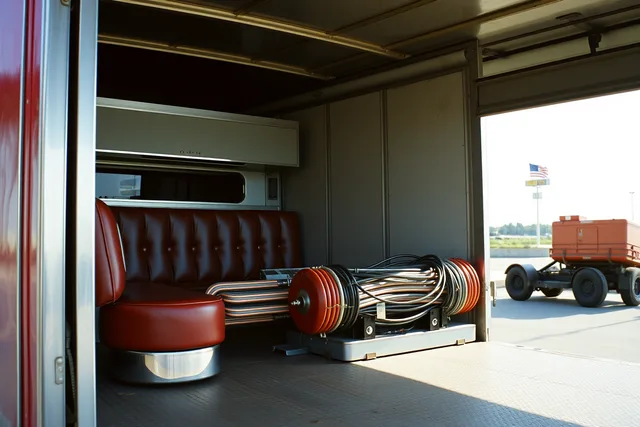
The image is visual context only. It does not establish ownership, access, project status, or suitability of any provider for a separate assignment.
Make the decision record useful later
Selection decisions become hard to explain when the emails, proposal versions, notes, and changes are scattered. Keep the documents for one assignment together: the brief, all issued clarifications, response versions, comparison notes, credentials checked, references contacted, and the final decision.
National Archives recordkeeping guidance says records relating to a specific transaction, project, study, or subject should be maintained together to preserve their context. Read NARA's recordkeeping requirements. The page governs federal records. For a project selection file, the same habit makes it possible to see what the client asked for, what each candidate offered, and why the decision changed.
Write a short decision note:
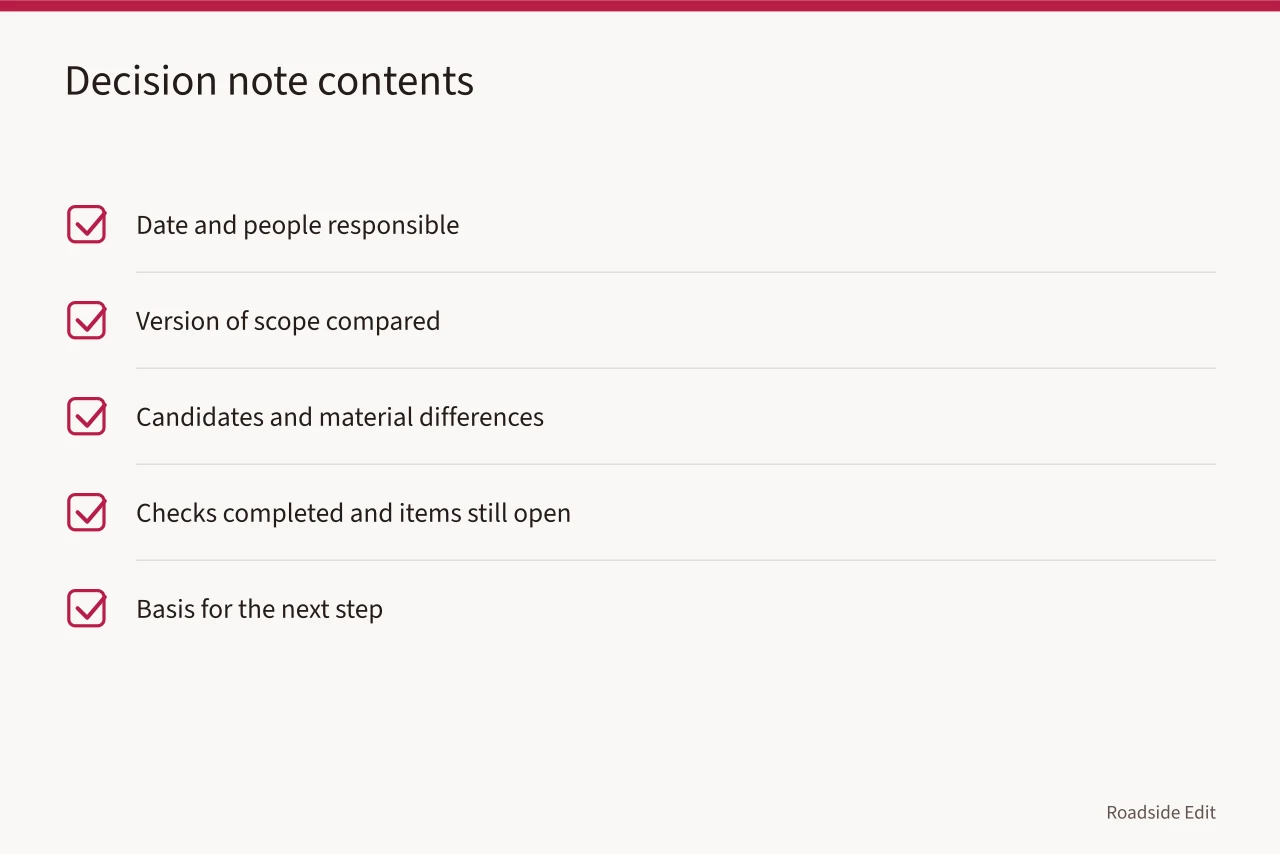
Do not turn a selection note into a public endorsement. A private choice may depend on timing, budget, access, or a specific working relationship. It may not say anything useful about a provider's fit for every other project.
Manage a scope change before it becomes a dispute
The original brief can change. That is normal. The problem begins when a new deliverable or condition enters through a call or email without a written decision. When the project question changes, send a change note that states the added or removed work, new inputs, effect on dates and fees if known, and the person who accepted the change.
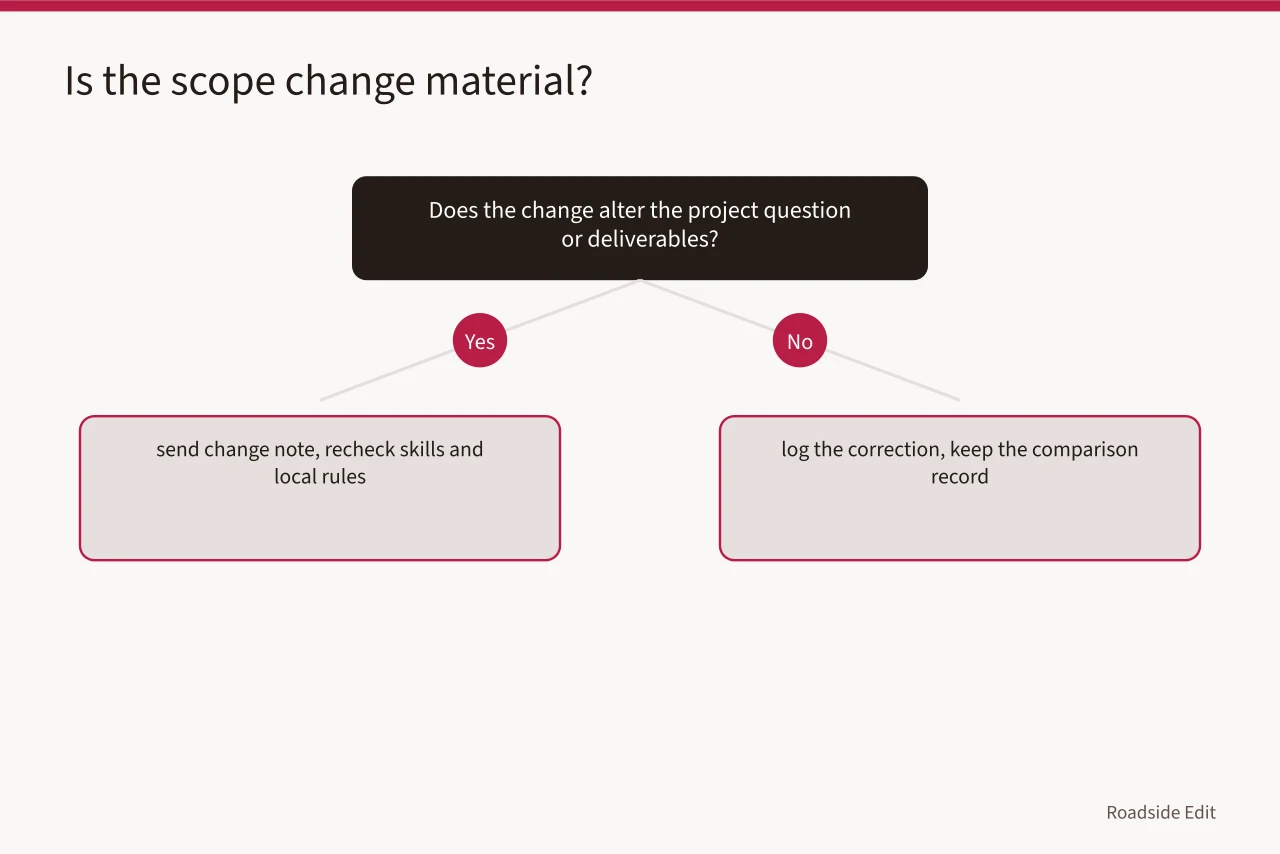
Return to the comparison record only if the change is material. A small correction may not require a new selection process. A shift from documentation to construction documents, from public research to private access, or from one feature to a full property plan may require a different set of skills and local checks.
Common questions
Should every candidate receive the same questions?
Yes, when the responses will be compared. A common written brief makes it easier to see real differences in scope, method, timing, and exclusions.
Does a portfolio verify a provider?
No. It is one piece of evidence. The project still needs a clear scope, any applicable local checks, and a record of who will do the work.
What if the scope changes after a provider is selected?
Document the changed work before treating it as included. Confirm whether the deliverables, schedule, fee basis, or required authority must change too.