Guides
Part of Gas station preservation provider selection: how to choose help in 2027
Gas station preservation provider records owners should keep in 2027
Keep better 2027 preservation-provider records for former gas stations, including scope, roles, references, decisions, changes, and public-claim support.
A provider-selection record helps an owner explain a choice long after the meeting notes fade. It also gives an editor a better boundary: the article can report what the record actually says instead of inferring that a provider has assessed, approved, or completed work that is still under consideration.
What to take away
- Keep the project question, scope, responses, selection notes, and later changes together.
- Label sources by date and distinguish supplied claims from verified records.
- Record the lead person and deliverables, not only the name of a business.
- Preserve decisions in a form a future owner, funder, or editor can understand.
Create a compact selection file
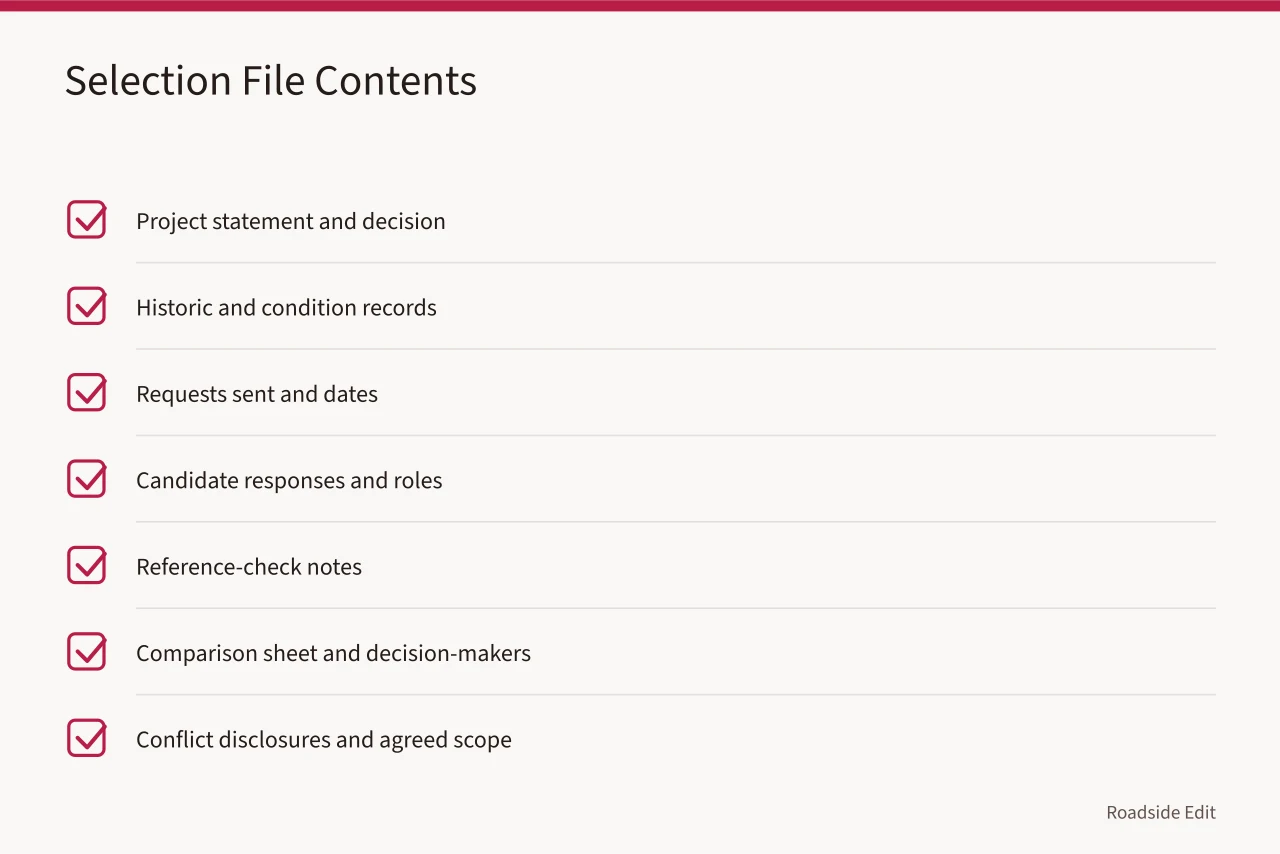
The file can be a shared folder, binder, or project-management system. What matters is that the record has a clear owner and version history. Include the following:
Preserve evidence that matches the work
Relevant experience should appear in the record, not as a broad claim. National Park Service stone-preservation practices recommend demonstrated similar projects, named experienced tradespeople, a work plan that protects historic fabric, and a reasonable price.
Read NPS best practices for stone building preservation management. That publication addresses a particular preservation setting, but the selection lesson carries over: keep evidence of the proposed team's relevant work and method.
| Record | Useful detail | Not enough on its own |
|---|---|---|
| Portfolio example | Candidate role, date, comparable task, and client reference | A project photo without a role description |
| Scope | Tasks, deliverables, access limits, and exclusions | A promise to "handle preservation" |
| Decision note | Reason for selection and unresolved questions | A verbal recollection months later |
| Change log | What changed, why, date, and approval | An overwritten proposal |
| Public claim log | Exact wording, source, date checked, correction owner | A copied marketing statement |
Keep editorial and commercial records separate
If a business pays for a placement, keep the commercial agreement separate from project evidence. The advertiser may describe its services. It should not purchase a statement that a particular station is eligible, clean, approved, historically accurate, or ready to open. Attribute supplied claims and retain the confirmation behind claims that can change.
Retain the source for every selection claim
The National Park Service publishes professional qualification standards for federal historic-preservation work. The standards do not create a one-size-fits-all hiring rule. They do make a practical recordkeeping point: a project file should identify the required discipline, the assigned person, and the work that person will actually perform, rather than relying on a business name alone.
Keep the documents in a form the next project owner can find. The National Archives' records-management overview explains the value of records that remain organized and retrievable. Save the dated proposal, scope revision, reference note, and selection decision together. A later editor can then distinguish a proposed service from completed work and an older price from an active scope.
The commercial file should record any material relationship. The Federal Trade Commission's endorsement guidance addresses disclosures that may be needed when a connection could influence an endorsement. Place that disclosure near a directory or profile claim and leave the hiring decision tied to the project record.
Before closing the file, write a short handoff note. State what the provider was selected to do, which documents control the scope, what remains unresolved, and who can approve a later change. This note keeps a future owner from treating a portfolio, invoice, or article mention as proof of a broader commitment.
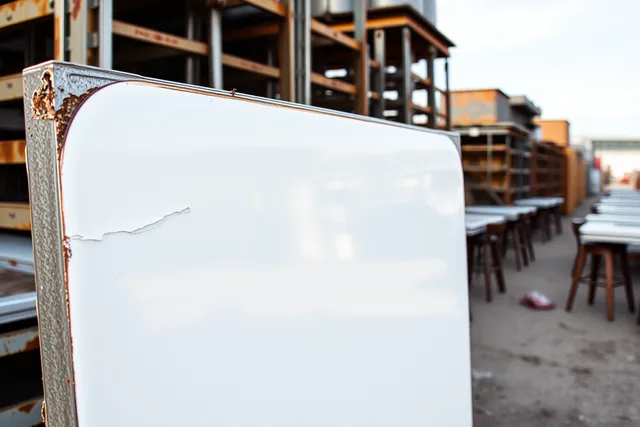
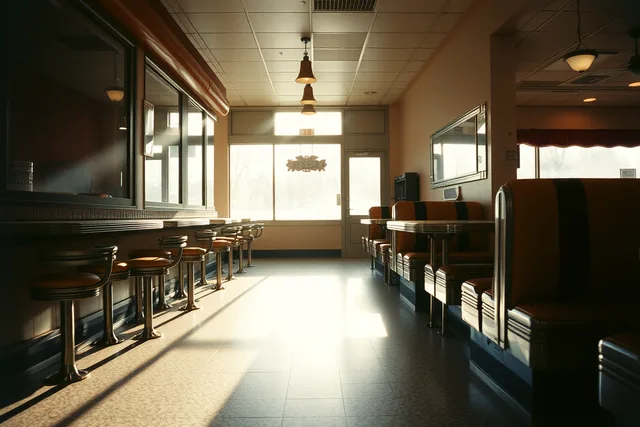
The image is illustrative only and does not document another project's scope, provider, or decision record.
Common questions
How long should provider-selection records be kept?
Keep them for the life of the project and long enough to support later maintenance, ownership, funding, or editorial questions. Applicable contracts and local rules may require more.
Should the public see every proposal?
That depends on ownership, procurement requirements, and privacy obligations. Keep a complete internal record while publishing only information that is appropriate and supported.
Can an article quote a provider's proposal?
Yes, when the quote is authorized, attributed, dated, and presented as a proposal rather than a final project fact.