Reviews
Part of How roadside design studios can build a case study method readers can audit
Roadside design studios case study method comparison questions to ask before you trust a record
Roadside design case study questions for 2027 help readers test sources, compare records fairly, credit media, and state what evidence cannot show.
A roadside design studio case study method comparison starts with one question: what does the record show? A photograph, project statement, map, drawing, or interview can add detail. None of them should carry a claim it cannot support.
That matters for an old motel, a neon sign, a filling station, or a commercial strip. It matters for the Big Duck in Flanders, New York, a duck-shaped poultry shop from 1931. It matters for Wigwam Village No. 2 in Cave City, Kentucky, a 1937 motor court.
This guide offers questions for writers, editors, and readers comparing source material. It is an editorial method, not a site investigation, condition assessment, permit review, or expert opinion. Its purpose is to keep observations, reported statements, and open questions clearly apart.
What to take away
- Start with a narrow question, not a desired conclusion.
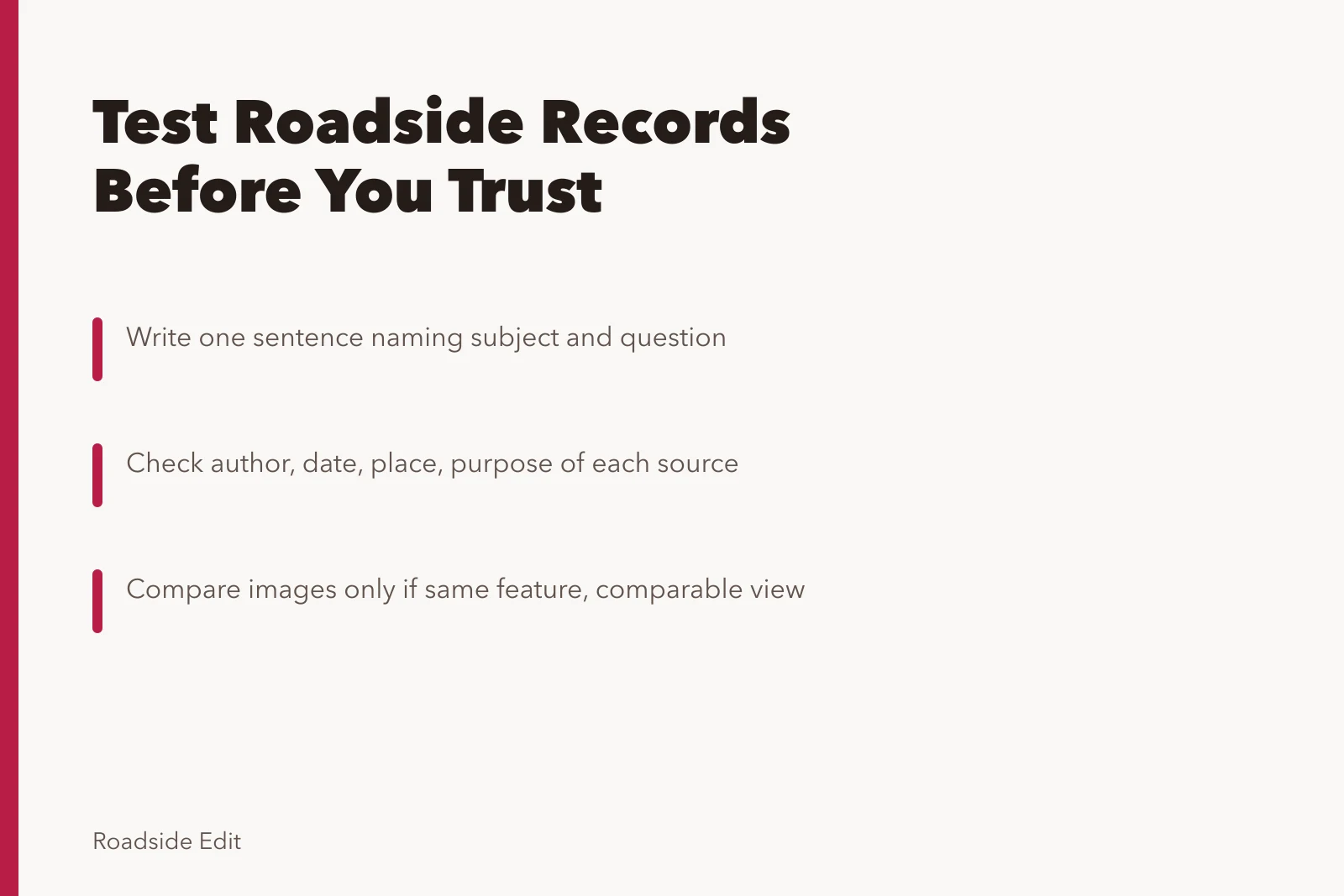
- Identify the author, date, place, and purpose of each source.
- Compare images only after checking whether they show the same feature under comparable conditions.
- Attribute project statements and keep uncertainty visible.
- Credit media at the page where it came from and ask before reusing material that may need permission.
- Match the method to the subject. A Historic American Buildings Survey record, a National Register nomination, and a Section 106 file answer different questions.
What is the case study actually trying to answer?
Name the subject and the question in one sentence. "What can dated public records and visible documentation tell us about the former service station at this location?" is workable.
"Was this a successful restoration?" is too broad. The article must define success, name the evidence, and say who makes that judgment.
Let the question decide which sources belong in the file. A study of visible lettering may call for dated photographs and one site observation.
A study of ownership history may call for land, business, or agency records. A study of a proposed repair may need unpublished documents. Do not let one source answer a different question.
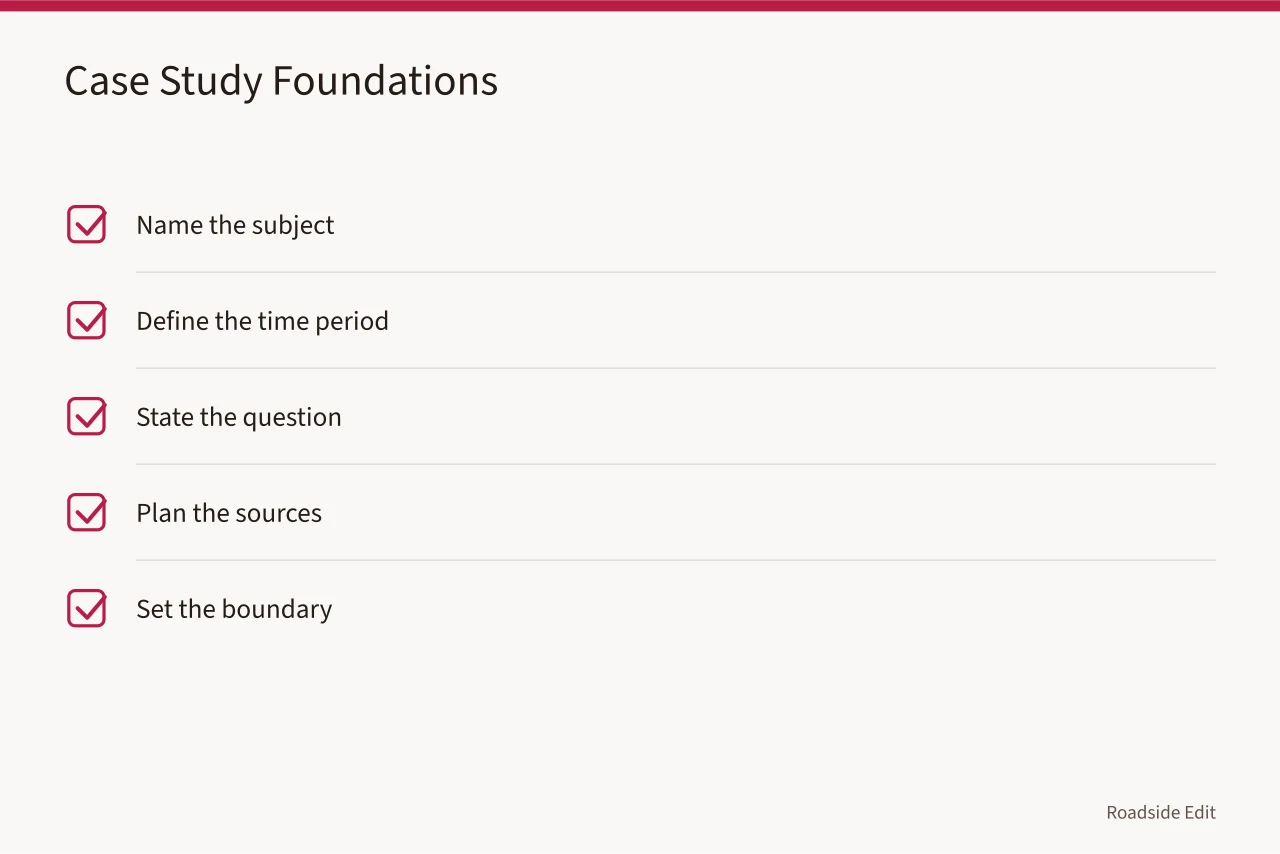
| Start with | Why it keeps the study honest |
|---|---|
| A named subject | Prevents a broad route or town history from becoming a site fact. |
| A defined time period | Stops later conditions from being read back into an older record. |
| A question | Keeps the article from collecting attractive material without a purpose. |
| A source plan | Identifies what can confirm, qualify, or challenge a claim. |
| A boundary | States what needs an owner, agency, or qualified professional. |
| A method label | Records whether a claim came from a survey, a nomination, or a measured drawing. |
State what the article will not decide. A public record may describe an event without proving present ownership. A photo may show an exterior without identifying materials behind it. An interview may report memory without confirming a date.
These limits are not defects. They tell readers what the evidence means. For a roadside subject, the gap between a visible sign and its present owner is often the whole story.
Who made each record, and for what purpose?
A contractor's project description, a tourist photograph, an agency file, a real-estate listing, and a newspaper caption do different jobs. Before using any of them, ask who created it, when, for whom, and why.
The National Archives describes preservation concerns for photographic materials: handling and storage conditions can affect them over time. Read the National Archives guidance on photographs.
That guidance does not authenticate a particular image or date a roadside feature. It supports one practical question: what is known about the copy, its history, and how it has been kept?
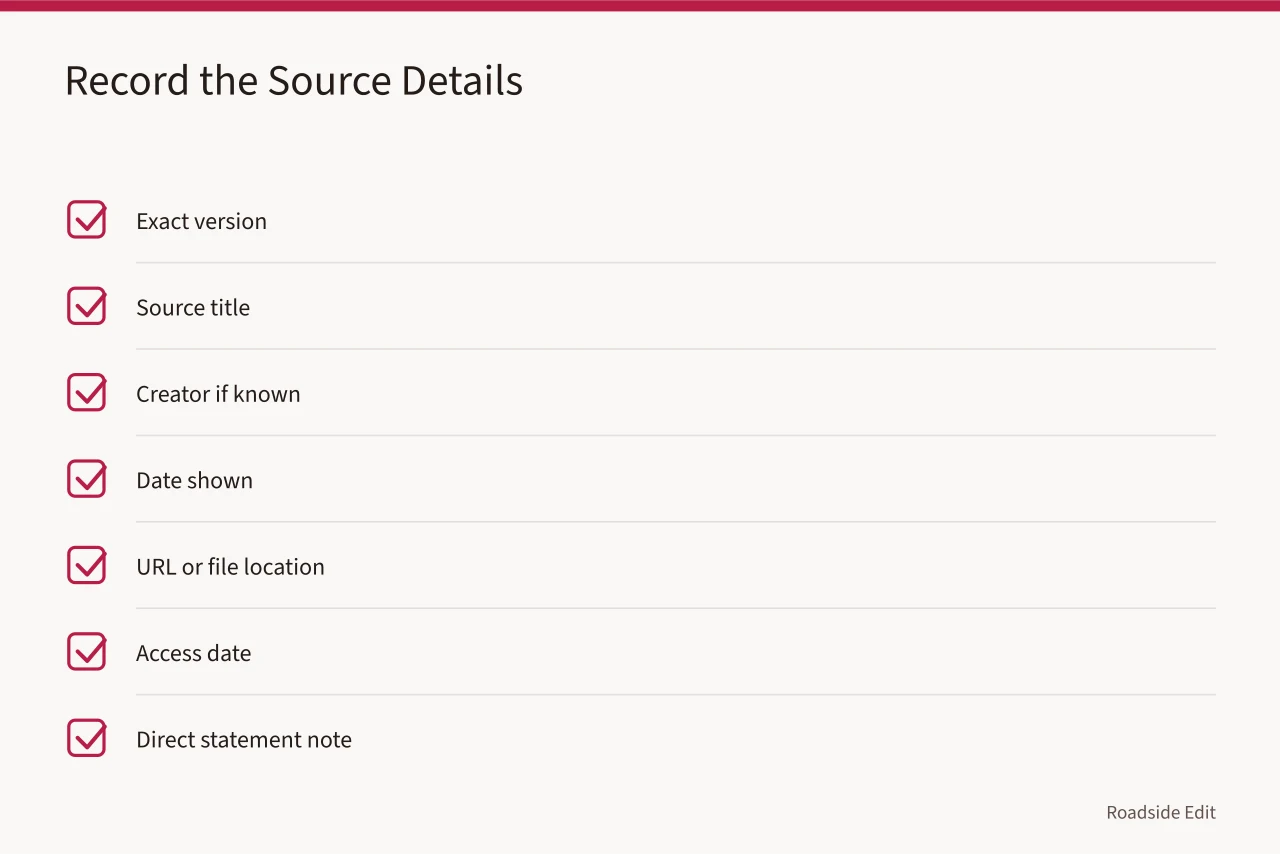
If the item is undated, do not give it a precise date just because the subject looks old. An estimate can be labeled an estimate, with its reason and its limit.
How do the named record types compare?
No single record answers every question. Compare the main methods on what each one is built to establish.
| Record type | Built to establish | Cannot settle alone | Where it lives |
|---|---|---|---|
| Historic American Buildings Survey or HAER record | Measured drawings, large-format photographs, written history | Present condition or ownership | Library of Congress collections |
| National Register of Historic Places nomination | Significance, period of significance, boundary | Owner consent, current condition | National Park Service and state historic preservation offices |
| Section 106 documentation | Effects of a federal undertaking | Compliance for private work | Federal agency file, Advisory Council on Historic Preservation |
| State historic preservation office survey | A field survey of a district or corridor | Condition, cost, or title | State historic preservation office |
| Newspaper and trade press archive | Contemporaneous reporting and dates | Independent technical verification | Local libraries, online archives |
A studio comparing its own case study to a public nomination should say which method produced each claim. Mixing methods without labels lets a survey guess look like a measured drawing.
Do the images show a fair comparison?
Before-and-after pairs attract attention, but they can mislead. Check whether the images show the same feature from a comparable viewpoint, whether dates are known, and whether the frame was cropped.
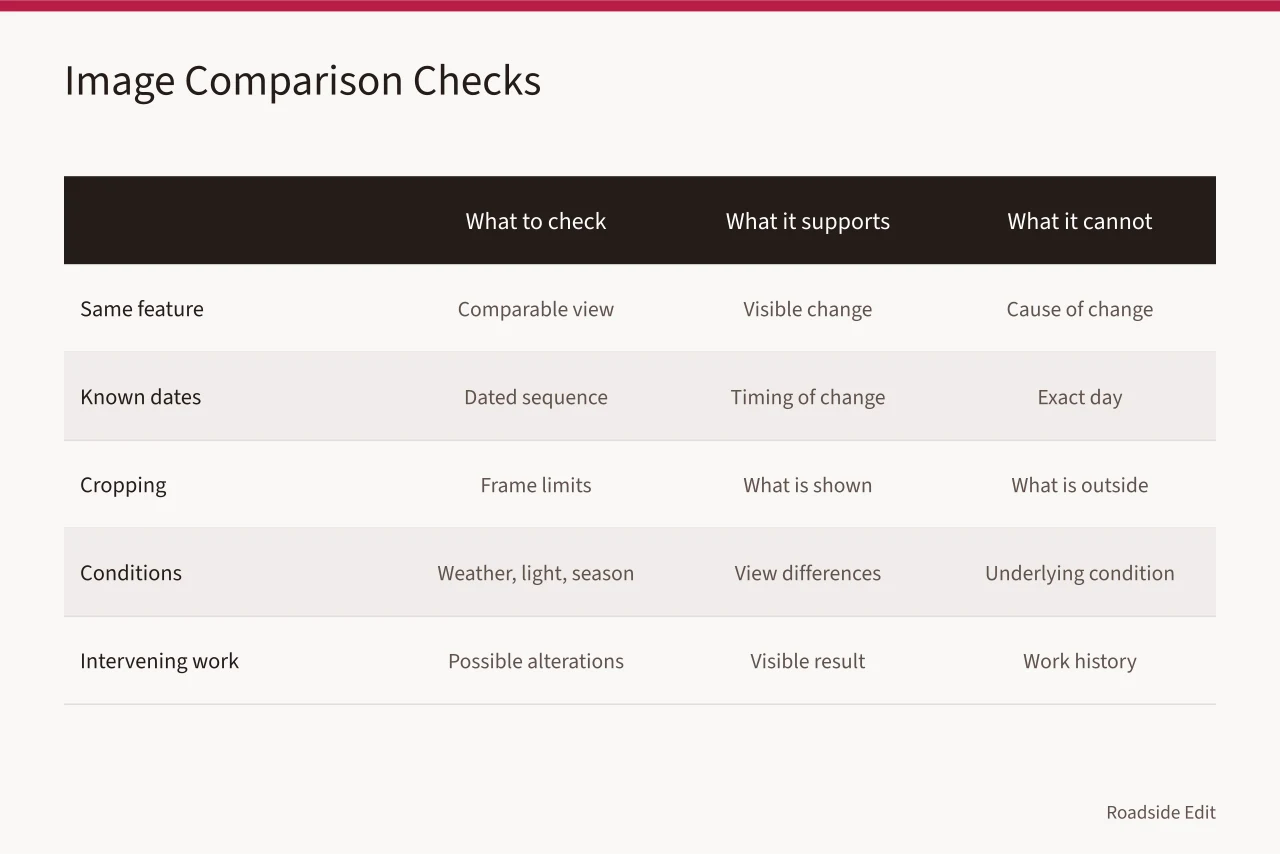
Ask whether weather, lighting, seasonal growth, traffic, or intervening work changes the view. A 1960s postcard of the Blue Swallow Motel in Tucumcari, New Mexico, and a current close-up can sit together. They are not a measured outcome comparison.
The National Park Service notes that laser-scan data can support field work but is not, by itself, formal documentation under the relevant standards. See the National Park Service laser-scan guidance.
That guidance does not address a particular roadside property. A detailed technical file still needs context, method, and a clear account of its limits.
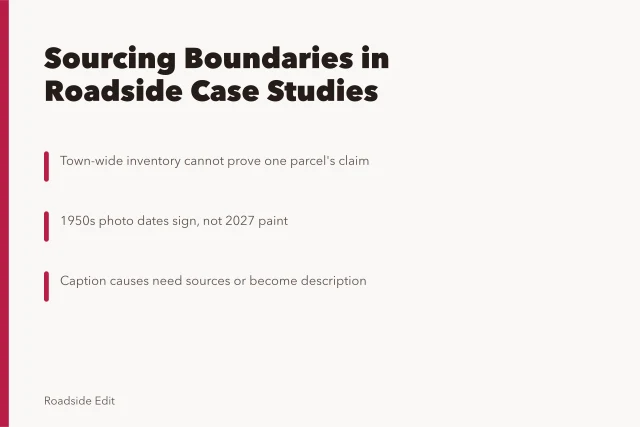
Captions should report rather than conclude. "North elevation shown in a 2019 image" is safer than "the building was restored by 2019." Use the second only when another source confirms the work.
"A painted panel is visible" differs from "the original paint survives." Describe what is visible. Then name the further record needed for the larger claim.
| Image question | What the answer can support | What it cannot settle alone |
|---|---|---|
| Is the place identified? | A location stated by the source or visible sign. | Current ownership or access rights. |
| Is the date identified? | When that view existed. | The date of every feature in the view. |
| Is the viewpoint comparable? | A cautious visual comparison. | A measurement of condition or value. |
| Is a change visible? | A reported visual difference. | Cause, permit status, or quality of work. |
What does a document say, and what is being inferred?
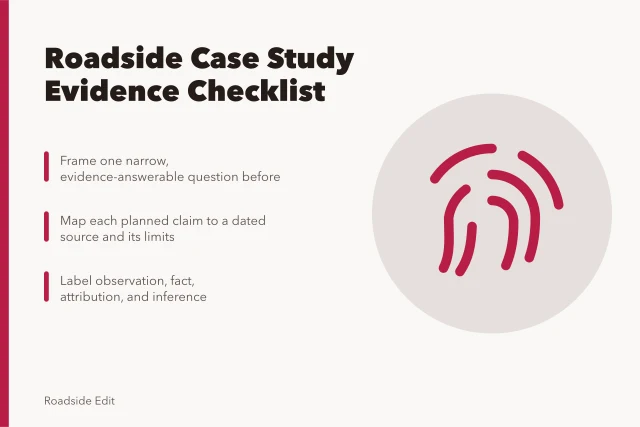
Keep quotation, summary, and inference in separate sentences. A document may say a business was listed at an address. The writer may infer the address was tied to the business at that time.
Neither statement proves the business occupied every part of the building or that it survives today. A National Register nomination, for example, states a period of significance and a boundary. It does not guarantee present condition.
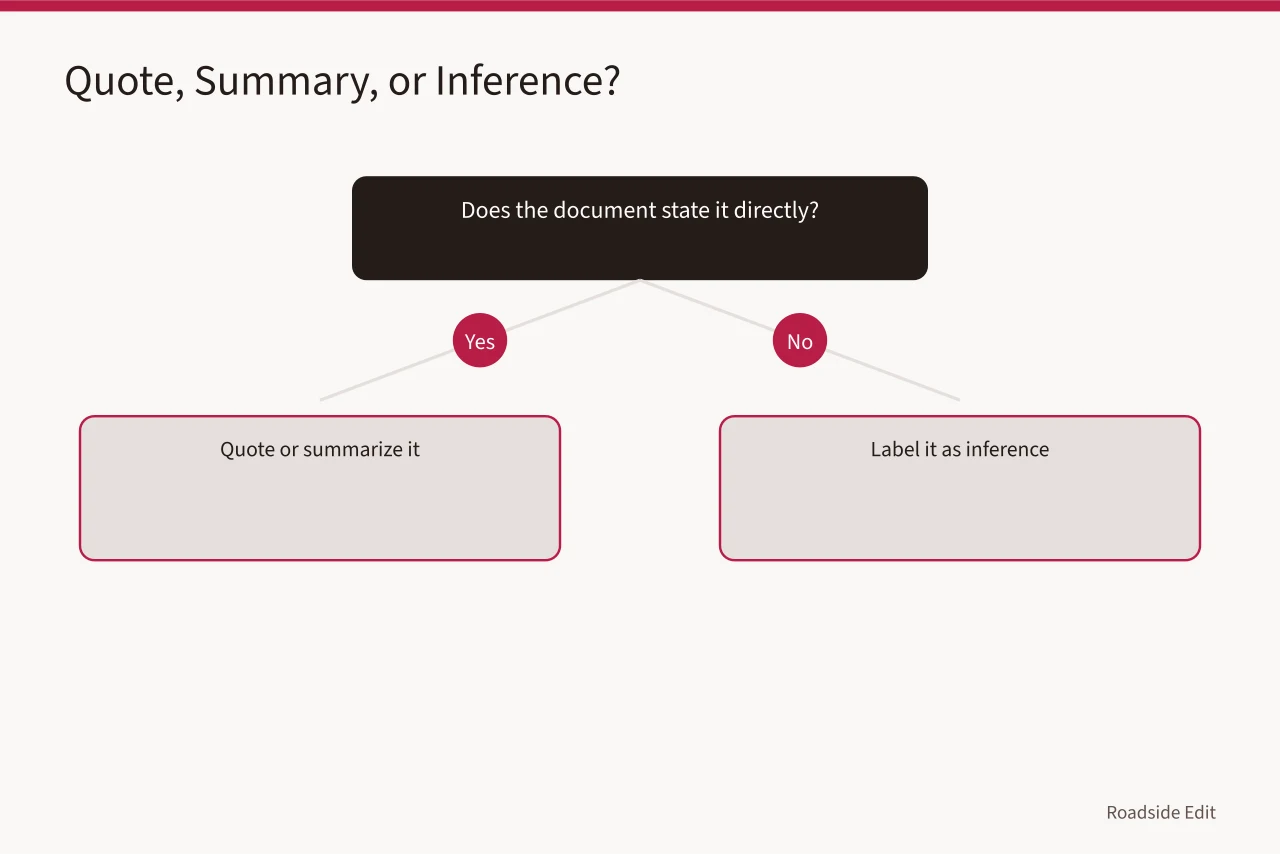
Ask whether the document is complete, whether it was created near the event, and whether another source confirms the relevant part.
A map may label a route but omit smaller changes. A permit record may show an application but not completed work. A press release may explain a sponsor's position but offer no independent evaluation.
The Library of Congress offers guidance on the care and handling of photographic collections. Review the Library of Congress care guidance.
That guidance is not a claim about any document in a case study. It is a reminder that a digital copy, an original print, and a later reproduction may carry different contextual information. Note which version the article relied on.
What should be asked about source use and credit?
Finding an image online does not mean you can reuse it. Ask who owns it, what license applies, if credit is required, and whether your use fits the terms.
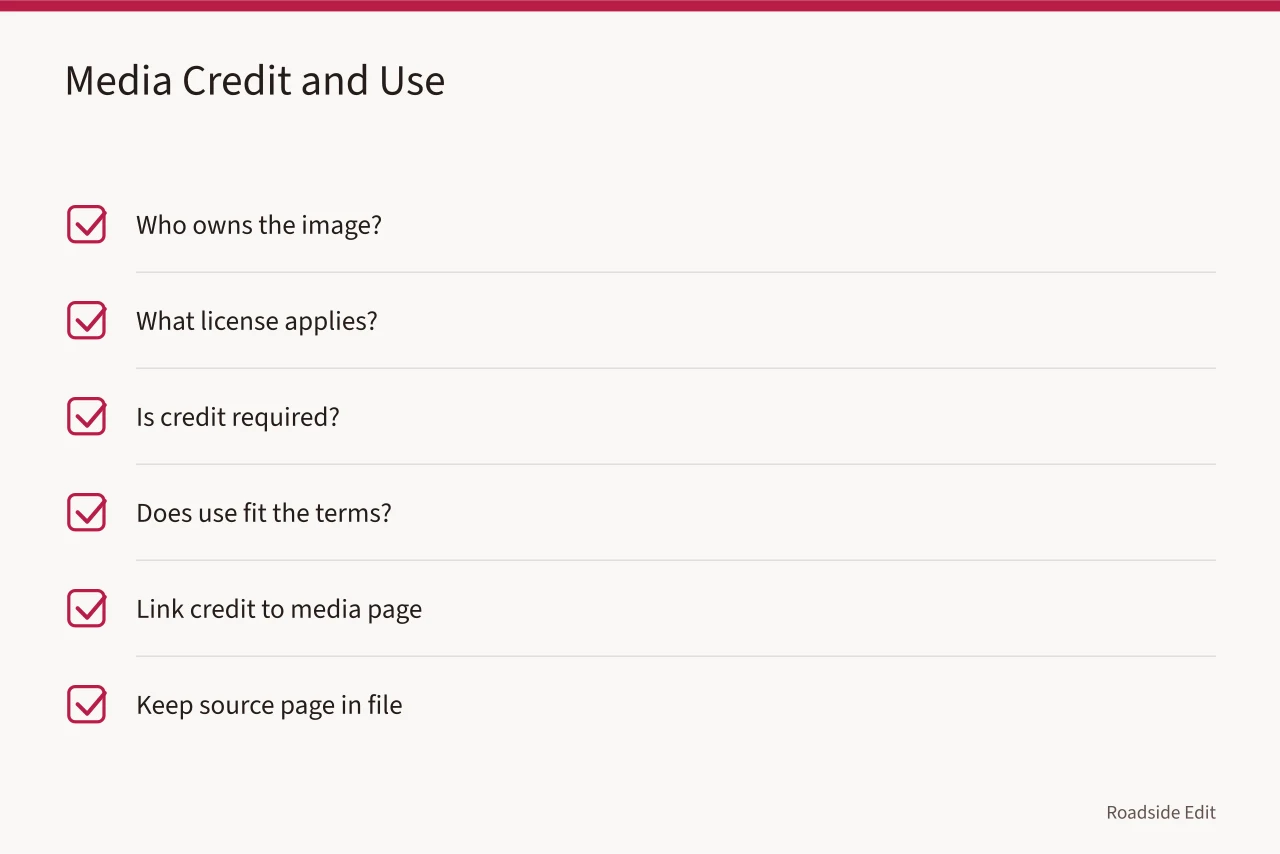
Link a media credit to the specific page holding the media, not a general site landing page. Keep the source page in the editorial file in case credit or terms change.
The U.S. Copyright Office explains that fair use is a case-by-case analysis, not automatic permission for a short excerpt or an educational purpose. Read the Copyright Office fair-use overview.
That overview does not decide whether a particular image or passage may be used. Seek permission or rely on clearly stated license terms. Do not assume a web image is free to publish.
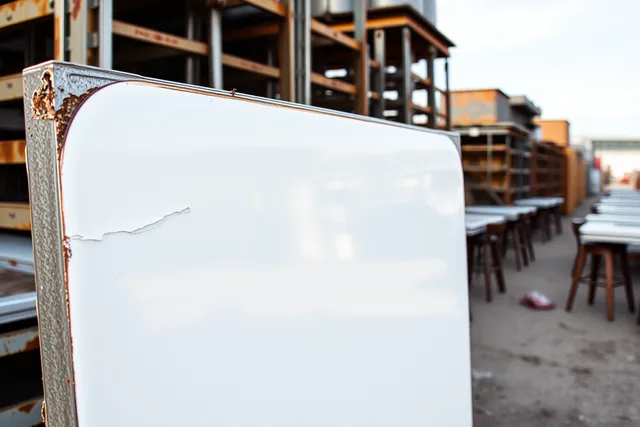
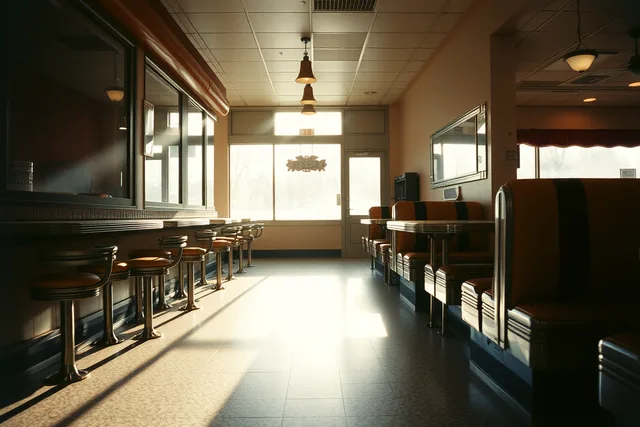
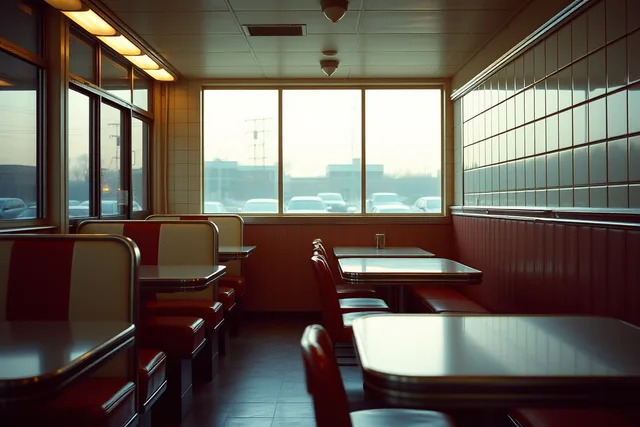
Credit is also an accuracy issue. A caption should mark an image as illustrative when it does not document the exact project described. Do not attach an unrelated roadside scene to a claim about a business, team, method, or result.
The image is illustrative only. It does not prove the present condition, ownership, safety, project history, or status of any other roadside place.
Which questions belong with the people closest to the work?
If a study includes a project statement, ask who supplied it and whether they were directly involved. Ask what records support their account, which dates are known, and what part is recollection.
A participant may offer important context. A reader should still be able to tell that account from an agency record or a visible feature.
For a current project, ask the owner or responsible organization who can confirm scope, completion, costs, permits, and public statements. Those questions belong with the responsible authority, not an editor.
Do not ask an editor to decide whether work complies with a code or whether a design is safe. Under Section 106 of the National Historic Preservation Act, a federal agency weighs effects on historic properties. The Advisory Council on Historic Preservation is a consulting party in that review. That review is a different job from writing.
The National Park Service Route 66 Corridor Preservation Program awards cost-share grants for preservation of Route 66 resources. Send grant questions there, not to an editor.
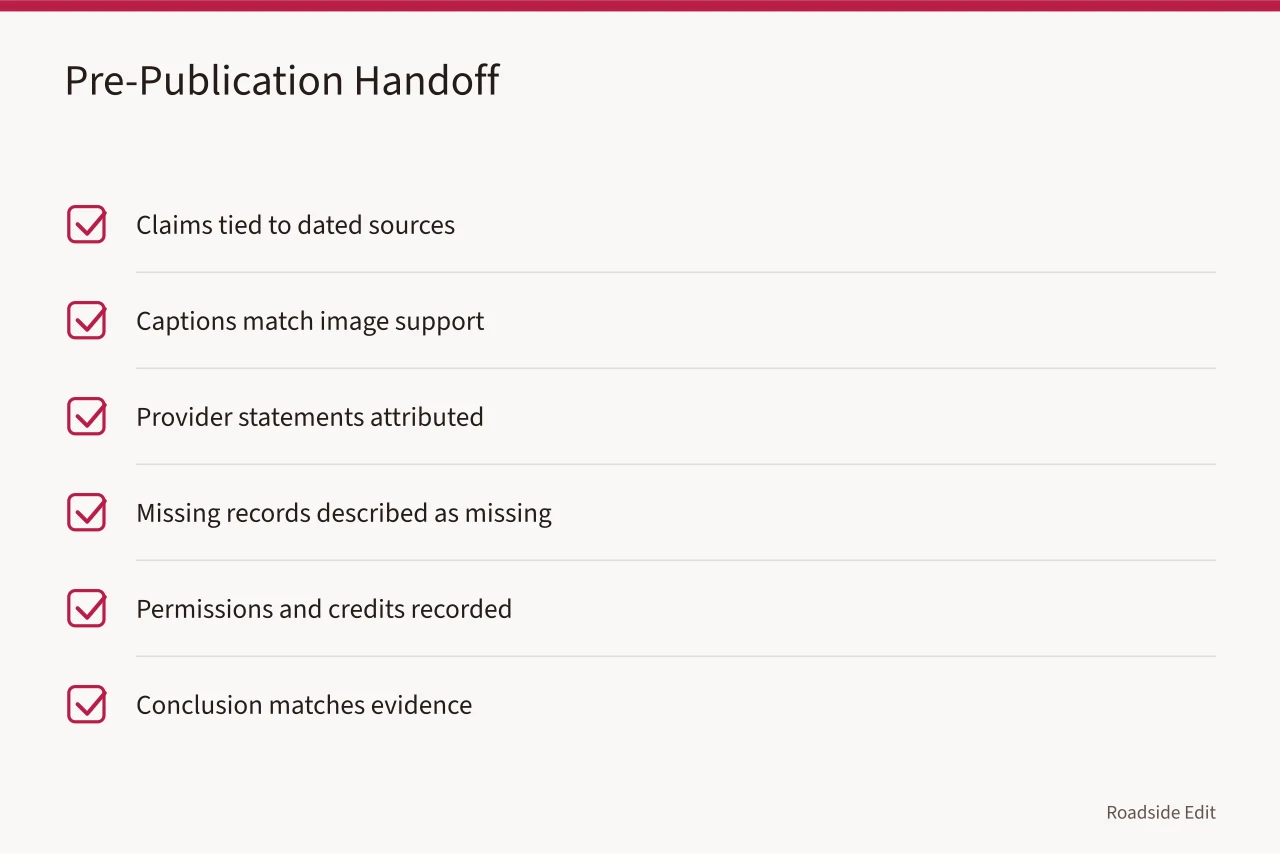
Use this handoff list before publication:
- Confirm every claim traces to a named source with a date.
- Check that image rights and credits are cleared.
- Flag anything that needs an owner, an agency, or a licensed professional.
- Note open questions where the record stops.
How should the result be written?
Use the narrowest conclusion the record supports. A closing may say images show a visible change between known dates, public records confirm a limited event, or evidence does not identify when an alteration occurred.
Do not promise a project succeeded, a site is safe, or a provider did exemplary work unless a source with authority for that claim supports it.
Open questions belong in a case study. They show where the record ends and give future reporting a clear next step. That beats a smooth story that turns uncertain detail into permanent fact.
Common questions
Can a photograph establish current safety?
No. It can document what was visible when and where the image was made. It does not replace a project-specific assessment by the responsible person.
Is a project press release enough to confirm completion?
It can support a clearly attributed statement from the project organization. Look for additional records before treating it as independent confirmation.
Should an article include unanswered questions?
Yes. A clearly stated gap prevents inference from becoming fact and directs later research toward the missing record.
Can a case study name a business?
Yes, when the source and relationship are clear. Do not present a provider's own statement or paid placement as independent editorial judgment.
Which documentation method should a case study use?
Pick the method that matches the question. A Historic American Buildings Survey record suits measured fabric. A National Register nomination suits significance and boundaries. A Section 106 file suits the effects of a federal project.