Guides
Part of How roadside design studios can build a case study method readers can audit
Roadside design studios case study checklist: what to settle before you draft
Roadside design case study checklist for 2027: frame one answerable question, map evidence, separate claims from inference, credit media, and correct the record.
A case study is not a gallery with a few dates underneath it. It is a limited answer to a defined question. The reader should be able to see what the evidence covers, where the writer made an interpretation, and which parts of the story remain unknown.
That approach matters for roadside subjects because a photo looks persuasive while hiding a missing date, unknown location, or second source with a different story. A business quote explains owner's intent, but it cannot prove work happened.
This checklist helps an editorial team write a careful case study about a sign, motel, service station, or storefront without manufacturing a project result. It covers a route segment or design intervention.
What to take away
- Start with one answerable question, not a preselected conclusion.
- Build a timeline from dated evidence and keep gaps visible.
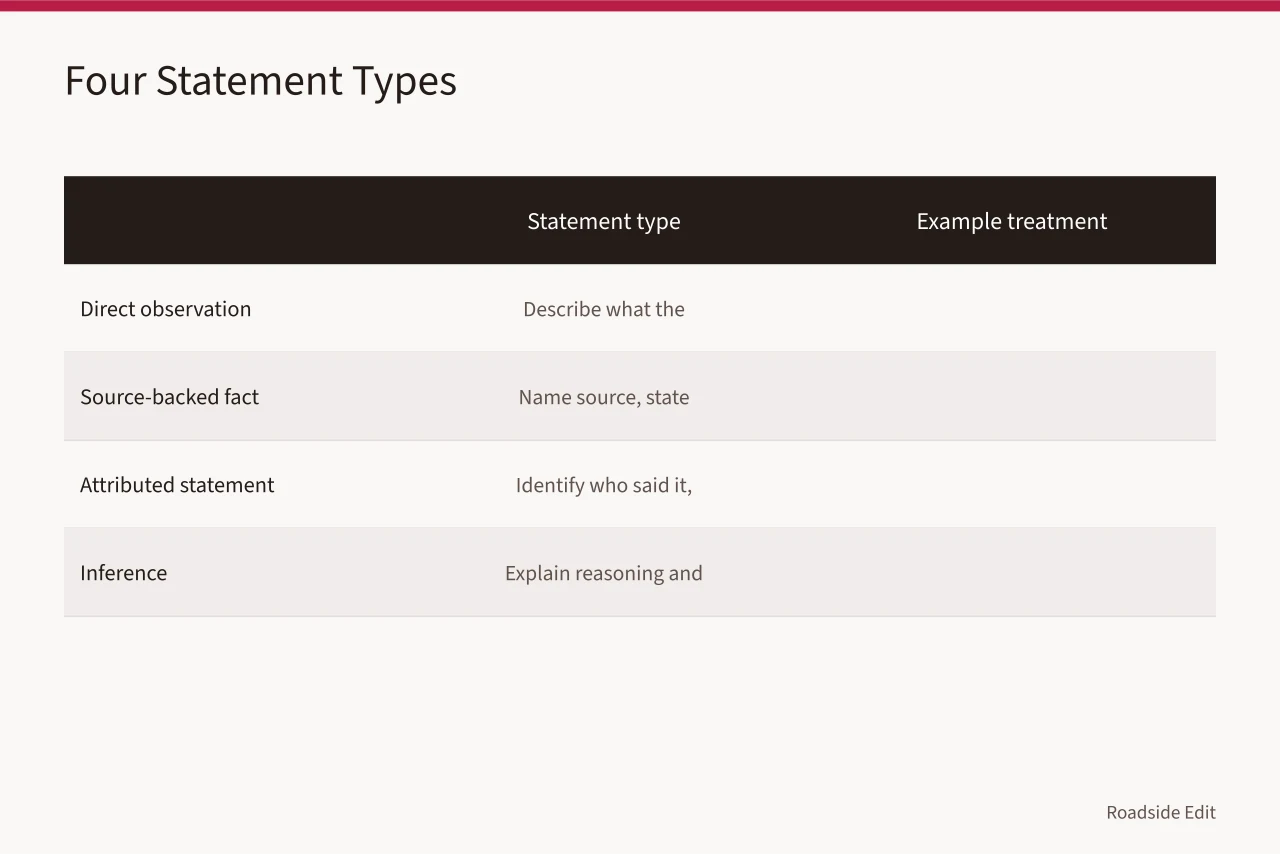
- Label observation, source-backed fact, attributed statement, and inference differently.
- Use a correction record so an error can be fixed without rewriting history.
Frame the question and stop point
Write the question in a form that evidence can answer. "Why is this roadside place important?" is broad enough to produce almost any story. "Which documented changes to the sign face occurred between two dated photographs?" is narrow enough to investigate. The question can expand later, but only after the source file shows why it should.
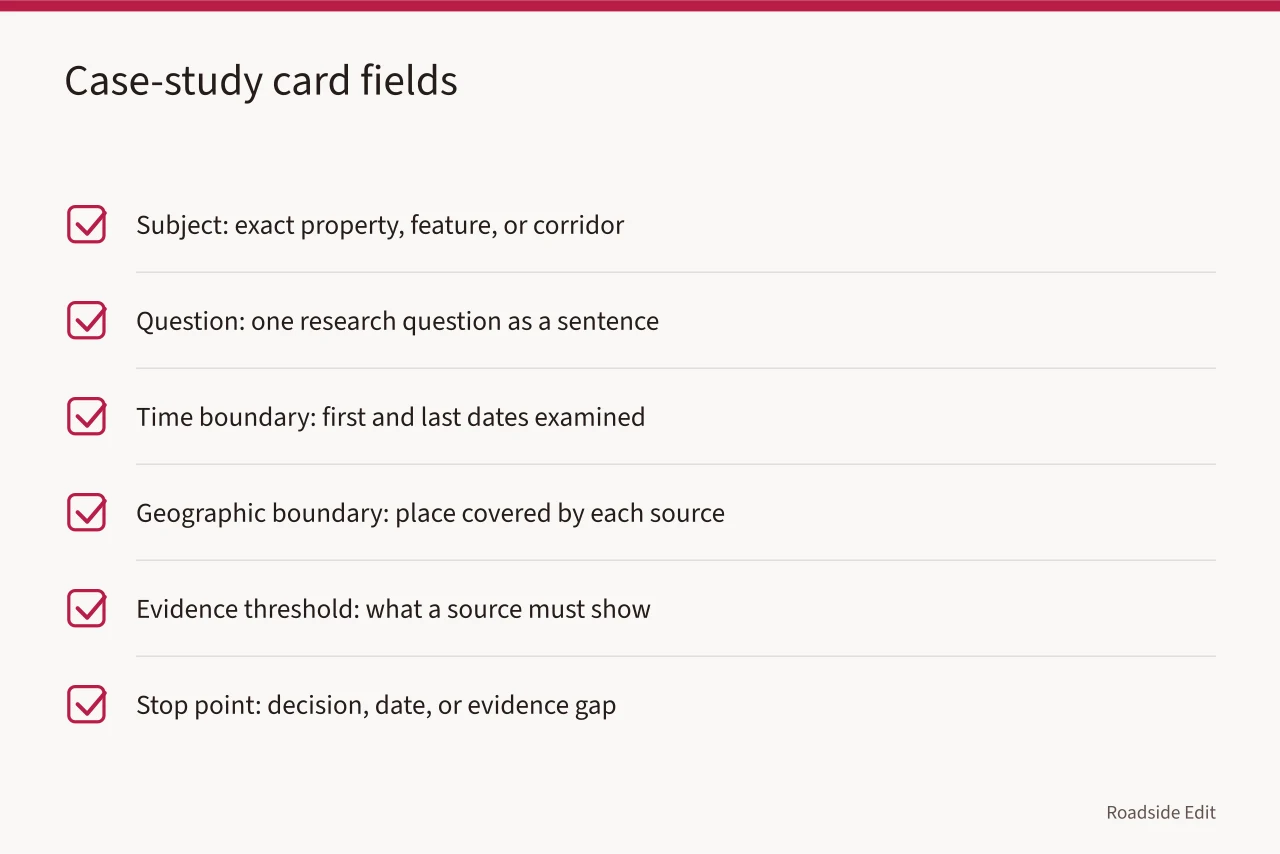
Use a case-study card before research begins:
| Card field | What to record |
|---|---|
| Subject | Exact property, feature, or corridor segment |
| Question | One research question written as a sentence |
| Time boundary | First and last dates the article will examine |
| Geographic boundary | Place covered by each source |
| Evidence threshold | What a source must show before the article makes a material claim |
| Stop point | Decision, date, or evidence gap that ends the study |
The National Park Service says archeological documentation starts with a defined goal. Background research may draw on prior work, archival research, and related information needed for that goal. Read the NPS documentation guidance.
A roadside design article is not an archeological project. The same discipline helps: gather evidence for the stated question, not every interesting fact about a place.
Do not write the title first and make the research serve it. A title such as "The Restoration That Saved Main Street" assumes a result, a cause, and a boundary that may not be documented. A neutral working title gives the research room to contradict the first idea.
Create an evidence map before drafting
The evidence map is a short ledger that connects each planned claim to a source. It should include material that will not appear in the published article, such as conflicting records and source limits. This is where the writer decides what each document can actually carry.
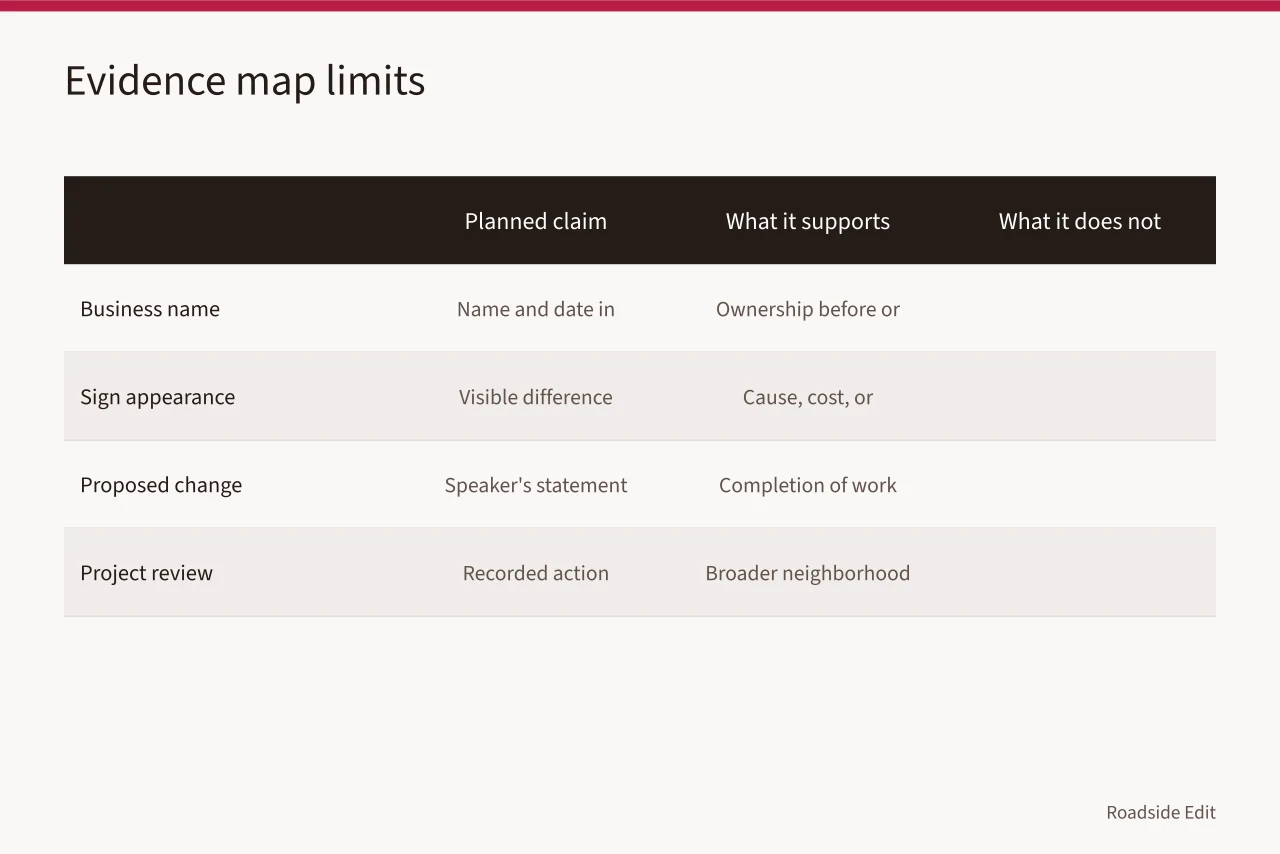
| Planned claim | Source and date | What it supports | What it does not support | | --- | --- | --- | | A roadside business operated under a stated name | Dated directory, permit, or institutional record | Name and date in that record | Ownership before or after that date | | A sign changed appearance | Two dated images with known viewpoints | Visible difference | Cause, cost, or approval | | A person proposed a change | Attributed interview or public statement | The speaker's statement | Completion of work | | A program reviewed a project | Specific agency record | The recorded action | A broader finding about the neighborhood |
National Register Bulletin 39 advises researchers to decide what they need to know, make a list of questions and tasks, determine the project's limits, and record documentation and sources consistently. Read NPS Bulletin 39. The bulletin addresses historic-property research. For a case study, it supports a modest method: define questions, collect traceable sources, and keep the scope visible.
If one source supports several claims, write each relationship separately. "City archive" is not enough. The ledger should name the page, file, image, or record that supports the sentence. That level of detail makes later corrections possible.
Build a timeline without forcing a tidy story
Case studies often fail at the timeline stage. A writer finds a promising early photograph, a later project mention, and a current image, then writes a smooth story between them. The middle may be unknown. Do not fill it with language such as "then," "therefore," or "as a result" unless the source supports the connection.
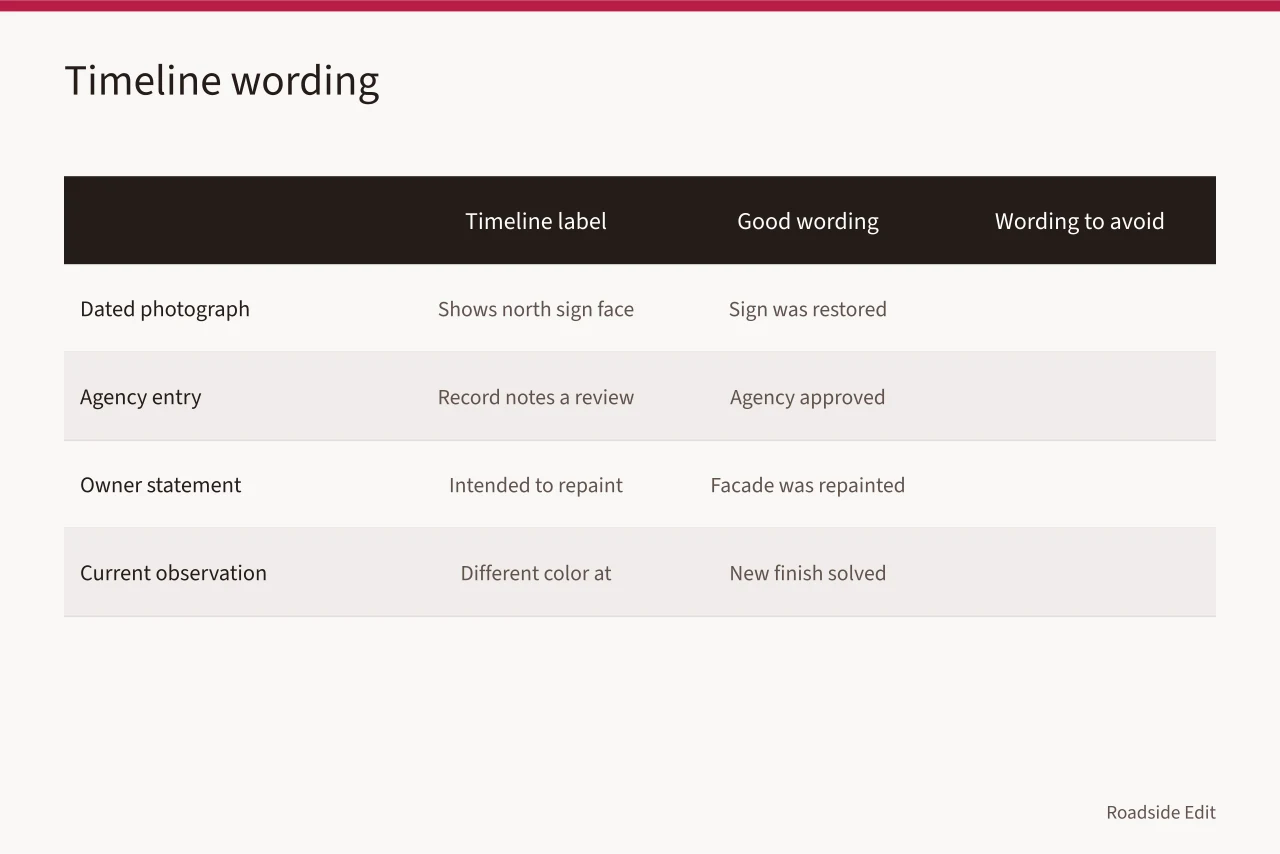
Create rows only for dated events or records:
- Record the event date or the date shown on the source.
- State the source type and why it is relevant.
- Write the narrow fact it establishes.
- Add an "open question" if the next event is not explained.
- Mark whether the event was observed, reported, proposed, approved, or completed.
| Timeline label | Good wording | Wording to avoid |
|---|---|---|
| Dated photograph | "A photograph dated May 2027 shows the north sign face from the listed viewpoint." | "The sign was restored in May 2027." |
| Agency entry | "The record dated June 2027 notes a review." | "The agency approved the project," unless the record says so |
| Owner statement | "A representative said the business intended to repaint the facade." | "The facade was repainted." |
| Current observation | "The current image shows a different color at the visible edge." | "The new finish solved the problem." |
Leave a blank in the timeline when there is no source. Readers can handle an unresolved interval. A false bridge between two facts is harder to correct because it sounds plausible.
Separate the four kinds of statements
Use clear labels during drafting. They help the writer remove accidental claims before publication.
| Statement type | Example treatment |
|---|---|
| Direct observation | Describe what the cited image or visit record visibly shows |
| Source-backed fact | Name the source and state only the fact it records |
| Attributed statement | Identify who said it, in what source, and when |
| Inference | Explain the reasoning and state the limit of the inference |
The National Park Service's documentation standards call for information prepared from reliable sources with limitations clearly stated so readers can independently verify it. Review NPS documentation standards. Those standards govern formal heritage documentation, not magazine case studies. They offer a sound editorial test: a reader should be able to locate the source, understand the claim, and see the limit.
Do not disguise an inference by removing the words that signal it. If the case study says "the two images suggest a change," that is honest about its evidence. If it says "the images prove a renovation," it makes a claim that images alone may not support.
Use visual evidence with a clear boundary
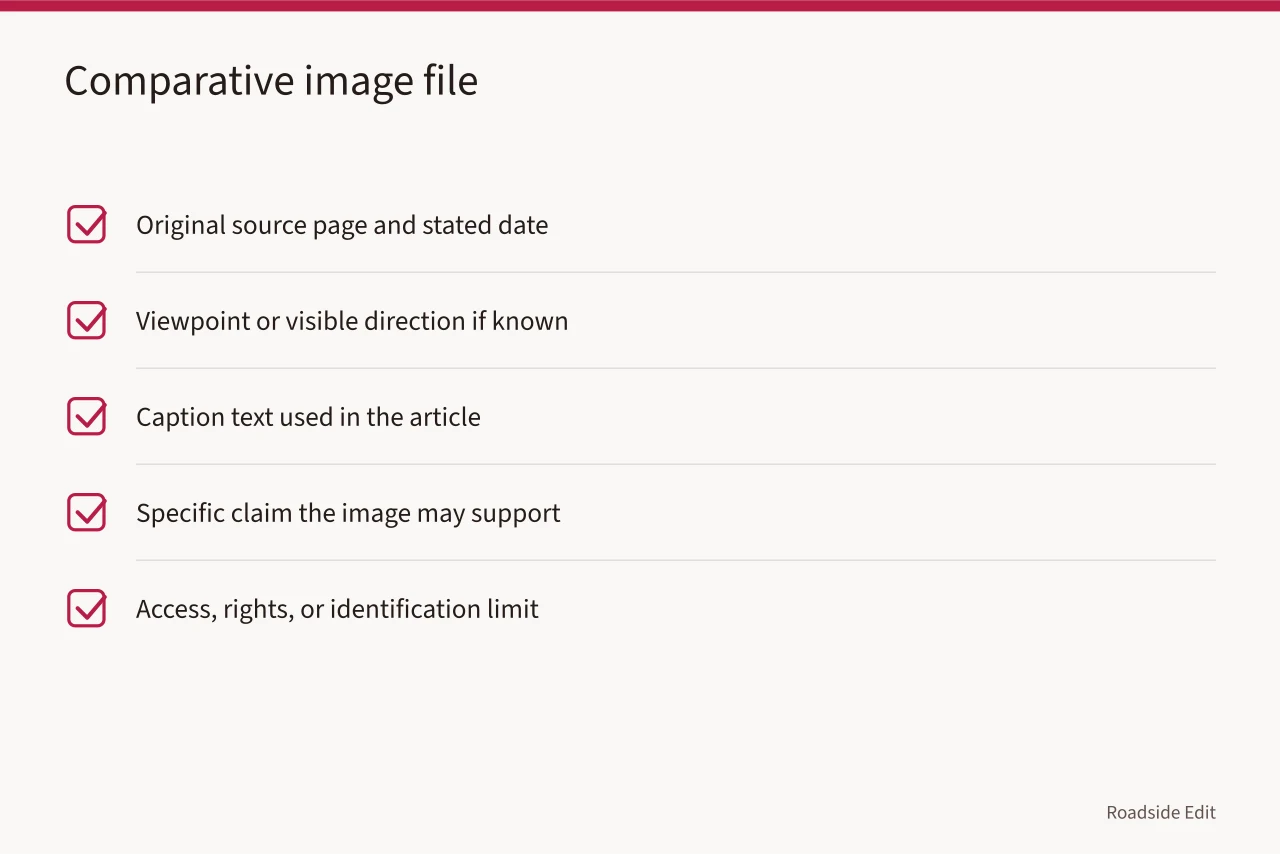
Images can make a case study easier to read. They can also cause the most expensive errors. A figure needs a local file, exact source page, useful alt text, and a caption that explains the view. The article should also say whether the image is direct evidence or visual context.
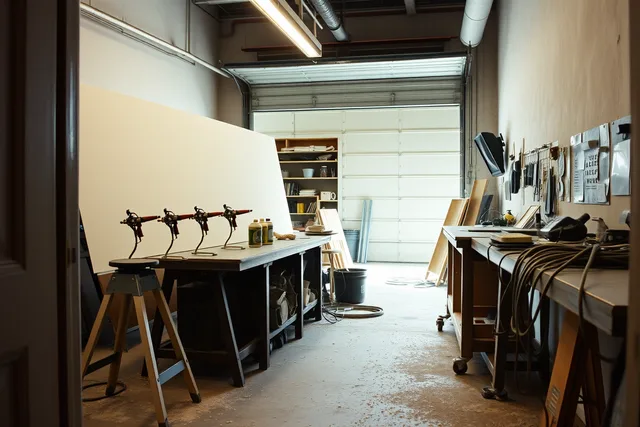
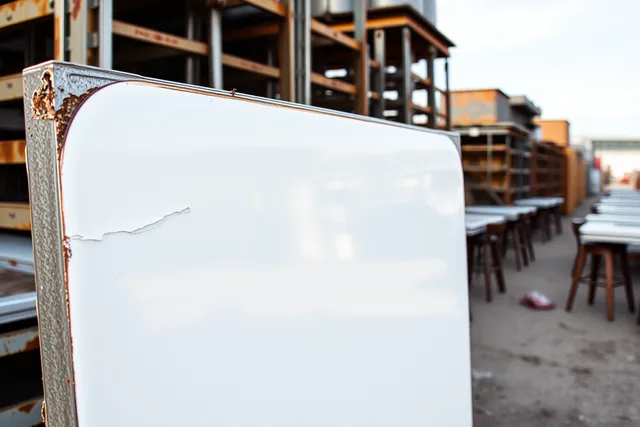
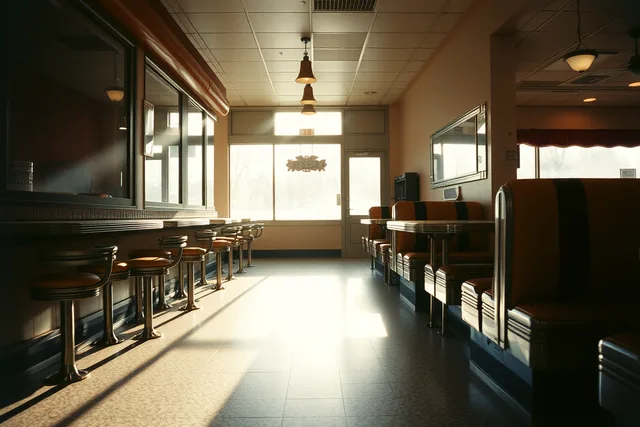
The image is visual context only. It does not establish the history, ownership, condition, or project outcome of any separate case study subject.
For a comparative image, save the following with the draft:
- Original source page and any stated date.
- Viewpoint or visible direction, if known.
- Caption text used in the article.
- Specific claim the image is allowed to support.
- Any access, rights, or identification limit.
Avoid before-and-after labels unless both images have reliable dates, comparable subjects, and a known relationship to the work being discussed. A before-and-after pair can be useful, but it should not become a shortcut around missing records.
Describe outcomes without inventing causation
Many case studies are published to show a lesson. That can tempt the writer to describe every later change as the result of the featured design choice. A case study should report the outcome that records establish and separate that from a proposed lesson.
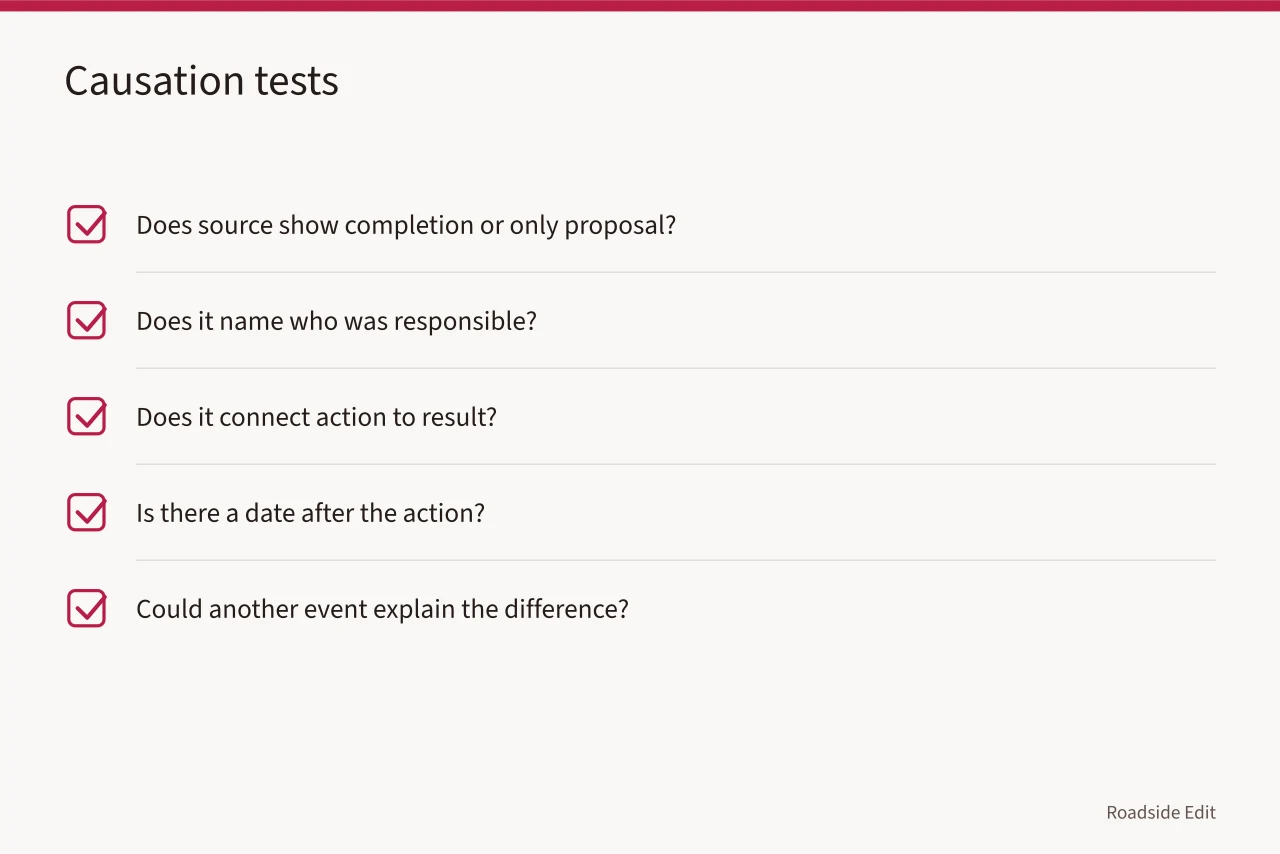
Use these tests:
- Does the source show that the project was completed, or only proposed?
- Does it identify the person or organization responsible for the change?
- Does it connect the stated action to the stated result?
- Is there a date after the action that supports the outcome?
- Could another event explain the difference?
If the answer is unknown, write the limitation. "The available records document a proposal and a later image, but they do not identify the work sequence." That sentence is more useful than a confident story built from coincidence.
Keep a correction path after publication
A case study is not finished when it goes live. A reader may provide a record that changes a date, identifies a feature, or contradicts a statement. The editorial team should preserve the original source note, evaluate the new material, and log the decision.
National Archives information-quality guidance says that after publication, when it detects an error, it corrects the information or adds a notice of the correction and tracks the change. Read NARA's information-quality guidelines. The policy covers NARA information products.
A publisher can adopt the same practice: correct the claim, keep a dated note of what changed, and avoid silently swapping one unsupported statement for another.
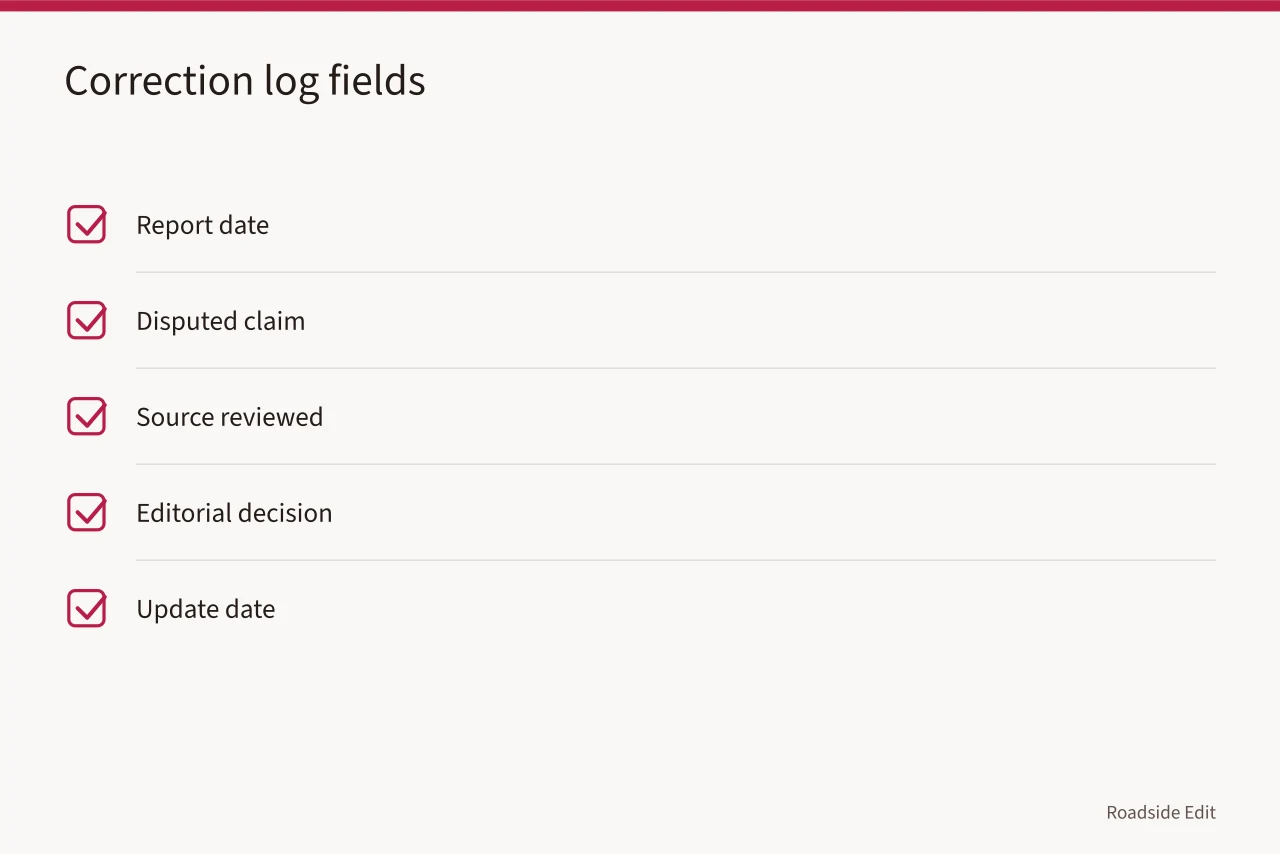
Keep a correction log with the report date, disputed claim, source reviewed, editorial decision, and update date. If the evidence is still unclear, say so. A transparent note is better than an unexplained deletion that leaves readers unsure what happened.
Common questions
Can a case study use a business interview as evidence?
Yes. Attribute the statement to the speaker and date. Treat it as evidence of what the person said, not automatic proof that a project was completed or effective.
Does a current photo prove when a design change happened?
No. It records a view on a stated date. A timeline needs evidence that connects the visible change to a date and, where relevant, to the project action.
What should happen when a reader sends conflicting evidence?
Review the material against the published claim, update the article if the evidence supports a correction, and record the decision in the correction log.