Guides
Part of How to plan vintage diner interior costs without faking an estimate
Before you publish vintage diner cost figures, run this scope checklist
Vintage diner cost planning checklist for 2027: qualify each figure by source, date, scope, comparison limits, disclosure, and publication decision.
This checklist helps an editor decide whether a diner-interior cost figure belongs in an article. It does not calculate a budget, create a work scope, or predict a price. Its purpose is narrower: qualify every number before it is published.
What to take away
- Admit a figure only when its source, date, and stated scope are clear.
- Label invoices, estimates, allocations, and recollections by record type.
- Compare records only when their scope and date make comparison meaningful.
- Keep missing exclusions visible instead of producing a false total.
- Attribute and disclose business-supplied information.
Use the four-decision test
Every proposed number should receive one decision: publish with context, publish as attributed background, hold for research, or exclude. The decision comes before writing the sentence. It prevents a number from staying in the outline just because it seems useful.
The Government Accountability Office's Cost Estimating and Assessment Guide describes documented methods for capital-program estimates. A diner feature is not an estimate. The relevant editorial discipline is documentation: retain the source, assumptions, and scope that let a reader understand what the figure means.
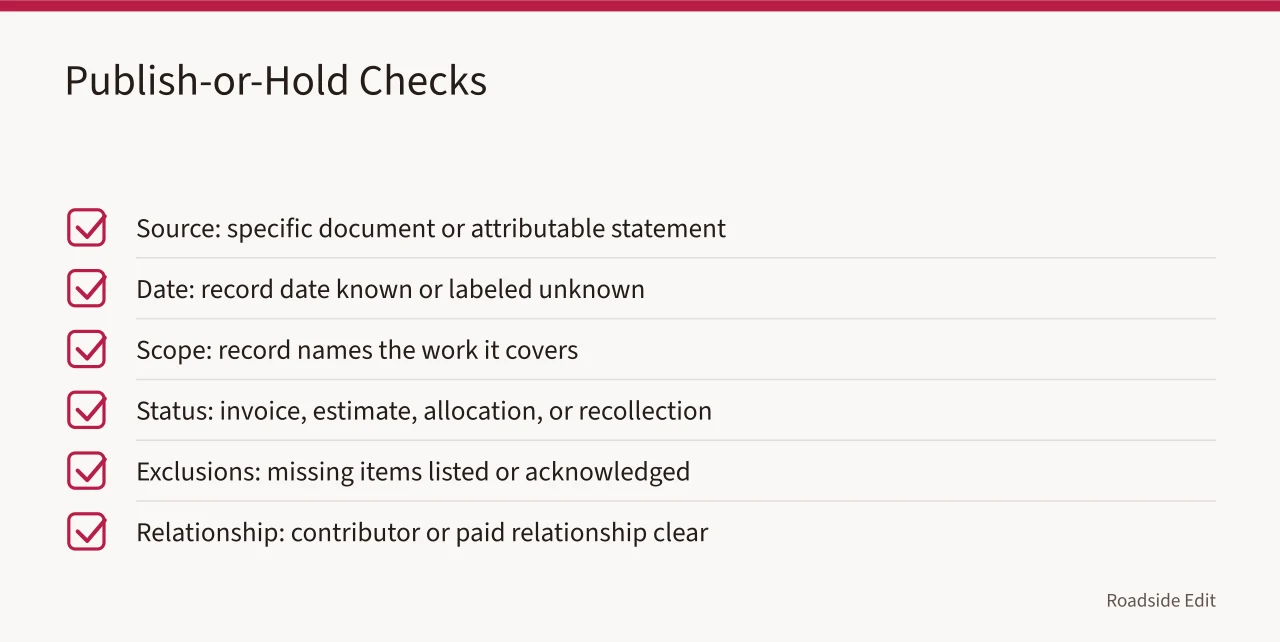
| Check | Publish only when | Otherwise |
|---|---|---|
| Source | A specific document or attributable statement exists | Hold or exclude |
| Date | The record date is known or clearly labeled unknown | Do not imply currency |
| Scope | The record names the work it covers | Do not create a general price |
| Status | Invoice, estimate, allocation, or recollection is identified | Do not guess finality |
| Exclusions | Missing items are listed or acknowledged | Avoid a total |
| Relationship | Contributor or paid relationship is clear | Add attribution and disclosure |
Test the figure out of context
Read the amount and one sentence around it without the rest of the article. Can a reader tell who supplied it, when, and what it covers? If not, the article needs more context or should not use the figure. A bare number often becomes a price promise even when the writer meant it as history.
The National Archives records-management overview supports the practical value of traceable records. For this checklist, save the direct page or document and the exact wording that describes the figure. A general reference to an archive, business, or report is not enough for a future editor to verify the claim.
The National Park Service Heritage Documentation Programs overview describes the use of drawings, photographs, and historical reports to document sites and structures. That does not create a cost record, but it reinforces the need to preserve the original source context before an article makes a claim about a particular place.
Do not compare mismatched records
An interior invoice from 2018, a 2025 provider estimate, and a historic news report may all include numbers. That does not make them comparable. They may describe different rooms, work phases, materials, access needs, taxes, or exclusions. Never add them into a total that no source reported.
Use this comparison question: would a reader understand why these two records are placed together? If not, report them separately or omit one. Historical context is valuable without becoming a shopping benchmark.
Keep promotion explicit
When a vendor, owner, or sponsor supplies an amount, identify the source and its relationship to the article. The Federal Trade Commission's endorsement guidance says material connections that could affect how readers evaluate an endorsement should be disclosed clearly and conspicuously. That label adds context; it does not verify a supplied price or outcome.
Record the publication decision
Close the checklist with a decision note that another editor can understand. State whether the figure was published, why it met the source test, and the exact limitation carried into the article. If the number was excluded, record what was missing: a date, scope, source, or clear relationship.
That record keeps a rejected figure from returning later as a detached fact. It also helps a contributor supply the one document that could make the information usable in a future update. Record the review date beside the final decision for clear later use.
Common questions
Does this checklist produce a budget?
No. It organizes reporting evidence and its limits. It does not calculate a property-specific amount.
What if a source has no date?
State that it is undated or exclude the figure if the missing date would cause readers to mistake it for current information.
Can a vendor supply a figure?
Yes, if it is attributed, dated, scoped, and labeled appropriately. Supplied information is not independent verification.