Guides
Part of Gas station preservation mistakes to avoid before you start work in 2027
Gas station preservation mistake prevention: a scope checklist before you publish
Gas station preservation mistakes checklist for 2027: verify site facts, protect historic features, label proposals, and keep public claims accurate.
A former gas station can be a small building with a large paper trail; owners, tenants, signs, and fuels may have changed many times. Additions and uses may have changed.
A good preservation checklist starts before a writer calls anything original, safe, restored, or open. Use it before commissioning photography, requesting access, drafting a grant story, or accepting outside copy for a site profile.
What to take away
- Confirm the address, building identity, and source date before publishing a site claim.
- Keep historical description, present condition, project proposal, and approval status in separate lanes.
- Treat former fuel use as context. Do not make an environmental conclusion without site-specific records.
- Protect original materials through documentation, not assumptions based on a photograph.
- Give readers a clear way to distinguish verified facts from a future plan.
Start with a property identity card
The most common early error is mixing facts from two places with similar names. A station may have a brand name, neighborhood nickname, an old road-number address, and a parcel record under a later owner.
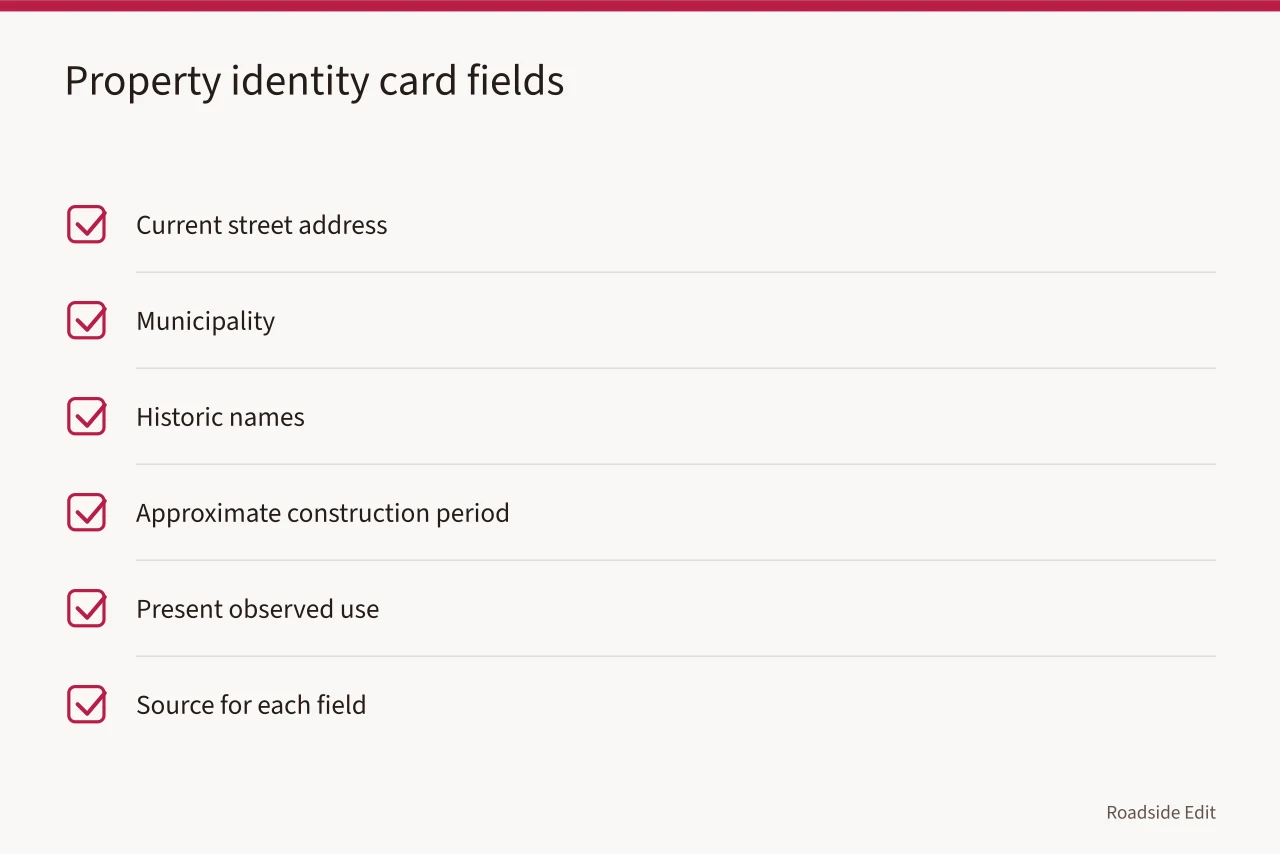
Do not quietly fill a missing field with a guess. If the construction year comes from an undated real-estate listing or a social post, describe it as unconfirmed or leave it out.
The National Archives guide to primary sources explains records created close to an event can offer direct evidence, while later summaries may need corroboration. A tax card, permit, newspaper clipping, or dated photograph can help, but each supports only the fact it documents.
| Field | Useful evidence | Do not infer |
|---|---|---|
| Site identity | Address, parcel map, historic survey | That a nearby station is the same property |
| Construction date | Permit, assessment, dated local record | An exact year from building style alone |
| Original features | Dated photograph, plans, field notes | That every visible feature is original |
| Current use | Current operator or owner statement | Hours, access, or services from an old listing |
| Project status | Public approval or dated project notice | That a proposed project is funded or complete |
Separate preservation choices from environmental claims
Former fuel dispensing is an important part of a station's story. It is not proof of contamination, cleanup, safety, or eligibility for a program. Those are separate questions that depend on property-specific records, agency decisions, and the scope of a qualified review.
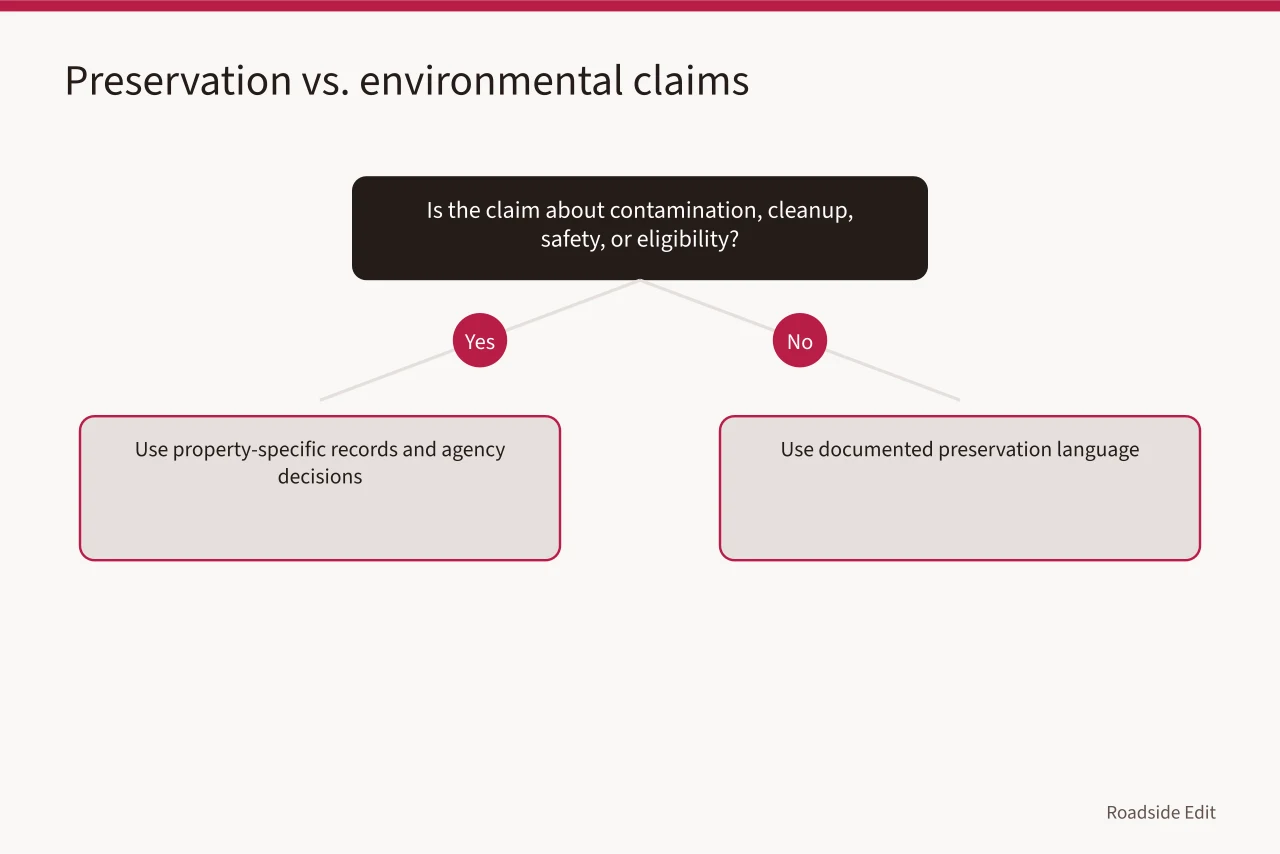
The EPA's Brownfields Program overview describes a program for properties whose reuse may be complicated by actual or potential contamination. That description supports careful wording about possible assessment or reuse work. It does not establish the condition of any individual station.
A checklist should therefore tell a writer to use phrases such as "former fuel use is documented" or "an assessment is proposed" only when a source supports them. It should never turn an ordinary exterior observation into a claim about soil, tanks, cleanup, or public safety.
Before a volunteer visit or photo assignment, set boundaries in writing. Do not enter closed buildings or climb canopies. Do not remove signs, fixtures, paint, or debris. Do not open utility covers.
A preservation story is not a reason to disturb a property. If a needed fact cannot be observed from an authorized area, mark it as a question for the owner or appropriate agency.
Document a proposed change before recommending it
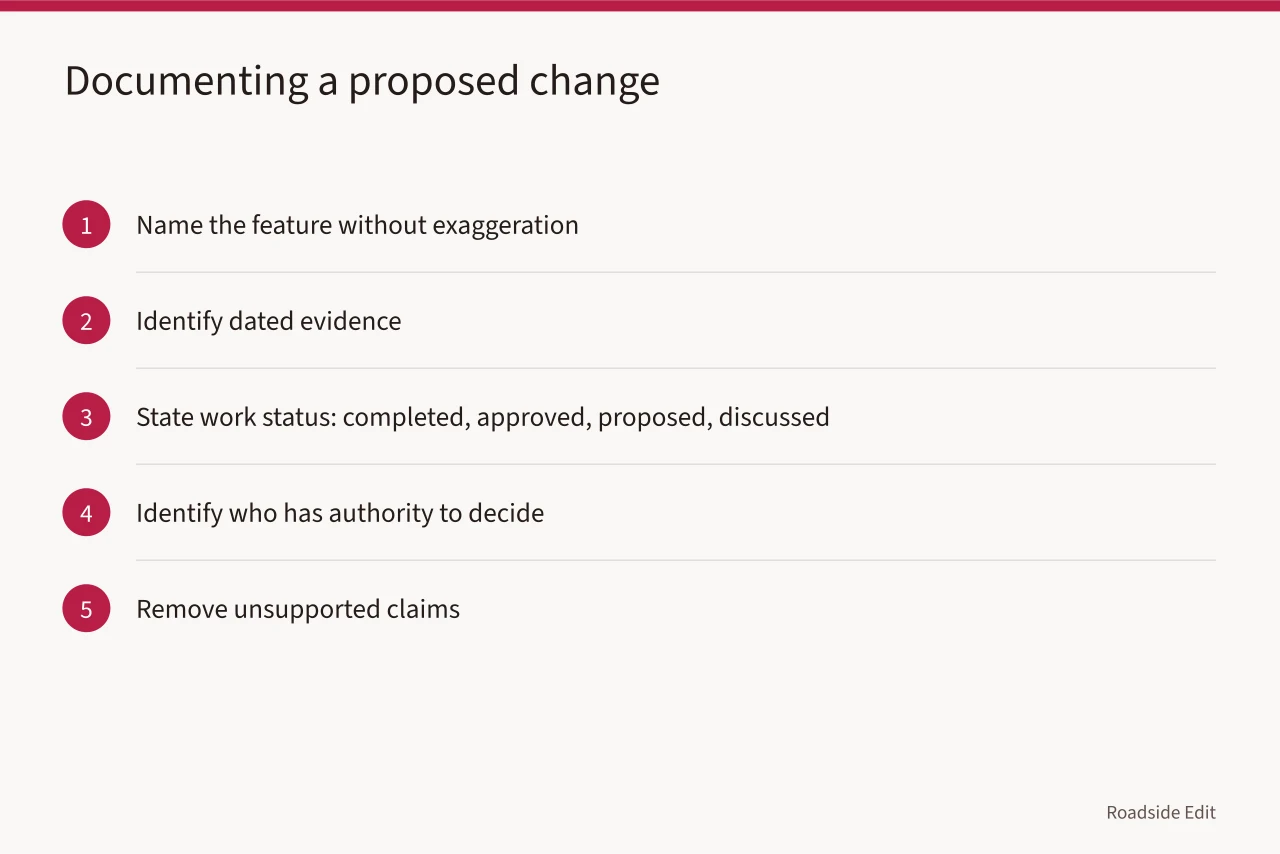
Public articles often jump from "this feature looks old" to "this feature should be saved." That shortcut can obscure material condition, code needs, ownership, and a project's actual authority. A more reliable approach is to document the feature, state the evidence, and label the recommendation as a recommendation.
The Secretary of the Interior's rehabilitation standards set broad principles for retaining historic character while allowing compatible change. They are useful context for explaining why an owner might study a canopy profile, tile wall, service bay, sign, or storefront before replacement. They do not replace a local review, a site inspection, or a written project scope.
Use this decision check for every statement about a physical change:
Keep sponsor, owner, and editorial copy distinct
Paid placements, donated services, and local business support can make useful documentation possible. They can also create confusion if supplied language is published as independent reporting. Keep a simple source log that records who provided each claim, when it was received, and whether the statement was independently confirmed.
The FTC's endorsement guidance addresses clear disclosure when material connections may affect an endorsement. For a preservation publisher, label plainly.
If a business paid for, supplied, or materially influenced a placement, disclose that relationship where readers can see it. Do not call a sponsored description a review or let promotional language make claims records do not support.
Final pre-publication review
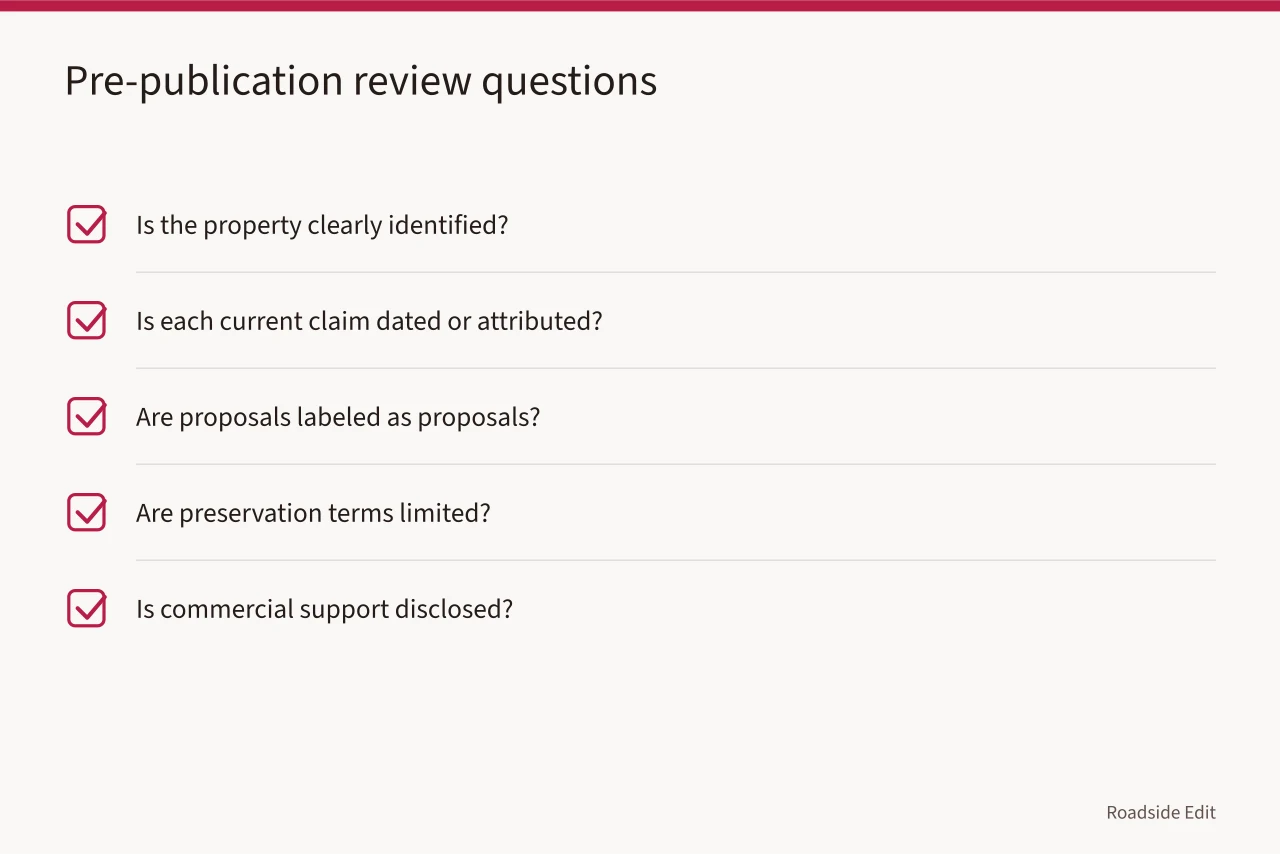
Read the article once as a skeptical local reader. Then read it once as the owner of the property. The first pass finds unsupported certainty. The second finds statements that could be mistaken for permission, a safety conclusion, or a promise of funding. Correct the record before publication, not after a reader points it out.
| Question | Publish only if the answer is yes |
|---|
Keep a correction contact and review date in the publishing record. If new documentation conflicts with the article, update the article and note what changed. A quiet correction is better than leaving a polished but inaccurate claim online.
The photograph is historical context only. It does not establish another station's condition, treatment, ownership, or operating status.
Common questions
Can this checklist decide whether a station is historic?
No. It organizes the evidence needed for a responsible discussion. Formal significance, designation, and review decisions belong to the appropriate authority and process.
Can an old photo prove that a feature survives today?
No. It can document what was visible when the photograph was made. Confirm present condition through authorized, current observation or a reliable current record.
What should an article say when a project has not been approved?
Describe it as a proposal, identify the proposal's source and date, and avoid a completion date, opening claim, or funding statement unless it has been confirmed.