Guides
Gas station preservation mistakes to avoid before you start work in 2027
Avoid 2027 gas station preservation mistakes by separating site evidence, historic features, reuse goals, environmental questions, and verified public claims.
The most expensive gas station preservation mistakes often begin before a repair, lease, event, or article is published. Someone assumes a former station is clean because it looks tidy, assumes a feature is unimportant because it is worn, announces a reuse before the project record exists, or presents a sponsor statement as verified fact.
A better process is slower at the beginning and much clearer later. It identifies what the property is, what is known, what is proposed, and what must be reviewed by the person responsible for that decision.
What to take away
- Do not infer environmental conditions, safety, or approvals from appearance, age, or a single document.
- Record character-defining features before selecting a treatment or a new use.
- Treat repair, replacement, cleanup, and reuse as separate decisions.
- Keep sponsor copy, owner statements, historical material, and verified records distinct.
- Stop a casual task when it becomes a disturbance, access, or project-scope question.
Mistake 1: Treating a former station like an ordinary empty storefront
A former gas station carries a history of fuel storage, vehicle repair, ownership changes, and later uses. It may also have a distinctive building form, canopy, exterior material, sign, or pump-island setting that matters to the site story.
Neither fact cancels the other. The mistake is treating the property as a simple vacant retail shell before its evidence is gathered.
Start with a records inventory: site history, prior reports, dated photographs, and drawings, and note the source date and what it covers. Add permits, ownership-provided documents, and the proposed use.
A historic photograph can show an earlier appearance but does not establish current condition. A public database can identify a neighborhood context but does not tell an editor whether a property is open, clean, safe, or approved for new use.
Mistake 2: Assuming visible condition answers an environmental question
Do not describe a property as uncontaminated, remediated, or ready for redevelopment without a suitable, current source for that exact claim. A former station may be a petroleum brownfield, may need an assessment, may have a completed cleanup record, or may have a different history entirely. Those possibilities cannot be sorted from a curbside observation or an old promotional article.
EPA's ecological revitalization checklist for abandoned gas stations frames reuse questions in relation to site context, soil, stormwater, and intended benefits. It does not diagnose a named property. The editorial lesson is narrow: acknowledge the former use, identify the appropriate source of local information, and avoid making a conclusion that the record does not support.
| Statement | Why it fails | Better wording |
|---|---|---|
| "The site is clean." | No property-specific evidence is identified | "The project is seeking current site information before reuse planning." |
| "The tanks are gone." | A photo or old article may not establish current conditions | "A dated record describes earlier tank work; current status was not verified for this article." |
| "The station is ready for business." | Reuse involves more than an attractive exterior | "A new business use has been proposed; approval and opening details should be confirmed by the operator." |
Mistake 3: Replacing a visible feature because it looks old
Age is not a defect. A worn door, panel, window, light, canopy edge, or sign may contribute to a station's historic character. It may also need repair or replacement. The mistake is deciding which before the feature, its condition evidence, and its role in the building have been considered.
Build a feature record before discussing a treatment, and photograph the feature from a safe, authorized position. Record its location, material if documented, visible condition, historical evidence, and why a change is considered, then state what is unknown.
This does not make an editor a preservation professional. It keeps an article from creating a replacement-first storyline that pressures a project into an unsupported decision.
Mistake 4: Calling every project a restoration
"Restoration" has a specific preservation meaning. It is not a catchy substitute for painting, cleaning, renovating, or adapting a property for a new use. A station can be rehabilitated for a contemporary tenant, preserved in its existing condition, restored to a documented period, or changed in another way. The public wording should match the documented approach.
Avoid attaching a grand treatment label to a property because a sponsor, realtor, or writer prefers the sound of it. Say what the project team has actually described: a proposed reuse, an exterior repair, a historical research effort, or a rehabilitation plan. If the project has no approved treatment record, do not invent one.
Mistake 5: Letting a cleanup question disappear from a reuse story
Reuse planning and environmental planning are related but not interchangeable. A project may have a compelling vision for a cafe, office, gallery, community room, or service business, yet still need the appropriate site information. Conversely, a site may have a completed cleanup step but still need a viable use, approvals, funding, and building plan.
Keep the work streams separate in the article and in the project file:
- historic and architectural evidence;
- current property and environmental information;
- proposed use and community needs;
- approval, funding, and operating questions; and
- public statements that are safe to publish now.
This structure helps a potential paid-placement customer too. A business can submit a current description of its service or event. It cannot purchase a claim that a project is complete, compliant, or free of a site issue.
Mistake 6: Starting work without a boundary
A photographer, volunteer, writer, or local history group can make a valuable contribution without entering a closed building, moving materials, climbing a canopy, opening equipment, or disturbing an unknown feature. The mistake is allowing curiosity or a content deadline to turn a documentation activity into work that needs a different scope and responsible review.
Set a clear activity boundary and state authorized areas, task, lead contact, stop-work triggers, and where observations will be stored.
If access depends on crossing a barrier, climbing, entering an unapproved space, or disturbing material, stop and refer the question. A factual handoff is more useful than a risky attempt to get a better image or stronger story.
Mistake 7: Copying a solution from another station
An attractive case study can demonstrate possibility, not a universal method. Buildings differ in materials, form, history, use, location, current condition, ownership, and local rules. A solution that was appropriate for one town, project team, or funding structure may be wrong or unavailable elsewhere.
When describing another property, state what it proves and what it does not prove.
For example, a case may show that a former station was adaptively reused, not that every former station can be used the same way. It may demonstrate a documented treatment choice, not a price or performance guarantee.
Mistake 8: Publishing claims that outlive their evidence
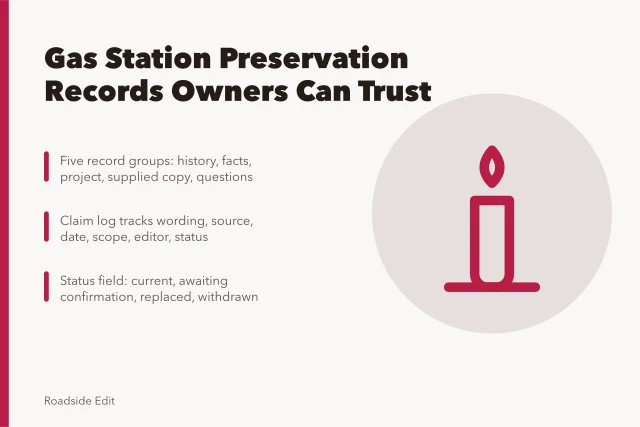
Operations change. A site can be closed, then under review, then open for a defined event or business use. An old listing may continue to say "open," "accessible," or "restored" long after the underlying facts changed. Create a claim log with the exact public sentence, source, date checked, scope, and correction owner.
For a paid placement, keep supplied copy marked as supplied. Attribute the statement and date it. Payment should never remove a supported correction, turn a plan into an approval, or convert a historical image into a current condition report.
The National Park Service's preservation treatment standards distinguish preservation, rehabilitation, restoration, and reconstruction. They support avoiding a catchall use of "restoration" when a public source describes a different scope. The standards do not select a treatment for a property without its own evidence, project aims, and responsible review.
Source discipline also reduces smaller but persistent errors. The National Archives' records-management overview describes keeping records organized so they remain accessible. A practical editorial file should preserve the exact source, source date, claim, and limitation. That makes it possible to revise one incorrect sentence without pretending that a historical image or old announcement remains a current site record.
If a business pays for a profile, disclosure should be plain. The Federal Trade Commission's endorsement guidance addresses material connections that could influence a reader's evaluation of an endorsement. A disclosure does not make supplied claims true; it tells readers how to weigh them while the publication keeps independent claims properly sourced.
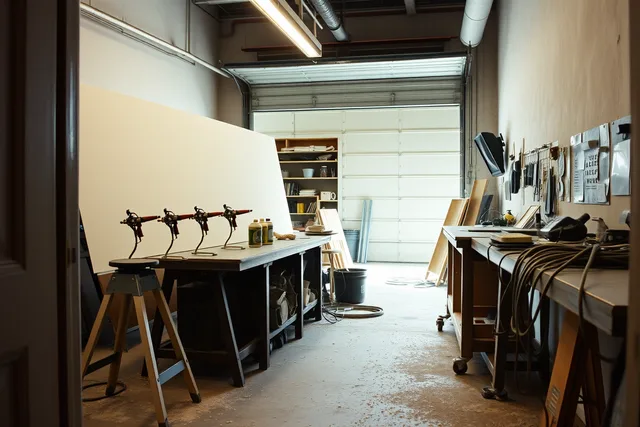
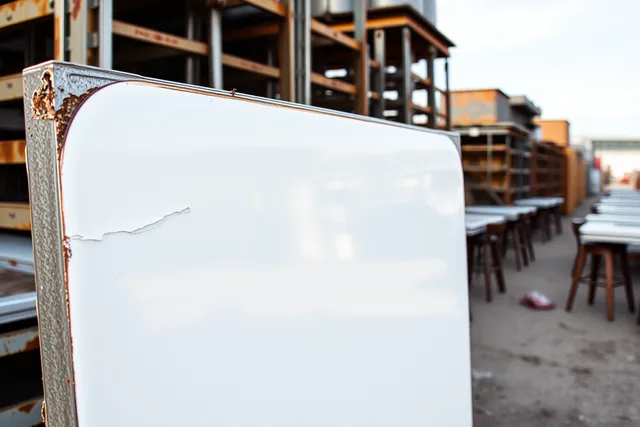
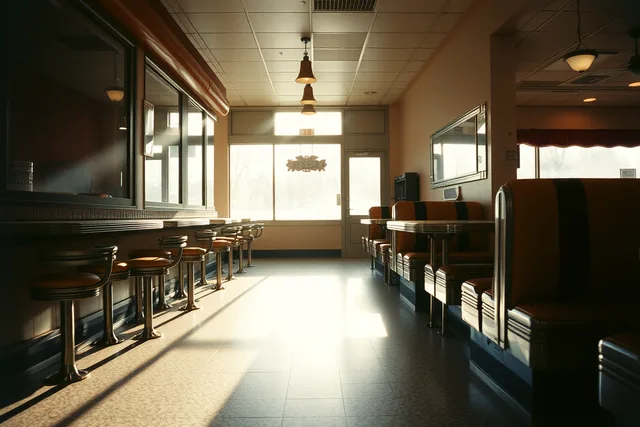
The image is illustrative and does not document another property's condition, environmental status, treatment, or public access.
A simple prevention workflow
Before publishing or beginning a small project step, use this sequence:
- Define the property, proposed use, activity boundary, and responsible contact.
- Collect records and label the date, source, and limits of every statement.
- Identify features that need a project-specific review before any change is described.
- Keep environmental, preservation, operating, and marketing questions in separate fields.
- Publish only the facts supported today, then set a review date for information that can change.
At the end of the review, ask one final question: could a reader mistake this sentence for a professional conclusion about a real property? If the answer is yes, narrow the wording, identify the source, or remove the claim until the responsible party can confirm it.
Common questions
Is an old gas station automatically a brownfield?
No. A former use alone does not determine current conditions. Use appropriate, property-specific information before making a claim.
Does preserving a feature mean it can never be changed?
No. It means the feature, its significance, condition, and proposed work should be considered before a conclusion is published.
Can a sponsor write the project description?
A sponsor can supply text, but the publisher should attribute it, date it, and correct it when supported information changes.
Can a volunteer remove a loose object to improve a photograph?
Not unless that action is within an authorized activity scope. Do not disturb a property to create content.
In this guide
- Gas station preservation mistake prevention: a scope checklist before you publishGas station preservation mistakes checklist for 2027: verify site facts, protect historic features, label proposals, and keep public claims accurate.
- Gas station preservation: questions to ask before you publish in 2027Gas station preservation questions for 2027 separate verified history, present conditions, proposed reuse, records, and sponsored copy before publication.
- How to build 2027 gas station preservation mistake records owners can trustBuild 2027 gas station preservation mistake records that separate current facts, history, supplied copy, open questions, corrections, and review dates.