Guides
Part of How to plan historic motel restoration costs for 2027 without guessing a price
How to keep historic motel restoration cost records clear through 2027
Historic motel restoration cost records for 2027 explain how to log figures, drawings, assumptions, dates, limits, and corrections without losing context.
An article needs a cost record that explains where a figure came from and what it means. The record should preserve the original wording, date, scope, and limitation so a later update does not strip the context from the number.
What to take away
- Keep an original source beside every cost figure.
- Record drawings, schedules, and estimate stage where available.
- Preserve assumptions and exclusions.
- Add dated corrections rather than silently changing a number.
Use a simple record layout
National Archives records guidance identifies early design records that can include conceptual drawings, order-of-magnitude estimates, and schedules, followed by more developed planning and design records. Review the National Archives project-records guidance. It is a federal records schedule, not a motel-budget rule. It offers a useful way to distinguish early figures from more developed documentation.
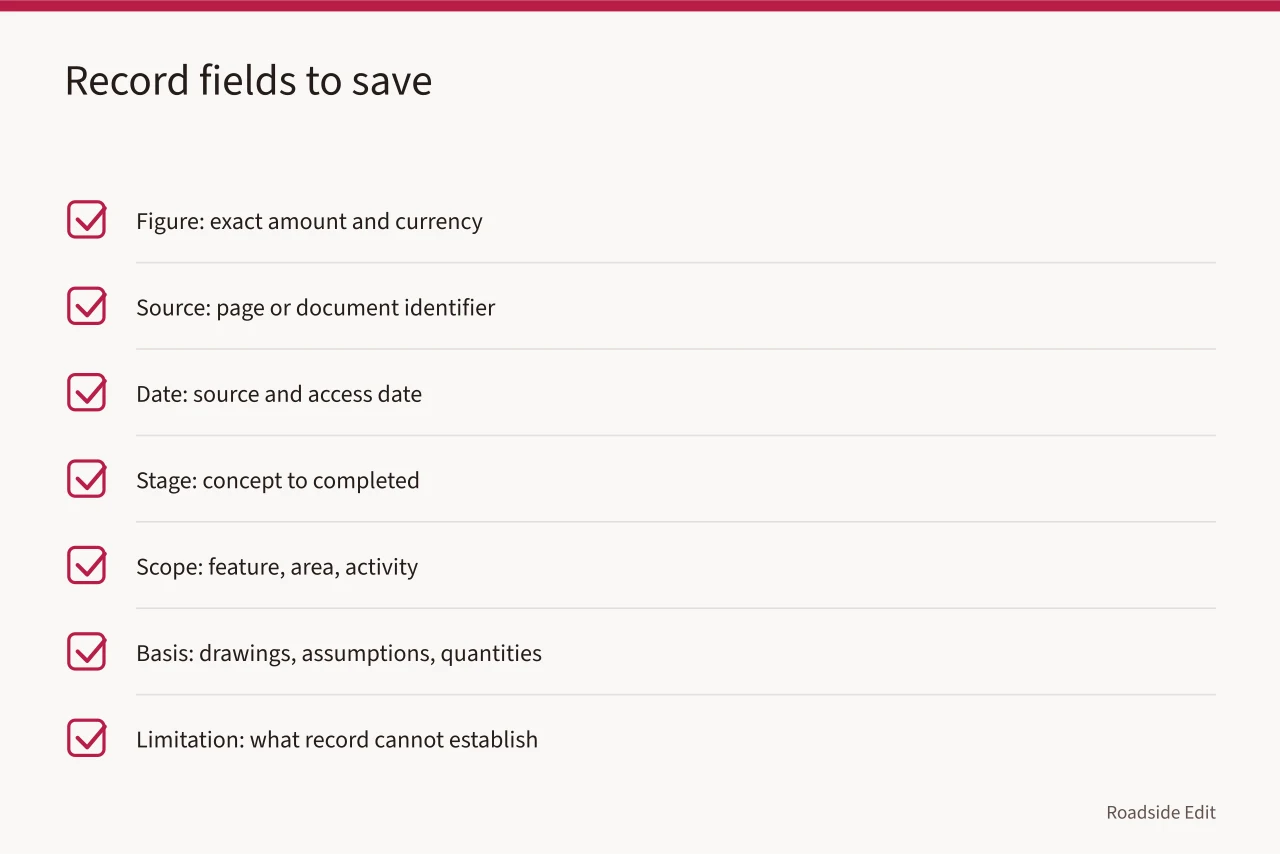
| Record field | What to save |
|---|---|
| Figure | Exact amount and currency as stated |
| Source | Specific page, record, or document identifier |
| Date | Source date and article access date |
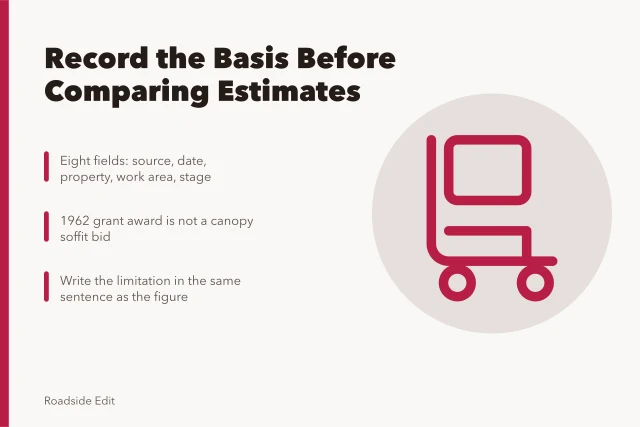
| Stage | Concept, planning, bid, award, completed, or unknown |
| Scope | Feature, property area, or activity described |
| Basis | Drawings, assumptions, quantities, or source note if supplied |
| Limitation | What the record cannot establish |
| Update | Date and reason for a later change |
Preserve the correction trail
If a later document revises a figure, keep both records. Explain whether the change reflects a new scope, a different stage, a correction, or a separate project. Do not overwrite a historical figure to make it appear current.
Use a short status field for each figure: published, checked, incomplete, superseded, removed. It is not a guarantee of accuracy.
It tells the next editor whether the source was reviewed, whether a later source changed the claim, and whether the number should stay out of publication until more context is reliably found and clearly documented in detail for later use.
Give each record a source role
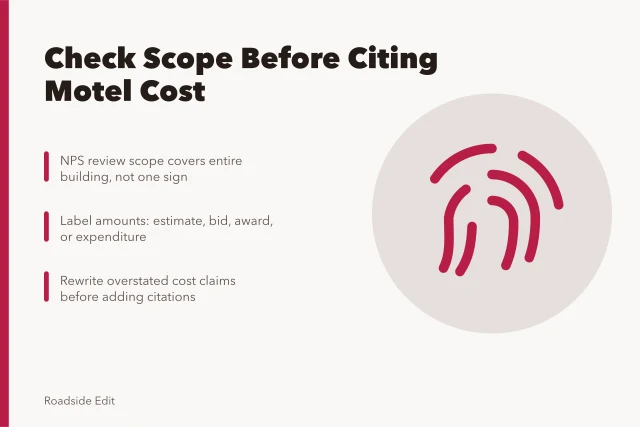
The NPS estimate definitions describe different estimate uses and the information that can stand behind them. Review the NPS estimate definitions. Add a source-role field so a later editor can see whether an item is an estimate, bid, award, invoice, completed-work record, or general context. That label should come from the source, not from a writer's guess.
The U.S. General Services Administration explains that estimates are managed as requirements and scope are clarified. Read GSA's cost-management guidance. A correction log should therefore record what changed. It should not merely replace an earlier number with a later one.
| If a new record says | Add this correction note |
|---|---|
| A broader work scope | The earlier amount covered a narrower stated scope |
| A later estimate date | The figures are separate dated records |
| A grant award | The award is a funding record, not a confirmed total |
| Work was completed | The source describes past work; current cost is not established |
Protect the editorial record from drift
NPS documentation standards call for reliable sources and stated limits that make verification possible. See the NPS documentation standard. Keep the source title, target URL, date, scope, and limitation with each figure. If a source cannot confirm a cost claim, leave the claim out of the published article while retaining the item in a clearly marked research log.
Review changes before publication
Compare the new record with the sentence already published. Correct only the statement the new source affects. Do not rewrite nearby claims that have different sources. This practice leaves a clear trail for future readers and prevents one new cost document from changing the historical account of the property.
Use one row per figure, even when a document has several amounts. Separate rows let the editor record each number's scope and date without a combined total.
Before publishing a revised amount, check if it refers to the same feature and stage as the earlier entry. If not, keep both records and explain they cover different work or project points.
Common questions
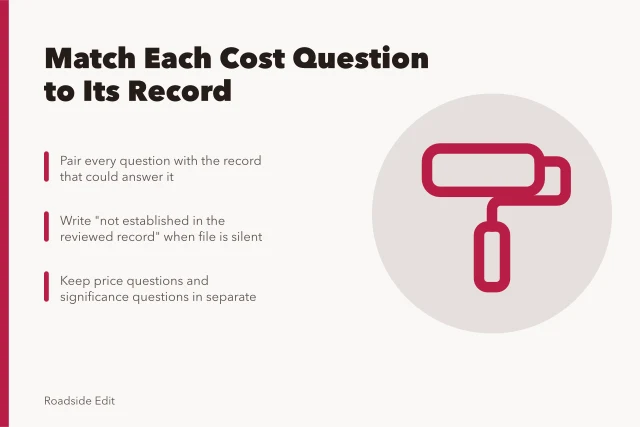
Should a record include an unsupported estimate?
It may be logged as an unverified lead, but the article should not publish it as a factual cost claim.
Why retain source wording?
Words such as "proposed," "award," and "completed" change the meaning of a figure. The original wording helps prevent an inaccurate paraphrase.
Can a media credit prove a budget fact?
No. Image credit identifies the media source. A cost claim needs the document or record that actually states the amount and scope.