Guides
Part of Modern Roadside Design Maintenance Plan 2027
Owner records for modern roadside design: how to keep a maintenance plan current
Modern roadside design records guide for 2027 helps owners retain inspection notes, photos, approvals, work history, and change decisions in one usable file.
The maintenance record should help the next person make sense of the feature without relying on memory. It is not an archive of every email. It is the smallest complete set of facts needed to understand what exists, what happened, and who made the next decision.
What to take away
- Keep original records separate from later edits.
- Store inspection, work, approval, and photo history together.
- Use dates and locations in every filename or log entry.
- Document a change after it happens, not months later.
Build the basic folder
Create folders for baseline records, inspections, routine work, condition reports, and approvals, and add a simple index that identifies the maintenance plan's current version and accountable owner. Add warranties, photos, and annual review.
GSA calls asset management systems a framework using policies, processes, inventory controls, and records to track assets and performance. Its asset management systems overview applies to federal personal property but supports the practical value of clear asset identification and usable records.
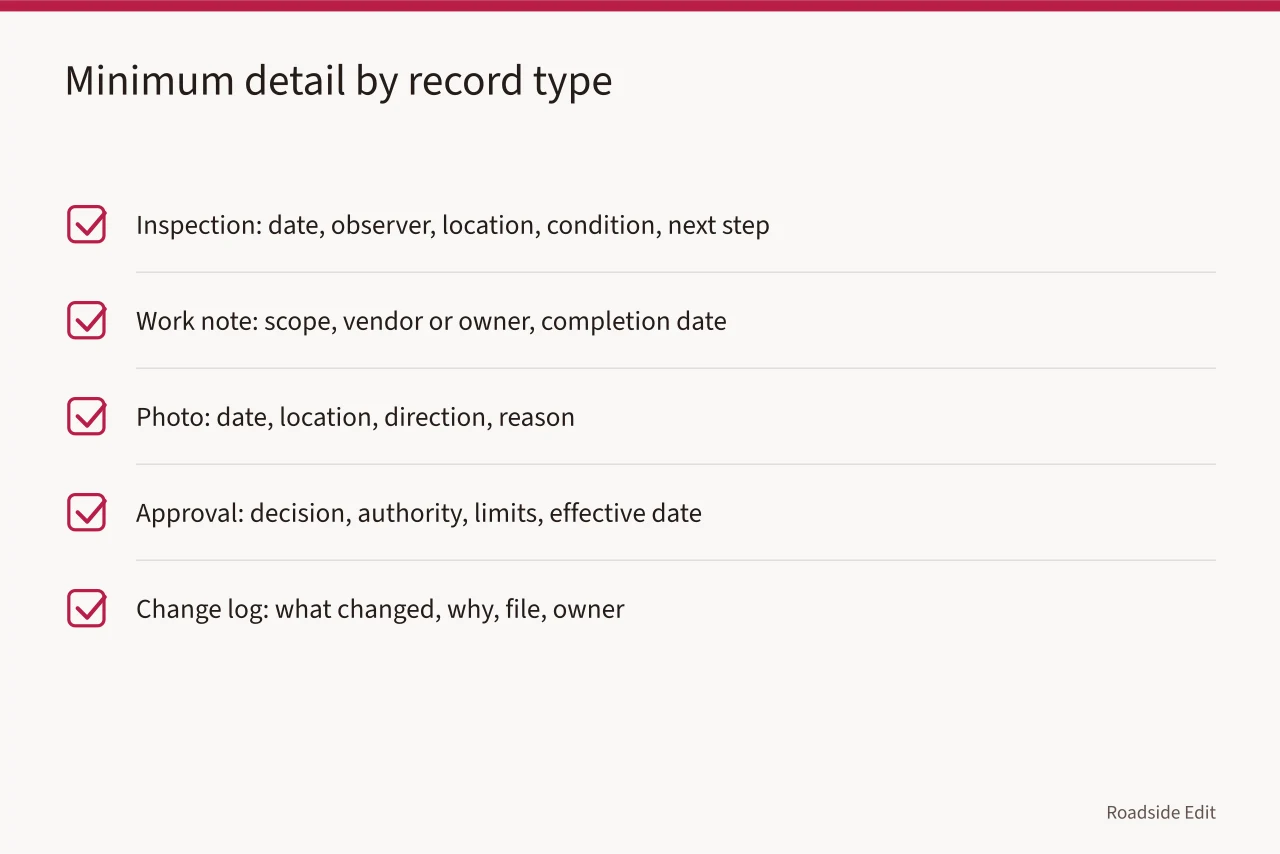
| Record | Minimum detail |
|---|---|
| Inspection | Date, observer, location, condition, next step |
| Work note | Scope performed, vendor or owner, completion date |
| Photo | Date, location, direction, reason for photo |
| Approval | Decision, authority, limits, effective date |
| Change log | What changed, why, supporting file, owner |
Use a dependable naming system
Begin files with the date in year-month-day order, then the asset name and record type. For example: 2030-08-29_south-entry-sign_inspection.jpg. A predictable system matters more than a sophisticated platform. Do not overwrite an original image or approval. Create a new version and leave a note explaining the revision.
Make records useful at handoff
When an owner, manager, or vendor changes, provide the current plan, index, open issue list, last inspection, warranties, current contacts, and the location of prior records. A handoff is complete only when the recipient can find the source files and understand which questions remain open.
Restrict access to information that could expose private contacts, security details, or unnecessary personal information. A public article can describe the recordkeeping method without publishing an address, access route, account number, or unredacted work order. The working file should be detailed enough for maintenance, while any public version should contain only what readers need to understand the process.
Preserve the evidence boundary
Every record should say what it can support. An inspection note can document what a person observed at a time and place. A work order can state what was requested. An approval can show who authorized a step. None of those records by itself proves a technical cause, a safety conclusion, or the future performance of a feature.
NPS documentation standards call for reliable source material with limitations clearly stated so the information can be independently checked. Read the NPS documentation standards. A small roadside maintenance file does not need to meet formal heritage-documentation levels. It benefits from the same basic habit: distinguish a direct observation, an owner's summary, a provider statement, and an unresolved question.
| File type | What it can establish | What needs another source |
|---|---|---|
| Dated image | Visible appearance from one view | Cause, extent, or hidden condition |
| Inspection log | Observed condition and follow-up | Technical diagnosis or approval |
| Provider proposal | Stated scope and terms | Completed work or verified result |
| Approval note | Decision and stated limits | Actual field completion |
Build a useful history, not a pile of files
The index should show how records relate over time. Link each inspection to any open item, later approval, work note, and new condition record. A one-line history entry can be enough: "2030-08-29, observed fading at north panel, referred for review, no work authorized." This gives the next person a path through the file without rewriting history.
NPS says historic structure reports can provide maintenance procedures and record research, investigation, and physical work for future users. See the NPS Historic Structure Reports overview.
The source does not require a report for every roadside asset. It makes the broader point that work history is valuable when a future decision must account for what was already found or done.
When facts change, add a dated correction rather than editing an older entry invisibly. State what was corrected, the supporting record, and whether public copy based on that earlier record needs revision.
Keep the plan current and access appropriate
At an annual review, compare the active maintenance plan with the actual records from the year. Remove obsolete contacts, update the owner role, confirm the current asset labels, and list questions that need a different type of review. Keep sensitive material inside the working file; do not include it in a public case study, listicle, or paid placement.
NPS's Historic Property Project Documentation overview describes a consistent approach for collecting and integrating cultural-resource information into project planning and development. Read the NPS HPPD overview. It is a federal tool, not a private folder template. It supports the value of treating documentation as a living project resource instead of a one-time archive.
Common questions
How long should maintenance records be kept?
Follow applicable contracts, owner policy, and local requirements. Keep records that explain ongoing condition, approvals, and warranty obligations.
Are phone photos enough?
They can be useful evidence when paired with date, location, purpose, and a related observation note.
What should never be overwritten?
Original photos, approvals, contracts, and prior plan versions should remain available with dated replacements or amendments.