Guides
Part of Modern Roadside Design Maintenance Plan 2027
How a modern roadside design maintenance plan scope checklist works
Modern roadside design care checklist for 2027 helps managers document condition, assign routine tasks, retain evidence, and know when to pause work.
A care checklist works when it makes observation easier, not when it pretends to diagnose every problem. Use this one for a small roadside feature after defining the owner, boundary, and approved work. It is not a permit, work order, traffic-control plan, or instruction to handle hazards.
What to take away
- Record observations before choosing a remedy.
- Use one accountable owner for each recurring task.
- Keep routine care separate from repair or redesign.
- Retain date, location, and photo records in one folder.
Set up the sheet
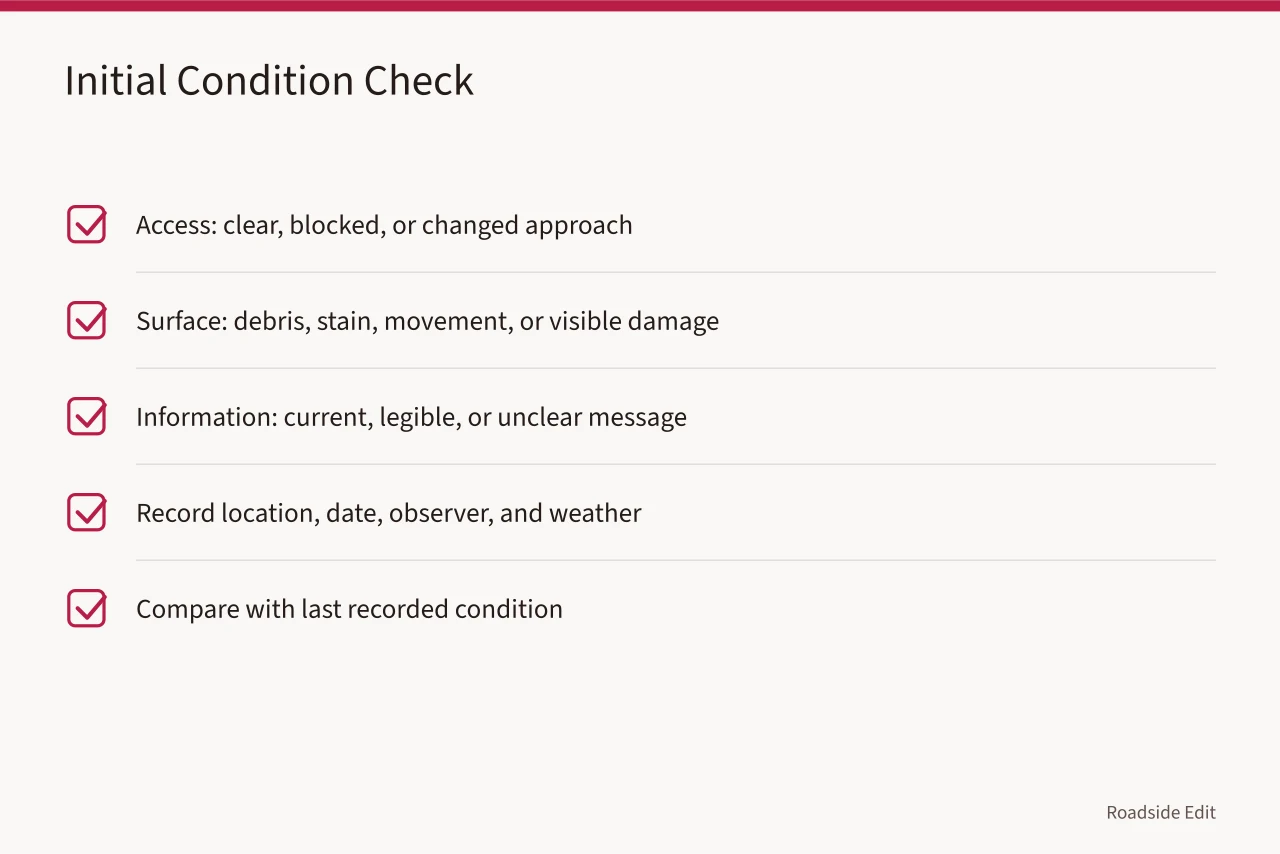
Start every review with location, date, observer, and weather if relevant. State the feature's normal purpose and compare it with its last recorded condition.
Environmental Protection Agency says written maintenance plans can identify routine activities, schedules, responsible parties, inspection requirements, and tracking mechanisms. Its operations and maintenance guidance concerns green infrastructure, but those elements help a roadside care file.
Do not copy another property's calendar to set inspection frequency; NPS guidance on maintaining historic exteriors says frequency varies with climate, rainfall, building conditions, and use patterns. Significant weather events can warrant inspection. Read NPS Preservation Brief 47.
The brief addresses historic buildings, not every roadside element, and supports the habit of recording why a site uses a particular review interval.
| Check | Record a direct observation | Next step |
|---|---|---|
| Access | Clear, blocked, or changed approach | Notify owner if access changed |
| Surface | Debris, stain, movement, or visible damage | Use approved routine scope only |
| Information | Current, legible, or unclear message | Route content changes for approval |
| Planting or edge | Bare soil, debris, erosion, dead material | Document and assign review |
| Surroundings | Runoff, nearby work, or new obstruction | Add event note and photos |
Use a clear stop line
The checklist should tell a worker when not to continue. Stop and report conditions involving traffic exposure, loose structural parts, suspected utilities, exposed electrical components, persistent runoff, public-right-of-way work, or anything outside the approved scope. A concise record is enough: what was seen, where, when, and who was notified.
Close the review
File the completed checklist with any photos, vendor note, and follow-up request. A useful closeout says whether routine work was completed, deferred, or escalated. It does not call an issue resolved until the accountable owner has recorded the result.
Keep the checklist short enough to finish at the location. If a field is never used, remove it during the annual review. If one condition occurs repeatedly, add a precise observation field rather than asking people to write a broad narrative every time. This produces records that can be compared across visits without pretending they establish a technical conclusion.
Use a repeatable observation route
Walk the same route when conditions allow. Begin at a known point, note the direction of travel, and use the same feature labels from the previous inspection.
This helps a later reviewer tell a newly observed condition from a change in how the site was described. For a small feature, a simple site sketch or numbered photo map may suffice.
NPS documentation guidance says records should be prepared from reliable sources with limitations stated so the information can be independently checked. Read the NPS documentation standards. A routine care log is not HABS or HAER documentation. The useful principle is to state what the observer could see, what could not be seen, and why a note may be incomplete.
| Observation result | Record | Do not infer |
|---|---|---|
| No visible change | Date, area, and viewing conditions | That hidden systems are sound |
| Possible change | Location, photo, and specific symptom | Cause, repair method, or severity |
| Repeated condition | Prior record and recurrence date | That a routine task will fix it |
| Hazard or out-of-scope condition | Stop point and notification | That work was authorized |
Link routine care to a current plan
The checklist should point to the current maintenance plan, approved routine tasks, and escalation contacts. It should not become a substitute for those documents. If a new condition changes the plan, record the change first and update the checklist afterward.
NPS says historic structure reports can provide maintenance information and record research, investigation, and physical work for future users. See the NPS Historic Structure Reports overview.
The source does not require a roadside owner to commission a report. It explains why a care program benefits from retaining past findings and work history instead of starting from scratch at every visit.
Common questions
What makes a maintenance checklist useful?
It has specific observations, a named owner, a clear stop line, and a place to store the result.
Should the checklist include repair instructions?
Only approved routine tasks. Conditions beyond the scope should be documented and escalated.
Do photographs replace written notes?
No. A photo benefits from a date, location, observation, and reason it was taken.