Guides
Part of How to build a 2027 gas station preservation maintenance plan that holds up
Gas station preservation maintenance plan: how to build a 2027 visit record
Gas station preservation care checklist for 2027: record visible conditions, repeat photos, flag moisture, and route repair questions for review.
A gas station preservation maintenance plan starts with a clear record of what a person can see. This checklist is for a site steward, owner, volunteer, or editor documenting a historic service station without pretending to diagnose it.
It does not authorize entry, testing, repair work, or a conclusion about safety. Its job is simpler: create a useful record, preserve context for later review, and identify questions that need a qualified answer.
What to take away
- Record visible conditions, the date, and the viewpoint before drawing a conclusion.
- Repeat the same broad photographs when access and safety allow it.
- Treat moisture, open joints, and changed surfaces as observations that need follow-up, not as diagnoses.
- Keep original images and note who supplied them.
- Send repair, environmental, access, and structural questions to the appropriate professional or authority.
Set up the visit record
Open a new visit record before walking the property. Include the date, the observer's name, the time, weather, access limits, and any earlier observation that needs another look. A checklist works only when someone later understands the circumstances behind the note. "East wall viewed from public sidewalk after rain" is much better than "wall checked."
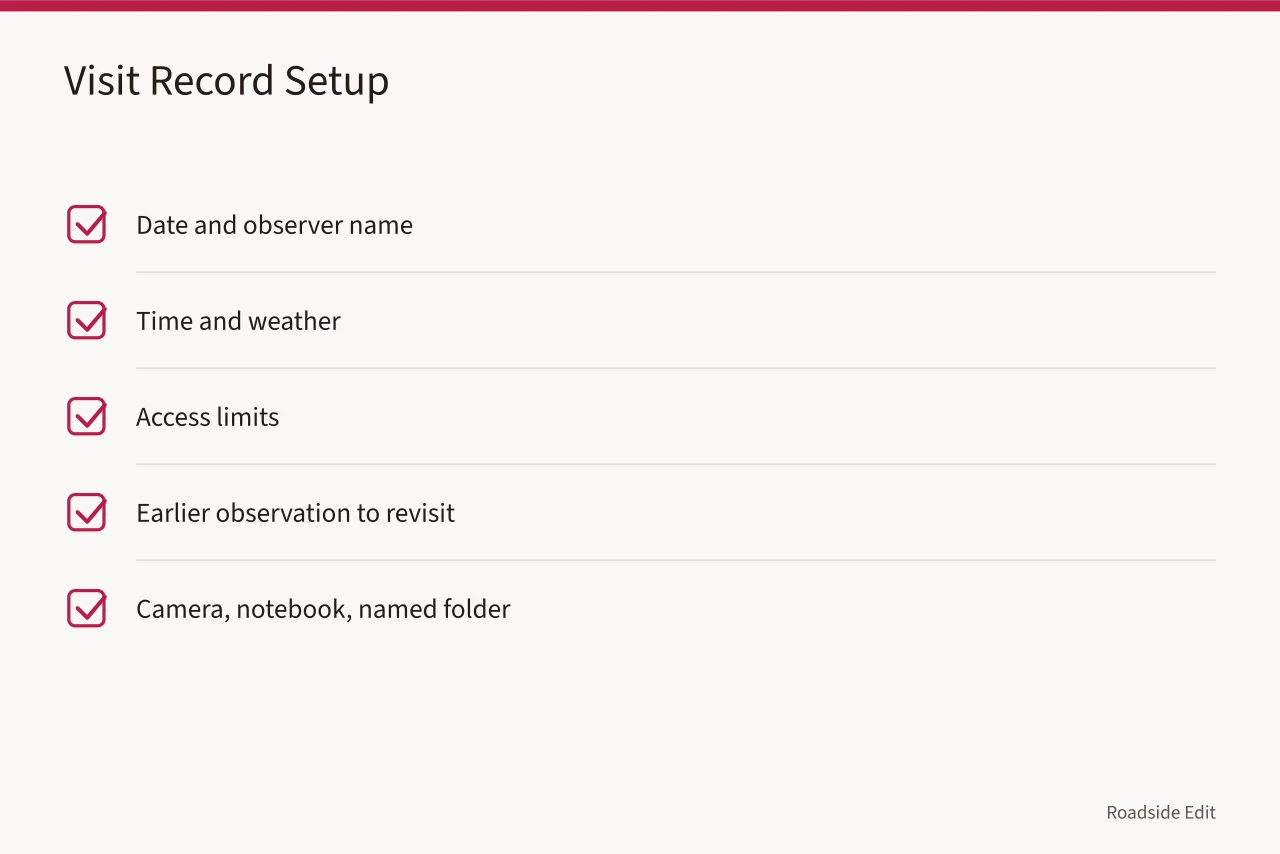
Bring a phone or camera, a notebook, and a way to save images in a named folder. Do not climb a roof, enter a closed building, move debris, touch damaged material, or operate old equipment just to complete a line item. If a feature cannot be seen safely, write that down. An unknown is part of the record.
The National Park Service describes regular condition monitoring as part of the ongoing care of historic resources in its preservation overview. That is the right frame for this visit: a repeatable observation, not a one-time verdict on the property.
Walk the exterior in the same order
Use one direction each time, such as beginning at the roadside elevation and moving clockwise. The order matters less than consistency. Start with broad views, then make notes about conditions that are visible from a permitted and safe location.
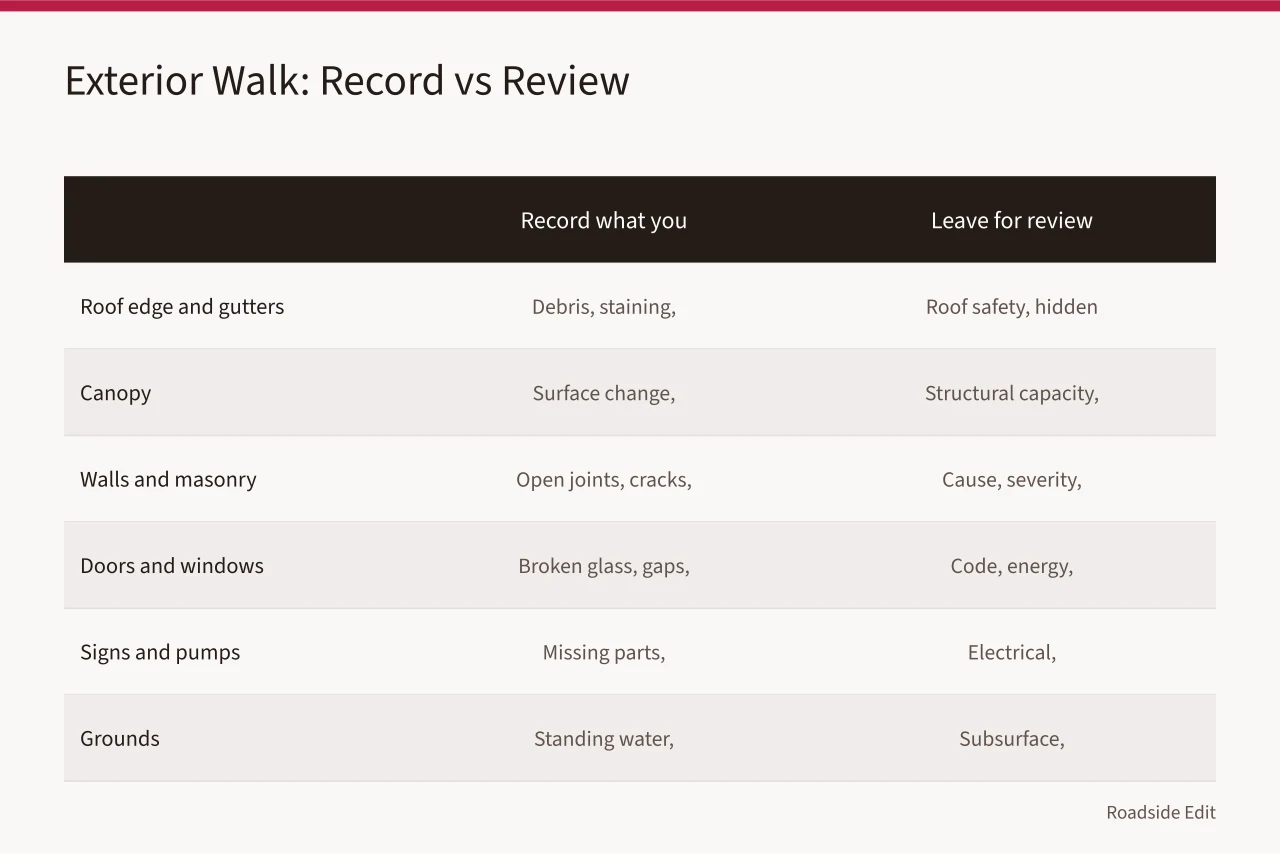
| Area | Record what you can see | Leave for review |
|---|---|---|
| Roof edge and gutters | Debris, loose visible material, staining, or where water appears to run | Roof safety or full hidden condition |
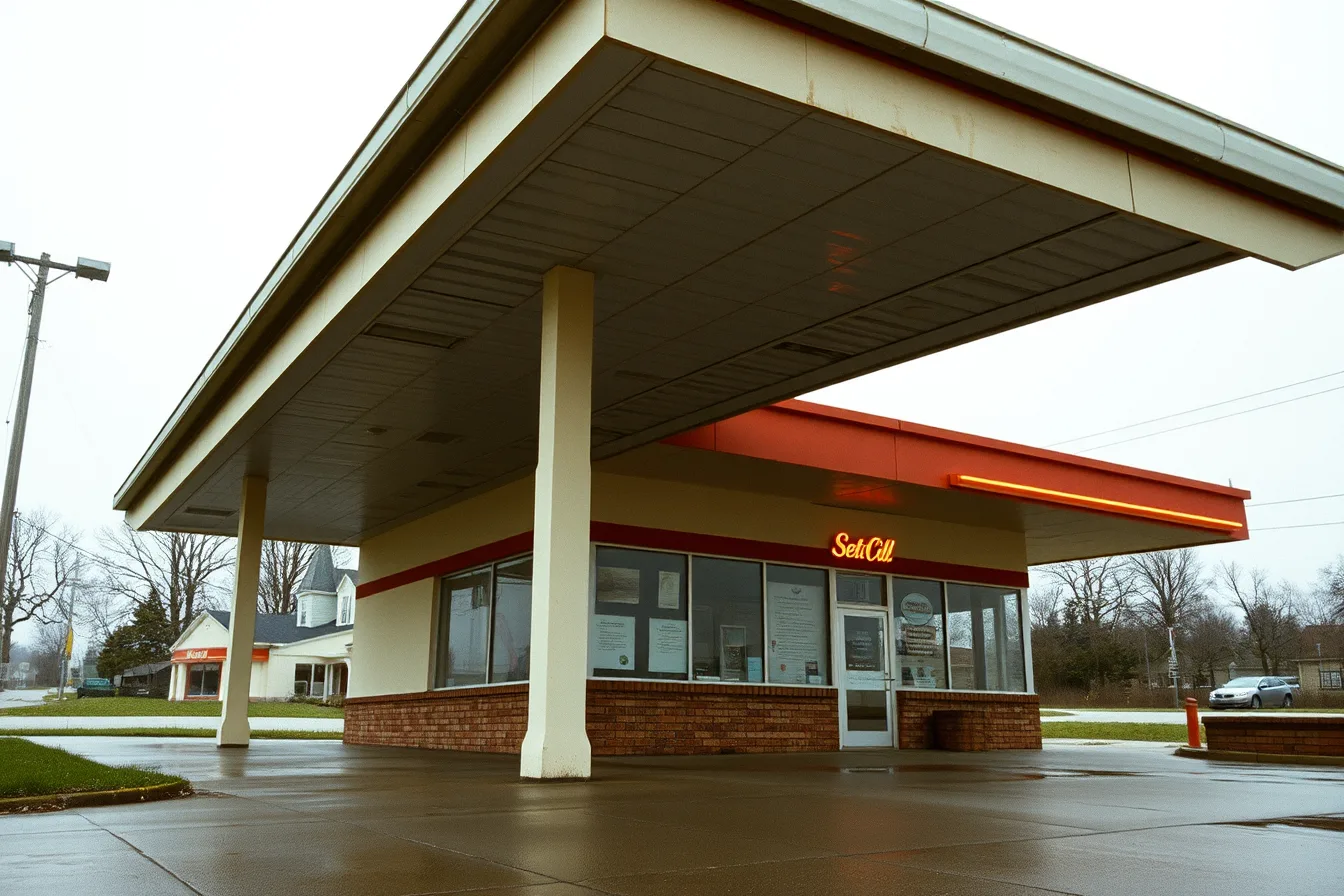
| Canopy | Surface change, visible joints, supports, water marks, or damaged trim | Structural capacity or attachment details |
| Walls and masonry | Open joints, cracks, staining, lost finish, impact marks, or plant contact | Cause, severity, or material compatibility |
| Doors and windows | Broken glass, open gaps, missing hardware, or visible weather entry | Code status, energy performance, or replacement choice |
| Signs and pumps | Missing parts, visible corrosion, loose elements, or unreadable lettering | Electrical state, environmental status, or safe operation |
| Grounds | Standing water, vegetation contact, pavement movement, or blocked drainage | Subsurface conditions or contamination status |
Write the observation as a sentence a later reader can verify. "Dark staining was visible below the north gutter" is a record. "The gutter caused severe water damage" is a diagnosis that a walk-around cannot prove.
Water can affect many parts of an older building, so note it carefully. The National Park Service's brief on controlling unwanted moisture calls for cyclical exterior care. Check roofing, gutters, downspouts, and openings. Also check grade and standing water.
Use that guidance to decide what to inspect. Do not turn the checklist into repair instructions unless the property team has the right expertise and authority.
Build a photo record that can be compared
Take broad images first. Capture the principal roadside view, each accessible side, the canopy, and roof-edge views from the ground. Then photograph only the conditions noted in the register. Make each close image useful by including enough of the surrounding feature to show its location.
Name files with a date, a viewpoint, and a feature, like 2027-04-18_north-side_downspout.jpg. Keep the original file. Make a smaller copy only when publication needs one.
For owner-supplied or sponsor-supplied images, retain the supplied filename, the source, the permission note, and the date received. A public credit does not replace a usable permission record.
For printed historic photographs in a project file, the National Archives advises handlers to support the item with two hands, avoid bending or curling it, and avoid touching the image area. Its photograph preservation guidance is relevant to the record itself, not to a decision about the building's condition.
Sort observations before anyone proposes work
At the end of the visit, give every note one next step. Use a small register rather than a pile of unconnected photos.
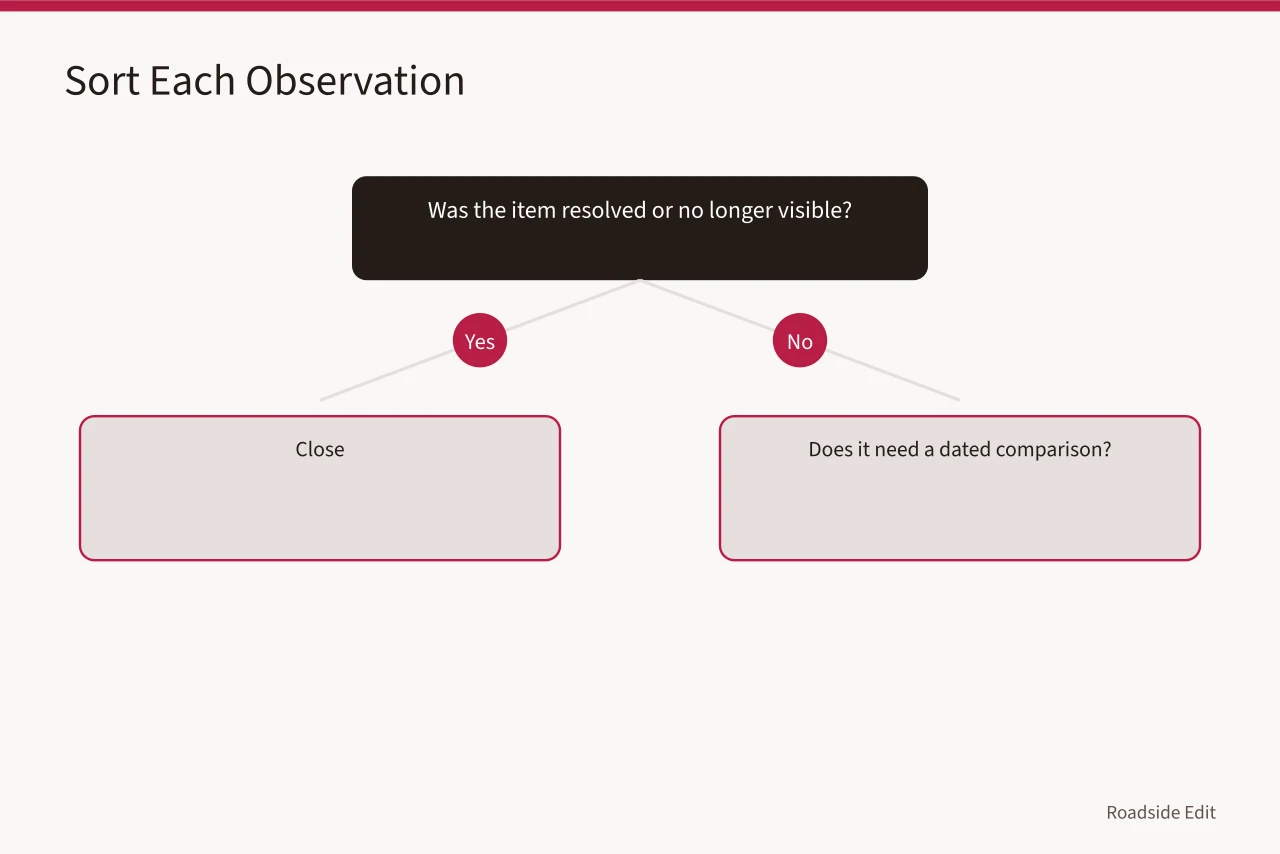
| Next step | Use it when | Example note |
|---|---|---|
| Close | The item was resolved or no longer visible | "Loose litter removed during an authorized cleanup." |
| Monitor | The condition is visible but needs a dated comparison | "Rephotograph gutter staining after the next major rain." |
| Gather information | The record is too thin to explain the observation | "Locate earlier exterior photos and confirm when the sign face changed." |
| Refer | The question needs a qualified review or an authority decision | "Ask an appropriate professional to assess the visible canopy connection." |
A site record should separate what was found from what someone recommends doing. The National Park Service's historic structure report guidance separates historical research and physical examination from treatment objectives and work recommendations.
A short care checklist is not a historic structure report, but the distinction is useful. Facts, questions, and proposed work should not read as the same thing.
Keep the record usable
Store the visit note, full-size images, issue register, supplied-image permissions, and any referral response in one place. Put a date in every filename and never overwrite an earlier image with a new one.
If the article later uses one image or one observation, a reader should still find the underlying record without guessing which visit it came from.
This checklist does not settle ownership, historic designation, environmental status, code compliance, structural condition, or the right treatment for a particular site. It makes the next conversation more precise because it preserves what was actually observed.
Common questions
How often should a historic service station be checked?
Choose a schedule that fits exposure, occupancy, access, and known concerns. Add a documented visit after an event that may have changed visible conditions, such as a storm or unauthorized entry.
Can a volunteer write a condition note?
Yes. The note should stay factual and within the volunteer's role. A volunteer can record an open joint or water mark without deciding why it happened or how it should be repaired.
What makes a preservation photo record useful?
Dates, repeated viewpoints, filenames, captions, source information, and a link to the related observation allow later readers to compare like with like.
Should a checklist include estimated repair costs?
No. A care checklist can identify a question for follow-up. It should not invent a scope, price, or treatment method before the needed review.