Costs
Part of Eleven habits of modern roadside design that actually read at speed
Modern roadside design cost: budget an architecture visit
Modern roadside design cost here means visiting roadside architecture, not designing or restoring it. Plan fuel, lodging, meals, detours, admissions, parking.
What to take away
- Modern roadside design cost here means the cost of visiting roadside architecture, not designing or restoring it. The trip budget breaks into seven parts: fuel or charging, lodging, meals, detour mileage and slow-road time, admissions and donations.
- The other two parts are town parking and one local guide.
- A typical four-day trip for two people runs about $1,100 to $1,500 at recent federal per diem and fuel rates.
- Fuel is the line people guess at and the one with published weekly numbers by region.
- Federal per diem rates give you a defensible lodging and meal figure for any county in the country.
- Budget the detours. Old alignments add mileage that a route planner will not show you.
A trip to see roadside architecture can be inexpensive compared with most travel and still be underbudgeted when the estimate is built from the wrong number.
Each part of a roadside architecture visit budget has a real source or a typical range. Build the estimate from those parts, not from a comfortable round number for miles.
The seven parts of a roadside architecture trip budget
The seven parts
| Part | What it covers | Source or typical range |
|---|---|---|
| 1. Fuel or charging | Gas, diesel, or public charging | EIA weekly regional retail prices; regular gasoline typically runs about $2.70 to $4.50 a gallon across regions; public DC fast charging typically runs about $0.30 to $0.60 per kWh |
| 2. Lodging | Nights on the road | GSA per diem by county and month; standard CONUS lodging recently near $110 a night, with high-cost counties far above |
| 3. Meals | Food and incidentals | GSA meal rate; standard CONUS often $60 to $80 a day per person |
| 4. Detour mileage and slow-road time | Old alignments, wrong turns, extra nights | Add 20 percent to route mileage; slow roads can turn an hour into most of a day |
| 5. Admissions and donations | Roadside sites and town museums | Most roadside sites free or a small donation; town museums often $5 to $25 per site |
| 6. Town parking | Meters and garages | Free at most roadside stops; downtown parking often $1 to $3 an hour, or $10 to $30 a day |
| 7. One local guide for a day | Guided half-day or full day | Typically $75 to $250 for a half-day, $150 to $400 for a full day; the best-value line on the trip |
That list is the whole budget. Two parts have published sources; five come from local conditions and your own pace.
Start with nights, not miles
Work out how many places you want to see properly, at two to four a day. That gives you days. Days give you nights, and nights are the largest line in the budget.
Places to days to nights
- Places you want to see properly
- Two to four places a day
- That gives you days
- Days give you nights
- Nights are the largest budget line
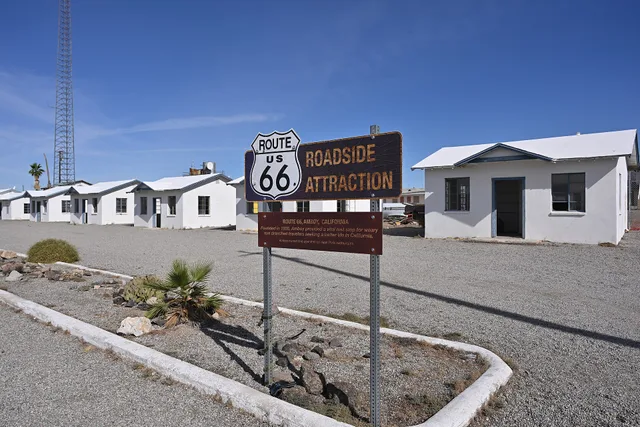
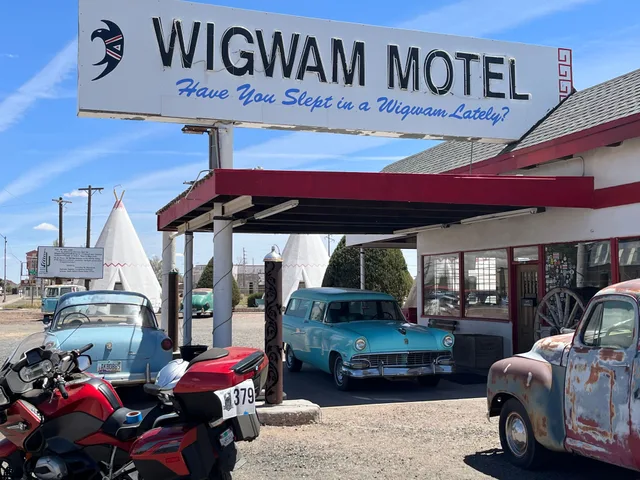
Driving the interstate between two towns takes an hour. Driving the old alignment between the same two towns, stopping at what is on it, takes most of a day. The trip you actually want is the second one, so budget for it. Route 66 makes that tradeoff concrete: the Wigwam Motel in Holbrook, Arizona, and the Blue Swallow Motel in Tucumcari, New Mexico, are roadside stops worth allowing time to visit. Route 66 also has a preservation story: the National Park Service's Route 66 Corridor Preservation Program supported work on historic corridor resources.
Fuel, from published numbers
Stop estimating this. The Energy Information Administration publishes weekly retail gasoline and diesel prices broken out by region, which is precise enough to plan against and updated often enough to be current.
Fuel cost in four steps
- Take route mileage
- Add 20 percent for detours
- Divide by real consumption
- Multiply by regional EIA price
- Electricsubstitute charging cost and time
Take your route mileage, add 20 percent for detours and wrong turns, divide by your real consumption rather than the manufacturer's, and multiply. On an electric car, substitute charging cost and add time rather than money, because slow chargers cost you an afternoon.
Lodging and meals, from GSA per diem
The other guessable line has an authoritative answer too. The General Services Administration publishes per diem rates for lodging and meals by county and by month, set for federal travelers but useful to anyone who wants a defensible figure for an unfamiliar area.
Per diem versus what you pay
GSA per diem rate
- Lodging
- Mid-market figure
- Location
- By county
- Season
- By month
Independent motel
- Lodging
- Beat it
- Location
- Small highway town
- Season
- Off-peak
Interstate national brand
- Lodging
- Exceed it
- Location
- Interstate exit
- Season
- Doubles in July
Two things make it worth using. It is location-specific, so it captures the difference between a small highway town and a city on the same route. And it is seasonal, which matters on tourist corridors where a room doubles in July.
Treat the lodging rate as a realistic mid-market figure. You will beat it at an independent motel and exceed it at anything on an interstate exit with a national brand.
The lines people forget
| Line | Why it gets missed |
|---|---|
| Detour mileage | Route planners give you the fast way, not the old alignment |
| Parking in towns | Free at roadside stops, not free downtown |
| Admissions and donations | Small individually, constant over a week |
| A guide for one day | The single best-value line on the whole trip |
| Food between towns | Long gaps mean you buy what is available, not what is cheap |
| Contingency | On old roads, at least ten percent |
What the money buys
One local guide, one day. Ask at the town museum, the historical society or the main street office; those three know who does good work locally. For practical advice, see how to find local guides for modern roadside design.
Staying in the places you came to see. A night in a restored motor court is both the trip and the accommodation, and it puts money into exactly the buildings you are interested in.
Time. An extra day costs one room and one tank and doubles what you understand.
What wastes the money
Paying for a hotel near an interstate junction so you can start early tomorrow means you saw the junction.
Equipment. Nobody has ever improved a roadside trip by renting a lens.
A worked shape for two people, four days
Rooms for three nights at the local per diem lodging rate, fuel for roughly 600 miles including detours, meals at the published meal rate, and one guided half-day.
Recent standard CONUS rates near $110 a night for lodging and $60 to $80 a day per person for meals put two people for four days at about $1,100 to $1,500. The table below shows where each part of that sits.
A worked shape
| Part | Basis for two people, four days | Typical |
|---|---|---|
| 1. Fuel or charging | About 600 miles with detours, at recent regional prices | $75 to $110 |
| 2. Lodging | 3 nights at the local per diem rate | $330 to $450 |
| 3. Meals | 2 people, 4 days at the published meal rate | $480 to $640 |
| 4. Detour mileage and slow-road time | Extra fuel and one slow afternoon | $40 to $60 |
| 5. Admissions and donations | Two or three town museums and donation boxes | $15 to $25 |
| 6. Town parking | Two afternoons downtown | $10 to $25 |
| 7. One local guide | One guided half-day | $150 to $190 |
| Total | $1,100 to $1,500 |
The low column adds to $1,100 and the high column to $1,500. Add ten percent if you want a contingency.
Fuel and lodging come from the two published sources above; repairs, tolls and local rates do not, so treat the total as a planning figure rather than a forecast.
For background on the design ideas behind roadside places, see 11 thoughtful approaches to modern roadside design before deciding how many days you need.