Costs
Part of Motel exterior cost planning: 7 steps before you ask for a 2027 estimate
How to write motel exterior cost budget notes before bids go out
Motel exterior cost budget notes for 2027 show U.S. readers how to record assumptions, exclusions, data sources, and changes without publishing a project quote.
A budget note is a planning record, not a quote. It should show what was defined when the number was recorded, what the document assumes, and what could change the scope. That makes it less likely that a provisional figure becomes an unsupported promise.
What to take away
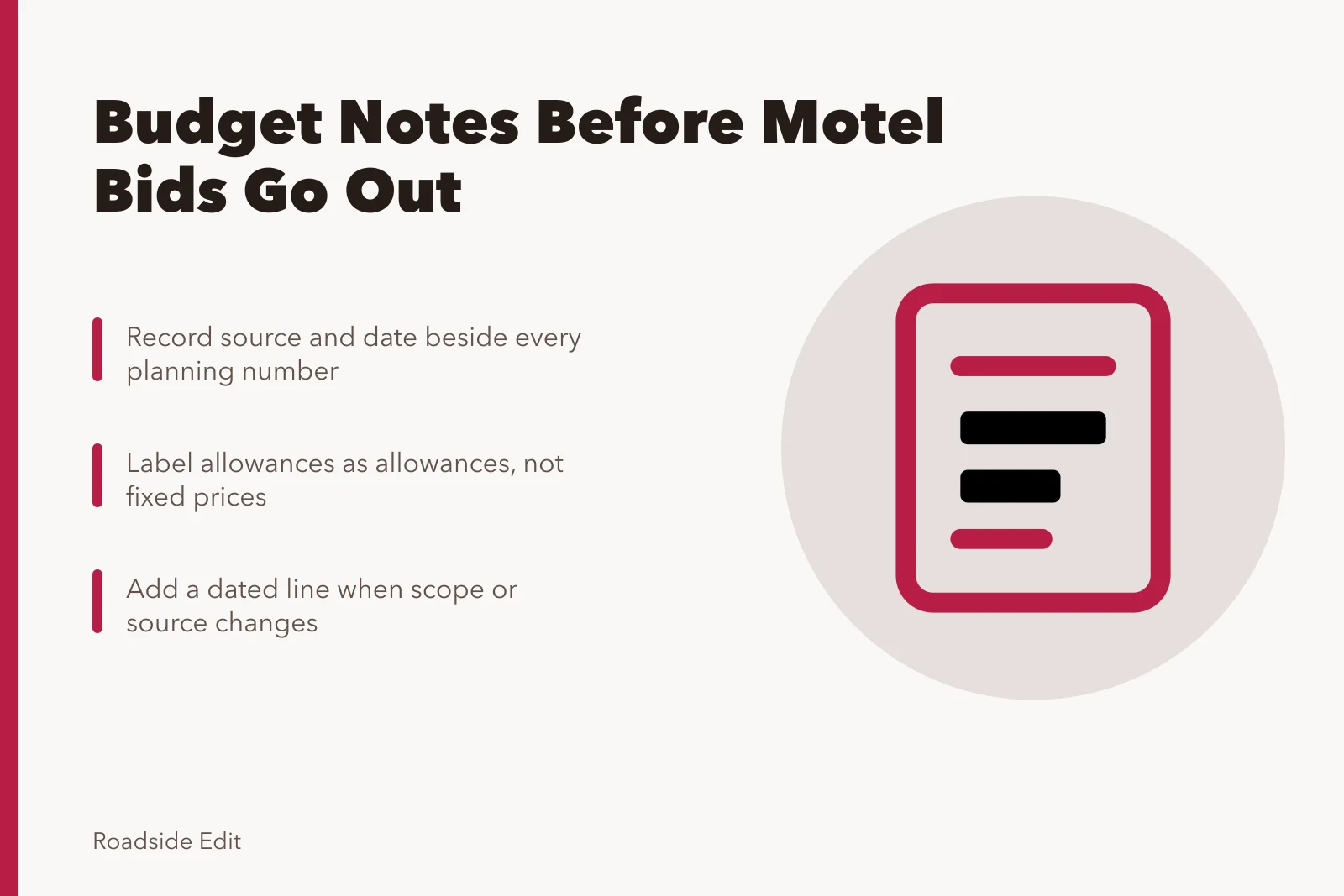
- Record the source and date beside every planning number.
- Keep allowances and unknowns visible, not buried in a total.
- Separate direct work items from assumptions and decisions.
- Revise a note when new evidence changes the scope.
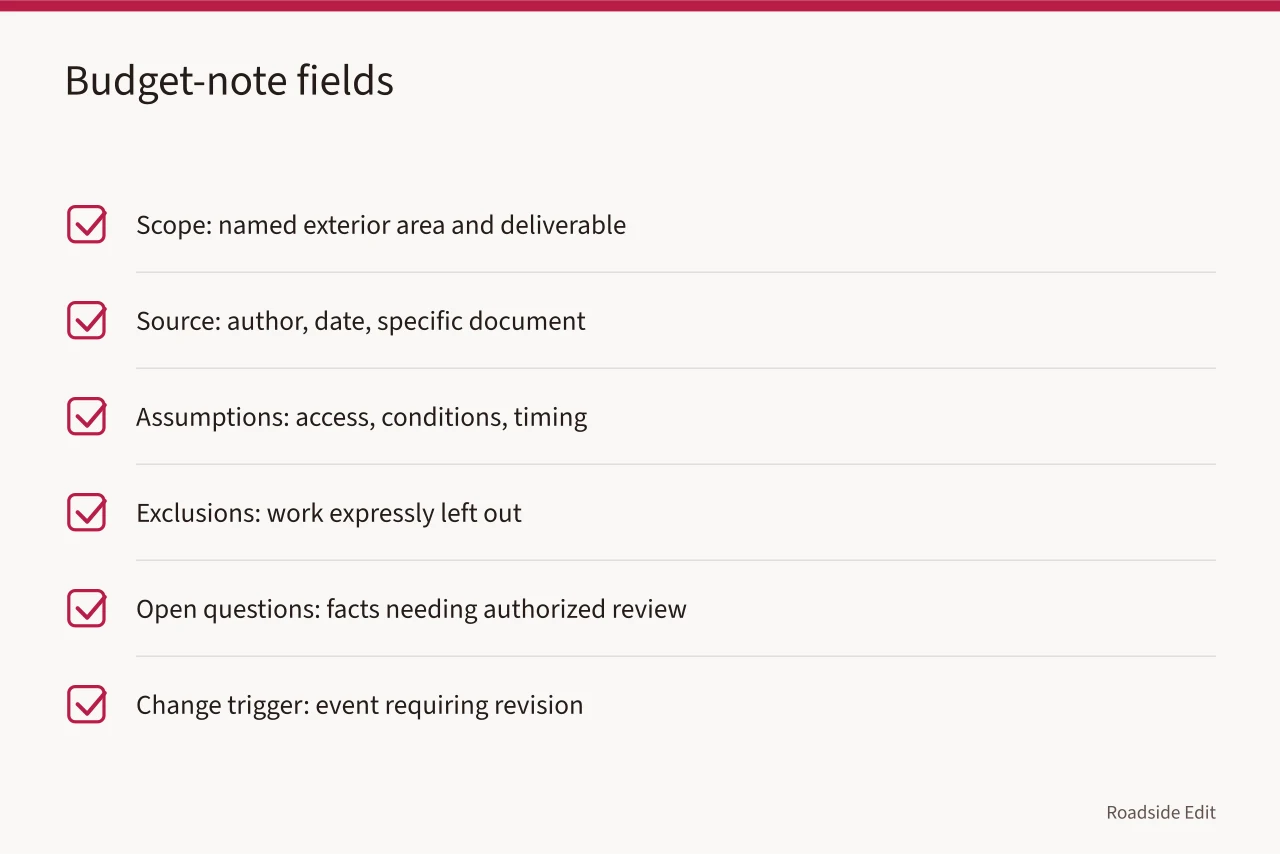
Budget-note fields
| Field | Include |
|---|---|
| Scope | The named exterior area and requested deliverable. |
| Source | The author, date, and specific document. |
| Assumptions | Access, conditions, timing, or information stated by the author. |
| Exclusions | Work that the document expressly leaves out. |
| Open questions | Facts that require authorized access or review. |
| Change trigger | The event that would require a revision. |
NPS specification QA guidance explains that specifications describe requirements, conditions, techniques, qualifications, and testing or reporting requirements for a project. Read the NPS specification QA checklist. The checklist is not a private-motel budgeting template. It does show why a planning number needs a clear description of conditions and requirements rather than a bare total.
Keep allowances honest
An allowance is not evidence that a condition exists or that a particular treatment is correct. Label it as an allowance, retain the document that states it, and describe the condition that could change it. Do not present it as a fixed price to readers or advertisers.
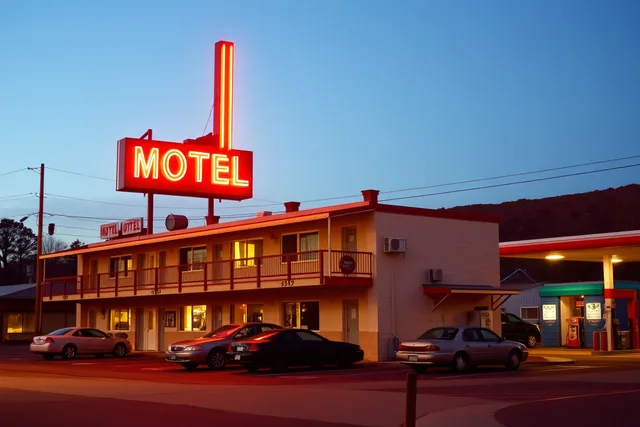
If a public photo is part of the planning file, caption it narrowly. The image can document a visible scene at a date. It cannot establish hidden materials, a code path, ownership, or project approval.
The GAO Cost Estimating and Assessment Guide explains that estimates need a stated purpose, scope, assumptions, data, methods, and updates. It applies to government estimates rather than a motel exterior project. Its practical point is that two totals are not comparable until the work and assumptions behind them are visible.
Separate work stages before comparing costs
| Stage | Record that supports it | Do not infer |
|---|---|---|
| Existing-condition note | Dated observation and visible limit | A hidden-condition diagnosis |
| Design or study | Scope and stated deliverable | A construction price |
| Proposal | Issuer, date, work package, exclusions | A market-wide rate |
| Award | Notice and named eligible activity | Full project funding |
| Invoice | Billed work and date | Completion of all work |
When a later proposal arrives, do not add it to an early study allowance unless the documents clearly address separate work and the article explains the relationship. A revision record should identify the prior number, new source, changed work, and what remains unpriced.
Record revisions visibly
Add a dated line whenever the scope, source, or assumption changes. State what changed, why it changed, who supplied the new information, and what it means for the note. This preserves the difference between a current working figure and a final decision.
The National Archives records-management resources address inventory, scheduling, appraisal, and oversight for federal records. They do not prescribe a motel project file. They support keeping a traceable source and change trail so a later editor can distinguish an original offer, a revised scope, and an editorial summary.
If a provider or sponsor supplies a number, retain its submitted scope and date in a commercial record. The FTC's endorsement guidance says material connections should be disclosed when they could affect how readers evaluate an endorsement. Attribute the source and do not treat a paid statement as independent proof of value or suitability.
Publish a source boundary with every total
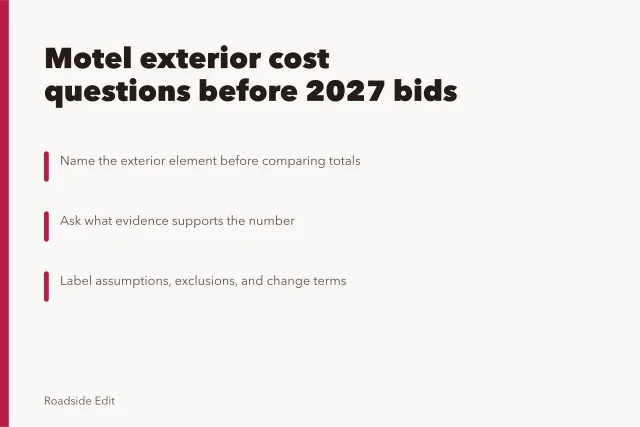
Before publishing a motel-exterior figure, ask four questions. Who supplied it? What exact work does it describe? What date and conditions apply? What work does the source leave outside the figure? If the article cannot answer one of those questions, the amount belongs in a private research note or must be described as incomplete.
Use plain update wording. "The source lists a later estimate for the stated fascia work and excludes drainage review" is better than "The exterior budget increased." The first sentence tells readers why the records cannot be treated as identical. It also leaves room for a later scope change without making the earlier source seem deceptive.
The same rule applies to historical cost. A past amount can explain a documented project phase. It cannot set a current price for another motel. Date it, identify its place and source, and state the limit. Readers can use that history as research context without being handed an invented quote.
Common questions
Is an allowance the same as a final price?
No. It is a stated planning assumption that may change when the scope or information changes.
Should a budget note include a business's marketing claims?
Keep submitted claims attributed and separate from independently sourced editorial facts.
What should trigger a revision?
A changed scope, corrected record, new decision owner, or clarified document assumption should trigger one.