Guides
Part of Motel exterior cost planning: 7 steps before you ask for a 2027 estimate
Motel exterior cost checklist: 2027 line items to budget before you request bids
A 2027 motel exterior checklist with painting, signage, lighting, masonry, roofing, and permit ranges, plus scope steps to take before you request bids.
An exterior cost question sounds simple until scope is written down, and a 2027 budget needs line items, not one vague total. This checklist names common motel exterior cost items and 2027 planning ranges.
It shows how to record assumptions before you ask for bids. It does not provide a quote, set a budget, select a provider, authorize work, or identify all local requirements.
What to take away
- Price painting, signage, lighting, masonry, and roofing as separate lines.
- Treat permits and fees as their own line, not a hidden markup.
- Use 2027 planning ranges only after you define scope, access, and exclusions.
- Ask every bidder to price the same item list and terms.
- Keep changes in a log so an older number is not treated as current.
Start with a 2027 cost item checklist
Begin with a table of physical items. Each row should have a scope note, a 2027 planning range, and a source or basis. Public cost guides such as Angi and Fixr publish exterior painting and roofing ranges. Gordian RSMeans data is a common commercial cost database. Use these as planning aids, not bids.
| Cost item | 2027 planning range | What to verify |
|---|
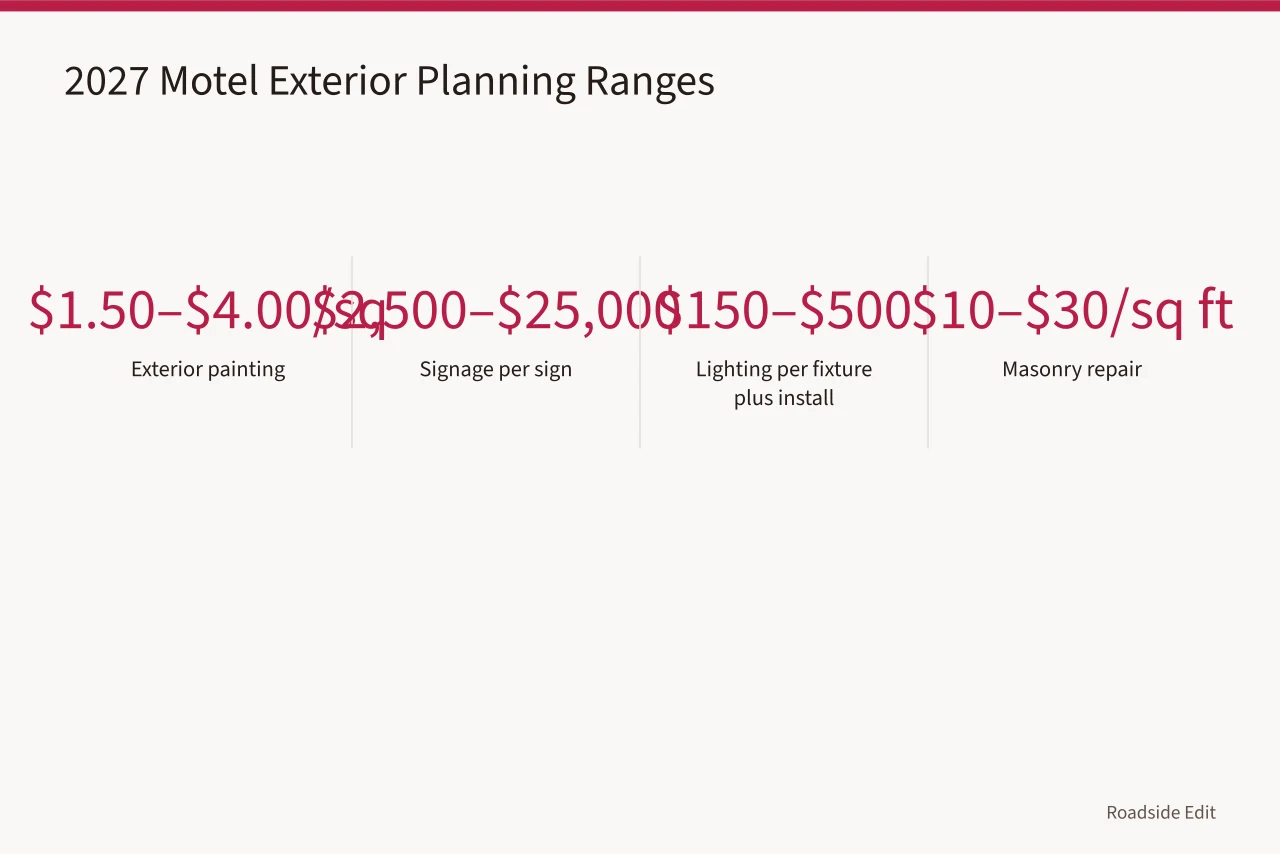
These ranges are planning figures for 2027. They assume typical low-rise motel exteriors in U.S. markets. Your local labor rate, access, and code can move them.
The National Park Service's schematic-design workflow includes existing-conditions material and a cost estimate that discusses major project features and systems. Review NPS schematic-design deliverables. The workflow is for federal design work, not a motel estimate. Its useful point is that cost planning follows a defined description of the features being considered.
Exterior painting
Sherwin-Williams sells exterior coatings such as Duration and Emerald. Duration is an acrylic latex for siding and trim. Public 2025 guides from Angi list $1.50 to $4.00 per sq ft for exterior painting. Add 3% to 5% per year for a 2027 planning range.
Signage
The International Sign Association publishes sign code guidance. Channel letters often run $2,500 to $25,000 per sign. Gemini Sign Products makes dimensional letters and logos. Permit and electrical work can add 20% to 40% to a sign project.
Lighting
Acuity Brands and Cree Lighting sell LED wall packs and area lights. Fixtures often cost $150 to $500 each. Installation can double that. The Illuminating Engineering Society publishes recommended light levels for parking and walkways.
Masonry
The Portland Cement Association publishes masonry repair guides. Tuckpointing runs $10 to $30 per sq ft. Sealant joints run $2 to $6 per linear foot. Scaffolding and access can add 15% to 30%.
Roofing
GAF and Owens Corning sell commercial roofing systems. TPO or modified bitumen runs $5 to $12 per sq ft. The National Roofing Contractors Association recommends checking warranty terms and deck condition.
Permits and fees
The International Code Council publishes model codes. Local permit fees range from $500 to $5,000. Sign, electrical, and zoning permits may be separate. Ask the local building department for a fee schedule.
Build an evidence packet before requesting numbers
An estimate becomes more readable when the provider sees the same starting record. Assemble available information. Label what is missing. A street-view image can show a motel sign from one date. It cannot confirm hidden conditions, access rights, field dimensions, a local permit path, or treatment. Keep an image ledger with filename, source page, date, caption, and limited observation.
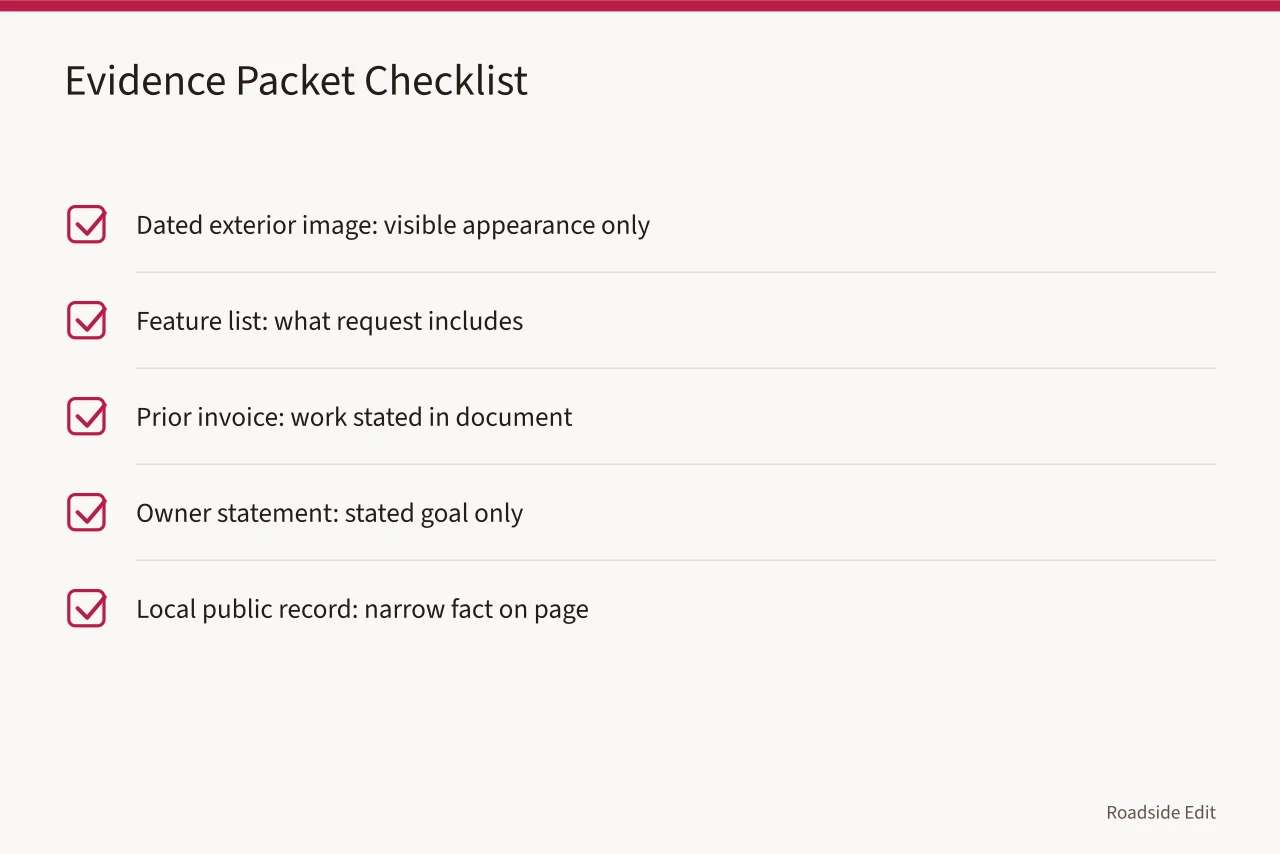
| Evidence item | What it can help explain | Limit to write down |
|---|---|---|
| Dated exterior image | Visible appearance and viewpoint | No hidden condition or work history |
| Feature list | What the request includes | No repair method or project approval |
| Prior invoice or record | Work stated in that document | No proof of current performance |
| Owner statement | The owner's stated goal | No automatic final scope |
| Local public record | The narrow fact on the exact page | No guarantee about later decisions |
Write a scope that can be priced
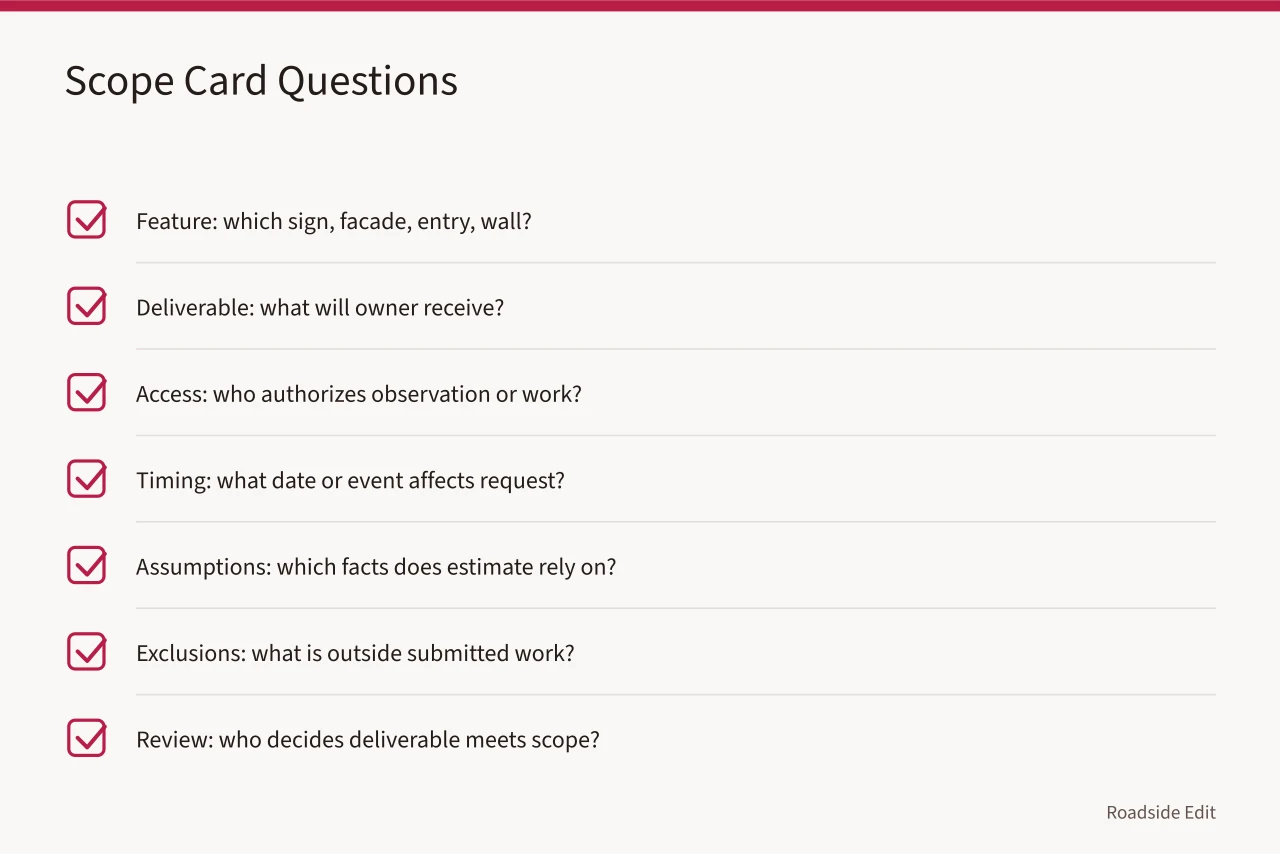
The scope card should describe work in plain, visible terms, letting a provider state what is included, excluded, and still undecided.
The Federal Trade Commission advises consumers to get multiple written estimates for home-improvement work; Read the FTC's estimate guidance. Written estimates should identify the work, materials, completion date, and price. That advice is not a template for every motel service. It still supports a basic rule: ask for enough detail to compare the same work.
| Scope area | Questions to answer |
|---|---|
| Feature | Which sign, facade area, entry, wall, or ground area is included? |
| Deliverable | What will the owner receive, and in what format? |
| Access | Who can authorize observation, measurements, or site work? |
| Timing | What date or event affects the request? |
| Assumptions | Which facts does the estimate rely on? |
| Exclusions | What is specifically outside the submitted work? |
| Review | Who decides whether the deliverable meets the scope? |
Separate fixed work, allowances, and unknown conditions
Read each submitted estimate as parts. Some describe defined work, some reserve an amount for a choice not yet made, and some flag a condition needing more information.
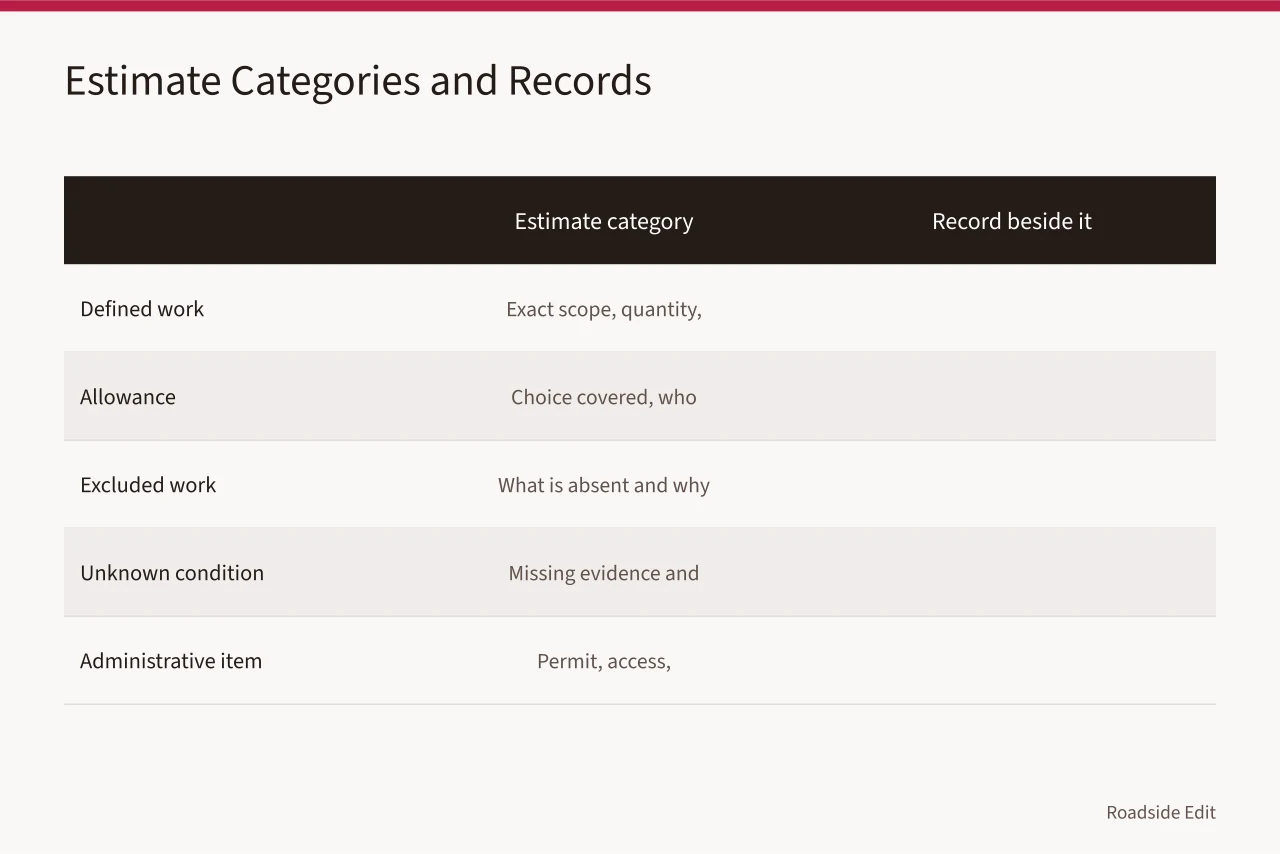
Grouping those parts under a single total hides the decision still needed. Do not call an allowance a final cost, do not call an exclusion a saving, and note each part plainly.
| Estimate category | Record beside it |
|---|---|
| Defined work | Exact scope, quantity or area if stated, deliverable, and assumptions |
| Allowance | What choice it covers, who set it, and what can change it |
| Excluded work | What is absent and why |
| Unknown condition | What evidence is missing and who must decide the next step |
| Administrative item | Permit, access, review, travel, or other stated project requirement |
Compare submitted estimates line by line
Place documents in a comparison sheet after the scope card is stable; if each provider received a different request, write that at the top. The NPS constructability review checklist asks teams to identify access, staging, and entry points.
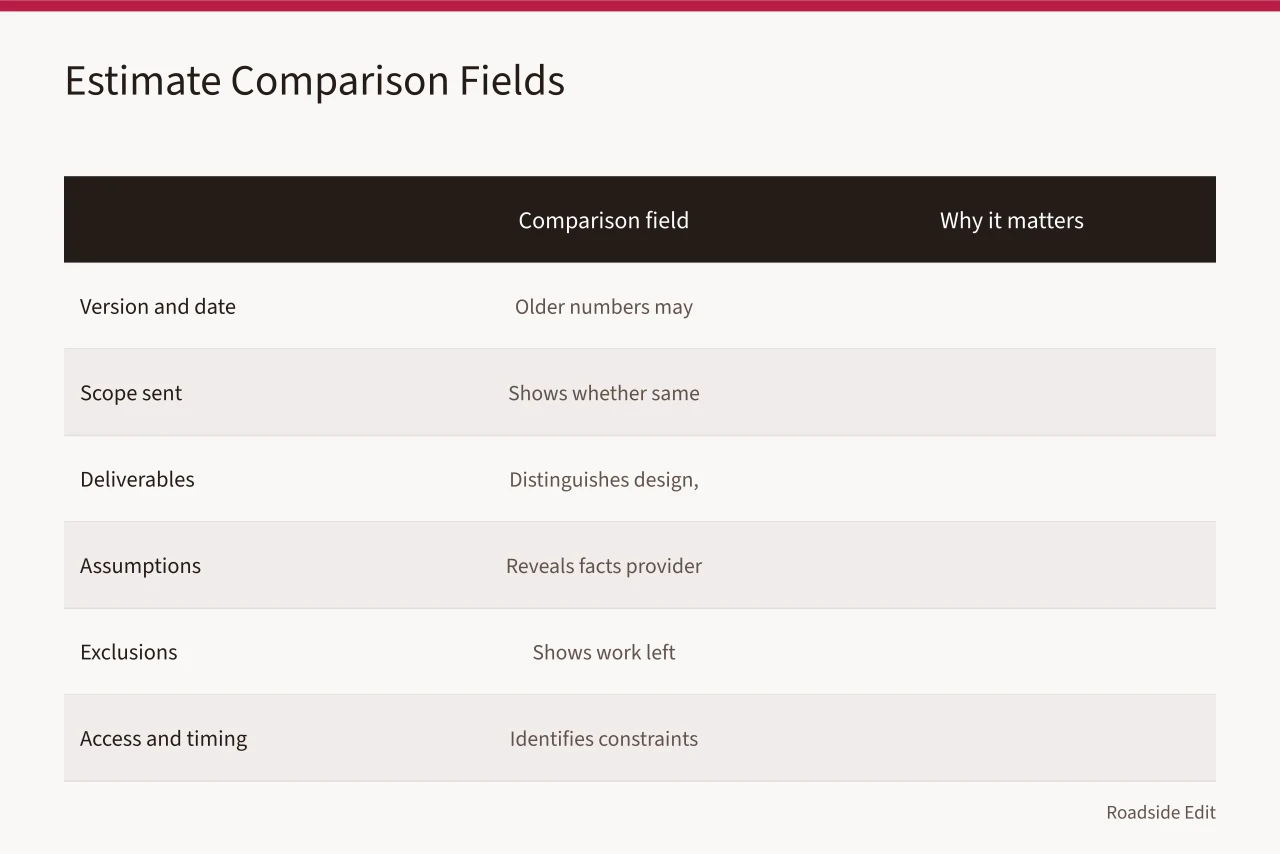
It asks for restrictions, scope, cost, timing, and project method, and it applies to NPS projects; Read the NPS constructability checklist. For motel exterior planning, record conditions that change a submitted number's coverage.
| Comparison field | Why it matters |
|---|---|
| Version and date | Older numbers may reflect a different record |
| Scope sent | Shows whether the same request was answered |
| Deliverables | Distinguishes design, documentation, and physical work |
| Assumptions | Reveals facts a provider treated as given |
| Exclusions | Shows work left outside the total |
| Access and timing | Identifies constraints that may affect the request |
| Open questions | Keeps decision gaps visible |
Ask for clarification when a material difference appears. Do not silently add missing work to one submission or subtract it from another. Keep the provider's original document and written clarification together.
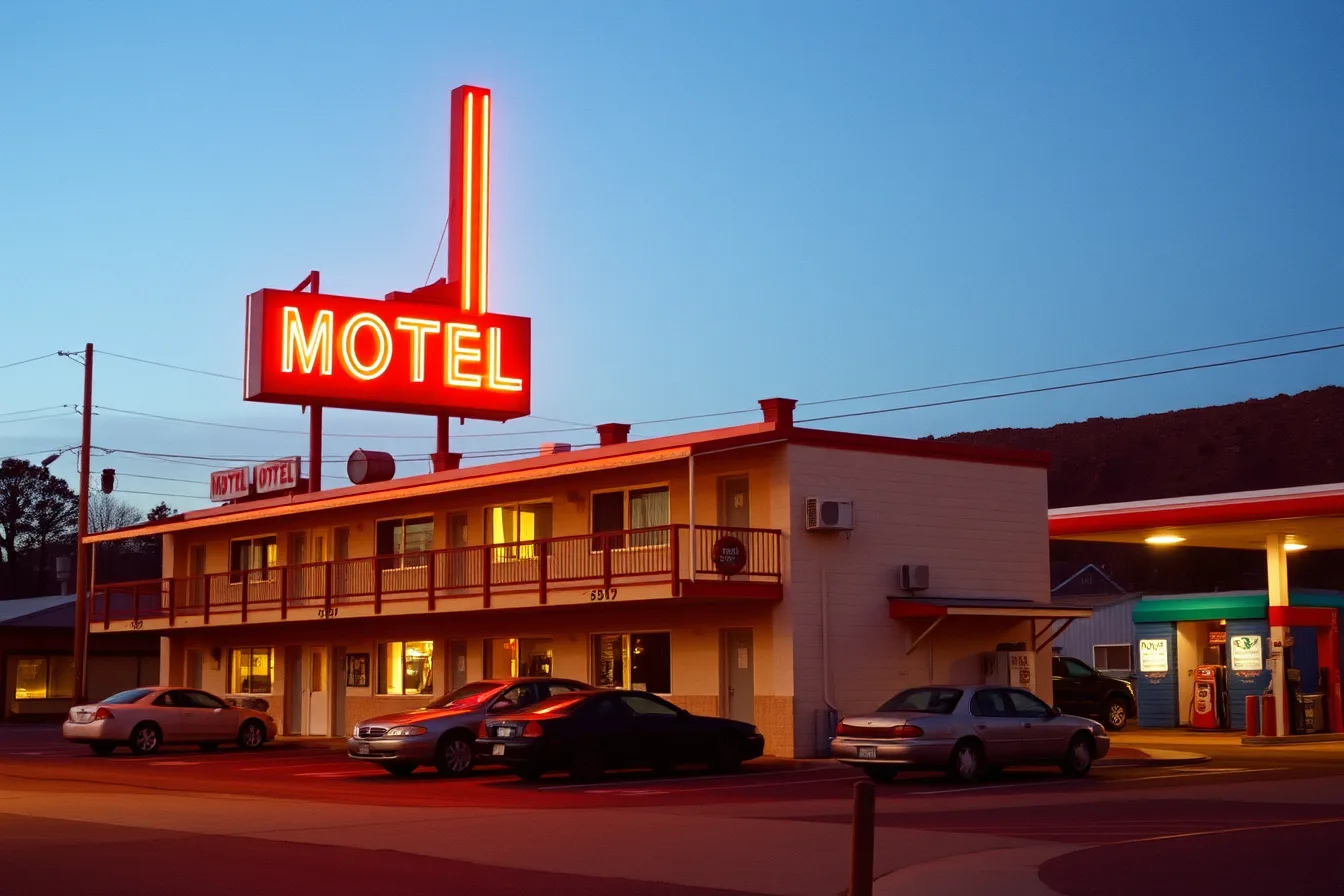
The image is visual context only. It does not establish cost, condition, ownership, project status, access, or suitability of any estimate for a separate motel.
Keep commercial claims separate from cost evidence
A provider may submit a proposal, service description, or paid placement. That material can belong in a project file.
It is not independent confirmation of the motel's condition or a reader recommendation. Mark who supplied it, the date, relationship, and purpose. In a public article, disclose paid or affiliate relationships near any statement readers might mistake for neutral judgment.
Log changes that affect a number
Cost records age quickly when scope changes, and a new photo, access limit, added feature, revised deliverable, or removed assumption can make an earlier number less useful. Keep a change log so the next decision uses the right version.
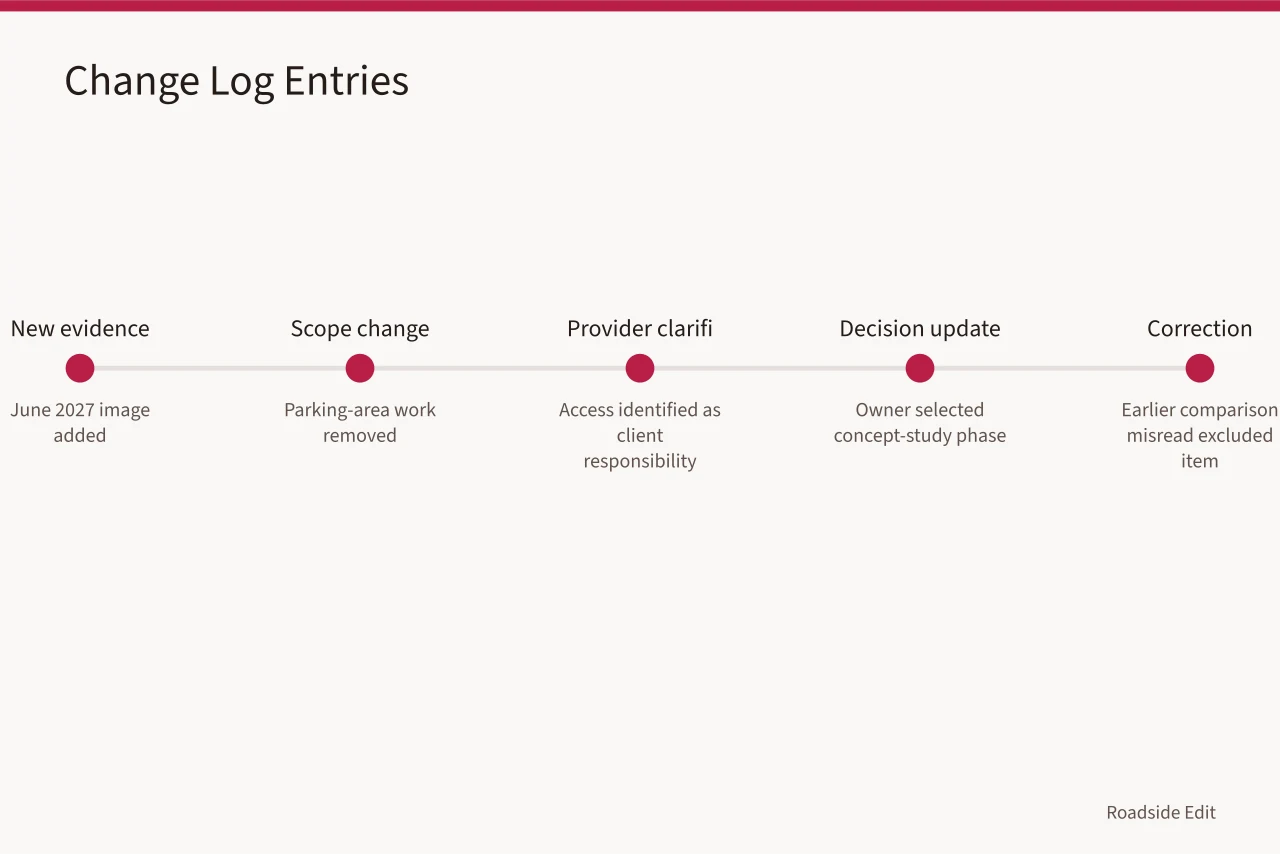
National Archives recordkeeping guidance says related records should be kept together to preserve context; Read NARA's recordkeeping requirements. The requirement governs federal records and offers a practical file rule: keep the scope card, estimate, clarification, and change note together.
| Change type | Example record |
|---|---|
| New evidence | 'June 2027 image added; it documents a different visible sign face.' |
| Scope change | 'Parking-area work removed from the requested exterior record.' |
| Provider clarification | 'Submission revised to identify access as a client responsibility.' |
| Decision update | 'Owner selected a concept-study phase before physical work.' |
| Correction | 'Earlier comparison misread an excluded item; table updated.' |
When a cost question grows into a different project, stop and issue a new scope card. Do not carry an early estimate forward because it is the only number available.
Common questions
Can this checklist provide a final motel exterior budget?
No. It organizes information for a project-specific estimate. The actual amount depends on scope, conditions, access, and timing. Local requirements and submitted work also matter.
What is the first document to prepare?
Write the cost-planning card and attach the dated evidence that defines the exterior feature and decision.
Should the lowest submitted total win?
No. Compare what each document includes, assumes, excludes, and leaves open before treating totals as comparable.