Guides
Part of Neon sign restoration options compared: how owners choose the right path
How to compare neon sign restoration options before you set a budget
Compare four neon restoration paths, from glass tube replacement to LED flex retrofits, on dated public price ranges and what each option excludes.
What to take away
- Four paths compete for the same sign: full restoration, electrical rebuild, glass replacement, and LED flex retrofit. Each uses different vendors and a different price basis.
- Glass tube price is quoted per foot; transformer price is quoted per unit; LED flex is quoted per meter. Never rank the three on one number.
- YESCO's Las Vegas sign work is the only large public figure here. Everything else is a supply price, not an installed cost.
- A conservation review produces a condition report, not a repair. Budget it as a separate deliverable.
- Keep one dated ledger row per path so a later scope change adds a row instead of overwriting history.
The four paths, with public prices
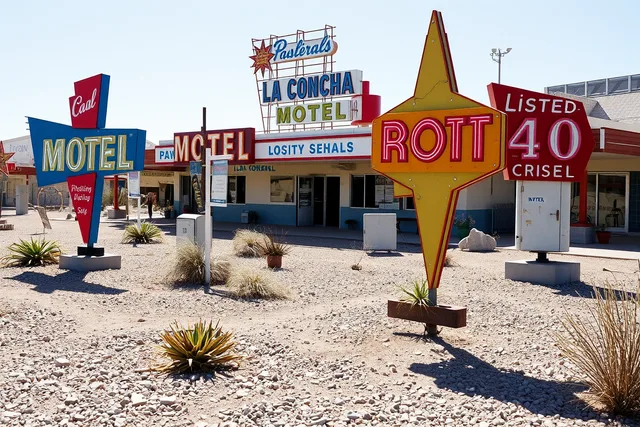
A 1950s porcelain-enamel station sign and a 1960s plastic-faced box sign fail in different places. Enamel chips at the mount; plastic yellows and the tube standoffs crack. The path you pick follows the failure.
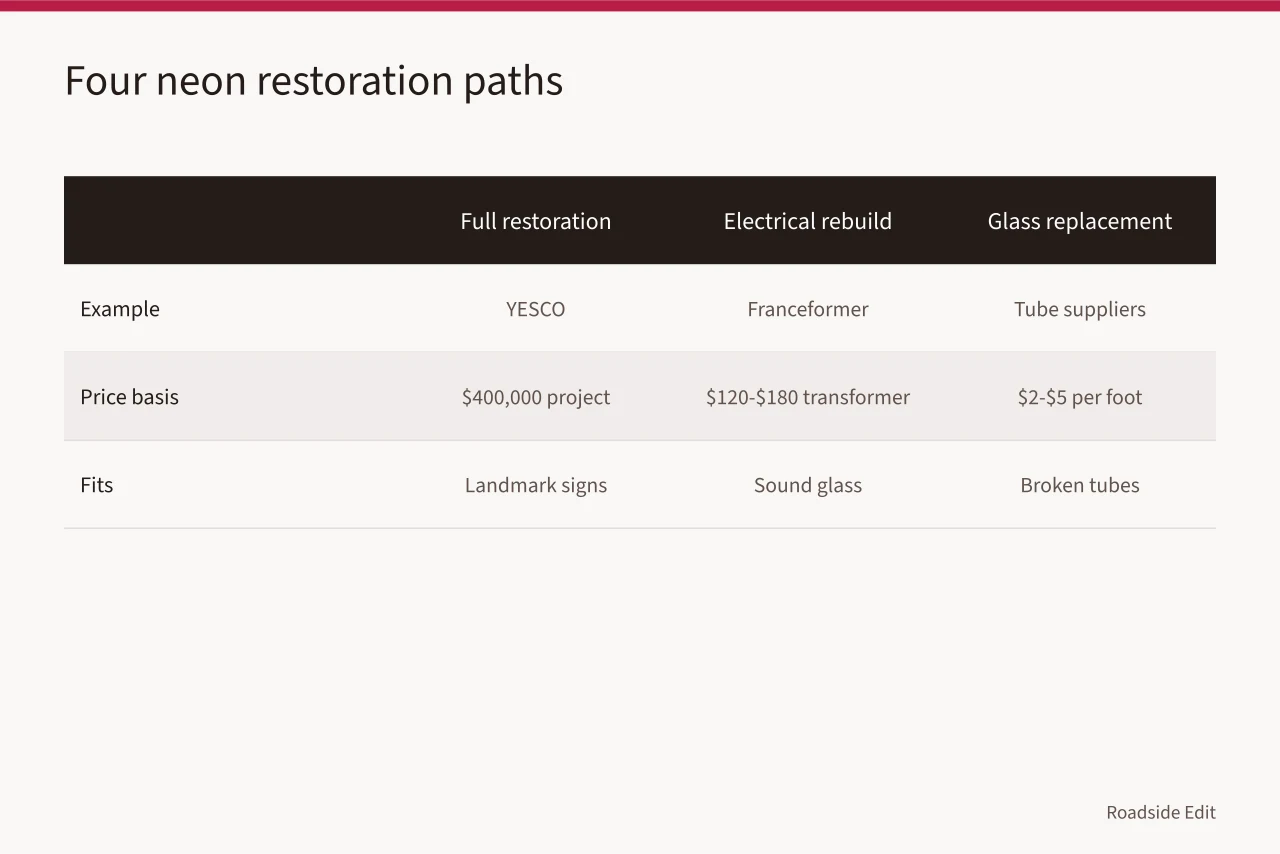
| Path | Named supplier or example | Public price basis | Fits |
|---|---|---|---|
| Full restoration | YESCO | The 2017 Welcome to Fabulous Las Vegas sign project ran about $400,000. Routine work is quoted after a site survey. | Landmark signs with historic status and a funding source. |
| Electrical rebuild | Franceformer | A 12,000V 30mA transformer sells for about $120 to $180. GTO-15 wire runs about $60 to $100 per 100 feet. | Sound glass, failed transformers and brittle GTO. |
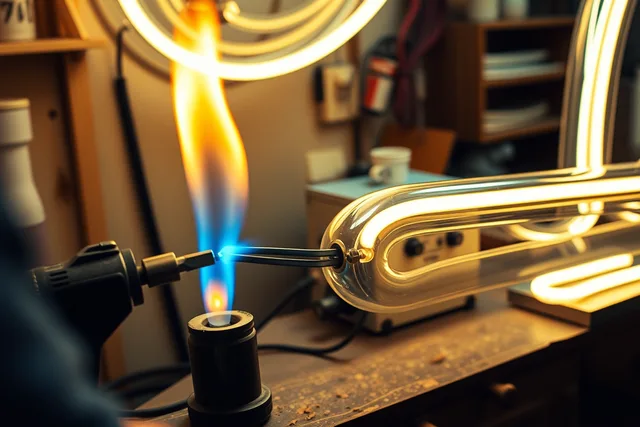
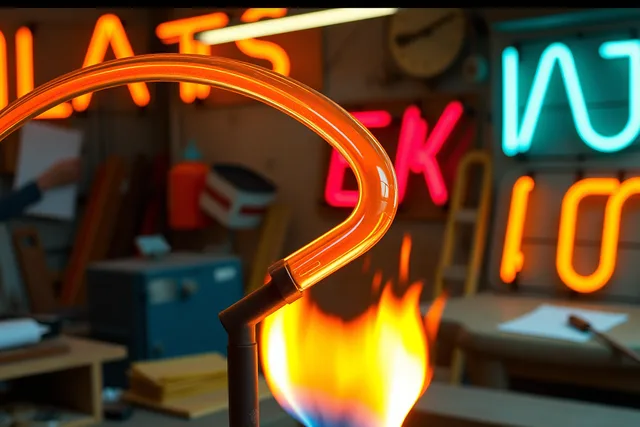
| Glass replacement | Neon tube and electrode suppliers | Clear 10mm tubing sells for about $2 to $5 per foot. Electrodes run about $5 to $15 each. | Broken tubes over sound metal and a reusable transformer. |
| LED neon flex | Super Bright LEDs, 1000Bulbs.com | 12V or 24V flex often sells for $15 to $30 per meter. | Owners who cannot meet restoration rules and accept losing the glass. |
The National Park Service National Center for Preservation Technology and Training publishes conservation guidance free online. A conservator prices a condition report per project, after looking at the sign.
Tube diameter drives the count. A 10mm tube bent to a 12mm letterform needs a different transformer load than the same run in 15mm. Ask the fabricator for the load figure in writing before you compare it to a transformer rating.
What each path quietly excludes
A transformer price excludes the electrician, the bucket lift, and the permit. A tube price excludes bending labor, pumping, and the return trip when a run comes out to the wrong length.
YESCO's public figure covers a landmark project with engineering, fabrication and reinstallation. It is not a per-sign rate. Do not divide it by square footage and apply it to a motel canopy.
The Library of Congress conservation FAQ sets out documented examination, research, treatment and preventive care. It addresses collection material, not roadside signs, but the sequence holds: examine first, then price the treatment.
Date every row
A price without a date is a rumor. Write the quote date, the scope, and the exclusions beside the number. When a supplier revises a tube price, add a row; do not edit the old one.
For a diner or a motel court, the sign is one line in a larger exterior scope. The vintage diner interior options notes show how booth laminate and chrome-edge trim get priced the same way, per unit with exclusions stated.
Photograph the sign before anything moves. The National Archives digital photo guidance covers file formats, metadata, captions and naming. Those conventions give a future reviewer a dated record of the fabric you are about to change.
Where the path leaves your hands
Transformer wiring, canopy soffit attachment, and anything underground are not budget questions. The OSHA electrical eTool for Subpart S covers installation topics including qualified-person work. Name the licensed electrician and the authority having jurisdiction, and let them set the method.
Structural questions on a canopy or a pole go to a licensed engineer. Tank and soil questions go to the state environmental agency. Preservation compliance goes to the State Historic Preservation Office or the local landmarks commission under the adopted ordinance. None of these is a line item you can price from a desk.
Disclose the commercial relationship
If a supplier appears in a directory or a paid placement, say whether the company wrote the description or paid for the slot. The FTC endorsement guides govern testimonials and endorsements in advertising. Payment never proves a claim about a sign's history or condition.
Keep the disclosure with the placement and the factual sources in a separate register.
The comparison ledger
One row per path, dated. Columns: question addressed, evidence assumed, deliverable, exclusions.
- Fee basis
- Commercial relationship
- Next decision
A motel court sign priced against a historic motel restoration budget sits in the same ledger as its neon. Two rows, two scopes, one decision history.
Common questions
Why not just take the lowest quote?
Quotes are not comparable until the deliverable, the assumptions and the exclusions match. A low tube price with no bending labor is not the same job as a high one with it.
Does a conservation review replace a repair quote?
No. It produces a condition report and a treatment sequence. Price the repair separately, after the report names what has to be done.
Can a paid profile sit in the same ledger?
Yes, as a communication expense with the relationship stated. Keep it in its own column so it never reads as evidence about the sign.