Guides
Part of Historic motel restoration options for 2027: how the four treatments compare
Historic motel restoration options: set one scope before you compare 2027 budgets
Historic motel restoration options and 2027 budget steps: name preservation, rehabilitation, restoration, reconstruction, tax credits, grants, and one shared scope.
What to take away
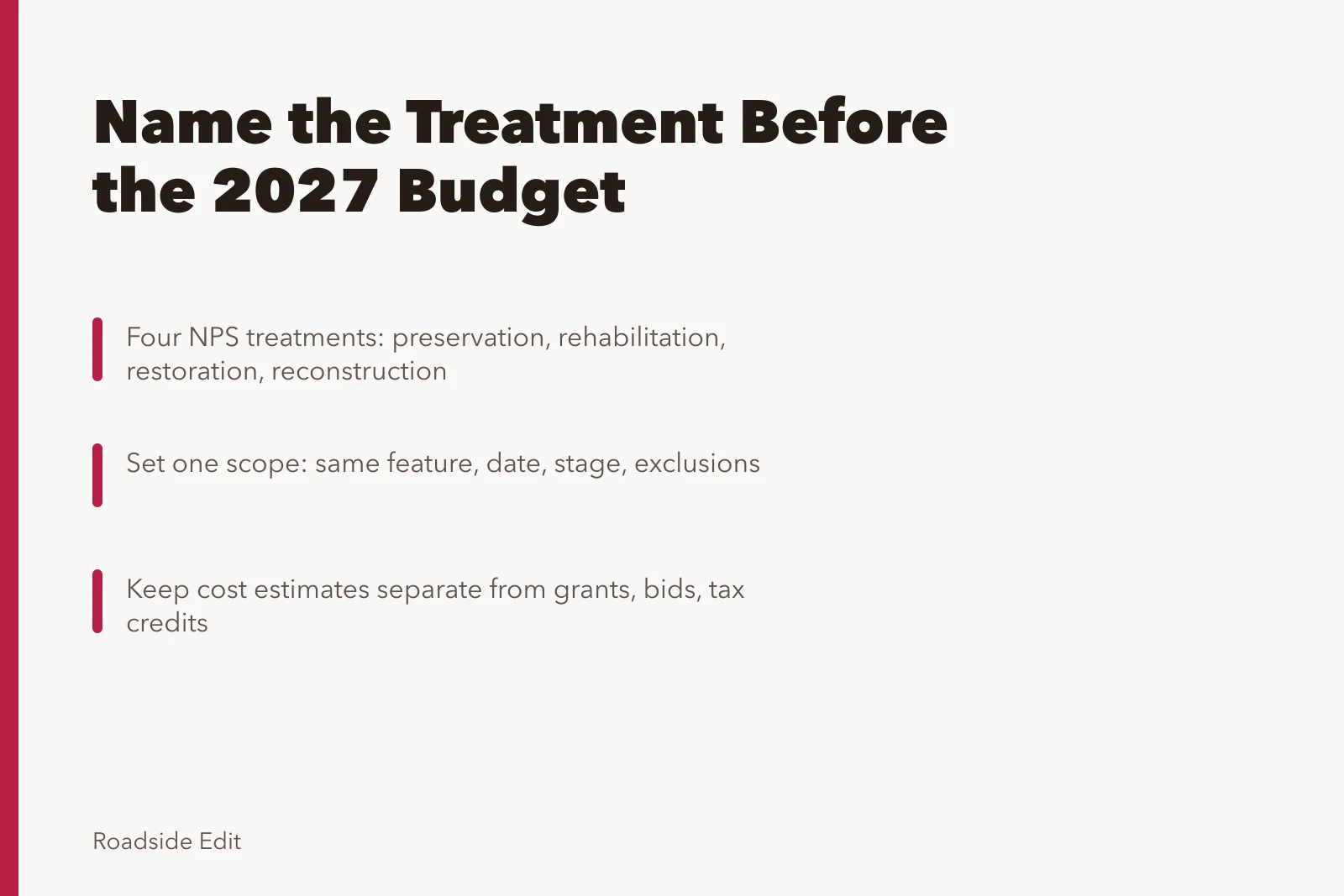
- Name the treatment before the price: preservation, rehabilitation, restoration, or reconstruction.
- Set one common scope for any 2027 comparison: same feature, date, stage, and exclusions.
- Keep cost estimates separate from grants, bids, and tax credits.
- Use public program terms, not a generic range, when a source lacks a figure.
- Leave unknowns visible so a property claim does not become a price promise.
An options comparison for a historic motel needs the same treatment scope before money enters. Preservation and rehabilitation are different goals, not price categories. Use the options below to set a shared scope, then add 2027 figures.
Name the options and the 2027 figures
The NPS treatment framework separates four approaches. See the NPS treatment summary. Review the NPS treatment standards. These are treatment definitions, not cost schedules.
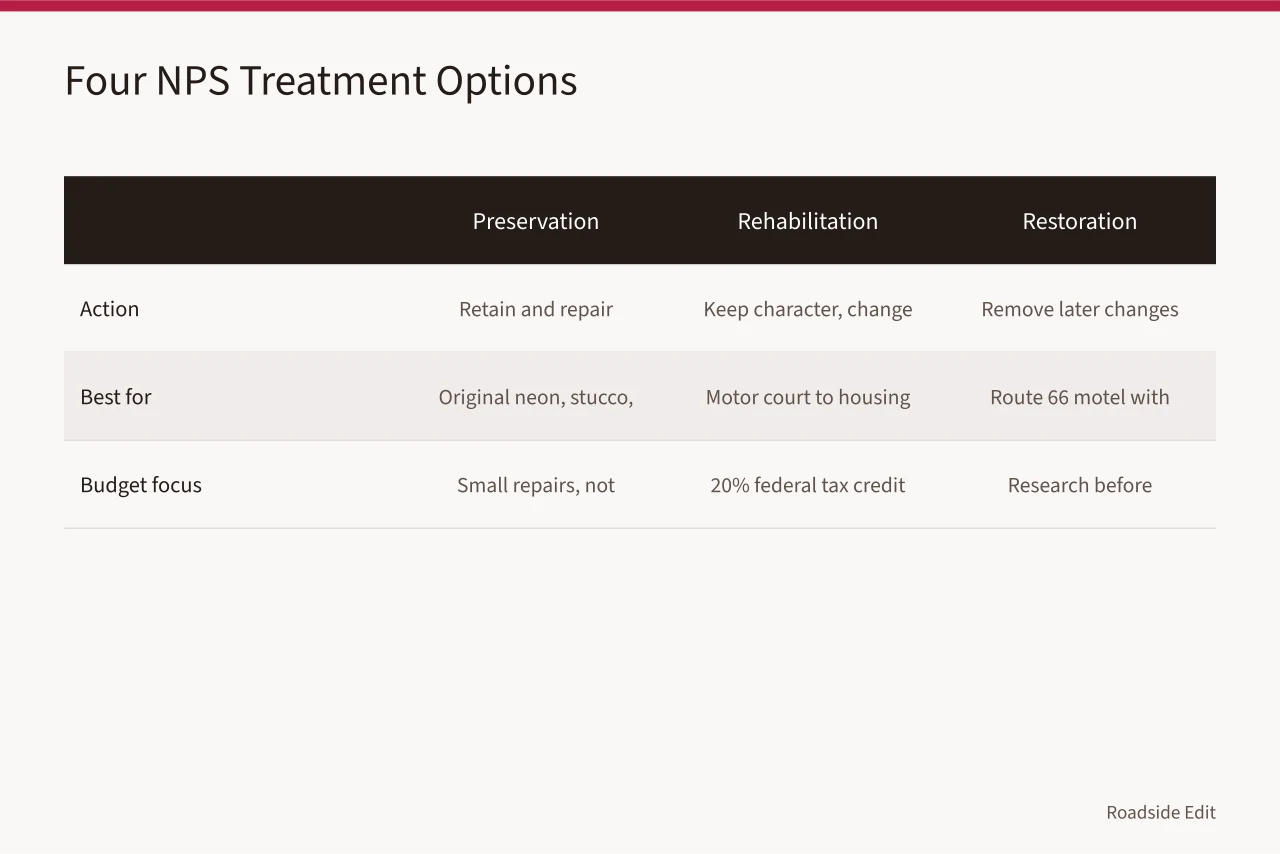
- Preservation treatment: Retain and repair existing historic material. It suits a motel with original neon, stucco, and room doors. NPS standards define it as maintenance and stabilization, so 2027 budgets should fund small repairs, not a rebuild.
- Rehabilitation treatment: Keep historic character while making compatible changes. It suits a motor court converted to housing, offices, or extended stay. The Federal Historic Tax Credit requires certified rehabilitation under NPS standards and generally provides a 20% credit for income-producing properties.
- Restoration treatment: Remove later changes to reveal a documented period. It suits a Route 66 motel with historic photos, paint evidence, and sign records. The work is period-specific, so a 2027 budget must include research before construction.
- Reconstruction treatment: Rebuild a missing feature, such as a neon sign or office. It suits a motel where documentation supports an accurate replacement. NPS standards treat reconstruction as new construction based on evidence, not as repair.
- Adaptive reuse: Convert guest rooms to apartments, hostels, or offices. It suits owners using Low-Income Housing Tax Credit or New Markets Tax Credit. LIHTC offers 4% or 9% credits through state housing agencies, and both credits require a qualified scope.
- Documentation: HABS/HAER drawings and photos at the Library of Congress. It suits a motel facing federal action or needing a preservation record. The Library of Congress posts many HABS records online for free.
- Accessibility: ADA Standards for Accessible Design. It suits a motel adding ramps, accessible rooms, or signage. Historic properties may use alternative compliance through a state historic preservation office, but the 2027 scope must state the method.
- Fire safety: NFPA 914, Code for Fire Protection of Historic Structures. It suits a motel upgrading alarms, exits, or sprinklers. It offers performance-based options that can reduce damage to historic fabric.
- Neon signs: NPS Preservation Brief 25 covers historic sign preservation. It suits a motel with an original porcelain or neon sign. The brief is free guidance, and sign restoration pricing is usually a custom quote.
Set one scope before 2027 budgets
Use a common record before comparing any figure. Read the NPS estimate definitions. Read GSA's cost-management guidance. GSA notes that estimates change as scope and requirements become clearer.
| Scope field | What to record |
|---|---|
| Treatment | Preservation, rehabilitation, restoration, reconstruction, or adaptive reuse |
| Feature | Sign, office, guest wing, roof, or systems |
| Date | Source date and the 2027 cost year |
| Stage | Planning, bid, award, completed, or unknown |
| Exclusions | Work, permits, fees, and contingencies not included |
| Funding role | Grant, tax credit, loan, or owner equity |
Public 2027 planning figures follow the same rule. A $1 million qualified rehabilitation can produce a $200,000 federal historic tax credit at 20%. A $2 million eligible LIHTC basis at 4% can generate about $80,000 in annual credits over 10 years.
The Route 66 Corridor Preservation Program has recently awarded about $500,000 in annual cost-share grants. The Paul Bruhn Historic Revitalization Grants made $12.5 million available in a recent round for rural subgrants. National Trust Preservation Funds offer $2,500 to $5,000 grants for planning and education. Check current notices before using any figure in a 2027 budget.
Common questions
Is preservation always the cheapest option?
No. Preservation can be lower for a sound building, but a rehabilitation with tax credits may net a lower owner cost. The scope decides.
Can I compare a grant award with a contractor bid?
No. A grant award is a funding source, and a bid is a price for a defined scope. Record both in separate fields.
What if no 2027 figure exists?
State the missing scope, feature, date, and stage. Then use a planning range or wait for a source-backed estimate. Do not invent a number.