Guides
Part of Neon sign restoration options compared: how owners choose the right path
How to compare neon sign restoration options before you commit
Compare neon sign restoration options: glass tube repair, new neon fabrication, LED neon flex, faux neon, and specialist conservation, with costs and limits.
What to take away
- Compare at least five physical paths: repair existing glass, make new neon, install LED neon flex, use faux neon, and hire a conservation specialist.
- Price models differ by shop labor, per-letter quotes, per-foot LED, panel fabrication, and project grants.
- Match the option to the sign condition, historic status, budget, and electrical service.
- Keep a dated record of each quote, scope, exclusion, and responsible person.
Name the options and what they do
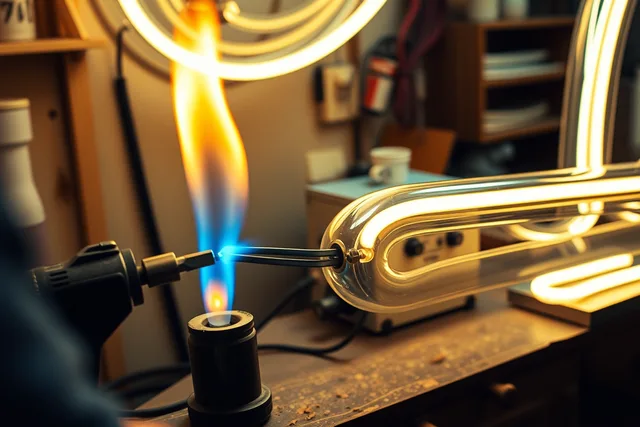
Repairing existing glass neon keeps original tube bends when the glass is sound. Let There Be Neon in New York has made and restored neon since 1972. It suits signs with intact tubes and serviceable transformers. The cost model is shop labor plus replacement electrodes, transformers, or glass. The main limit is broken or contaminated tubes that cannot be reused.
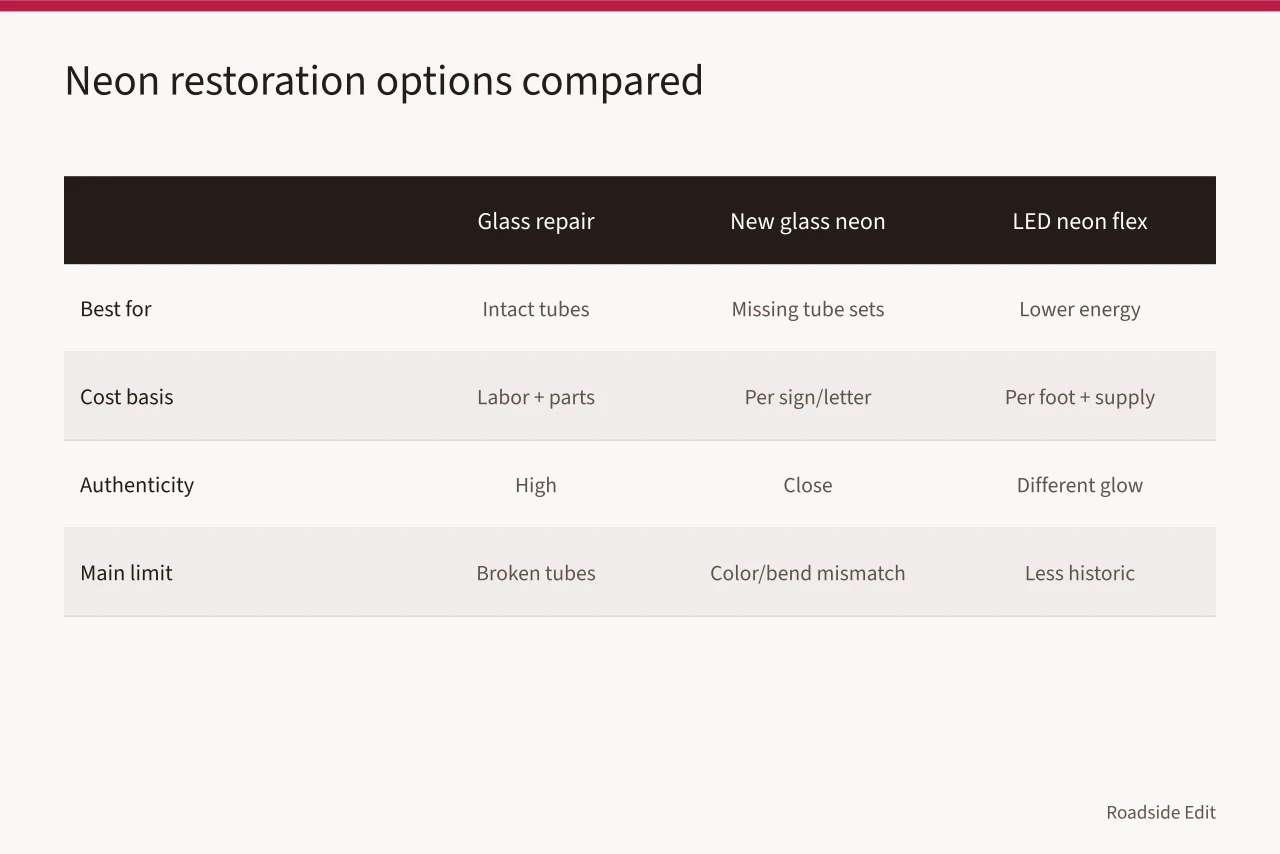
New glass neon fabrication replaces missing or unsafe tube sets. NeonSign.com sells custom glass neon signs and asks for project details before quoting. It suits owners who want a traditional look and cannot save original glass. Pricing is usually per sign or per letter. The trade-off is that new glass may not match old color, glass type, or bend radii.
LED neon flex replacement uses flexible silicone with embedded LEDs. Diode LED Neon Flex by Elemental LED and Nova Flex LED Neon by Nova Flex are two product lines. They suit owners who want lower energy use and no glass breakage. Pricing is often per foot plus power supply. The trade-off is a different glow and less historic authenticity.
Faux neon or LED channel letters use plastic or metal forms instead of glass. Gemini Signage makes dimensional letters and logos that can mimic some sign shapes. It suits tight budgets or code-driven replacements. Pricing is often per letter or square foot. The limit is that it is not neon and may fail preservation review.
Conservation by a specialist treats a sign as historic fabric. The Neon Museum in Las Vegas and the Museum of Neon Art in Glendale, California, conserve and interpret historic signs. They suit landmark or museum-grade signs. Funding is often project-based, grant-supported, or donor-supported. The limit is that these groups are not routine commercial repair shops.
Full-service sign companies can handle access, removal, and electrical work. YESCO, founded in 1920, services and restores signs across the western United States. It suits large or high-access signs that need a crew. Pricing starts with a service call and a scope review. The trade-off is that the company may recommend LED over glass for long-term maintenance.
Weigh the trade-offs
Checks: authenticity, reversibility, energy use, maintenance, permitting. Add available skills as a sixth.
Glass repair scores high on authenticity but needs a skilled tube bender, while new neon looks close to original but can alter fabric.
LED flex cuts energy and breakage but changes the look, and faux neon is cheapest but least historic. Conservation protects fabric but is slow and selective, while YESCO and other full-service firms solve access but may push modern parts.
Document before you commit
The Library of Congress's digital imaging workflow for treatment documentation shows why records need dates, captions, and file context. The National Park Service documentation standards and guidelines cover recording historic properties. Use these to label photos and source claims before you compare quotes. They do not select a restoration method for your sign.
The OSHA electrical eTool for Subpart S covers electrical-installation topics and qualified-person issues. Keep electrical decisions with a licensed electrician or sign contractor. The Federal Trade Commission's endorsement guides apply when a directory, profile, or testimonial includes a paid relationship. Label provider claims as provider claims.
Save the comparison note
Record the date, sign condition, option quoted, reused parts, and new parts. Then note price basis, exclusions, warranty, permit duty, and next action. If the choice changes, add a dated reason instead of deleting the old note. This record keeps an article or directory profile from being mistaken for a work order.
Check the boundary before committing
- Does the quote say whether glass, LED, or faux materials will be used?
- Are electrical, structural, access, and permit duties named?
- Has the local historic review or preservation office weighed in?
- Is any paid placement or testimonial clearly disclosed?
- Can a future reviewer find the source and version used?
Common questions
Can I mix restoration options?
Yes. You can repair some glass letters, replace others with new neon, and use LED flex for hidden backlighting.
Is LED neon flex a restoration?
It is a replacement when original glass and transformers are removed. It can be reversible if the original parts are saved.
Who decides for a landmark sign?
The local historic review or preservation office decides, not a general article or a single vendor quote.