
Guides
Neon sign restoration options compared: how owners choose the right path
Neon sign restoration options compared for 2027 sets out four paths, the shops that work each one, and what each path cannot decide for owners.
Neon sign restoration options compared here split into four paths. A 1950s porcelain-enamel station sign and a 1960s plastic-faced box sign fail in different places, and the shops that repair them are not the same shops. "Restoration" covers four distinct paths. Each one produces a different deliverable, and each one stops at a different boundary.
What to take away
- Four paths exist: survey documentation, planning and specification, fabrication and re-tubing, and site-specific professional review.
- Fabricators re-tube glass and rebuild transformers. Sign survey firms record condition. Conservators treat enamel and porcelain. Few firms do all three.
- A condition survey gives you a dated record. It does not tell you what treatment to choose.
- Neon work is electrical work. The authority having jurisdiction and a licensed electrician set the rules, not an article.
- Ask every firm for a sample report, a scope of exclusions, and three references from signs of similar age and material.
Neon sign restoration options, and who works them
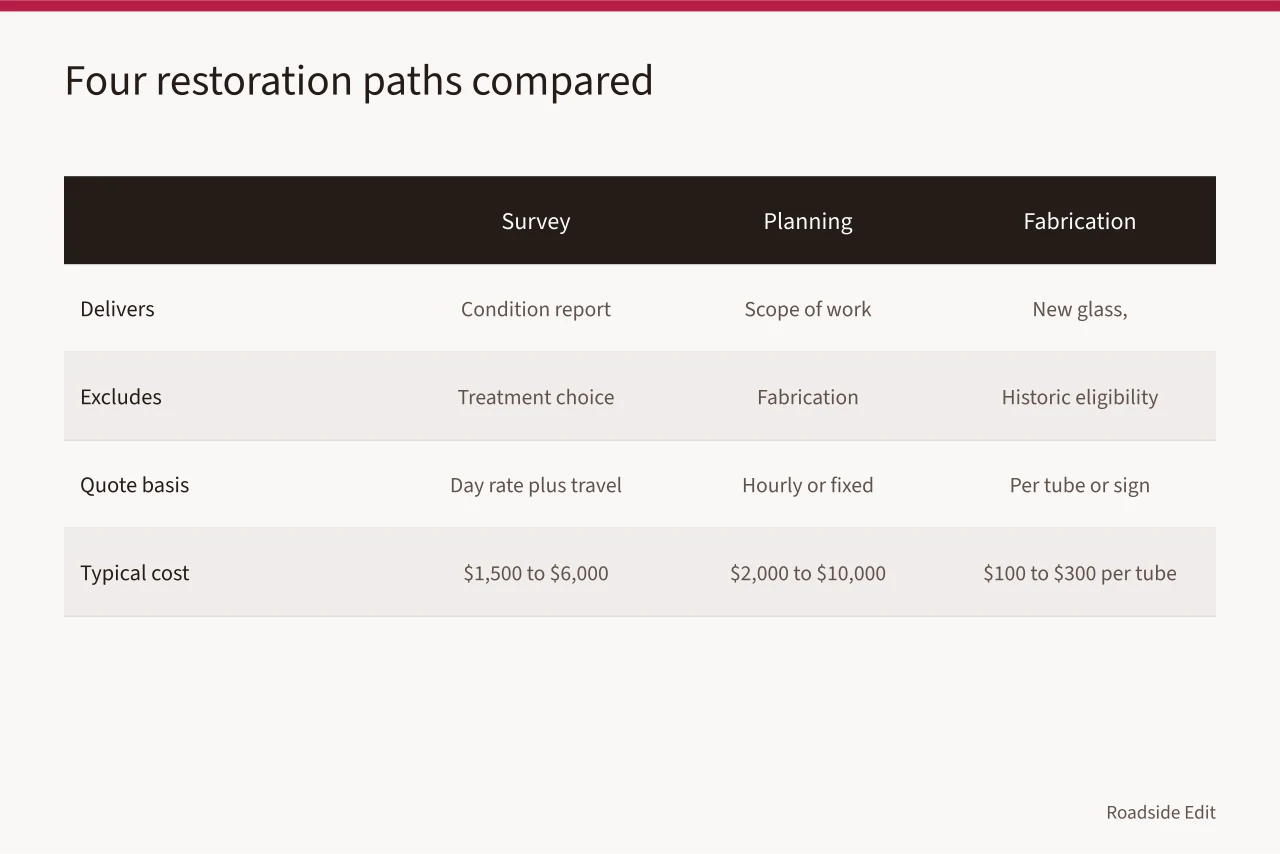
| Option | Named providers or sources | What it delivers | What it excludes | Typical quote basis |
|---|---|---|---|---|
| Survey and documentation | Preservation consultants; National Park Service documentation standards; American Institute for Conservation directory for material conservation | Dated condition report, photo log, material notes, source list | Treatment selection, cost estimates, permit outcomes | Survey days times day rate, plus travel; single-sign surveys typically $1,500 to $6,000 in most markets as of 2026 |
| Planning and specification | Preservation architects and heritage consultants; Secretary of the Interior's Standards; Advisory Council on Historic Preservation standard treatments guidance | Scope of work, Standards citations, bid package | Fabrication, electrical design, legal review | Hourly or fixed fee; single-sign scopes typically $2,000 to $10,000 in most markets as of 2026 |
| Fabrication and re-tubing | Neon Sign & Lighting Service, Megahertz Neon, Federal Heath, DCL Sign, Ramsay Signs, YESCO | New glass, electrodes, transformers, can, and mounting hardware | Historic eligibility findings, compliance rulings | Per tube, per transformer, per sign, or contract; simple exposed-neon re-tubes often $100 to $300 per tube in most markets, custom matches cost more |
| Site-specific review | Licensed engineer, licensed electrician, SHPO or local landmarks commission | Signed findings, permit conditions, compliance determination | A reusable answer for a different sign | Permit fees plus hourly rates; engineering and electrical reviews commonly $100 to $250 per hour in most markets |
Each row is a different trade with a different insurance profile and a different contract. Hiring one does not get you the others.
Fabricators and shops that do this work
These firms are known in the trade for neon and historic sign work. Confirm current services and coverage directly, because small shops change scope often.
- Neon Sign & Lighting Service (Chicago) re-tubes existing glass, rebuilds electrodes, and services transformers on vintage roof and projecting signs. It suits owners of pre-1970 exposed neon. Pricing is per tube and per transformer, quoted after inspection.
- Megahertz Neon (Salt Lake City) fabricates replacement glass to match original tube diameter and bend patterns. It documents the bends before removal. It suits signs where the original tubing survives in part. Project pricing.
- Federal Heath (Delaware, national) is a full-service sign company with a service division that handles historic re-tubing alongside modern signage. It suits larger owners who need one vendor across a portfolio. Contract pricing.
- DCL Sign (Michigan) works on porcelain-enamel and painted-metal sign faces as well as neon. It suits mid-century station and motel signs with damaged enamel. Quoted per sign.
- Ramsay Signs (Portland, Oregon) has restored exposed neon on commercial storefronts and theater marquees since the 1950s. It suits urban storefront and marquee work. Project pricing.
- YESCO (Salt Lake City, national) operates a service network and has restored large historic signs, including casino and theater work. It suits big signs needing a national contractor. Contract pricing.
For enamel and porcelain specifically, the conservation route runs through firms listed by the American Institute for Conservation, not through a commercial sign shop. A conservator treats chipped enamel and rust staining. A fabricator replaces the face.
What a condition survey actually contains
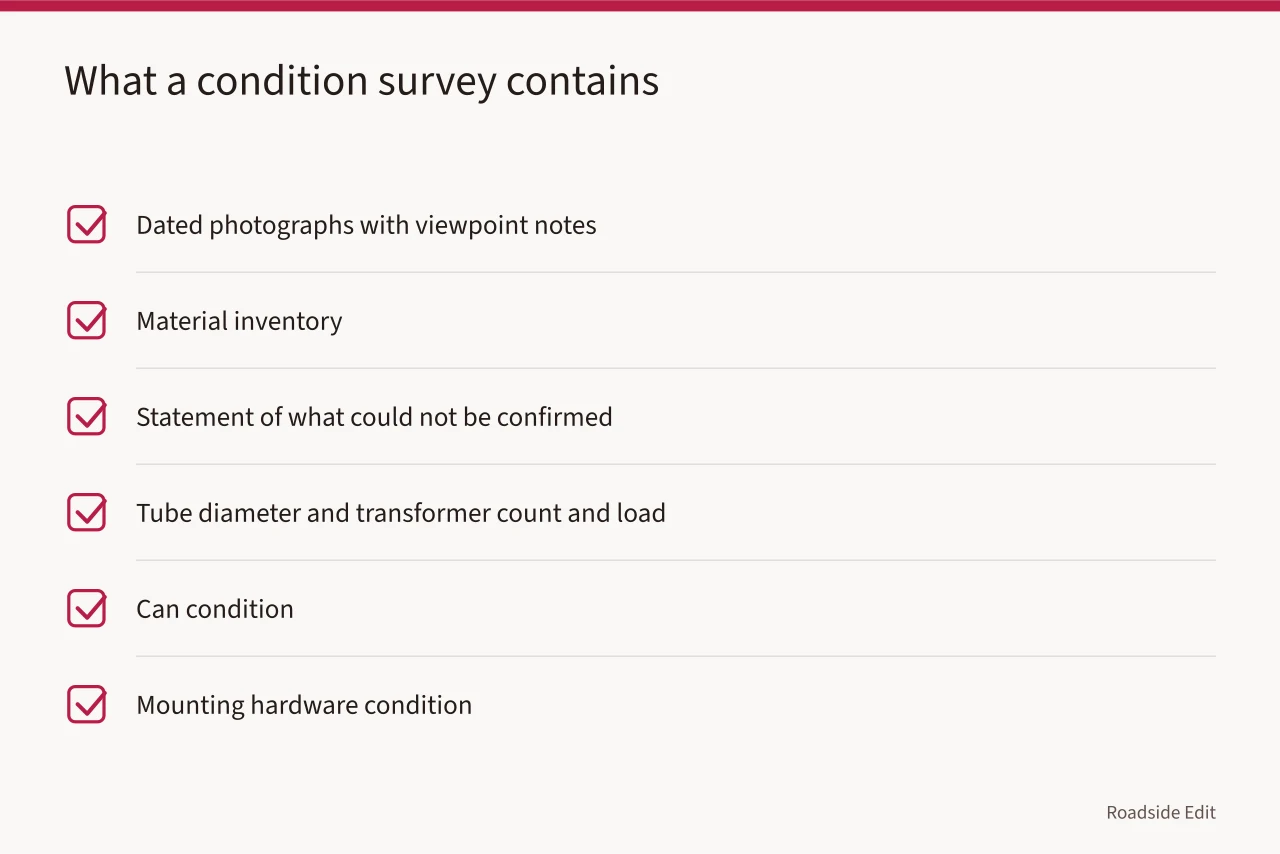
A survey is the cheapest path and the one most often skipped. It should carry dated photographs with viewpoint notes, a material inventory, and a plain statement of what could not be confirmed. Tube diameter, transformer count and load, can condition, and mounting hardware all belong in it.
The National Park Service documentation standards and guidelines describe how historic properties are recorded. They do not decide treatment for one sign. They do set the habit: date the evidence, name the source, and state the limit.
A survey does not tell you whether to re-tube or replace. It tells you what is there.
Where planning ends and fabrication begins
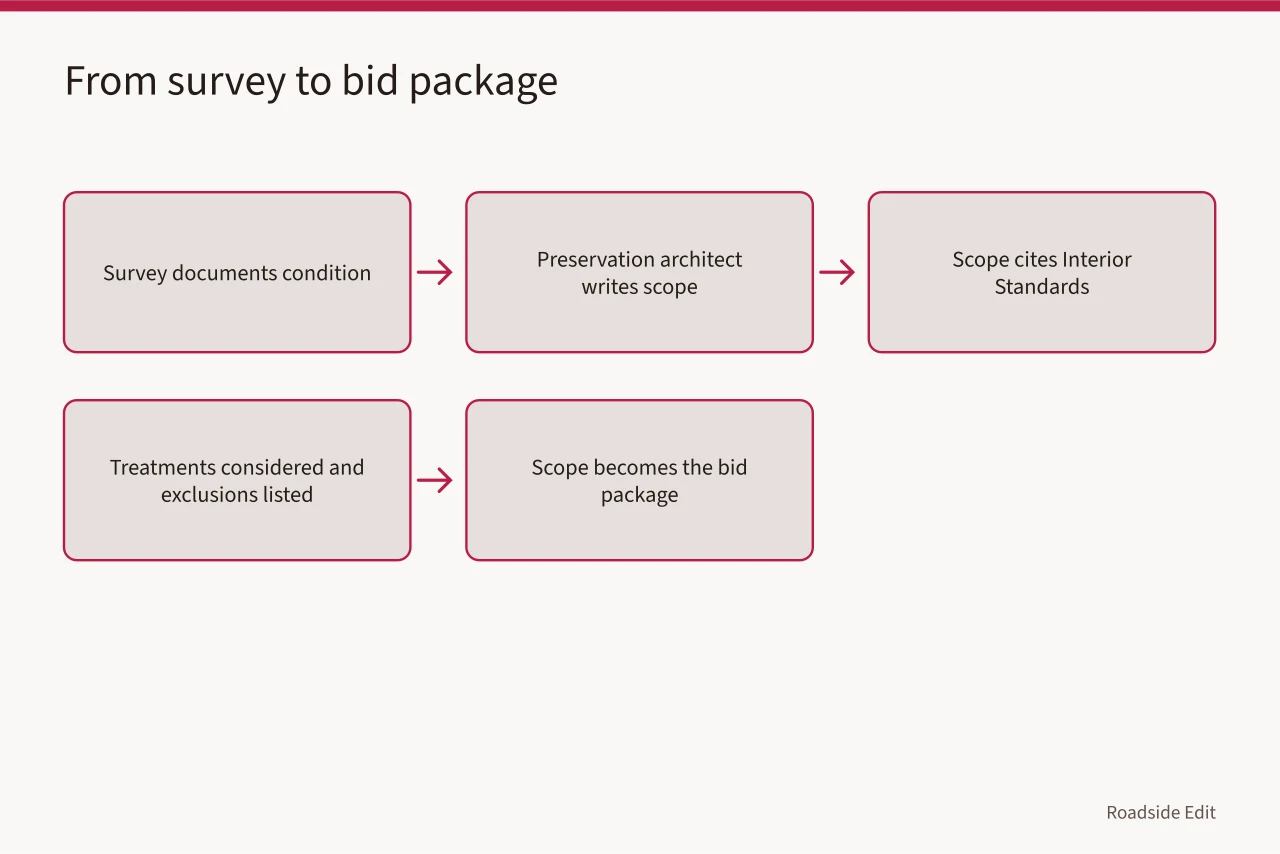
A preservation architect turns a survey into a scope of work. That scope cites the Secretary of the Interior's Standards, names the treatments considered, and lists what is excluded. It becomes the bid package.
The Advisory Council on Historic Preservation standard treatments guidance describes program alternatives used in federal Section 106 review. It does not govern a private sign. It is useful for terminology when a project touches federal funding, a federal permit, or federal land.
If federal involvement is possible, the responsible agency runs its own process. Keep the project record and route the question to that agency or its adviser.
The electrical boundary
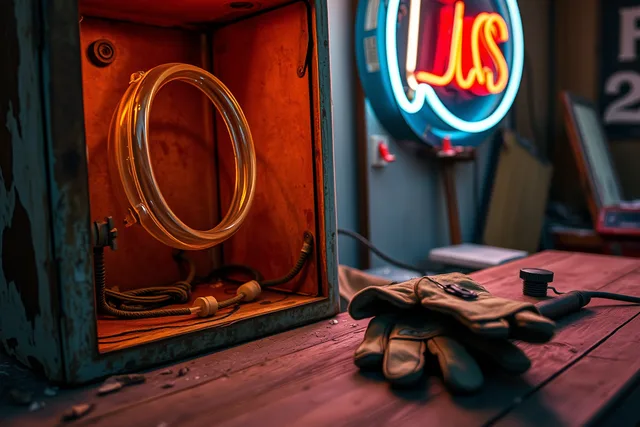
Re-tubing a sign means working on a transformer and a circuit. No article can tell you how. The OSHA electrical eTool for Subpart S covers installation topics including qualified-person requirements. It is not neon guidance, and it is not a substitute for the electrician who signs the work.
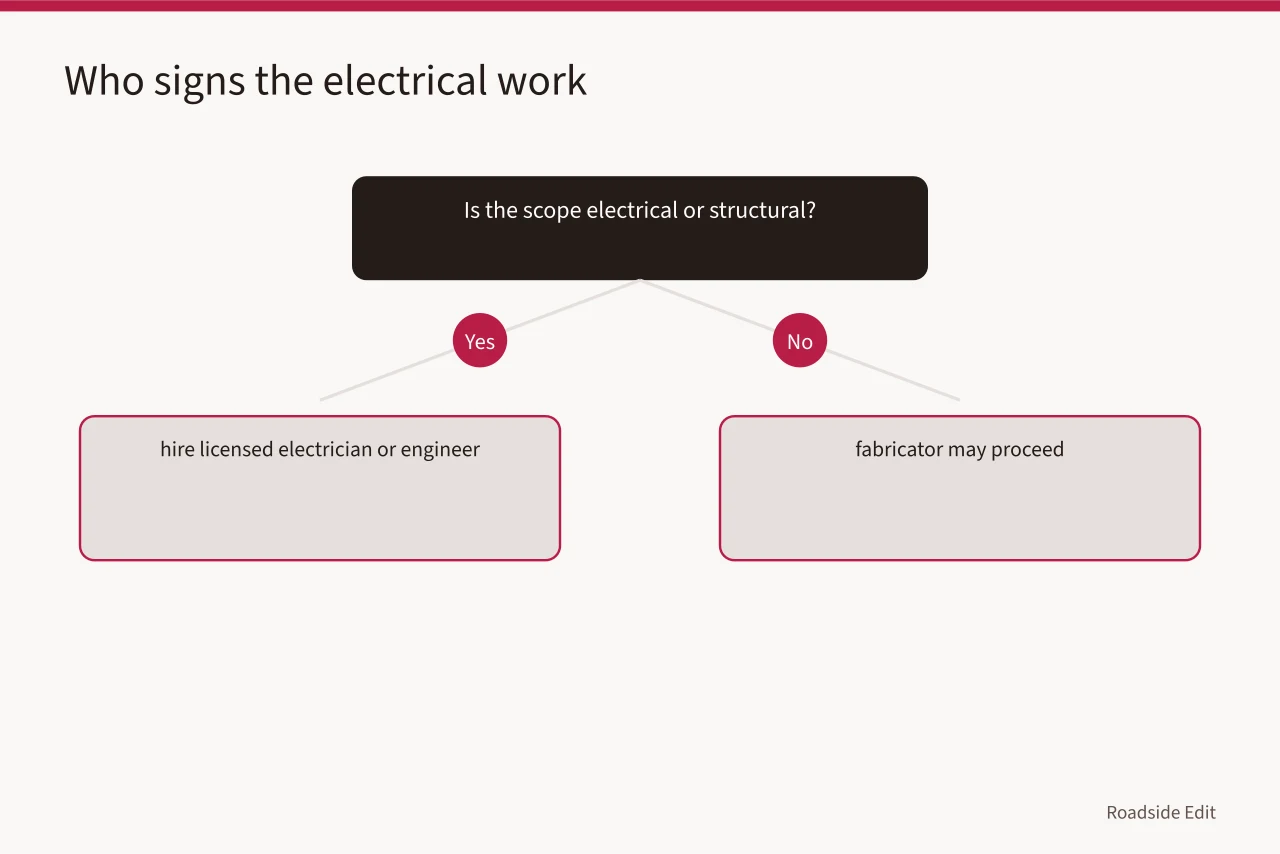
Ask the authority having jurisdiction which permits apply and who may pull them. Then hire a licensed electrician for the electrical scope and a licensed engineer if the can, the mounting, or the roof structure is in question. A fabricator who will not name those two people is not set up for historic work.
Worked example: choosing between a survey and a re-tube
An owner has a 1958 projecting sign with roughly 60 percent of the original glass and a working transformer of unknown age.
- Commission a condition survey. Cost is survey days times day rate, plus travel.
- If the survey shows the can and mounting are sound, go to a fabricator for re-tubing. Ask for the bend pattern to be recorded before removal.
- If the survey shows enamel loss on the face, add a conservator to the scope.
- If the survey flags the mounting or the roof, stop and hire a licensed engineer before any fabrication contract is signed.
- Write a decision note: date, option considered, evidence reviewed, who decided, next action.
Step four is the one owners skip. It is also the one that turns a repair into a structural project.
Getting a fair comparison from bidders
Ask each firm for the same three things: a sample report from a sign of similar age, a written list of exclusions, and three references you can call. A bid that does not state exclusions is not a bid.
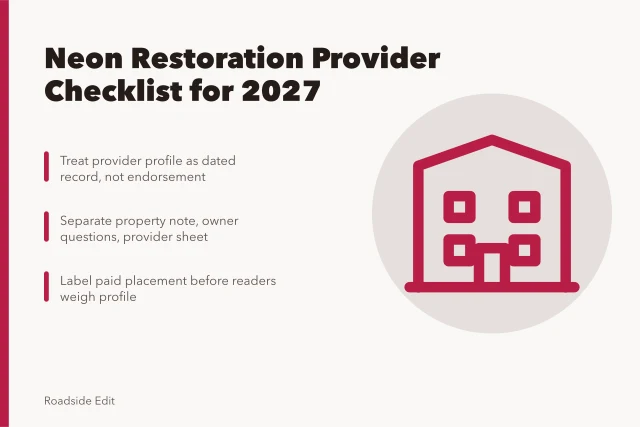
For directory placements and sponsored profiles, disclose the payment and the selection method. The Federal Trade Commission endorsement guides cover endorsements and testimonials in advertising. They do not establish a sign's history. They do require that a reader can tell where commercial material begins.
Image records need the same care. The Library of Congress Prints and Photographs collections show how image items carry descriptive and rights information. Check an image's own record before using it as evidence.
Sequencing the four paths
The order is not fixed. A survey often comes first, but a fabricator's inspection can reveal that documentation is missing and send the owner back to step one. A planning scope can be written before or after the survey, depending on whether the owner needs a bid package or a record.
What matters is that each path produces its own artifact and its own limit. Keep the artifacts together. A future owner, reviewer, or options comparison is only as good as the record behind it.
Where the question leaves editorial scope, name the professional. A research plan can define the question, but a licensed engineer, a licensed electrician, or the state historic preservation office answers it. For records questions, start with the safety and records guidance, then choose the right restoration help for the trade the sign actually needs.
Common questions
Can one firm handle all four paths?
Rarely. Large sign companies such as YESCO and Federal Heath cover fabrication and service. Survey firms cover documentation. Conservators cover enamel and porcelain. Expect to hire two or three, and expect the contracts to be separate.
How do I know which path I need first?
Start with the decision you have to make. If you need a record before anything else, commission a survey. If you already have a record and need a bid, hire a preservation architect. If the question is electrical or structural, go straight to the licensed professional.
Does naming a fabricator mean you recommend it?
No. The list names firms known for this work so you can start calling. Confirm licensing, insurance, and current scope yourself, and check references from signs of comparable age and material.
What if the sign is on a federally funded project?
Section 106 review may apply, and the responsible agency runs it. Keep your project record, and direct the question to that agency or a qualified preservation consultant rather than to a fabricator.