Guides
How to build a neon sign restoration case study: a 2027 method guide
Build neon sign restoration case studies for 2027 with a clear question, dated evidence, source limits, image credits, attributed accounts, and correction notes.
A useful neon sign case study is not a site inspection, treatment report, or endorsement. It states what a specific record shows, what an identified person or institution reports, and what remains uncertain.
The method is simple: ask one answerable question, separate observations from interpretations, name each source and its limits, and publish a correction route. That gives agencies, owners, businesses, and readers articles they can improve, without the page claiming technical authority.
What to take away
- Start with a narrow historical or editorial question, not a conclusion.
- Date every observation, quote, image, and supplied update.
- Keep direct observation, source-backed fact, attribution, and interpretation in separate lanes.
- Use images as evidence only within the limits of their caption, date, viewpoint, and source.
- Explain sponsorship or supplied material near the relevant case-study section.
Choose a question the records can answer
The best case study question is modest. It might ask how a sign appeared in a dated photograph, how a business described a project at a particular time, what records are publicly available about a streetscape, or how different sources describe a change.
It should not start with claims like "the sign was fully restored," "the work was successful," or "this provider is the best."
Those statements require evidence and expertise a general feature may not possess.
Write the question before gathering material. Then identify what would count as evidence, what would count as a business or owner statement, and what the article cannot determine. This prevents a feature from collecting attractive images first and inventing a conclusion afterward.
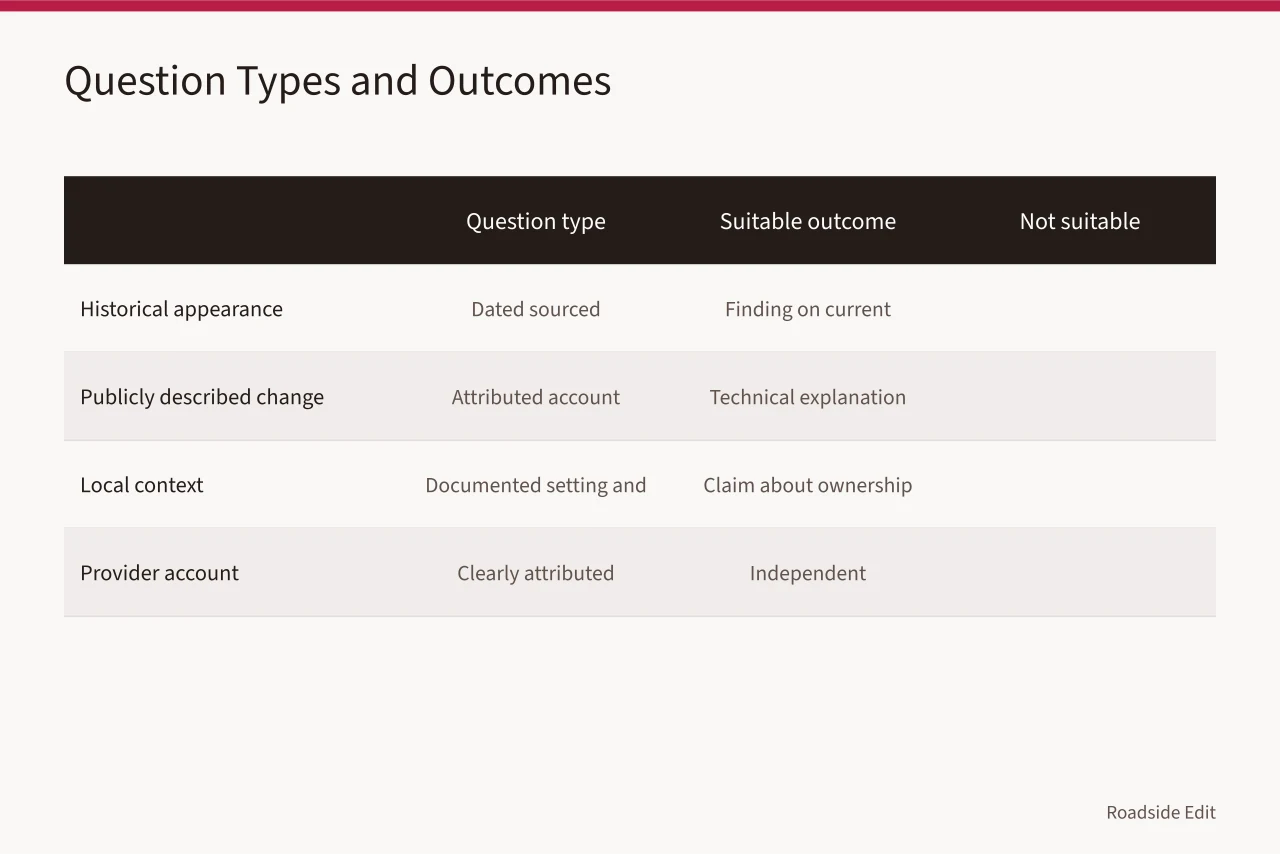
| Question type | Suitable article outcome | Not a suitable outcome |
|---|---|---|
| Historical appearance | Dated, sourced description of an image or record | A finding about current condition |
| Publicly described change | Attributed account with a source date | A technical explanation of why it happened |
| Local context | Documented setting and chronology | A claim about ownership or permission |
| Provider account | Clearly attributed project description | Independent certification of quality |
Build an evidence packet
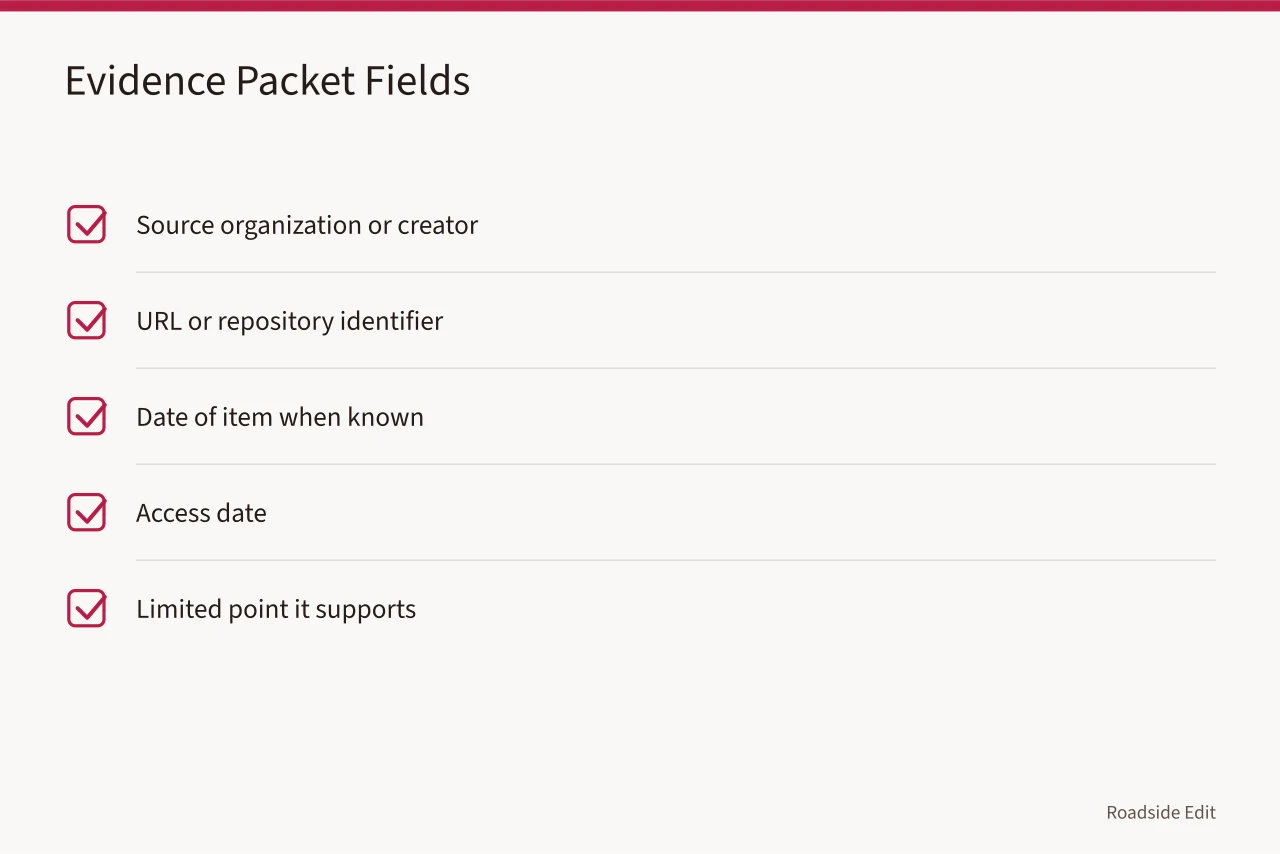
Create a small evidence packet before writing. It can include a source log, image file details, interview or submission notes, public-record links, and a list of unanswered questions. The packet is not a technical project file. It is the editorial record that lets a later writer explain where a sentence came from.
A scanned photograph may establish an image exists and what its caption says. It cannot establish the sign's present condition, why a change occurred, or who did the work.
A business statement may establish what the business says it did. It does not, by itself, prove the statement as an independent fact.
The National Archives explains what makes a primary source: whether a source is primary depends on the question asked. That distinction helps an editor avoid calling an old item definitive when it only answers one narrow historical question.
The Library of Congress notes in its guide to researching images that visual research requires weighing what is known about image makers and subjects, technical processes, and an image's intended purpose. The practical point here is narrow: a compelling photograph needs context before it carries a factual claim.
Separate four kinds of statements
Readers should be able to tell which kind of sentence they are reading. A clean case study uses four labels in the writer's notes, even if the labels are not all printed on the page.
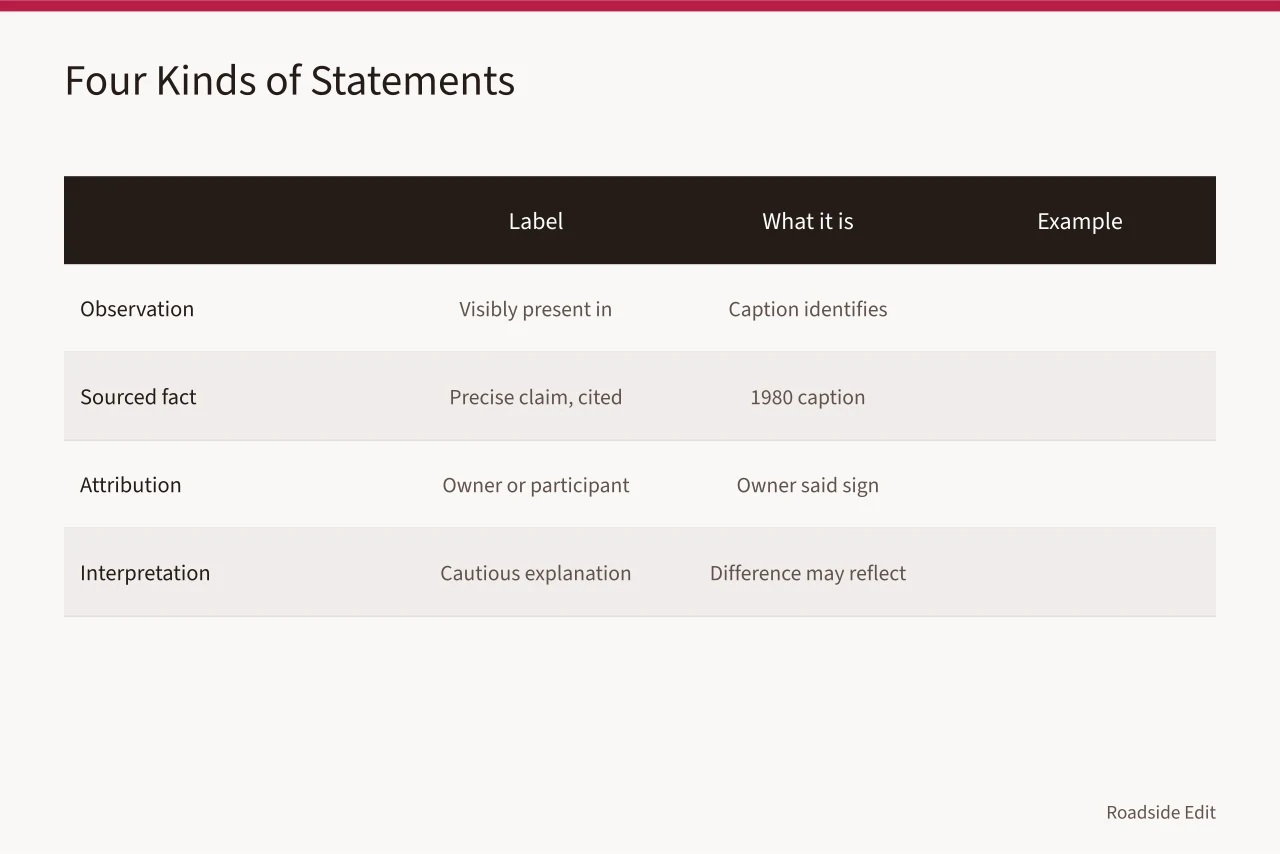
- Observation: what is visibly present in a dated image or what a named record states.
- Sourced fact: a precise claim supported by a specific, cited source.
- Attribution: an owner, agency, business, or participant's own account.
- Interpretation: a cautious explanation of how the evidence may fit together.
A sourced fact: "The 1980 collection caption identifies the business name," when the collection record is linked. Attribution: "The owner said the sign was repainted in 2026."
"The difference may reflect a later repaint" is interpretation, not a finding. "The sign looks newer" is neither a useful observation nor a well-supported fact unless the wording ties to observable, dated details.
Write the timeline without inventing gaps
A timeline is often the heart of a case study. Give each event a date or a date range, then state the basis for it. If the date is uncertain, say so. If the evidence is a submitted business note, label it. If two sources conflict, show the conflict rather than forcing a neat story.
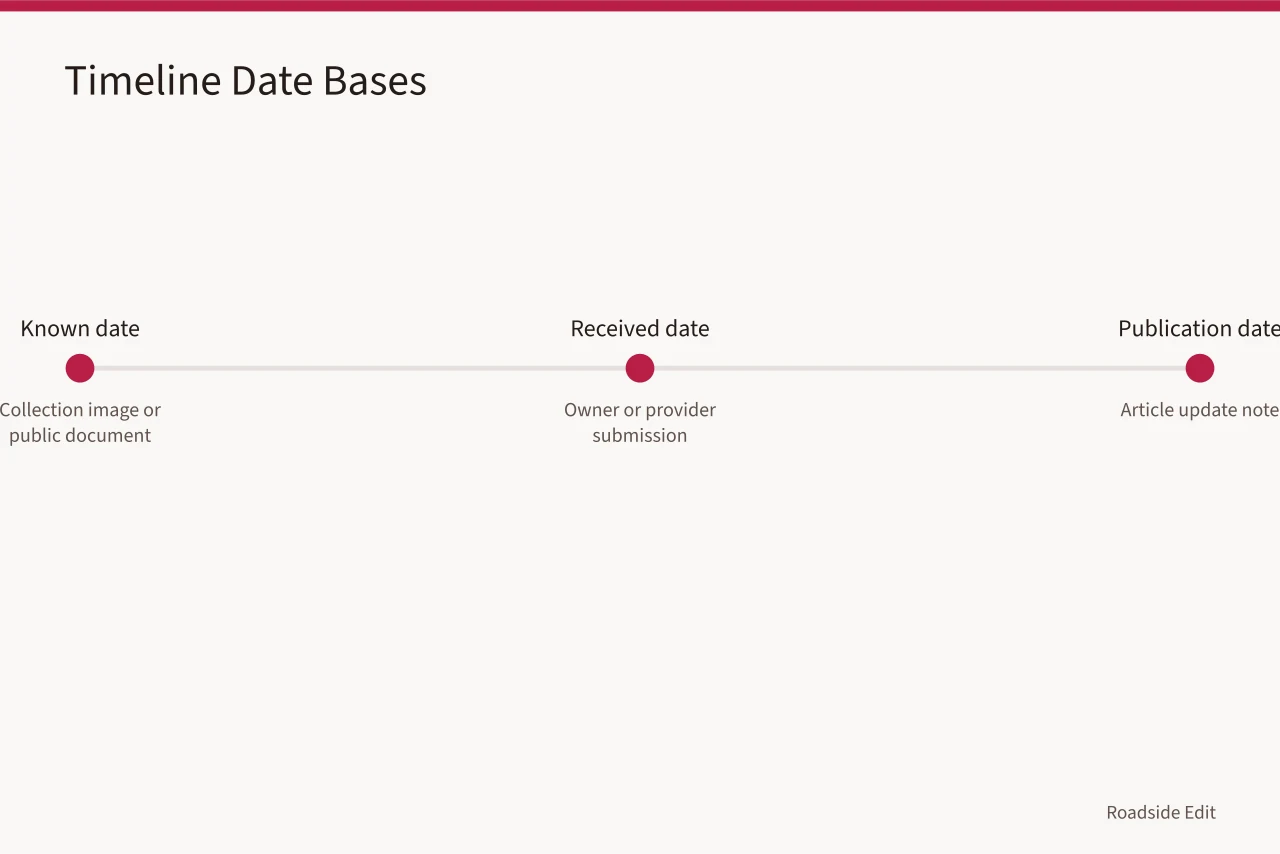
| Date | Record | What it supports | Limitation |
|---|---|---|---|
| Known date | Collection image or public document | A dated description or caption | Not proof of current conditions |
| Received date | Owner or provider submission | The submitter's account | Not independent verification |
| Publication date | Article update note | When the page was reviewed | Not proof that every source is current |
Avoid words that suggest a timeline is complete when it is not. "Available records reviewed for this feature" is more accurate than "the complete history." A gap is information. It tells the reader what the article does not yet know and gives the appropriate owner, archive, or agency a specific opportunity to contribute a record.
Use images as accountable context
Images make a case study readable, yet they invite the most tempting overclaims. Each one needs a caption saying what it is, a credit linking to its source page, and a note on whether it is context or evidence.
Do not present a picturesque sign from another town as documentation of the property under discussion.
A caption can say, "A 2018 photograph of a roadside diner sign in Pennsylvania, used as contextual illustration." It should not say, "Example of restoration damage" unless a source supports that exact diagnosis. Similarly, a historic photograph belongs in a dated historical section, not beside a current operating-hours claim.
The National Park Service's historic-place inquiry method treats photographs and documents as evidence to analyze. A case-study editor can apply that approach by describing the visible detail first and reserving broader conclusions for a source that actually establishes them.
Handle interviews and submissions carefully
Case studies often benefit from local voices. The most responsible approach is to preserve the source of the voice. Note who spoke, their relationship to the property or project, the date, and whether the statement was edited for length. Quote only what the speaker actually said. If an owner or business supplies background material, identify it as supplied material.
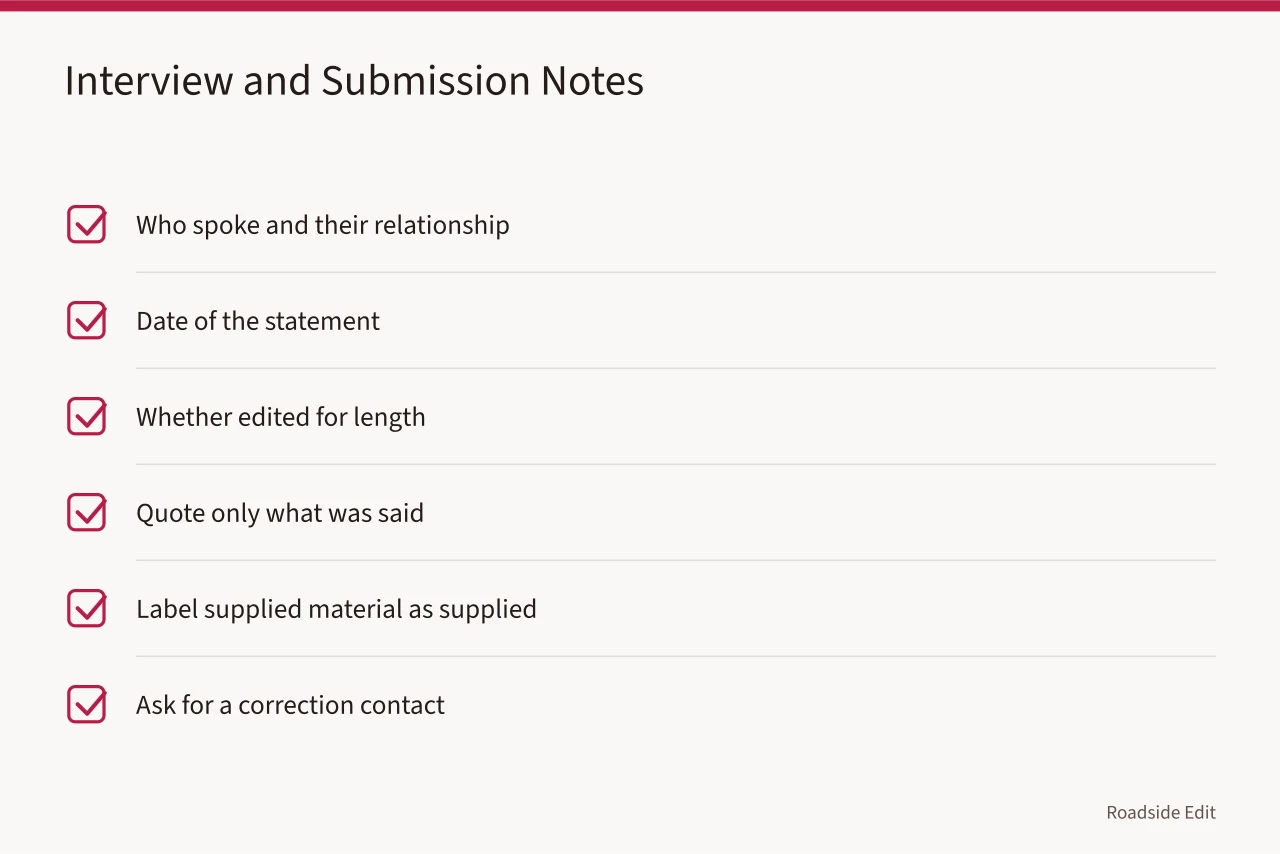
Ask each contributor for a correction contact. Then give them a narrow invitation: correct a name, date, role, supplied description, or caption with a supporting record. Do not promise that every requested change will be accepted. The article still needs to preserve attribution, evidence, and an intelligible correction history.
Make paid material visible
Case studies can contain paid placement or supplied images, but the relationship should never hide inside a disclosure policy. Place a plain-language label near the beginning of the relevant feature. Do not imply that payment purchased an independent conclusion, a ranking, or a technical review.
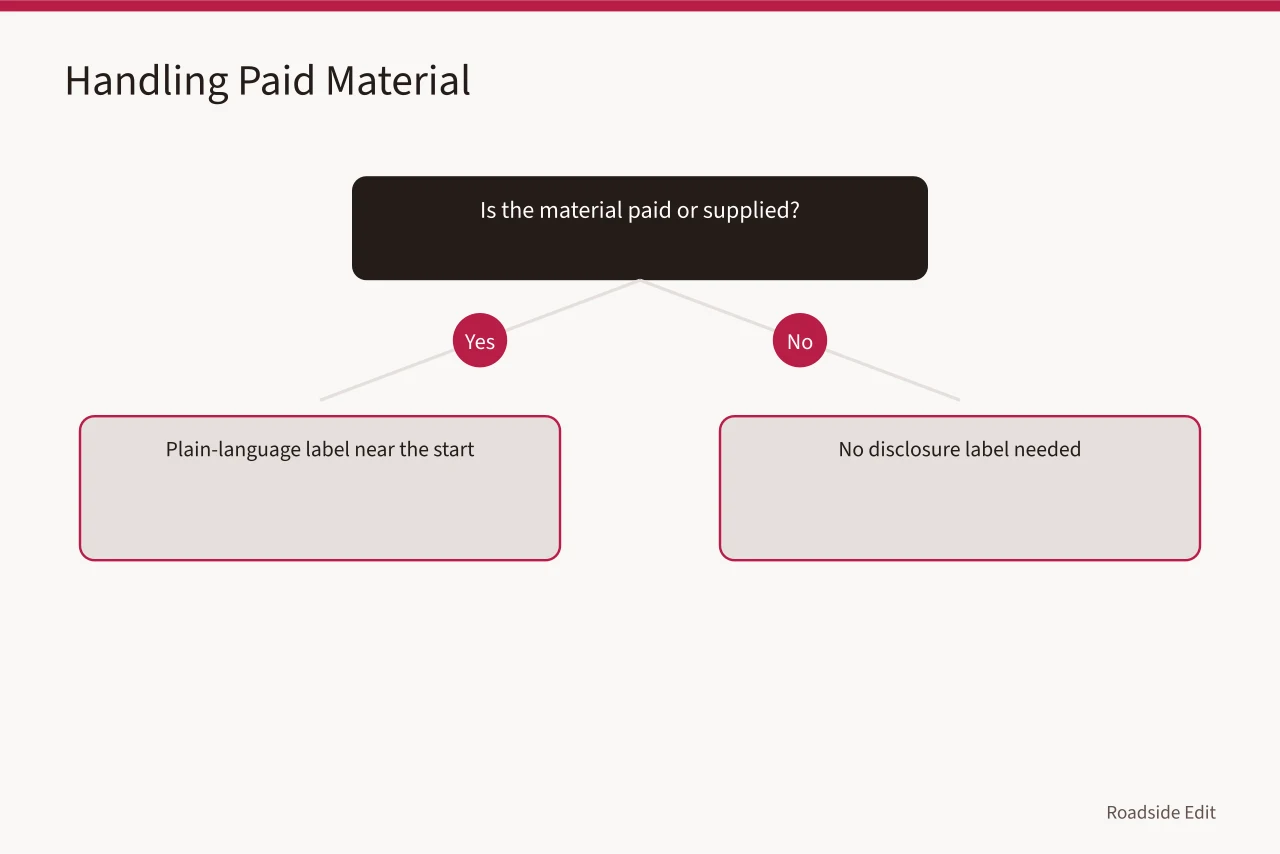
If a provider funds a profile, the case study can report the provider's own account in an attributed section. It cannot describe the provider as approved, recommended, or uniquely qualified unless an exact, independent basis for that word is present and explained. This protects the reader and gives a participating business a fair, accurate place to present information.
The Federal Trade Commission's endorsement guidance says a connection that could affect how readers evaluate an endorsement should be disclosed clearly and conspicuously. A label gives the audience context; it does not prove a business claim or settle a disputed project account.
Publish a repeatable case-study structure
Use the same sections on every case study. Consistency makes it easier for readers to understand what the page covers and makes it easier for editors to review later updates.
- The question and the limits of the feature.
- The location or subject context, with dated sources.
- A short timeline that identifies evidence and attribution.
- Images with captions, credits, and an evidence-or-context label.
- Unanswered questions and the appropriate correction route.
- A disclosure statement if supplied or paid material is present.
This structure leaves room for a strong story without asking the article to perform work it cannot do. A case study becomes valuable when it is easy to check, easy to correct, and candid about the boundaries of its evidence.
Before publication
Review the draft line by line. For each sentence, ask if it is an observation, a source-backed fact, an attributed report, or an interpretation. If it fits none, rewrite or remove it.
Check that no image exceeds what its caption allows. Check that the headline does not promise a result the article cannot establish. Finally, confirm a contributor or reader can submit a factual correction without negotiating the article's opinion.
Common questions
Can a case study say a sign was restored?
Only when a specific source supports that statement. Otherwise, describe the dated record, attribute the report, or state that the work history is not confirmed.
Can a business submit its own project story?
Yes. Label it as business-supplied material, give it a date, and do not present it as an independent evaluation.
What happens when two sources disagree?
Name the disagreement, identify each source and date, and avoid choosing a conclusion unless evidence supports resolving it.
Does an image prove a current condition?
No. It supports only the limited, dated observation that its source and caption allow.