Guides
Part of How to compare roadside architecture treatment options before you choose
Roadside architecture adaptation questions to ask before you describe a change
Match each verb to the record behind it so a rendering, permit or completion note never reads as a finished roadside change you cannot source.
An adapted roadside building may get a new tenant, a moved entrance, a service addition, or a curb cut on the forecourt. Each of those is a physical change with its own paper trail. The writing problem is narrower than it looks: name the feature, name the record, and let the verb carry the weight.
What to take away
- A rendering supports "depicts." Only a completion record supports "now has."
- A permit identifies proposed work. It does not report finished work.
- Photograph the entrance, sign, canopy and curb cut on a stated date before you describe them.
- Keep the use, the physical change and any review decision in separate sentences.
- File the source title, issue date and publisher with the draft, not after it.
Read the feature, then read the record
Start with the physical feature the record names. An entrance moved from the pump-island corner to the side elevation is an alteration. A flat-roofed service bay added behind the canopy is an addition. A new curb cut is an access feature.
Then match the record to that feature. A drawing set shows intent. A permit shows that someone filed. A completion record shows the work happened.
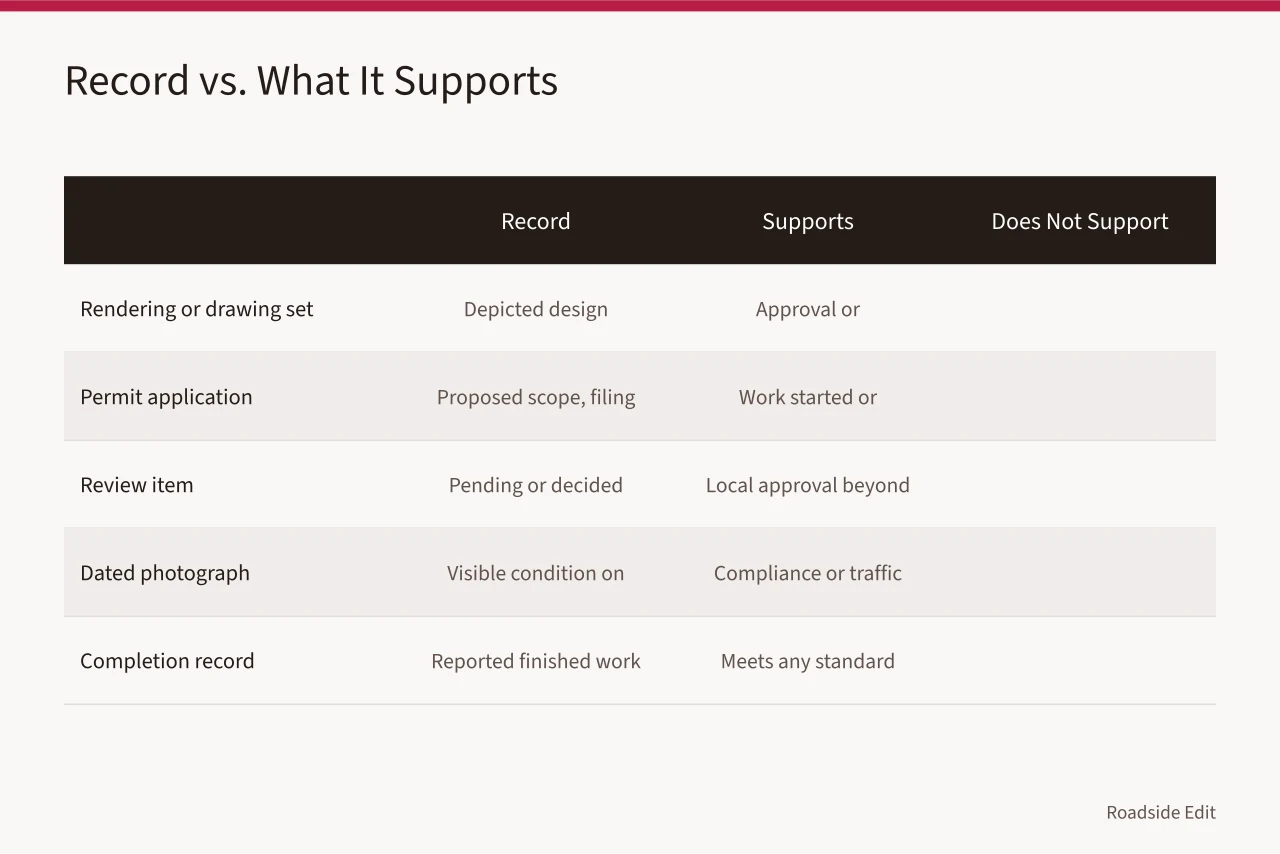
A business listing or a temporary banner is a lead. It tells you someone is there. It does not tell you what was built.
Choose the verb before you choose the sentence
Most unsupported claims in this trade come from one verb. "The station now has a side entrance" asserts a present fact. "The 2026 drawing set depicts a side entrance" asserts only what the sheet shows.
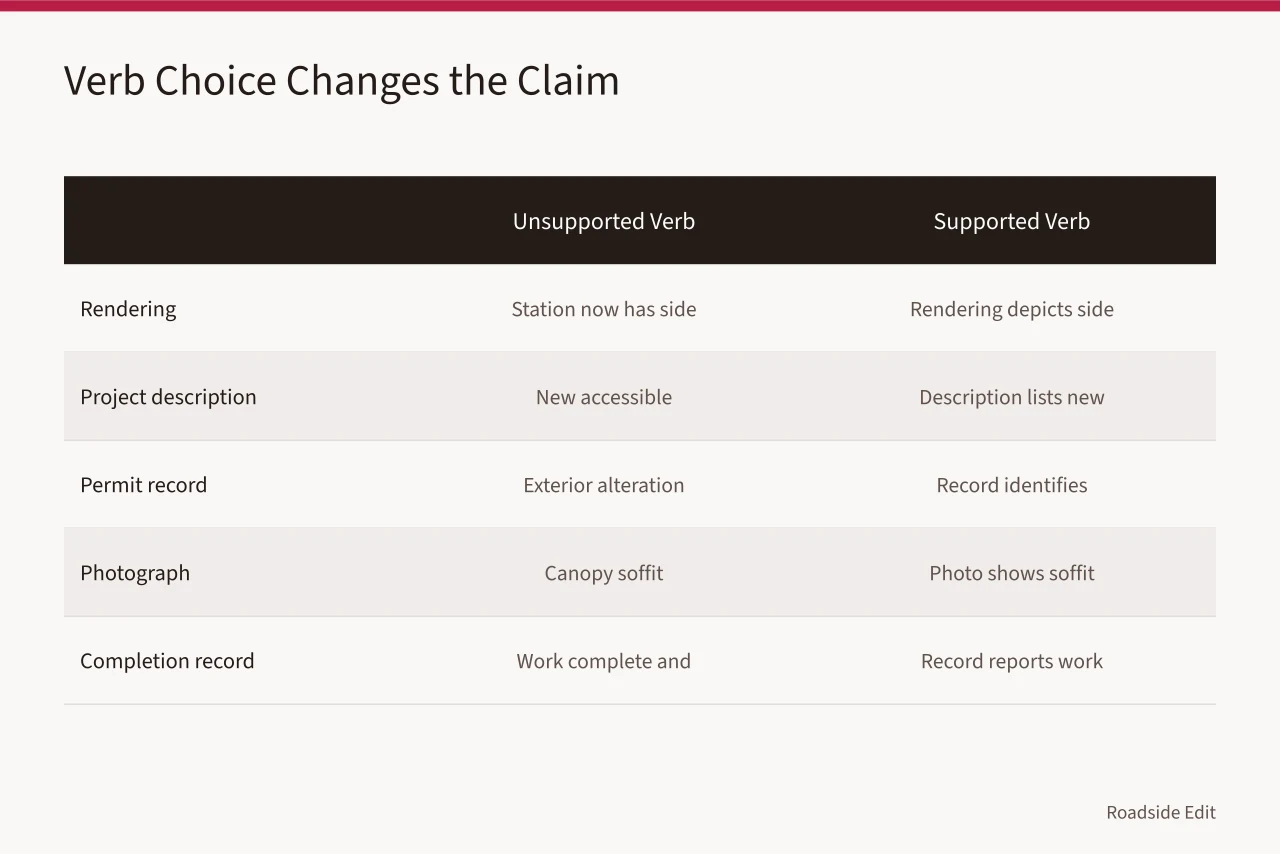
When plans shift, the first sentence survives. The second has to be rewritten.
Keep use, alteration and judgment apart
A new use and a physical change are different subjects. A third subject is any formal decision about them. Write three sentences and the article stops wobbling.
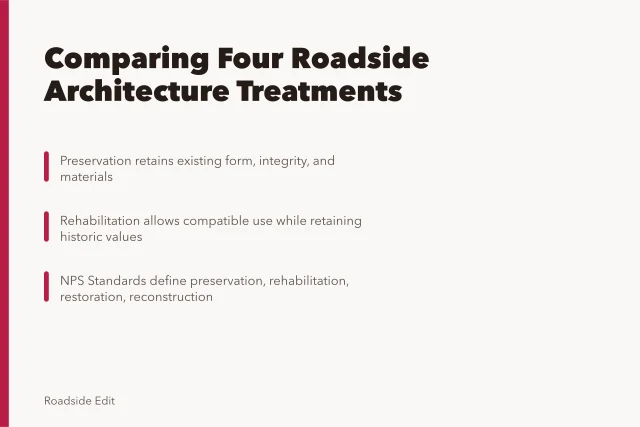
The National Park Service describes rehabilitation as making a compatible use possible through repair, alterations and additions while retaining the features that carry the property's values. Read the NPS explanation of rehabilitation. That is vocabulary. It is not a finding about a specific diner conversion.
NPS also states that its rehabilitation guidelines are general recommendations rather than case-specific advice. Read the NPS rehabilitation planning guidelines. Cite the guidance as guidance, then stop.
Where an addition is the story, NPS guidance treats the review as a question about effects on the building and, where relevant, the district. Review NPS guidance on additions to historic buildings. That is one program's framing, not a local approval.
The road-facing details carry the most risk
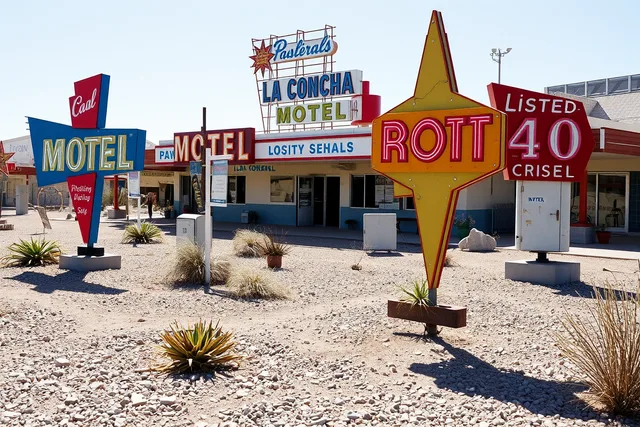
Route-facing changes are the ones readers think they can judge from a photograph. A repainted porcelain-enamel sign panel, a swapped neon tube for LED, a widened curb cut, a new dry-stand pipe at the island edge: each is visible and each invites a conclusion the image cannot support.
A single frame will not tell you whether the paint is original enamel or a later coat, whether the transformer load still matches the tube diameter, or whether the forecourt drains as designed. Those answers live in the survey, the specification and the inspection report.
NPS notes that its tax-incentive review weighs the cumulative effect of the work on historic character. See NPS guidance on cumulative effect and historic character. That is a reason to avoid judging one change in isolation, not a method for judging it from the shoulder of the road.
For the sequence from survey to fabricated replacement, the neon sign restoration planning workflow shows how a scope gets built. When the question turns to who does the work, choosing roadside building help covers the trades and the paperwork each one carries.
Write the version note before you publish
Every draft gets a short block. It includes source title, issue date, publisher, and stated use. It also includes named alteration and project status. When a later document changes the design, add a new line and revise the sentence that no longer matches.
Then run one check on each claim. Is it present fact, proposal, or judgment? Present fact needs a source current enough to carry it. Proposal keeps its date and its future tense. Judgment names who decided and cites the determination.
Anything about structural capacity, electrical load at a neon transformer, or underground tank condition goes to the licensed engineer, electrician or environmental authority, and to the authority having jurisdiction. Nothing in a draft settles it.
Common questions
Can a rendering support a present-tense description?
No. A rendering depicts a design. Use a dated photograph or a completion record when you need to say what stands today.
Does a new use mean the building is rehabilitated?
No. Describe the documented use and the documented work. Apply a treatment label only when a project record or a qualified source supports it.
What can I say about approval status?
Only what an authoritative, dated record states. An announcement, a rendering or site activity is not an approval, and inferring one from it is the error readers notice first.