Guides
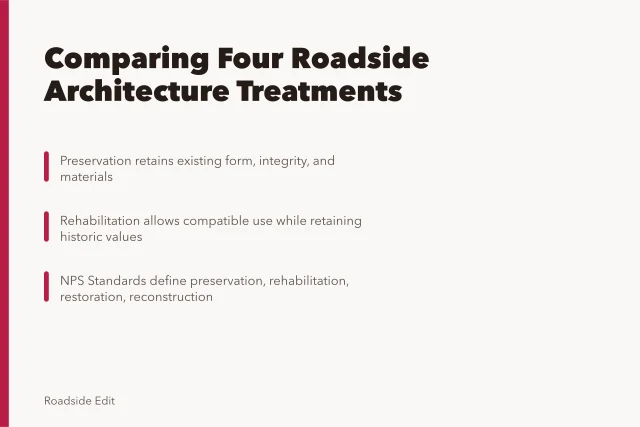
Part of How to compare roadside architecture treatment options before you choose
How to set roadside architecture reconstruction limits and label new work
Roadside architecture reconstruction limits for 2027 explain how to label new work, separate surviving material, and tie claims to evidence for a lost feature.
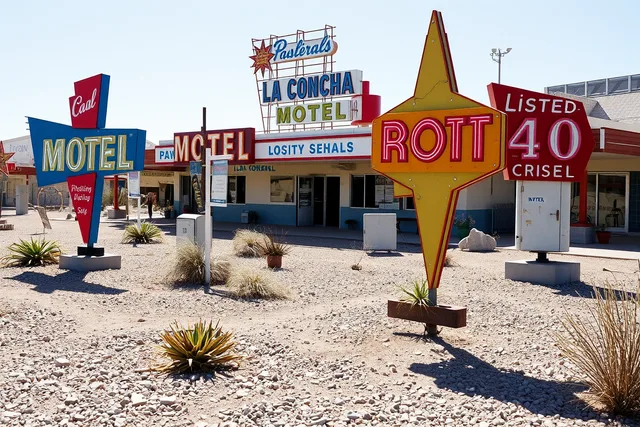
Newly made roadside features can look historic in a single image. That is why reconstruction needs a careful label. The term concerns a resource that no longer survives, not every replacement, replica, repair, or new sign. An article should say what is new, what survives, and which evidence supports the historical reference.
What to take away
- Identify the feature that no longer survives before calling new work reconstruction.
- Link each historical detail to the source that supports it.
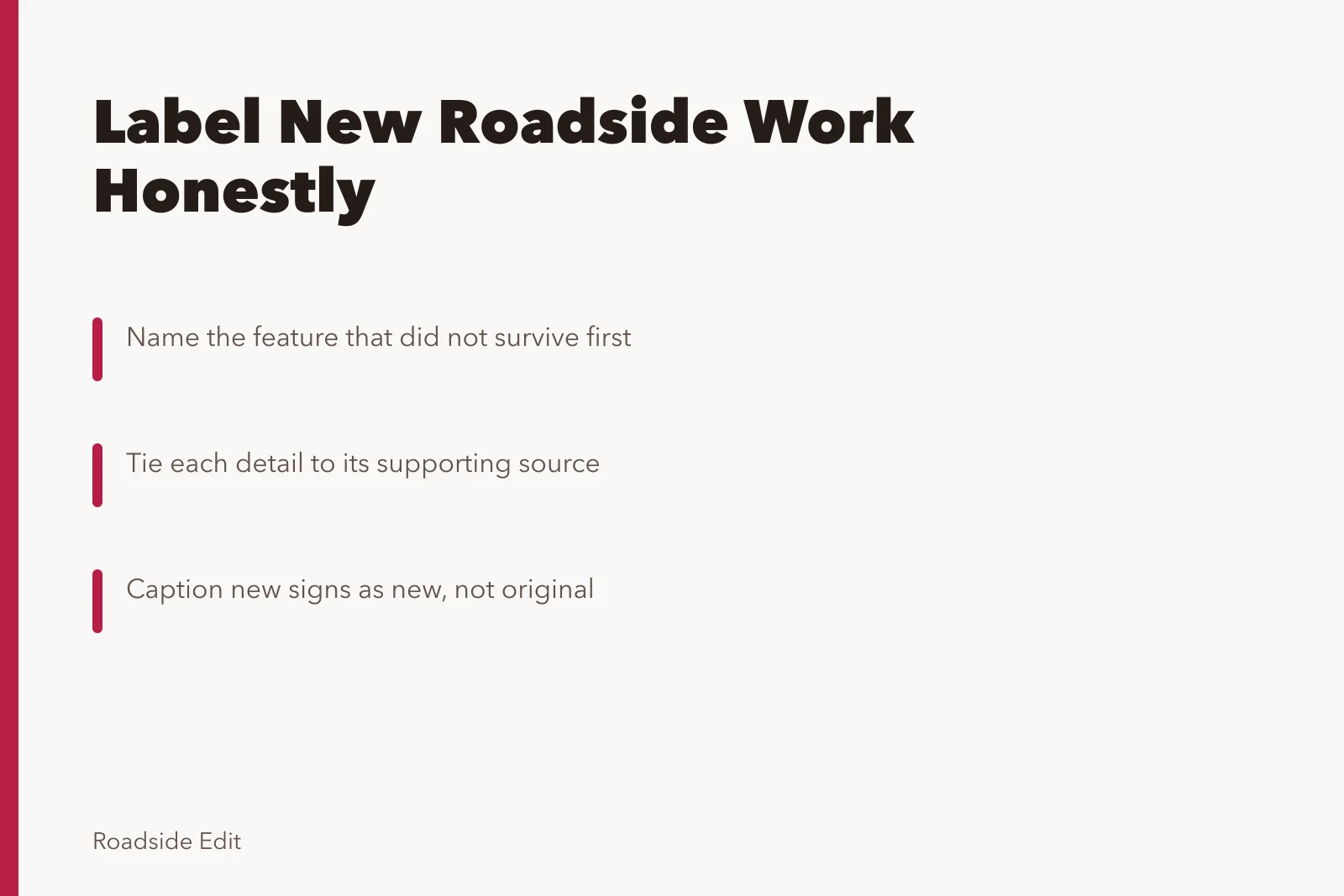
- Keep new work and surviving material distinct in captions and body copy.
- Remove a claim when the available evidence does not support it.
Start with the survival question
The first question is simple: what feature was gone before the new work appeared? A new roadside sign may replace a lost sign, but it may also be a new interpretive marker or a generic replica. The public description should follow the project record rather than visual similarity.
| Question | Record to find |
|---|
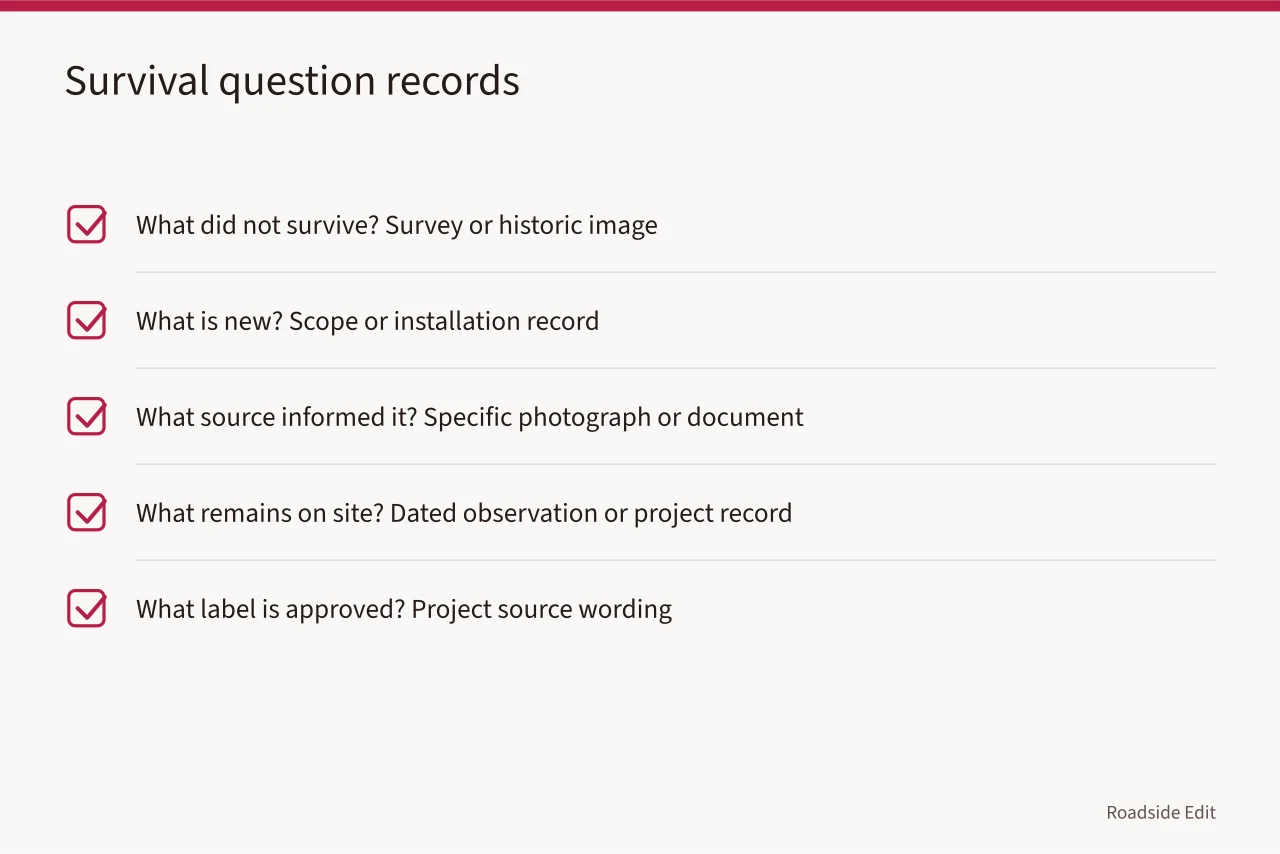
The National Park Service describes reconstruction as recreating a resource that no longer exists and says it depends on enough documentation to avoid conjecture. Read the NPS overview of reconstruction as a treatment. The guidance explains the treatment term. It does not establish that a local feature was reconstructed correctly or that its historic reference is fully known.
Build a feature-by-feature evidence note
Do not treat a single historic image as proof of every detail. A photograph may show lettering and general form, while leaving material, scale, color, or the rear side unknown. Record which source supports each detail and which detail remains uncertain.
The NPS reconstruction guidelines advise against designs based on conjecture or features borrowed from other properties. Review the NPS treatment guidance for reconstruction. That principle is useful for article copy. If the project source does not identify a historical detail, do not add it simply because it would make the story sound complete.
| Claim | Source-specific wording |
|---|---|
| Historic reference | "A dated photograph shows lettering in this position." |
| New work | "The 2027 project record describes a new sign." |
| Uncertain detail | "The reviewed sources do not establish the original color." |
| Surviving material | "The project record identifies the remaining base as existing material." |
Label new work without blurring the history
Use "new," "reconstructed," "replica," or "replacement" only when the project record supports that term. "Original-looking" is not useful because it tells readers nothing about survival, date, or evidence. A direct caption is better: "New sign installed in 2027, based on the project description."
NPS documentation standards call for reliable sources, stated limitations, and material that another person can check. Read the NPS standards for historical documentation. A concise article can follow that rule by separating the historic source from the record of the new work.
Before publication, check every sentence for an implied claim of authenticity. A source may document a new feature's installation without establishing that it reproduces the original in every respect. Revise the article to match the evidence, even when the narrower sentence is less dramatic.
The NPS reconstruction standards describe the approach as recreating a non-surviving resource with enough documentation for an accurate reproduction. Read the NPS standards for reconstruction. Use that standard as a vocabulary reference, not as a determination for a local project.
Run a final wording review
Read the caption, opening paragraph, and image alt text as a set. They should agree about what viewers are seeing. If the sign is new, do not let the photo caption imply that the entire object survived. If only the design reference is historic, say that plainly.
This last pass also catches a common editorial mistake: treating a dated photograph as proof of construction details that the photograph does not show. A clear limitation is more useful than a confident guess.
Common questions
Is a replica automatically a reconstruction?
No. Use the term that the project record and evidence support. A replica may not meet the source and survival conditions associated with reconstruction.
Can an article call a new feature original-looking?
Avoid that phrase. State that it is new, and identify the historical source used if a reliable record does so.
Why does the label matter?
It helps readers distinguish surviving material, documented repair, and new work. Clear labels prevent a false impression about what is historic.